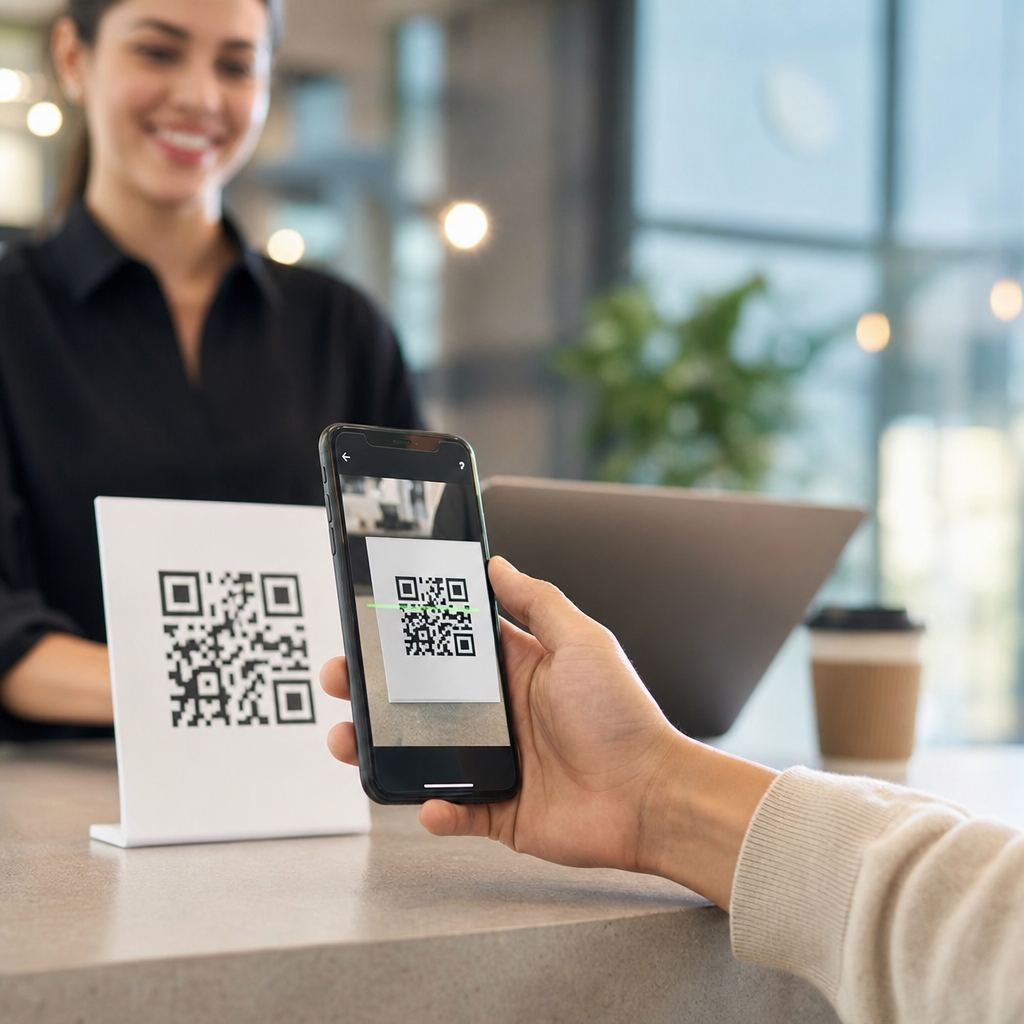
A successful QR code campaign connects a clear customer intent with a frictionless mobile experience, reliable tracking, and a reason to scan right now. Businesses often treat the code itself as the campaign, but in practice the square pattern is only the access point. The real campaign includes placement, message, landing page, analytics, compliance, and follow-up. When those pieces work together, QR codes can increase response rates, attribute offline marketing, and shorten the path from curiosity to conversion.
In business and marketing FAQs, QR codes appear constantly because they sit at the intersection of print, packaging, retail, events, email, and digital advertising. A QR code, or quick response code, is a two-dimensional barcode that a smartphone camera can read to open a link, download a file, start a payment flow, or trigger another action. Static codes point to fixed information. Dynamic codes route through a managed URL, allowing edits, redirects, and measurement after the code has been printed. That difference matters because most business campaigns need flexibility once materials are live.
I have worked on QR code rollouts for trade shows, direct mail, restaurant table tents, product packaging, and field sales leave-behinds, and the winning pattern is consistent: the best campaigns remove uncertainty. People scan when they understand what they will get, how long it will take, and whether the destination feels trustworthy. A code beside vague copy like “Scan me” underperforms. A code paired with a specific promise such as “Scan for the 2-minute setup guide” or “Scan to claim 15% off before Friday” gives users enough confidence to act.
Start with a measurable campaign goal
The first requirement for QR code campaign success is a single primary objective. If the goal is lead generation, the destination should be a fast form, not a general homepage. If the goal is product education, the scan should open installation instructions, comparison content, or a short demonstration video. If the goal is in-store conversion, the page should surface a coupon, mobile wallet pass, or product locator immediately. Mixing multiple goals into one code dilutes performance because users must decide what to do next.
Good campaign planning answers five practical questions before design starts: who will scan, where will they scan, what action should happen after the scan, how will success be measured, and what operational team owns updates? For example, a B2B event exhibitor might define success as marketing qualified leads from booth traffic. In that case, the QR code should route to a form integrated with HubSpot, Marketo, or Salesforce, tagged by event source and booth location. A restaurant chain might instead measure menu views, loyalty sign-ups, and average order value by store.
Use dynamic QR codes for most business use cases because they support edits, UTM parameters, and scan analytics without reprinting assets. A managed platform such as Bitly, QR Code Generator PRO, Beaconstac, Flowcode, or Scanova lets marketers monitor scans by date, device, and geography. Those numbers are useful, but they are not enough on their own. The real measure is downstream behavior: completed purchases, booked demos, redeemed offers, app installs, or support deflection. Connect the QR campaign to Google Analytics 4, CRM reporting, and point-of-sale data whenever possible.
Give people a compelling reason to scan
People do not scan QR codes because the technology is clever; they scan because the value exchange is obvious. The offer must match the context. On packaging, useful destinations include setup guides, warranty registration, recipes, refill ordering, or authenticity verification. In out-of-home advertising, the destination should be fast and mobile-first, such as a coupon, store map, or appointment booking page. At conferences, a code can deliver speaker slides, a meeting scheduler, or a gated case study that supports sales conversations after the event.
Message clarity matters more than code size in many campaigns. The strongest calls to action describe both the action and the reward: “Scan to see live pricing,” “Scan for the patient intake form,” or “Scan to watch the 90-second demo.” In my testing, adding a time cue or reducing perceived effort often improves scan intent. “Scan for today’s menu” beats “Scan for our website.” “Scan to compare plans in under a minute” beats “Learn more.” Specificity lowers risk for the user.
Incentives can lift response, but they should not feel disconnected from the brand. Discounts work in retail, yet service businesses often do better with utility-based offers such as a checklist, estimator, appointment slot, or sample request. For regulated sectors, including healthcare and financial services, keep the destination compliant and avoid collecting more information than necessary on the first screen. Trust is part of the value proposition, especially when a user is scanning from a public place using a personal phone.
Optimize placement, design, and scanability
A QR code campaign fails quickly when the code is hard to notice, difficult to scan, or placed where a person cannot comfortably use a phone. Basic production standards matter. Keep adequate contrast, preserve the quiet zone around the code, and test at realistic distances and angles before launch. As a practical rule, the farther away the audience will be, the larger the code must be. On posters and storefront windows, glare and reflections can reduce scan success even when the printed code is technically correct.
Destination context matters too. A code on transit signage should not lead to a heavy page that loads slowly over cellular data. A code on product packaging should still work months later when the customer opens the box at home. A code on a restaurant table should survive cleaning chemicals, scratches, and low light. Branded customization can help recognition, but excessive styling hurts readability. Keep logos modest, error correction appropriate, and colors high contrast. Attractive codes work only when they still scan instantly on older devices.
| Campaign setting | Best QR destination | Common failure | Practical fix |
|---|---|---|---|
| Retail shelf | Reviews, specs, coupon | Homepage redirect | Send users to the exact product page |
| Trade show booth | Lead form, meeting booking | Long form fields | Use autofill and ask only essential questions |
| Direct mail | Personalized landing page | Generic message | Match headline to the mailed offer |
| Packaging insert | Setup guide or warranty | Broken link after rebrand | Use a dynamic code with managed redirects |
Create a landing experience built for mobile conversion
The scan is only the start. Most QR code campaigns lose performance on the landing page through slow load times, cluttered design, or mismatched messaging. The first screen should confirm that the user arrived at the right place and immediately present the promised value. If the code says “Scan for assembly instructions,” the page should open directly to assembly instructions, not a navigation menu. If the code promises a discount, display the offer code, terms, and redemption steps above the fold.
Speed is crucial. Compress images, minimize scripts, and avoid pop-ups that cover the primary action. Mobile conversion depends on thumb-friendly forms, readable text, and simple choices. For commerce, offer Apple Pay, Google Pay, Shop Pay, or other one-tap checkout options when appropriate. For lead generation, reduce form fields and use progressive profiling later in the funnel. Accessibility also influences performance. Pages should support screen readers, readable contrast, and logical heading structure because successful campaigns reach broad audiences, not only ideal users in perfect conditions.
Consistency across the printed prompt, QR destination, and follow-up message improves trust and conversion. If a hotel room card invites a guest to “Scan for local recommendations,” the page should be branded consistently with the property and tailored to the guest’s location. If a manufacturer uses a code for troubleshooting, the page should identify the model clearly and surface FAQs, manuals, and support options fast. This article sits in a broader business and marketing FAQ hub because those linked support resources often become conversion assets when organized around real scan intent.
Track performance, test variables, and manage risk
Strong QR code marketing is measurable. At minimum, track total scans, unique scans, scan-to-session rate, bounce rate, conversion rate, and assisted revenue or lead value. Where possible, separate scans by source, asset version, geography, and time window. UTM parameters remain useful for campaign attribution, but they should be paired with event tracking in GA4 and CRM stage reporting. Offline channels become much more accountable when a print piece, sign, or package insert can be tied to qualified pipeline or repeat purchase behavior.
Testing should focus on the variables that most influence intent and friction: call-to-action wording, offer type, code placement, page speed, and form length. In one direct mail campaign I reviewed, the response gap between “Scan to learn more” and “Scan to see your custom savings” was substantial because the second promise was immediate and specific. Similar gains come from moving a code nearer the headline, adding directional design cues, or shortening the path to the primary action. Small adjustments often outperform expensive creative redesigns.
Risk management is equally important. Broken links, expired promotions, and unsecured destinations damage trust quickly. Use HTTPS, monitor redirect health, and maintain ownership of the domain used in the code. For enterprise teams, create a governance checklist covering naming conventions, approval workflows, expiration dates, and archive rules. Consider fraud risk as well. In public spaces, malicious stickers can cover legitimate codes. Brands should inspect physical placements regularly and teach customers what official codes look like. Success comes from reliability as much as creativity.
Build a repeatable hub for business and marketing FAQs
The most successful QR code programs do not live as isolated one-off tactics. They become part of a repeatable content and measurement system tied to business and marketing FAQs. That means creating linked resources for common scan outcomes: pricing questions, setup steps, event follow-up, product comparisons, return policies, loyalty enrollment, and troubleshooting. When each destination page answers a focused question completely, teams can reuse codes across brochures, displays, packaging, and support materials without confusing the user.
For companies building a FAQ and troubleshooting hub, QR codes are powerful navigational tools because they move customers from physical touchpoints into the exact answer they need. That improves experience, reduces support volume, and reveals which questions occur most often in the real world. A successful QR code campaign therefore looks bigger than a scan rate. It creates a direct, trackable path from offline attention to online action. Start with one goal, one audience, one clear promise, and one mobile page built to deliver immediately. Then test, measure, and expand with discipline.
Frequently Asked Questions
What are the core elements that make a QR code campaign successful?
A successful QR code campaign works because every part of the experience is aligned around one clear goal. The QR code itself is not the campaign; it is simply the bridge between a physical touchpoint and a mobile action. What matters most is matching customer intent with a fast, useful, and low-friction destination. If someone scans a code on product packaging, a store sign, direct mail piece, event display, or brochure, they should immediately land on something that feels relevant to why they scanned in the first place. That might be a product page, a coupon, a registration form, a video demo, a menu, a loyalty signup, or a support resource.
The strongest campaigns also include strong placement and clear messaging. People need to know why they should scan and what they will get in return. A code placed where customers naturally pause, combined with a simple call to action such as “Scan to get 15% off,” “Scan to see the demo,” or “Scan to book now,” usually performs better than a code presented with no context. The landing page must load quickly, display well on mobile devices, and remove unnecessary steps. If the page is slow, cluttered, or asks for too much information too soon, response rates drop quickly.
Reliable tracking is another core ingredient. A campaign is only truly successful if the business can measure scans, visits, conversions, location-based performance, and downstream actions. This is what turns a QR code from a novelty into a real marketing channel. Finally, timing matters. The best campaigns give people a reason to act now, whether that is convenience, urgency, exclusivity, or immediate value. When message, placement, mobile experience, analytics, and follow-up all work together, QR codes can drive measurable engagement and shorten the path from interest to action.
Why do some QR code campaigns get plenty of scans but fail to convert?
This usually happens when curiosity is higher than post-scan relevance. A person may scan because the code is easy to access, visually prominent, or paired with interesting creative, but conversion depends on what happens next. If the landing experience does not match the expectation created before the scan, users quickly abandon the process. For example, a code promising a discount that leads to a generic homepage, or a “learn more” code that opens a long and confusing form, creates friction and breaks trust.
Another common issue is poor mobile usability. QR code traffic is overwhelmingly mobile, so pages need to be designed for small screens, thumb-friendly navigation, fast loading times, readable text, and minimal input requirements. If users are forced to pinch and zoom, wait for heavy media to load, close multiple popups, or complete a complex multi-step process, conversions suffer. Even small delays can reduce results because QR scans often happen in-the-moment, when attention is limited and context matters.
Weak offers can also be the problem. Not every audience needs a discount, but every audience needs a compelling reason to continue. That reason could be speed, access, convenience, personalization, education, proof, or savings. A campaign that gives users no obvious benefit after the scan will struggle, even if scan volume is high. In many cases, businesses also fail to tailor the destination to the physical context. Someone scanning from a restaurant table has different needs than someone scanning from a trade show booth or printed catalog. The more closely the content reflects the environment and motivation behind the scan, the more likely the campaign is to convert.
Finally, many campaigns fail because there is no clear next step. A successful QR landing page should guide users toward one primary action, whether that is purchasing, registering, claiming an offer, downloading an app, or contacting the business. When the destination contains too many competing links or objectives, users hesitate. High scan volume is a positive signal, but conversions come from clarity, relevance, and a seamless mobile journey.
How important are placement and call-to-action in a QR code campaign?
Placement and call-to-action are critical because they shape both visibility and motivation. Even a well-designed code with a strong offer can underperform if it appears in the wrong place or at the wrong moment. The best placements are locations where the target audience already has attention, enough time to scan, and a natural reason to want more information. This could be on product packaging during consideration, on in-store signage near a point of decision, on direct mail at home, on event materials during engagement, or on receipts and post-purchase inserts for follow-up actions.
Good placement also takes practical scanning conditions into account. The code should be large enough to scan easily, printed clearly, and positioned where lighting, distance, and angle do not make the interaction awkward. A code on a highway billboard, for example, is far less practical than one on a countertop display, table tent, shelf talker, flyer, poster, or package. If the environment makes scanning inconvenient or unsafe, performance drops regardless of campaign quality.
The call-to-action is what turns a visible code into a persuasive invitation. People are much more likely to scan when they understand exactly what will happen next and why it is worth their time. Vague prompts like “Scan here” typically perform worse than direct, benefit-led messaging. Strong calls-to-action set expectation and value in a few words: “Scan to order ahead,” “Scan for setup instructions,” “Scan to unlock member pricing,” or “Scan to watch how it works.” This reduces uncertainty and increases intent.
Together, placement and call-to-action help qualify the audience before the scan even happens. They attract the right people, in the right context, with the right expectation. That means better engagement after the scan, stronger conversion rates, and cleaner data for evaluating campaign performance. In many cases, improving placement and messaging can have a bigger impact than changing the code design itself.
What should businesses track to measure QR code campaign performance accurately?
Businesses should track much more than raw scan count. Scans are useful as a top-level engagement metric, but they only show initial interaction. To understand campaign success, it is important to measure what users do after the scan. That includes landing page visits, unique visitors, bounce rate, time on page, click-through behavior, form completions, purchases, bookings, downloads, coupon redemptions, and any other action tied to campaign goals. The right performance indicators depend on the objective, but the key is connecting scans to meaningful outcomes.
Source-level attribution is especially valuable. Using distinct QR codes or campaign parameters for different placements, regions, products, stores, print runs, or channels allows businesses to compare performance with much greater precision. For example, a brand can learn whether packaging outperforms posters, whether one retail location produces more conversions than another, or whether a direct mail version with one offer performs better than a version with a different message. This turns QR codes into a strong attribution tool for offline marketing.
Technical performance should be monitored as well. Load speed, device type, operating system, browser behavior, and failed page loads can all influence results. If a campaign receives many scans but poor landing-page engagement on certain devices, the issue may be technical rather than strategic. Geographic and time-based data can also reveal useful patterns, such as stronger response during certain store hours, at specific events, or in certain markets.
Businesses should also think beyond the immediate conversion. Follow-up metrics such as repeat purchases, subscription retention, loyalty participation, and lead quality can reveal whether the campaign attracted high-value users or simply generated short-term activity. In addition, proper consent and privacy practices should be in place when collecting user data. Accurate measurement is not just about tagging links; it is about building a reporting structure that shows how QR interactions contribute to business outcomes over time.
How can businesses improve the customer experience after someone scans a QR code?
The post-scan experience should feel immediate, relevant, and easy. The first priority is speed. When someone scans a QR code, they are expecting a near-instant response. Slow-loading pages create friction right away and increase drop-off. Businesses should use mobile-optimized landing pages that load quickly, present the key message above the fold, and avoid unnecessary distractions. In most cases, the best experience is one page, one purpose, and one clear next action.
Relevance is just as important as speed. The content should clearly match the context in which the code was scanned. If the code appears on packaging, the landing page might offer product instructions, care details, reviews, or reorder options. If it appears in a storefront window, the page might prioritize hours, availability, booking, or directions. If it appears at an event, the destination might focus on lead capture, schedule information, exclusive content, or a limited-time offer. The smoother the handoff between offline context and mobile destination, the better the experience feels.
Reducing effort is another major factor. Keep forms short, remove unnecessary fields, support autofill where possible, and make buttons easy to tap. If a conversion requires multiple steps, guide users clearly from one step to the next. It also helps to reinforce trust with recognizable branding, concise copy, secure browsing, and transparent privacy information when data is being collected. People are more likely to continue when the destination looks legitimate, polished, and consistent with the original campaign asset.
Finally, a strong QR code