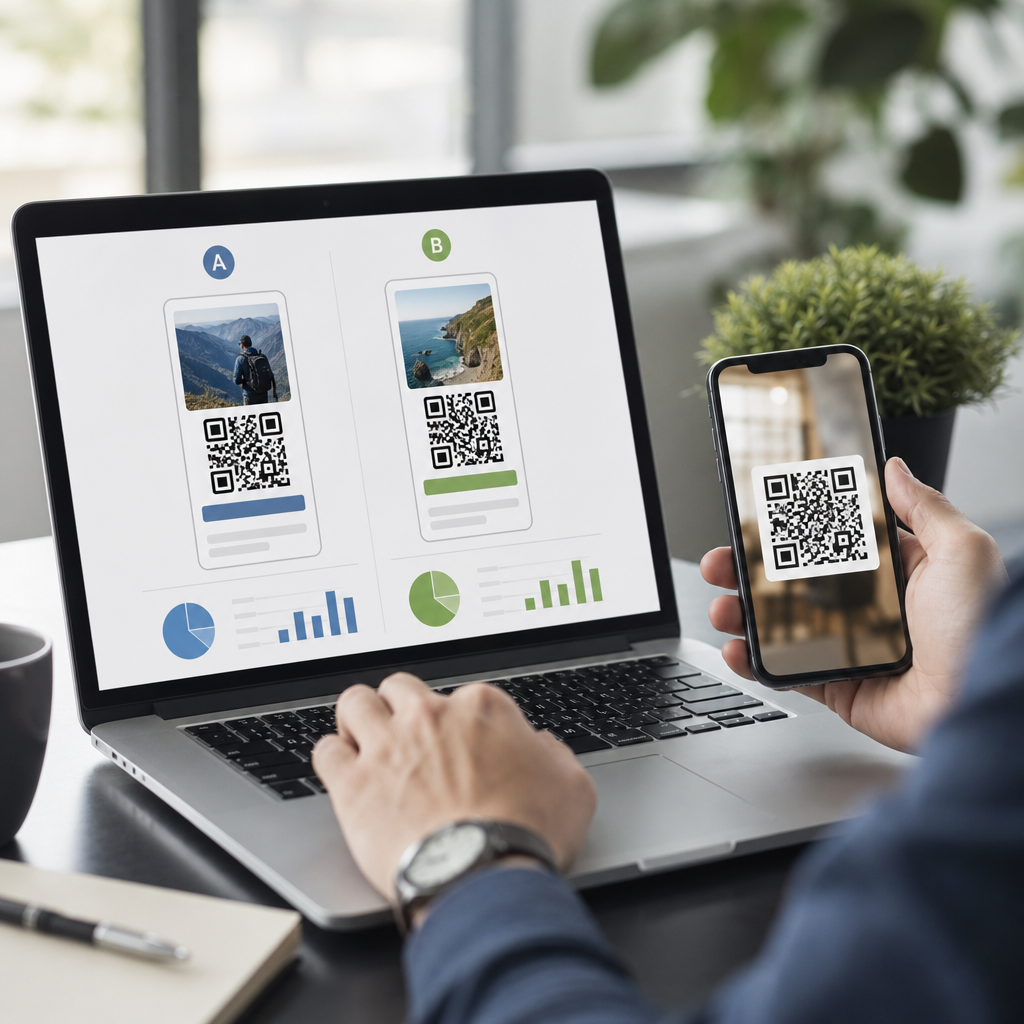

QR codes are no longer just static bridges from print to web; they are powerful routing tools that can deliver different experiences to new users and returning users with measurable business impact. In QR code personalization, the core idea is simple: the same scan entry point can detect context, identify prior behavior, and send each person to the most relevant next step. That means a first-time scanner might receive an onboarding page, while a returning scanner sees a loyalty offer, account shortcut, or reordering flow. I have implemented these journeys for retail packaging, event check-in, restaurant menus, and product support, and the difference in conversion is usually driven less by the code itself than by the logic behind it.
For marketers, product teams, and operations leaders, this matters because QR scans happen in moments of intent. A customer standing in an aisle, opening a package, or arriving at a venue wants an immediate answer. If every scan leads to the same generic landing page, businesses waste context. Personalization fixes that by using scan history, device signals, campaign parameters, authenticated sessions, CRM data, and geography to adapt the destination. The result can be higher activation, faster support resolution, more loyalty enrollments, and stronger attribution across offline and online channels.
It is also important to define terms clearly. A new user experience is the first meaningful interaction after a scan, typically focused on orientation, trust, and value explanation. A returning user experience is designed for recognition, continuity, and reduced friction. Dynamic QR codes are usually required because they allow the destination and rules to be changed after printing. Personalization logic can be session-based, cookie-based, account-based, or token-based. The hub topic here is not merely changing copy on a page; it is designing a decision system that matches the user’s familiarity, intent, and permissions at the exact moment of scan.
What changes between new and returning QR code journeys
The biggest difference is not aesthetics but task design. New users need orientation. They ask: What is this, why should I trust it, and what do I do next? Returning users ask: Can you help me finish faster? For first-time scanners, the highest-performing pages usually include a clear headline, a short explanation of value, one primary call to action, and proof signals such as brand identity, secure domain usage, and privacy language. Returning users benefit from prefilled data, direct links to account actions, saved preferences, loyalty balances, recent orders, or context-aware recommendations.
In practice, I map these journeys by intent category. On product packaging, a new scanner might see setup instructions, warranty registration, and a product authenticity check. A returning scanner might go directly to refill ordering, troubleshooting history, or accessories. At a museum, a first scan can introduce the exhibit and language options, while a repeat scan can resume an audio tour where the visitor stopped. At a restaurant table, a first-time guest might receive menu guidance and allergen filters; a returning guest can be taken straight to previous favorites or reward redemption. The same printed code can serve all of these paths when the backend recognizes state correctly.
State detection should be explicit and privacy-aware. Marketers often rely on browser cookies alone, but that is fragile because device changes, private browsing, and app webviews can break recognition. Better systems combine methods: first-party cookies for lightweight continuity, authenticated accounts for precision, URL parameters for campaign source, and server-side rules for scan time and location. If the business uses platforms such as Adobe Experience Cloud, Salesforce Marketing Cloud, HubSpot, Segment, or Braze, those tools can enrich QR traffic with audience profiles and trigger the correct content branch. The destination should still degrade gracefully when identity cannot be confirmed.
How QR code personalization works technically
Personalized QR code experiences usually start with a dynamic redirect service. The code points to a short URL controlled by the business or provider. When the scan occurs, the redirect service evaluates conditions such as unique code ID, timestamp, device type, operating system, browser language, GPS or IP-derived location, referral data, and whether the user has been seen before. It then routes the person to a destination page, in-app deep link, wallet pass, or support article. This architecture is more durable than printing separate QR codes for every audience because the logic can be adjusted without reprinting materials.
There are two common implementation models. The first is one code shared by many users, with recognition based on session history or account login. This is common for storefront displays, menus, packaging, and posters. The second is a unique or semi-unique QR code assigned to a customer, order, seat, product unit, or mail piece. That model enables stronger personalization because the code itself carries an identifier, often tokenized to avoid exposing personal data. Logistics labels, direct mail, and event badges use this approach frequently. In both cases, secure token design, short URL hygiene, and redirect latency matter because every extra second reduces completion rates.
| Personalization signal | Best use case | Primary limitation |
|---|---|---|
| First-party cookie or local storage | Recognizing repeat scanners on the same device | Fails across devices and private browsing |
| Authenticated account session | Loyalty, subscriptions, support portals | Requires login or prior enrollment |
| Unique token in the QR URL | Direct mail, tickets, serialized packaging | Needs secure token management and expiration rules |
| Location and time rules | Events, venues, retail zones | Context is useful but not true identity |
Measurement must be planned before launch. I recommend tracking scan volume, unique scanners, repeat scan rate, redirect resolution time, bounce rate, assisted conversions, and downstream actions such as sign-up, add-to-cart, redemption, or ticket validation. UTM parameters still matter for analytics platforms like Google Analytics 4, but they are not enough on their own. Server-side event logs are essential because scans often occur in embedded browsers where attribution is messy. A reliable setup documents exactly what counts as a new user, what resets that status, and how long a returning user remains in a repeat cohort.
Best practices for designing personalized experiences
The strongest rule is to reduce friction for returning users without confusing first-time users. That sounds obvious, yet many teams over-personalize too early. If recognition confidence is low, show a simple choice screen such as “Start setup” or “Continue where you left off.” If confidence is high, route directly. I have seen support QR codes on hardware products cut resolution time when the first scan opens guided setup and the second scan jumps straight to the exact troubleshooting step previously viewed. The user feels remembered, but only because the path is relevant, not because the page uses their name.
Content hierarchy matters. First-time visitors need explanation before action; repeat visitors need action before explanation. Use concise copy, visible trust markers, and one dominant task per screen. On mobile, place the key button in the thumb zone and keep forms short. If the journey depends on login, delay that prompt until the user understands the benefit. Deep links into apps can be excellent for returning users, but always provide a browser fallback. Apple App Clips and Android Instant experiences can reduce installation friction, though they require additional development and should be reserved for high-value repeated interactions.
Privacy and compliance are part of the user experience, not a legal afterthought. If a QR code uses personalized routing, disclose what data is collected and why. Under regulations such as GDPR and CCPA, businesses must avoid collecting more than they need and must provide lawful processing grounds where required. Never encode raw personal information directly in the QR pattern. Use opaque identifiers, signed tokens, and expiration controls. For sensitive sectors such as healthcare, finance, or education, involve security and compliance teams early. A personalized experience that feels invasive will reduce trust faster than a generic page ever could.
Use cases, internal linking paths, and hub priorities
As a sub-pillar hub within Advanced QR Code Strategies, this page should connect readers to deeper articles on QR code personalization patterns. The most useful follow-on topics are dynamic QR codes, first-party data capture, loyalty QR programs, app deep linking, QR code analytics, serialized packaging, event QR workflows, and privacy-safe tracking. Those internal linking paths help readers move from concept to execution. They also mirror how teams actually implement projects: strategy first, routing logic second, analytics third, and governance throughout.
Several high-value use cases prove the model. In retail, shelf talkers can introduce a brand to first-time shoppers and offer replenishment shortcuts to returning buyers. In hospitality, in-room QR codes can show hotel information on first scan and room service reorder options on later scans. In B2B field service, equipment stickers can deliver installation guidance to new technicians and maintenance logs to repeat technicians. In direct mail, personalized QR codes tied to household IDs can send prospects to introductory offers while existing customers land on upgrade paths. Each example depends on the same principle: recognize familiarity, then remove unnecessary steps.
The key takeaway is that QR code personalization works best when it serves user intent instead of forcing clever segmentation. New users need clarity, reassurance, and a clean path to first value. Returning users need speed, continuity, and context. Dynamic routing, solid measurement, privacy-safe identifiers, and thoughtful mobile design make that possible at scale. If you are building an Advanced QR Code Strategies program, start by auditing every current QR destination and asking one practical question: should a first-time scanner and a repeat scanner really see the same thing? If the answer is no, your next gains will come from personalized QR journeys.
Frequently Asked Questions
1. What does it mean for a QR code to deliver different experiences to new and returning users?
It means a single QR code can act as an intelligent entry point instead of sending every scanner to the exact same destination. When someone scans, the system can evaluate available context such as whether that device has scanned before, whether the person is already known in a CRM or loyalty platform, what campaign the code belongs to, what location the scan came from, and what type of device is being used. Based on that information, the QR experience can change in real time.
For example, a first-time scanner might be directed to a welcome page that explains the offer, introduces the brand, or encourages sign-up. A returning scanner, on the other hand, could skip the introductory content and go straight to a loyalty reward, a personalized product recommendation, an account shortcut, or a time-sensitive promotion. The important idea is that the QR code itself does not need to change. The destination logic behind it changes based on user history and scan context.
This creates a smoother customer journey because people are not forced through repetitive steps. New users get the orientation they need, while returning users get speed, relevance, and recognition. From a business perspective, that often leads to stronger conversion rates, higher engagement, better retention, and clearer attribution because the brand can measure how different audience segments respond to different destination experiences.
2. How can a QR code tell whether someone is a new user or a returning user?
In most cases, this is determined through a mix of device recognition, browser storage, authenticated account data, campaign tracking, and backend routing rules. A common method is to use a dynamic QR code that points to a smart redirect layer rather than a fixed landing page. When the scan happens, that redirect layer checks for identifiers such as first-party cookies, local storage values, session tokens, app deep-link data, or customer IDs associated with prior activity. If a match is found, the person can be treated as returning. If no prior signal exists, the user is usually handled as new.
Brands can also improve accuracy by connecting QR scans to existing systems such as CRM platforms, loyalty programs, ecommerce accounts, or mobile apps. If a user is already logged in on their device or opens the scan through a branded app, the platform may be able to identify them with much greater confidence. In offline environments, additional context can help too. The specific store location, packaging type, campaign date, or product SKU may influence routing decisions even before a full identity match is made.
That said, detection is rarely perfect, and good implementation accounts for edge cases. Someone may clear cookies, switch devices, use private browsing, or scan without granting any persistent tracking signals. Because of that, the best systems use a layered approach: they combine known identifiers with contextual rules and fall back gracefully when certainty is lower. In practice, the goal is not surveillance. It is relevance. A well-designed QR experience uses available signals responsibly to reduce friction and present the most useful next step.
3. What are the business benefits of personalizing QR code experiences for first-time and repeat scanners?
The biggest benefit is improved relevance, and relevance tends to improve performance across the funnel. First-time users usually need confidence, context, and motivation. They may respond best to educational content, a first-purchase incentive, or a simple introduction to the product or service. Returning users often need something different. They may be ready for account access, repeat purchase options, loyalty rewards, upgrades, referrals, or support. When a QR strategy accounts for those differences, each scan is more likely to move the user forward instead of restarting the journey.
This personalization can also increase measurable business outcomes. Brands often see better conversion rates because new users receive onboarding that removes uncertainty, while returning users avoid unnecessary steps. Engagement can rise because the content feels timely rather than generic. Retention can improve because repeat scanners are acknowledged and rewarded. Customer lifetime value may grow when returning users are guided to higher-value actions such as subscription renewal, membership participation, cross-sell offers, or reorder flows.
Another major advantage is cleaner analytics. By distinguishing first-time scans from repeat scans, marketers can better understand campaign effectiveness, user intent, and post-scan behavior. That makes it easier to test different landing experiences, compare segments, and optimize creative, placement, and messaging. Instead of just counting total scans, the business can evaluate what percentage of scans came from new prospects, how many became repeat users, and what downstream actions each group completed. That level of insight turns QR codes from simple access tools into performance channels with strategic value.
4. What kinds of experiences should brands show to new users versus returning users after a QR scan?
For new users, the ideal experience usually removes uncertainty and builds momentum. That can include a concise landing page explaining what the brand offers, a product demo, social proof, a first-order discount, a guided sign-up flow, or a short sequence that captures email or SMS opt-in. If the QR code appears on packaging, print, in-store signage, or direct mail, the page should quickly answer the obvious question: “Why did I scan this, and what should I do next?” The goal is clarity and confidence, not complexity.
For returning users, the experience should prioritize speed and familiarity. These users often do not need a generic introduction. They may benefit more from a shortcut to the next logical action, such as opening a loyalty dashboard, redeeming points, viewing personalized recommendations, accessing saved preferences, continuing a partially completed journey, or receiving a targeted promotion based on previous activity. In many cases, the best returning-user experience is one that feels almost invisible because it removes extra taps and gets the person directly to value.
The strongest strategies map QR destinations to the customer lifecycle rather than relying on one universal landing page. A restaurant might send first-time scanners to a menu plus sign-up offer, while repeat scanners see a reorder page or rewards balance. A retailer might route new users to a product explainer and returning users to a replenishment flow. A software brand might send first-time scanners to onboarding content and existing customers to account support or upgrade options. The exact experience will vary by industry, but the principle is consistent: welcome new users, recognize returning users, and tailor the next step to intent.
5. Are there privacy, compliance, or implementation considerations when using QR codes to personalize experiences?
Yes, and they are critical. Personalized QR routing should be built on transparent data practices, appropriate consent standards, and a clear understanding of what user signals are being collected and how they are used. If the experience relies on cookies, device identifiers, account-based recognition, or integration with customer databases, brands need to ensure they comply with applicable privacy regulations and platform requirements. That includes providing clear disclosures, honoring consent choices where required, minimizing unnecessary data collection, and securing any personal information involved in the routing process.
From an implementation standpoint, it is also important to choose the right technical setup. Static QR codes are limited because they point to one fixed URL. Dynamic QR codes are typically the better option because they allow destination logic, tracking, testing, and updates without reprinting the code. The routing layer should be fast, mobile-optimized, and resilient. It should also support fallback behavior for cases where the system cannot confidently identify the user as new or returning. A poor implementation can create delays, broken redirects, or confusing experiences that undermine trust.
Measurement and governance matter as much as the user-facing journey. Brands should define what counts as a new versus returning scan, document their attribution logic, and monitor outcomes by segment. They should also test the experience across operating systems, browsers, and app environments because mobile scan behavior can vary. When done responsibly, personalized QR experiences do not have to be intrusive. They can be practical, respectful, and highly effective. The best programs combine strong privacy hygiene with smart routing logic so users get a more relevant experience and the business gets better performance data.