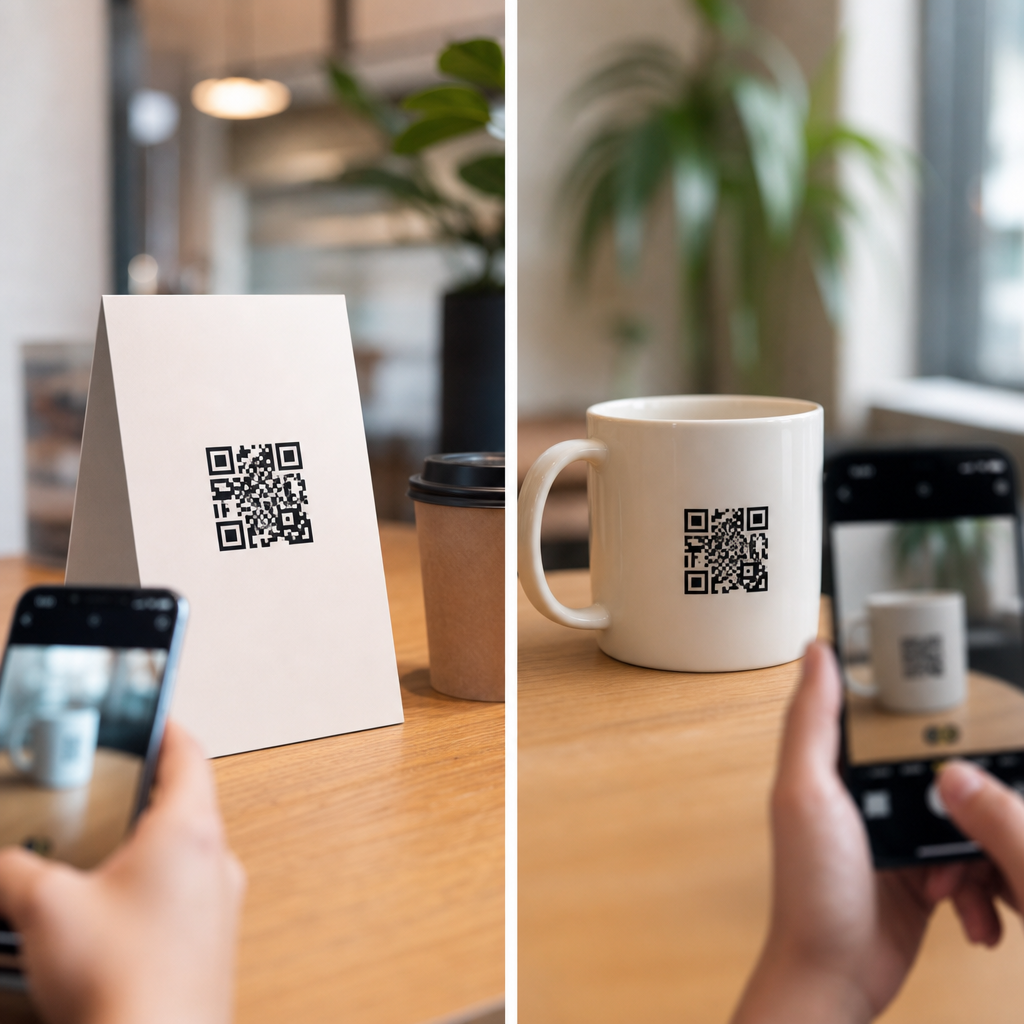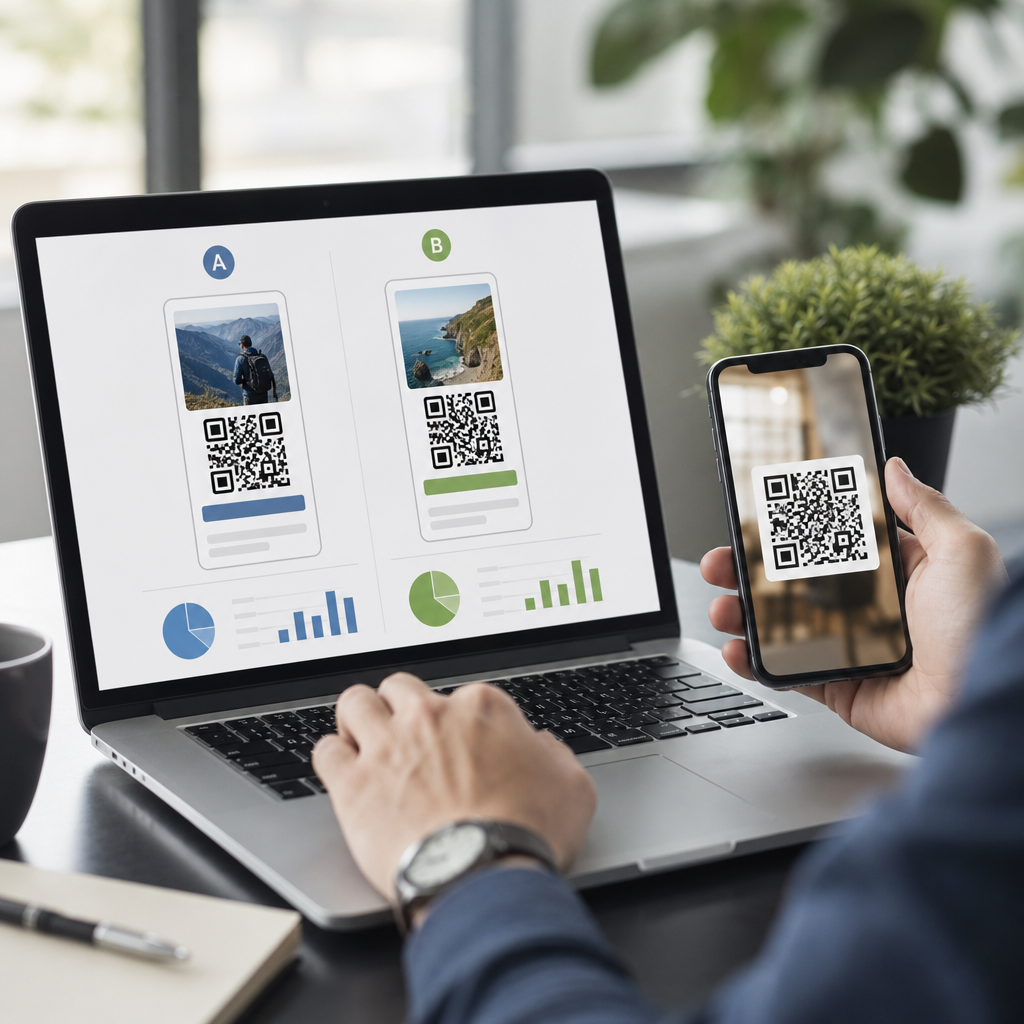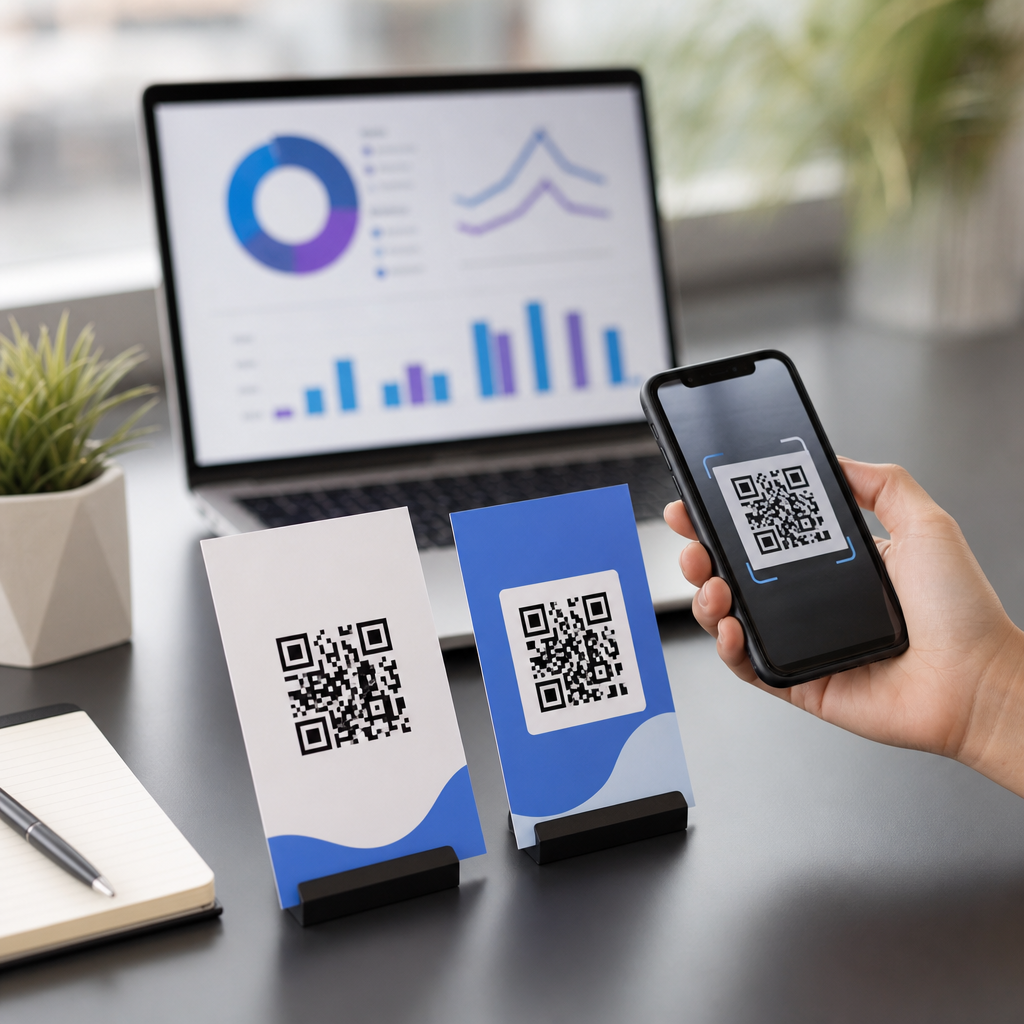

QR codes have evolved from simple shortcuts into precise data collection and delivery tools, making them one of the most practical channels for behavioral targeting. In this context, behavioral targeting means adjusting content, offers, or follow-up actions based on how a person interacts with a QR code: where they scanned, when they scanned, what device they used, what page they visited next, and whether they converted. QR code personalization is the discipline of designing those experiences intentionally, so each scan becomes a signal and each destination becomes more relevant. I have used dynamic QR campaigns for retail launches, event registration, field sales, and packaging inserts, and the pattern is consistent: generic landing pages waste scans, while personalized flows lift engagement because the user sees immediate relevance.
Why does this matter now? Because offline touchpoints increasingly need the same accountability as paid search, email, and social campaigns. A QR code on a shelf talker, direct mail piece, menu, product box, trade show banner, or invoice can connect a physical moment to a measurable digital journey. Unlike static print URLs, QR codes reduce friction, and unlike broad display targeting, they often capture high intent because the user chooses to scan in a specific context. The strategic value is not the square code itself; it is the data architecture behind it. When configured correctly, QR code personalization supports audience segmentation, campaign attribution, remarketing, and conversion optimization without requiring a mobile app. That makes it a core tactic in advanced QR code strategies for brands that want measurable offline-to-online performance.
To use QR codes for behavioral targeting effectively, you need three building blocks. First, dynamic QR codes that can be edited after printing and tracked centrally. Second, landing pages or destination logic that change based on audience signals such as location, time, device type, campaign source, or prior actions. Third, analytics that connect scan data to business outcomes, usually through UTM parameters, first-party cookies, CRM events, and conversion tracking in platforms such as Google Analytics 4, HubSpot, Salesforce, or Adobe Analytics. Once those elements are in place, a single printed asset can serve different audiences intelligently. That is the essence of QR code personalization: one visible code, many tailored outcomes.
Start with dynamic codes, first-party data, and clear audience segments
Behavioral targeting begins before the first scan. The first decision is to use dynamic QR codes rather than static ones. Static codes permanently encode one URL, so changing the destination means reprinting every asset. Dynamic codes route through a short tracking URL, which lets you edit the final destination, append parameters, pause campaigns, and review scan analytics. Providers such as Bitly, QR Code Generator PRO, Flowcode, Uniqode, and Beaconstac support dynamic management, but the tool matters less than the implementation. I recommend assigning every QR code a campaign taxonomy that mirrors your analytics naming conventions: source, medium, placement, creative, audience, and objective. Without naming discipline, the scan volume looks impressive while the insight remains unusable.
Next, define audience segments based on observable behavior rather than assumptions. In practice, the most useful QR segments are contextual: in-store scanners versus at-home package scanners, weekday lunch customers versus weekend visitors, first-time event attendees versus returning members, or product owners who scanned setup instructions versus warranty information. These are powerful because they derive from actual behavior at the moment of intent. For example, a restaurant group can place one QR code on table tents for lunch and another on takeaway packaging for evening diners. Both codes can lead to the same domain, but the downstream experience differs: lunch scanners see a time-limited combo offer, while takeaway scanners see loyalty enrollment and a reorder prompt. Same brand, different behavior, different response.
Privacy and consent also need to be addressed early. Behavioral targeting does not mean collecting unlimited personal data. It means using scan context responsibly. If you plan to retarget users or connect scans to identifiable profiles, disclose that through your privacy notice and consent mechanisms where required by laws such as GDPR and CCPA. A strong setup prioritizes first-party data, server-side tagging where appropriate, and limited retention windows. It is entirely possible to personalize QR experiences effectively using contextual signals and aggregate trends without becoming invasive.
Use scan context to personalize the destination experience
The most effective QR code personalization happens at the landing page level. A scan should answer the user’s likely question immediately: What is this? Why should I care now? What should I do next? Context determines the right answer. Location-based targeting is a common example. A retailer can print one code across national point-of-sale materials, then route scanners to the nearest store page, regional inventory, or localized promotion using geolocation. Time-based targeting is equally useful. A venue can promote early-bird ticket bundles before noon, standard admission during the afternoon, and last-minute upgrades in the evening without changing the printed sign.
Device and operating system are also practical signals. If someone scans on iOS, link to the App Store; if they scan on Android, send them to Google Play. If the destination is a long-form configurator, mobile users may need a simplified page, larger buttons, autofill support, and fewer fields. I have seen conversion rates improve simply by reducing a generic seven-field lead form to three fields for mobile QR traffic. The scan itself already indicates intent; the page should respect that.
Sequential personalization is where behavioral targeting becomes especially valuable. Suppose a consumer scans a QR code on product packaging for setup instructions. That first visit can set a first-party identifier and trigger a journey in your CRM. If the same user later returns through another QR code on an insert card, the destination can shift from onboarding content to accessory recommendations, warranty registration, or a referral incentive. This is not guesswork. It is a rule-based progression tied to real interactions.
| Behavioral signal | What it indicates | Personalized response |
|---|---|---|
| In-store scan | Immediate purchase intent | Product comparison, coupon, store inventory |
| Package scan after delivery | Ownership and post-purchase stage | Setup guide, registration, accessories |
| Event booth scan | Interest in a specific solution | Demo booking, case study, rep follow-up |
| Repeat scan within 7 days | High consideration | Stronger offer, testimonials, FAQ |
| Late-night scan | Off-hours research behavior | Chatbot, callback form, saved quote |
Connect QR scans to analytics, CRM workflows, and conversion tracking
If a QR campaign cannot be measured, it cannot be optimized. At minimum, every destination URL should carry standardized UTM parameters so scans appear clearly in Google Analytics 4 or your analytics platform of choice. Go beyond total scans. Track engaged sessions, bounce rate proxies, scroll depth, key event completions, form submissions, purchases, booked meetings, and assisted conversions. A scan is an entry point, not the goal. The business value emerges in the downstream behavior.
For serious behavioral targeting, connect scans to your CRM and marketing automation stack. In HubSpot, Marketo, Klaviyo, or Salesforce Account Engagement, QR-origin traffic can trigger lists and workflows based on page visits, form fills, and repeat engagement. A trade show example shows the payoff. One manufacturer I worked with used separate dynamic QR codes for booth signage, product demo stations, and printed spec sheets. Booth sign scanners received a high-level overview; demo station scanners were routed to technical comparison pages; spec sheet scanners were invited to request CAD files. Each path fed a different lead score model. Sales teams followed up faster and with better context because the scan location revealed intent depth.
Use attribution carefully. QR codes often influence conversions that happen later on another device or through direct traffic. That means last-click reporting will understate their impact. GA4 path exploration, CRM attribution models, coupon code matching, and customer surveys can help fill the gap. For physical retail, POS integration or redemption-specific offers make the connection stronger. The best practice is to define one primary conversion and one supporting conversion for each QR placement so evaluation stays realistic.
Design campaigns around real use cases, testing, and operational discipline
Behavioral targeting works best when the campaign objective is narrow and the execution is disciplined. Retail packaging, direct mail, out-of-home advertising, hospitality, healthcare intake, and B2B events all support different behaviors, so they require different page structures and metrics. On packaging, the priority may be onboarding and cross-sell. In direct mail, it may be personalized offers tied to household segments. In healthcare, it may be appointment confirmation, pre-visit instructions, or language-specific resources. In B2B, it is often content qualification and sales routing.
Testing should be continuous. Compare destination variants by message, offer, page length, trust elements, and call-to-action placement. Test whether users respond better to “Scan to compare models” or “Scan for today’s offer.” Test whether a personalized headline referencing the context, such as “You scanned this in store,” outperforms a generic product page. The answer is often yes, because contextual reassurance reduces confusion. Also test the QR code itself: size, contrast, quiet zone, print placement, and nearby instructions affect scan rate before targeting even begins. ISO/IEC 18004 remains the core technical standard for QR code specification, and following print best practices prevents avoidable failures.
Operationally, maintain a destination map, expiration policy, and quality assurance checklist. Broken redirects, expired promotions, and orphaned campaigns are common problems in large organizations. I advise teams to review active dynamic codes monthly, confirm redirects, validate analytics tags, and document owner responsibility for every campaign. Personalized QR experiences fail less from strategy mistakes than from routine neglect.
Common mistakes to avoid when using QR codes for behavioral targeting
The biggest mistake is sending every scanner to the homepage. That wastes intent and removes the context that made the scan meaningful. Another common error is overpersonalizing too early. If you ask for too much information on the first visit, users abandon. Start with contextual relevance, then earn deeper data through value exchange. Brands also misread scans as success when low-quality traffic never converts. Optimize for outcomes, not vanity metrics.
Another failure point is poor governance. Marketing launches the code, IT owns redirects, analytics owns reporting, and nobody owns the customer journey. Behavioral targeting requires one accountable owner per campaign. Finally, do not ignore accessibility. Landing pages should load quickly, support screen readers, use readable contrast, and avoid app-only dead ends. A personalized experience still needs universal usability.
QR code personalization gives marketers a practical way to turn physical touchpoints into measurable, relevant digital experiences. The method is straightforward: use dynamic codes, segment by observable behavior, tailor the landing experience to context, and connect every scan to analytics and CRM workflows. When done well, a QR code does more than open a page. It identifies intent, shortens the path to action, and improves conversion efficiency across offline and online channels.
For teams building an advanced QR program, this subtopic should serve as the foundation. From here, expand into location targeting, sequential campaigns, packaging journeys, event lead capture, and post-purchase nurture flows. Audit your existing QR placements, replace static links where needed, and map each scan to a clear audience and next step. That is how to use QR codes for behavioral targeting in a way that is scalable, accountable, and commercially useful.
Frequently Asked Questions
How do QR codes support behavioral targeting in a practical marketing strategy?
QR codes support behavioral targeting by acting as trackable entry points into personalized digital experiences. Instead of sending every scanner to the same static destination, a dynamic QR code can trigger different landing pages, offers, messages, or follow-up workflows based on real-world and digital behavior. That behavior can include where the scan happened, what time it occurred, what type of device was used, whether the person was a first-time or returning visitor, what content they viewed after the scan, and whether they completed a desired action such as a purchase, form fill, booking, or download.
In practical terms, this means a business can place the same QR code concept across multiple environments and use scan data to tailor the next step. For example, a retailer might show a discount to users scanning in-store, a product demo to people scanning from packaging, and a comparison guide to users scanning from a print ad. A restaurant could promote a lunch offer during midday scans and a dinner upgrade in the evening. A B2B company might route mobile scanners to a short lead-capture page while desktop users receive a deeper case study experience.
The value of QR codes in behavioral targeting comes from their ability to bridge offline behavior and online decision-making. They make physical touchpoints measurable and actionable. When configured well, they do more than generate traffic; they create context. That context helps marketers adjust messaging in real time, improve relevance, reduce friction, and build smarter audience segments for retargeting, email automation, and conversion optimization.
What types of user behavior can you track after someone scans a QR code?
Once someone scans a QR code, you can track a wide range of behaviors depending on your QR platform, analytics setup, consent practices, and connected marketing tools. At the most basic level, you can measure scan volume, unique scans, time of day, date, approximate location, device type, operating system, and browser. These data points already provide a useful foundation for understanding who is engaging and under what conditions.
Beyond the initial scan, more advanced behavioral targeting comes from what happens next. You can monitor which landing page variant was shown, how long the user stayed, what buttons or links they clicked, whether they scrolled, which products they viewed, whether they added items to a cart, whether they completed a form, and whether they converted. If the QR code experience is tied to a CRM, email platform, or marketing automation system, you can also map follow-up actions such as email opens, return visits, repeat purchases, or sales-qualified lead status.
Marketers often use campaign parameters, event tracking, pixels, and first-party analytics to connect the scan to downstream behavior. For example, if a user scans a code on product packaging and later completes a purchase, that pathway can help identify which packaging message led to the sale. If users scanning from one store location bounce quickly while users from another location stay engaged, that may indicate a mismatch between the in-person prompt and the digital landing page. The key is to define the behaviors that matter most to your goals, then build tracking around those signals so personalization is driven by meaningful data rather than surface-level scan counts alone.
What is the difference between a standard QR code campaign and true QR code personalization?
A standard QR code campaign usually focuses on one main outcome: getting people from a physical touchpoint to a digital destination. In that setup, the QR code functions primarily as a shortcut. Everyone scans, everyone lands on the same page, and success is measured mostly by total scans or general traffic. That approach can still be useful, but it does not fully take advantage of the behavioral data QR interactions can provide.
True QR code personalization goes much further. It uses the scan as the beginning of an adaptive journey rather than a one-size-fits-all redirect. The experience changes based on user behavior and context. A returning visitor may see a stronger call to action than a new visitor. Someone scanning from a certain city may receive a location-specific promotion. A user who previously viewed pricing may be sent to a testimonial or case study page. A person scanning during a live event may be shown time-sensitive content, while someone scanning later may receive a replay or follow-up offer.
This difference matters because personalization increases relevance. Relevance improves engagement. And improved engagement usually leads to better conversion rates and more efficient marketing spend. In other words, a standard campaign asks, “Did they scan?” Personalized QR strategy asks, “Who scanned, under what conditions, what did they do next, and how should the experience change because of that?” That shift from access to adaptation is what turns QR codes into a serious behavioral targeting tool.
How can businesses use QR scan data without hurting privacy or user trust?
Businesses can use QR scan data responsibly by focusing on transparency, proportionality, and consent. The first principle is to be clear about what the user is getting when they scan. If the QR code leads to a personalized experience, discount, registration page, product information hub, or follow-up communication, the destination and purpose should feel understandable and fair. Users are much more comfortable sharing behavioral signals when the exchange is obvious and useful.
It is also important to collect only the data needed to improve the experience or measure campaign performance. Not every campaign needs invasive tracking. In many cases, approximate location, device category, referral source, and on-site behavior are enough to support relevant personalization. When personally identifiable information is involved, such as email addresses or phone numbers collected after the scan, businesses should use clear opt-in language and comply with applicable regulations like GDPR, CCPA, and other regional privacy standards.
Trust also depends on the landing page experience itself. The page should be secure, mobile-friendly, and aligned with the promise made near the QR code. Unexpected redirects, excessive pop-ups, or requests for too much information too early can damage confidence and reduce conversions. A strong privacy approach balances insight with restraint: use first-party data where possible, disclose tracking practices appropriately, give users meaningful choices, and ensure the personalization feels helpful rather than intrusive. When done well, privacy-conscious QR targeting not only protects users, but also leads to better long-term performance because trust improves response rates and brand credibility.
What are the best practices for setting up QR codes for behavioral targeting and better conversions?
The best practices start with using dynamic QR codes rather than static ones. Dynamic codes allow you to change destinations, update content, test campaigns, and track behavior without reprinting the code. This flexibility is essential for behavioral targeting because it lets you optimize experiences over time and respond to performance data. You should also create a clear campaign structure with naming conventions, UTM parameters, audience segments, and conversion goals before launching. If the tracking foundation is weak, the personalization layer will be unreliable.
Next, match the QR code placement to a strong user intent. A code on packaging, signage, direct mail, in-store displays, event booths, menus, or product inserts should lead to content that fits the context of that moment. Someone scanning from a shelf tag may want quick product details. Someone scanning from a mailer may be ready for an offer. Someone scanning during an event may want a registration form, agenda, or instant download. The closer the landing experience matches the physical situation, the more useful the scan becomes as a behavioral signal.
It is also critical to optimize the destination for mobile performance, fast loading, and low friction. Most QR scans happen on smartphones, so the page should be easy to read, easy to navigate, and built around one primary call to action. From there, layer in personalization using rules such as location, time, device, prior visits, or downstream activity. Test different landing pages, incentives, headlines, and next-step flows to see which combinations convert best for each audience segment.
Finally, evaluate success with more than scan counts. Look at engagement quality, bounce rate, path progression, assisted conversions, repeat visits, and revenue impact. Behavioral targeting works best when QR codes are treated as part of a larger system that includes analytics, segmentation, retargeting, and ongoing optimization. The goal is not simply to get more scans. The goal is to learn from each scan and use that insight to deliver a more relevant experience that steadily improves conversion performance.