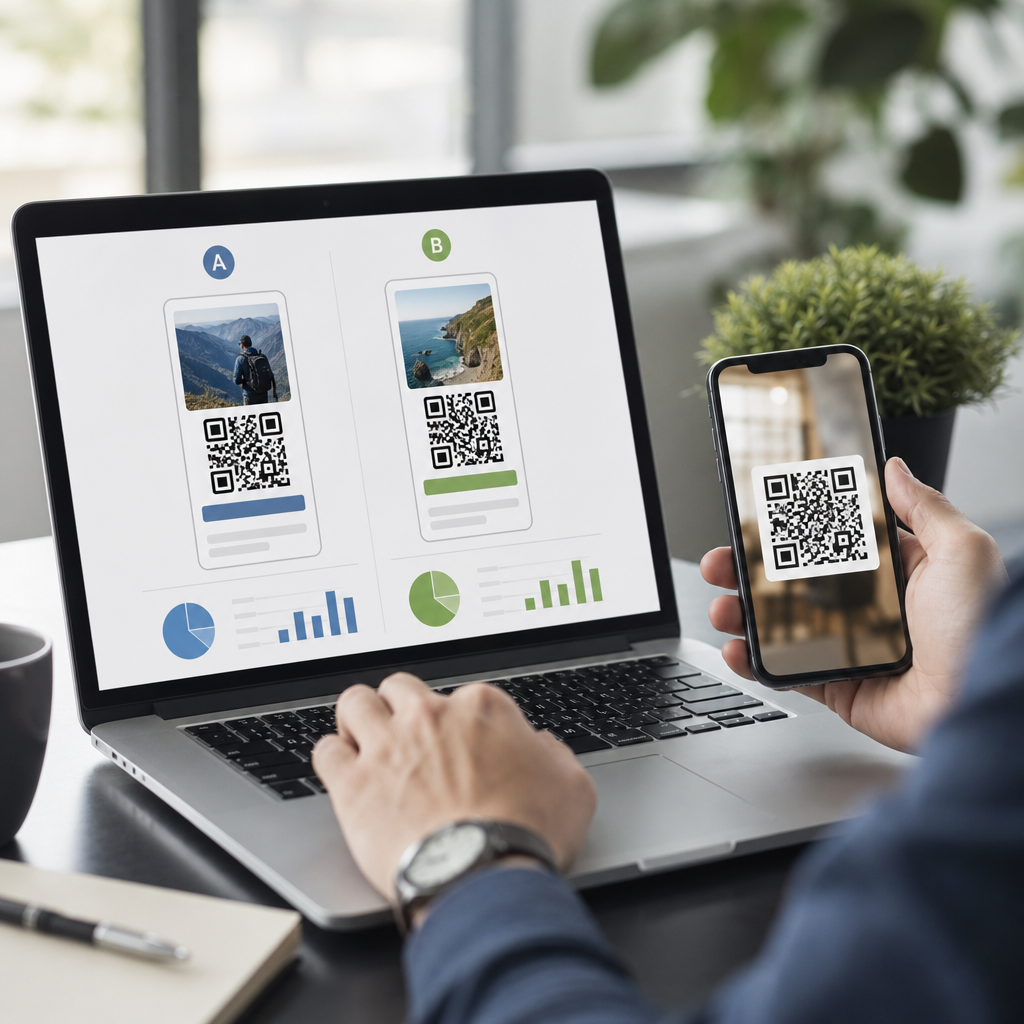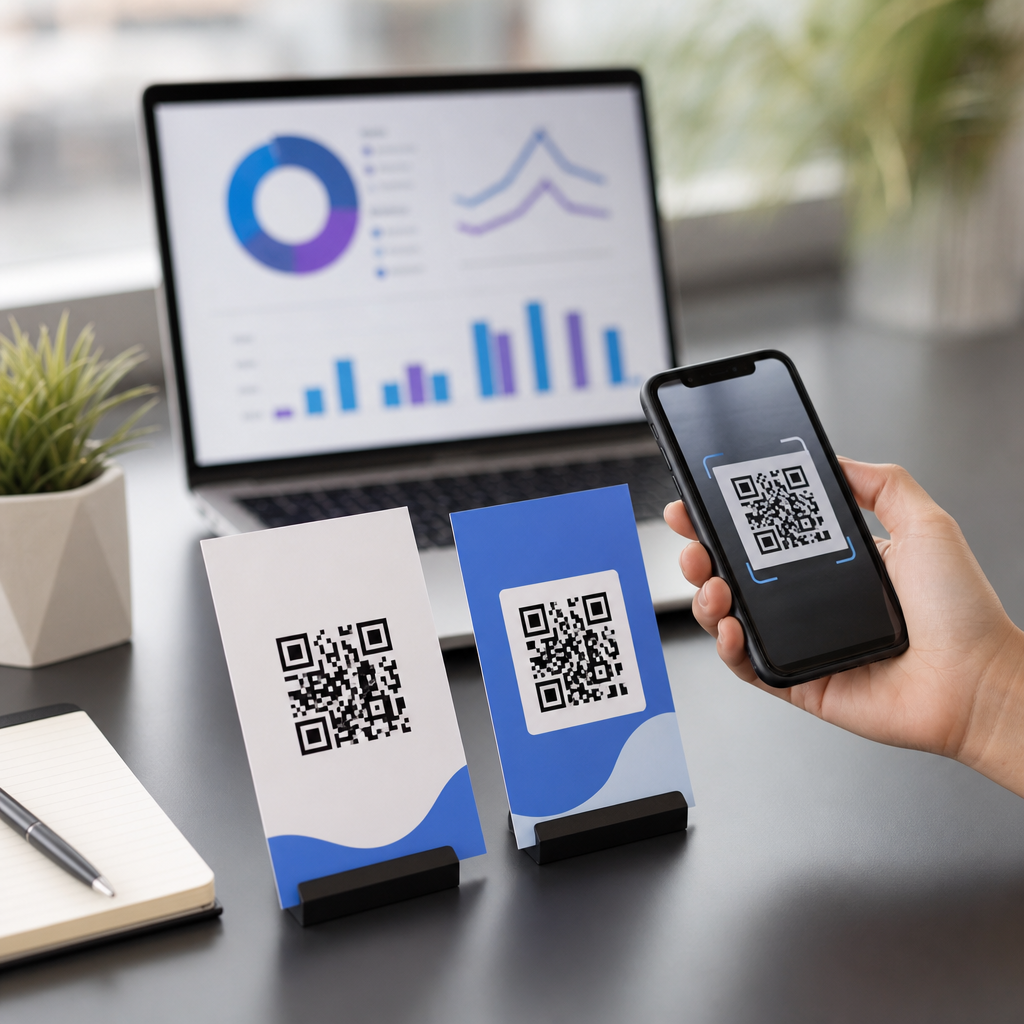

QR codes for real-time content automation turn a static square pattern into a live delivery system that can change what people see, trigger workflows, and personalize information at the exact moment of scan. In practical terms, this means a single code on packaging, signage, manuals, mailers, or event badges can connect users to content that updates without reprinting the asset. Real-time content automation combines dynamic QR codes, rule-based routing, APIs, and AI-assisted decisioning so one scan can lead to different pages, messages, videos, forms, or support paths based on context. I have implemented these systems for campaigns, product operations, and customer support, and the business value is consistent: faster updates, lower print waste, better tracking, and more relevant user experiences. For organizations building advanced QR code strategies, this topic matters because it links physical touchpoints to live digital systems. Instead of treating QR codes as simple links, teams can use them as controllable entry points into content operations, CRM journeys, inventory systems, learning platforms, or service workflows. That shift is what makes this sub-pillar important.
What real-time content automation means in QR code systems
Real-time content automation is the practice of using QR scans as triggers for immediate, conditional content delivery. A dynamic QR code typically resolves through a redirect server before sending the user to a final destination. That redirect layer is where automation happens. It can evaluate time of day, device type, language, campaign source, geography derived from IP, inventory status, or user attributes stored in a connected platform. Based on those conditions, the system routes the visitor to the best next asset. A restaurant can show breakfast before 11 a.m. and lunch after. A manufacturer can route installers to the current PDF manual while sending end users to a short setup video. A healthcare provider can display language-specific intake instructions without posting multiple codes in the same waiting room.
The distinction between static and dynamic QR codes is central. A static QR code contains the final URL directly, so changing content usually requires changing the destination page itself or reprinting the code. A dynamic QR code points to a managed short URL, enabling destination edits, analytics, expiration rules, password protection, and integration with automation tools. In most enterprise deployments, the dynamic layer is nonnegotiable because governance, measurement, and change control matter as much as convenience. Platforms such as Bitly, QR Code Generator PRO, Flowcode, Beaconstac, and Uniqode commonly support dynamic redirects and campaign analytics. On more customized stacks, teams use branded short domains, serverless functions, and API gateways to control scan behavior directly.
How QR codes connect with AI and automation workflows
QR codes become more powerful when connected to automation platforms and AI services. The scan event can pass metadata into Zapier, Make, Microsoft Power Automate, HubSpot workflows, Salesforce Flow, or custom webhook pipelines. That lets organizations trigger actions such as updating a contact record, opening a support ticket, assigning a lead owner, notifying a field rep, or logging a maintenance event. In a warehouse, a worker can scan a shelf label to pull the latest pick instructions and automatically confirm task completion in the warehouse management system. In higher education, a code posted outside a lab can deliver current safety protocols and simultaneously record that a student accessed the document before entry.
AI adds decision support and content generation. Large language models can summarize a long knowledge base article into a scan-friendly version for mobile users. Recommendation models can choose the most relevant offer or help article based on product type and previous engagement. Computer vision can classify a returned item after a scan and serve the appropriate troubleshooting or return instructions. In customer service programs I have worked on, the most effective pattern is not unrestricted AI output but a controlled workflow: the QR scan identifies the context, automation retrieves approved content blocks, and AI helps tailor the presentation, translation, or summarization. This preserves brand consistency and reduces hallucination risk while still improving speed and relevance.
High-value use cases across marketing, operations, and support
Marketing teams use QR codes for real-time content automation to keep campaigns current without replacing printed materials. A code on an in-store display can route shoppers to a landing page that changes by location, inventory, or promotional calendar. During a product launch, the same code can lead early visitors to a waitlist, then switch to a product demo, and later to a discount or retailer finder. At events, badge or booth QR codes can present role-specific content, such as a buyer case study for procurement visitors and a technical specification sheet for engineers. Because scans happen in a physical setting, timing and context are unusually strong signals, which is why conversion rates often improve when routing logic is well designed.
Operations teams use automated QR content to reduce documentation errors and improve compliance. On factory floors, a QR code attached to a machine can resolve to the latest standard operating procedure, maintenance checklist, or lockout-tagout guidance. If a procedure changes, the content owner updates the destination centrally rather than replacing labels across the facility. In field service, a code on an asset can open a technician workflow that checks the serial number, displays service history, and starts a guided diagnostic tree. In hospitality, room or venue codes can provide multilingual instructions, local offers, or housekeeping requests while feeding requests into ticketing systems. These applications save time because the scan both delivers information and initiates the next process step.
Support and post-purchase experiences are another strong fit. A code on packaging can route a customer to setup help based on region, model, and firmware version. If the product has a known issue, the brand can temporarily prioritize a fix article or status update. If not, the code can display onboarding videos, warranty registration, and accessory recommendations. This is especially effective for electronics, medical devices, and industrial products where printed instructions become outdated quickly. The best programs also use progressive profiling: the first scan serves general guidance, while later scans invite registration or personalized recommendations after trust has been established.
Implementation architecture, metrics, and governance
A reliable QR automation stack has five layers: code generation, redirect management, decision logic, content source, and analytics. The code itself should usually use a branded short domain for trust and deliverability. The redirect layer should support HTTPS, low latency, and edit history. Decision logic can live in the QR platform, a rules engine, or a serverless endpoint. Content may come from a CMS, DAM, product information management system, help center, or CRM. Analytics should capture scans, unique users where consent allows, geography, device, destination, conversion, and downstream outcomes. UTM tagging remains useful because it aligns scan traffic with web analytics in Google Analytics 4 or Adobe Analytics.
| Component | Best practice | Why it matters |
|---|---|---|
| Dynamic code | Use editable redirects on a branded domain | Enables updates, trust, and measurement |
| Routing logic | Apply rules for time, location, language, and audience | Improves relevance at scan time |
| Content source | Connect to CMS or knowledge base APIs | Keeps information current without reprinting |
| Automation | Trigger workflows through webhooks or integration tools | Links scans to CRM, support, or operations tasks |
| Governance | Control permissions, versioning, and audit trails | Reduces compliance and brand risk |
Measurement should go beyond scan volume. The critical metrics are scan-to-action rate, assisted conversion rate, content completion, bounce rate by destination, repeat scans, and time to update. For service use cases, I also track ticket deflection, first-time fix rate, and reduction in outdated document access. Governance matters because QR codes can become orphaned links if ownership is unclear. Every code should have a named owner, destination policy, review cadence, and archival rule. Security is equally important. Public QR codes should never expose sensitive identifiers in plain text, and any personalized destination should rely on tokenized URLs, authenticated sessions, or time-bound access. For regulated sectors, teams should document consent, data retention, and accessibility requirements, including WCAG-friendly landing pages and readable alternatives for users who cannot scan easily.
Common pitfalls and how to build a scalable hub strategy
The most common mistake is treating the QR code as the strategy instead of the entry point. If the landing experience is slow, generic, or confusing, the scan adds friction rather than value. Another mistake is overpersonalizing without enough signal. Approximate location and device type are useful; guessing intent too aggressively often sends users to the wrong place. I also see teams ignore print testing. Quiet zone, error correction level, contrast ratio, and placement affect scan reliability, especially on curved packaging, glossy surfaces, or long-distance signage. Codes should be tested across iOS and Android camera apps, under realistic lighting, and at expected viewing distances.
As a sub-pillar hub within advanced QR code strategies, this topic should connect closely to supporting articles on dynamic versus static codes, QR analytics, QR code security, API-driven QR management, personalized landing pages, marketing automation, AI content operations, and compliance. The hub role is to give decision-makers the full model: QR codes are not only scannable links but programmable interfaces between offline intent and live digital systems. Start with one high-frequency use case, such as packaging support or event lead capture, define the routing logic, connect the content source, and measure outcomes that matter to the business. Then expand carefully, with clear governance and documented standards. When done well, QR codes for real-time content automation reduce reprint costs, shorten update cycles, improve relevance, and create a measurable bridge between the physical world and modern automation. Audit your current QR inventory, identify any static codes tied to changing information, and prioritize the first workflow you can automate this quarter.
Frequently Asked Questions
1. What are QR codes for real-time content automation, and how do they work?
QR codes for real-time content automation are typically dynamic QR codes connected to a cloud-based destination rather than a fixed, permanent URL. Instead of sending every scanner to the exact same static page forever, the code points to a controllable routing layer that can decide what content, workflow, or experience to deliver at the moment of scan. That decision can be based on rules such as time of day, device type, language, geography, campaign source, product SKU, or user status. In more advanced setups, the QR code platform can also connect to APIs, CRM systems, inventory tools, event software, customer support platforms, and AI models to shape the next step in real time.
In practice, that means a single QR code printed on packaging, signage, manuals, direct mail, or badges does not have to be reprinted every time the content changes. A brand can update product instructions, swap promotional offers, localize a landing page, trigger lead routing, launch a support chatbot, or display different information depending on live business conditions. For example, a code on product packaging could send first-time buyers to onboarding content, while existing customers are routed to replenishment options or support resources. The square pattern stays the same, but the experience behind it remains flexible, measurable, and continuously optimized.
2. Why use real-time content automation instead of a traditional static QR code?
The biggest advantage is adaptability. A static QR code is locked to one destination, which means any mistake, expired campaign, outdated PDF, or changed web address can create friction and force a reprint. Real-time content automation removes that rigidity by allowing marketers, operations teams, and product owners to update what the code does without touching the printed asset. That is especially valuable when QR codes appear on expensive or long-lived materials such as product packaging, retail displays, trade show signage, user manuals, restaurant tables, and direct mail pieces.
Beyond flexibility, automation adds intelligence and business value. Instead of merely linking to a page, the scan can start a process. A code can assign a sales lead, log a service request, deliver region-specific compliance content, present inventory-aware offers, or personalize content based on customer data. This turns QR codes from simple shortcuts into responsive entry points for customer journeys. It also improves analytics because teams can track scan volume, location patterns, device trends, conversion events, and routing outcomes. In short, static QR codes are useful for basic linking, but real-time automated QR codes are better suited for environments where content changes frequently, personalization matters, and measurable workflows drive results.
3. What kinds of use cases are best suited for QR codes tied to real-time automation?
They work best anywhere a physical touchpoint needs to connect to digital content that may change over time. On product packaging, a single code can deliver setup instructions, safety information, multilingual content, warranty registration, batch-specific notices, or promotional journeys based on product line and market. In retail and out-of-home advertising, the same printed sign can point users to location-aware landing pages, current inventory, local store hours, or limited-time offers. For printed manuals and inserts, a QR code can reduce reprint costs by linking to the latest documentation, video tutorials, support articles, and software updates.
Event and field operations are also strong fits. Badges, booth displays, and venue signage can use automated QR logic to trigger check-in flows, session-specific agendas, lead capture, networking experiences, or post-event follow-up. In healthcare, manufacturing, logistics, and service environments, a QR code can connect staff or customers to real-time forms, maintenance records, authentication steps, training content, or case escalation workflows. Direct mail campaigns benefit as well because one code can route recipients to personalized landing pages, segmented offers, or appointment booking flows. Any use case that involves changing information, multiple audience types, workflow automation, or the need to learn from scan behavior is a strong candidate.
4. How do APIs and AI improve a real-time QR code automation strategy?
APIs make QR code automation operationally useful because they allow the scan event to interact with other business systems. A QR platform can pass data to a CRM, marketing automation platform, customer support desk, e-commerce engine, inventory database, event registration system, or internal application. That means a scan can do more than open content; it can create records, update customer profiles, check stock, validate tickets, trigger notifications, or launch a workflow. APIs are what connect the physical scan to the rest of the digital business stack, making the experience timely, coordinated, and measurable.
AI adds a decision layer that helps optimize what happens next. Instead of relying only on simple if-then rules, AI can assist with recommending the best content, summarizing product information, translating responses, powering chat interfaces, detecting intent, or prioritizing next actions based on context. For example, if a user scans a code on a technical product manual, AI could surface the most likely troubleshooting article based on product model, previous support history, and language preferences. In a marketing scenario, AI could help select the most relevant offer for a given segment or predict which landing page is most likely to convert. Used responsibly, AI improves speed, relevance, and personalization, while APIs ensure those decisions can trigger meaningful downstream actions across the organization.
5. What should businesses consider when implementing QR codes for real-time content automation?
Start with strategy before technology. The most successful implementations define the purpose of the scan, the audiences involved, the conditions that should influence routing, and the business outcomes that matter. Teams should decide whether the goal is education, conversion, service, compliance, registration, reordering, authentication, or workflow activation. From there, it helps to map the decision logic clearly: what happens for different locations, products, languages, dates, customer statuses, or campaign sources. Strong governance is important too, especially when many departments may update destinations or automation rules over time.
Execution details matter just as much. Businesses should choose a reliable dynamic QR infrastructure, ensure mobile landing pages load quickly, and design for a smooth experience after the scan. Tracking and reporting should be built in from the start so scan data can be tied to conversions and operational outcomes. Security and privacy also deserve close attention, particularly when QR codes connect to customer data, regulated information, or authenticated experiences. It is wise to use secure redirects, permission-based integrations, and clear consent practices where needed. Finally, teams should test extensively across devices, environments, and user scenarios. A well-implemented real-time QR automation program is not just about making a code editable; it is about creating a resilient, context-aware bridge between physical assets and live digital experiences that can evolve with the business.