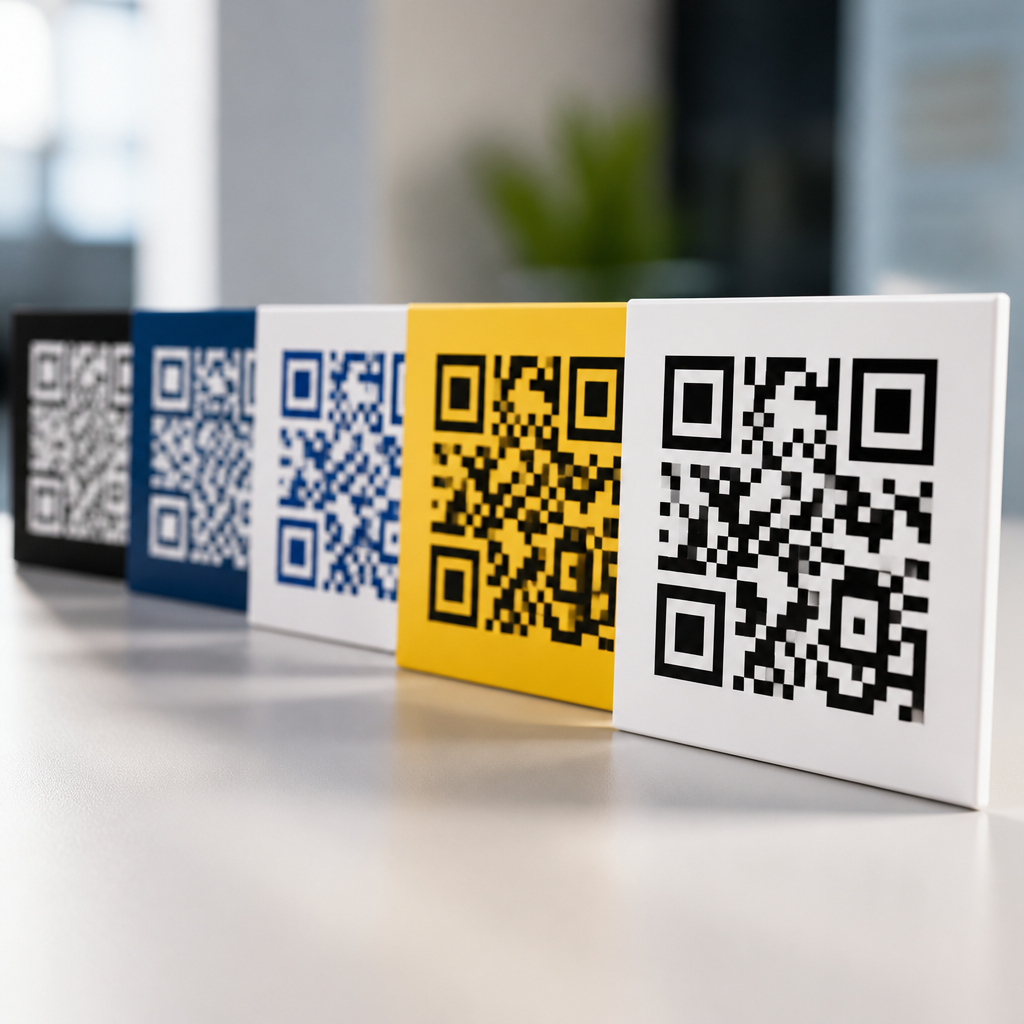
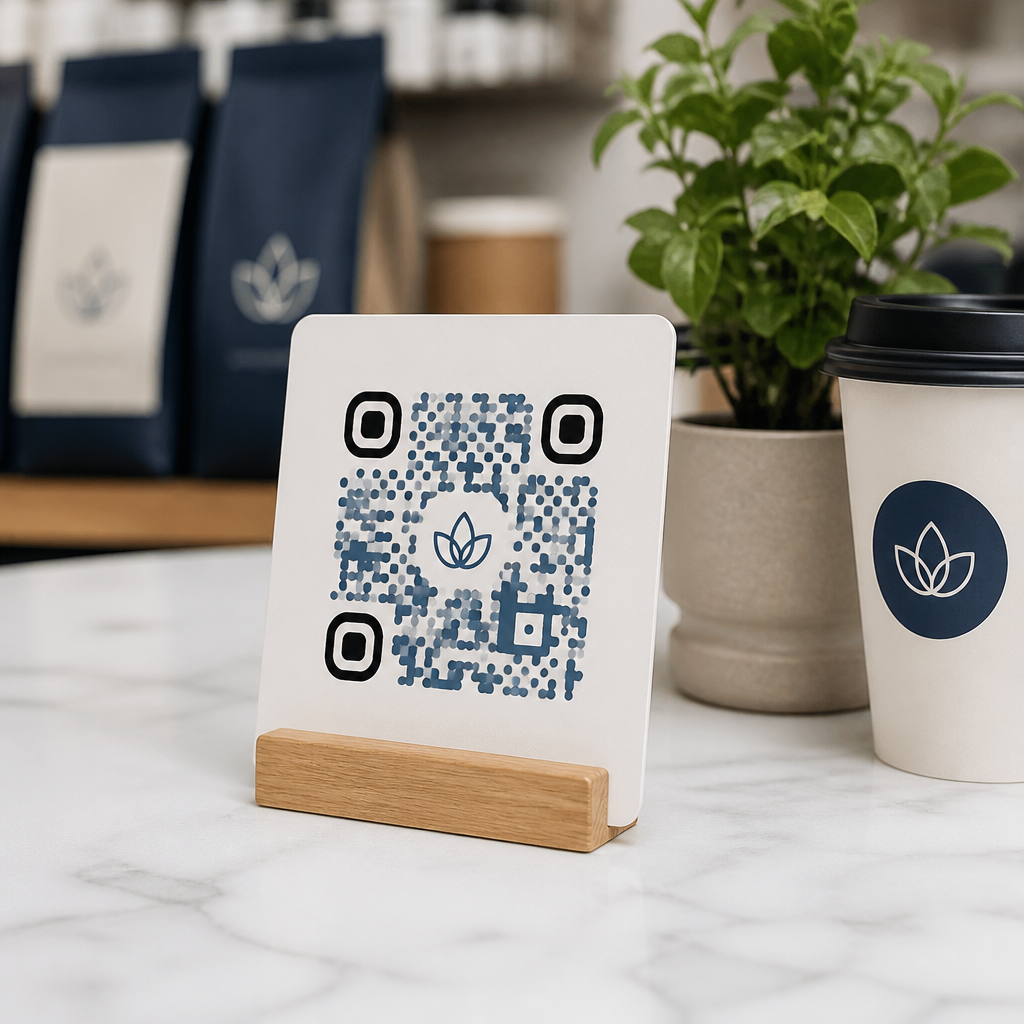
Creative branded QR code examples show how a simple scannable square can become a recognizable brand asset, a conversion tool, and a measurable part of customer experience. A branded QR code is a Quick Response code customized with visual identity elements such as logo placement, brand colors, custom frames, CTA text, and destination-specific design. Unlike plain black-and-white codes, branded versions are built to attract attention without sacrificing scan reliability. That balance matters because QR codes now sit everywhere customers make decisions: packaging, menus, storefront windows, direct mail, product inserts, event signage, app onboarding flows, and connected TV ads. When I have tested campaigns across retail, hospitality, and SaaS, the strongest results came from codes designed as part of the brand system rather than treated as a last-minute utility graphic. This topic matters because QR adoption is no longer experimental. Smartphone camera scanning is native on iOS and Android, and consumers understand the behavior. The challenge has shifted from “What is a QR code?” to “Why should I scan this one, and can I trust where it leads?” Effective branding answers both questions instantly by signaling legitimacy, clarifying value, and reducing hesitation.
For teams working within Mobile QR Code Design & UX, branding with QR codes is the hub discipline that connects visual design, destination strategy, analytics, accessibility, and physical placement. A QR code is only successful when three things happen in sequence: a person notices it, believes it is worth scanning, and lands on a mobile experience that fulfills the promise. Strong branded execution improves the first two steps dramatically. It also supports channel attribution when paired with dynamic QR platforms such as Bitly, QR Code Generator PRO, Flowcode, Beaconstac, or Adobe Express workflows. The sections below explain what high-performing branded QR codes look like, where they work best, and which design decisions consistently separate attractive codes from codes that fail in the field.
What Makes a Branded QR Code Effective
An effective branded QR code combines visual identity with technical readability. The nonnegotiable requirements are adequate contrast, a preserved quiet zone, error correction that supports customization, and a landing page optimized for mobile speed. ISO/IEC 18004 defines the QR Code standard, and while designers do not need to memorize the specification, they do need to respect its practical implications. If a code uses low contrast, crowds the edges, or distorts finder patterns too aggressively, scan rates drop fast. In my experience, teams often over-focus on making the code look clever and under-focus on the scanning environment: glare on packaging film, distance from the viewer, low light in restaurants, or wrinkled labels on curved bottles. The best branded examples look distinctive from six feet away and still scan on the first attempt.
Direct calls to action are equally important. “Scan me” is weaker than “Scan for assembly video,” “Scan to see shades on skin,” or “Scan for 15% off today.” The CTA tells users what they will get and whether the effort is worthwhile. The destination must match that promise exactly. If a food package says “Scan for recipes,” the code should not land on a generic homepage. It should open a mobile recipe hub tied to that product. This is where branding becomes functional, not decorative. Design, message, and destination work as one experience.
Creative Branded QR Code Examples by Use Case
Retail packaging offers some of the clearest branded QR code examples because the code can extend shelf presence beyond the box or label. A cosmetics brand might place a rose-gold code beside a lipstick shade chart with the CTA “Scan to try on live.” The code includes a centered logo, uses high-contrast dark plum modules on a pale background, and opens directly to a WebAR shade tool. The branding assures shoppers it is official, while the destination reduces purchase uncertainty. Beauty, furniture, and consumer electronics brands use this pattern effectively because mobile demonstration content closes gaps that in-store signage cannot.
Restaurants often use QR codes poorly by posting generic black squares on tables with no explanation. A better example is a café that frames the code in its signature color, adds “Scan to order ahead and earn points,” and routes diners to a fast-loading menu with Apple Pay and Google Pay enabled. The code is not merely decorative; it shortens lines, increases average order value through add-ons, and ties every scan to loyalty growth. Hotels apply the same principle in-room. A tent card with a branded code for “Late checkout, room service, and local guides” can reduce front-desk call volume while improving guest convenience.
Events and experiential marketing provide another strong category. I have seen trade show booths improve lead quality by separating intents into multiple branded codes: one for a product demo, one for the spec sheet, and one for booking a post-show consultation. Each code looked visually related but had its own CTA and analytics stream. That approach outperformed a single catch-all landing page because it matched visitor intent in the moment. On stage backdrops and print collateral, distinct branding also helps attendees remember the source after the event ends.
| Use case | Creative branding approach | Best destination | Main success metric |
|---|---|---|---|
| Product packaging | Logo center, product color palette, benefit-led frame | How-to video, warranty, recipes, AR demo | Scans per unit sold |
| Restaurant table or takeaway bag | Bold CTA and loyalty branding | Mobile menu, reorder flow, rewards signup | Orders and repeat visits |
| Retail window | Large high-contrast code visible after hours | Store locator, appointment booking, promo page | Off-hours conversions |
| Direct mail | Personalized design tied to campaign theme | Tracked landing page with offer code | Response rate |
| Trade show booth | Multiple branded codes by visitor intent | Demo booking, datasheet, contact capture | Qualified leads |
Design Principles That Protect Scan Performance
Creative branding should never obscure the structural elements scanners rely on. Keep the three finder patterns recognizable, maintain a quiet zone of at least four modules, and favor dark modules on a light background. In controlled tests, subtle color customization usually scans well, but reversing the code to light modules on a dark background is less dependable across older devices and poor lighting. Rounded modules, gradients, and embedded logos can work, especially when error correction is set to level H, yet they should be validated on multiple phones before launch. Testing should include iPhone and Android devices, native camera apps, and common scan distances.
Size and placement are practical design decisions that affect performance more than many teams realize. A useful rule is ten-to-one: the scanning distance should be no more than ten times the code width. A 2-inch code is comfortable around 20 inches away, while a poster viewed from ten feet needs a much larger mark. Curved surfaces, reflective laminates, and low-contrast printing demand larger codes and stronger margins. For accessibility, pair the code with a short URL and plain-language instructions. Not every user can or wants to scan, and fallback paths improve inclusivity and campaign resilience.
Brand Trust, Measurement, and Governance
Branding with QR codes is also a trust and operations discipline. People are cautious because malicious codes can redirect to phishing pages. Official visual identity, clear destination language, and domains users recognize reduce that fear. I recommend dynamic QR codes managed through a central platform so teams can update destinations without reprinting assets, add UTM parameters consistently, and monitor scan data by channel. Governance matters here. Without naming conventions, expiration policies, and ownership rules, organizations end up with orphaned codes, broken links, and conflicting visual styles across markets.
Measurement should go beyond raw scans. Evaluate scan-through rate by impression source, landing page bounce rate, downstream conversions, assisted revenue, and device breakdown. If a printed insert generates many scans but few completions, the issue may be page load speed, not the code itself. Google Analytics 4, Adobe Analytics, Mixpanel, and CRM integrations can connect scans to revenue or retention outcomes. Strong teams also annotate physical variables, such as placement height, store region, print material, and CTA wording. Those details explain performance differences better than creative opinion alone and turn QR branding into a repeatable optimization program.
How This Hub Connects the Wider Subtopic
As the hub page for Branding with QR Codes, this article ties together the disciplines that sit underneath effective execution. Color selection belongs with scan reliability. Logo placement belongs with error correction and testing. CTA writing belongs with mobile landing page relevance. Placement strategy belongs with viewing distance, glare, and context of use. Analytics belongs with dynamic code management and campaign taxonomy. In practice, these are not separate tasks handled in isolation. They are parts of one mobile experience system, and branded QR code examples are useful because they reveal how each decision affects user behavior.
The main lesson is straightforward: the best creative branded QR codes are not the fanciest-looking ones. They are the codes that express brand identity clearly, communicate a precise benefit, scan instantly in real conditions, and lead to a mobile page that completes the task fast. Use branding to increase confidence, not to show off. Test every design on multiple devices, map each code to a single user intent, and measure what happens after the scan. If you are building out your Mobile QR Code Design & UX strategy, start by auditing every live code against those standards, then create templates your team can deploy consistently across packaging, print, retail, hospitality, and events.
Frequently Asked Questions
What is a branded QR code, and how is it different from a standard QR code?
A branded QR code is a customized Quick Response code that includes visual identity elements such as a company logo, brand colors, a custom frame, short call-to-action text, or a design style matched to a specific campaign. A standard QR code is usually a plain black-and-white square designed only for function. The main difference is that a branded QR code is created to support both scan performance and brand recognition at the same time.
That matters because people are more likely to scan a code when they understand where it will take them and when it looks intentionally connected to a brand they already know. A well-designed branded QR code can signal trust, improve visual consistency across packaging and marketing materials, and make the code feel like part of the customer experience rather than an afterthought. The best examples do not simply decorate the code. They use branding strategically while preserving contrast, quiet space, and error correction so the code remains fast and reliable to scan.
What are some creative branded QR code examples businesses can use in real campaigns?
Creative branded QR code examples can appear across many customer touchpoints. On product packaging, a code can include the brand logo in the center and send customers to tutorials, recipes, product registration pages, or loyalty rewards. In retail displays, a framed QR code with action-driven text such as “Scan to See It in Your Space” or “Unlock Today’s Offer” can connect physical browsing to digital conversion. Restaurants often use branded QR codes on table tents, takeout bags, and menus to guide diners to ordering, reviews, or limited-time promotions while keeping the brand visible.
Event marketers use them on badges, signage, and printed programs to drive app downloads, schedules, lead capture, or sponsor activations. Real estate brands place customized QR codes on yard signs and brochures to launch virtual tours. Beauty, fashion, and lifestyle brands often use visually styled QR codes in magazine ads or influencer kits to connect print and social campaigns. Even service businesses can create memorable versions for invoices, business cards, and storefront windows. The most effective examples match the code’s design and destination to a single clear objective, so the customer immediately understands why scanning is worth their time.
How can you make a QR code look creative without hurting scan reliability?
The key is to treat design as enhancement, not decoration for its own sake. A QR code still needs strong contrast between the foreground and background, enough quiet space around the edges, and a clean structure that phone cameras can read quickly. If you add a logo, it should be sized carefully so it does not block too much of the underlying pattern. Brand colors can work well, but they should maintain sufficient contrast. Light gray on white, for example, may look elegant but often performs poorly in real-world scanning conditions.
Using dynamic QR code generators, built-in error correction, and testing across multiple devices can help preserve reliability while allowing more creative freedom. Frames and call-to-action labels are especially useful because they improve visibility and communicate intent without interfering with the core code structure. It is also smart to consider placement, print size, material finish, and lighting conditions. A code on glossy packaging, curved bottles, or outdoor signage may require larger sizing and simpler styling. The strongest branded QR code examples look polished and distinctive, but they are always tested in the environments where customers will actually scan them.
Why do branded QR codes often perform better than plain QR codes?
Branded QR codes often perform better because they reduce uncertainty and increase attention. A plain code can be easy to ignore, especially in crowded visual environments where customers do not immediately know what will happen after scanning. A branded version gives context. When users see familiar colors, a recognizable logo, and a short prompt such as “Scan for 15% Off” or “Watch the Demo,” the code becomes clearer, more credible, and more compelling.
They also support a stronger overall brand experience. Instead of feeling like a generic utility, the QR code becomes part of the campaign or product presentation. That can improve engagement rates, encourage repeat interactions, and help businesses maintain consistency from offline materials to mobile landing pages. Branded QR codes are especially effective when paired with destination-specific design, meaning the code’s appearance and CTA reflect the exact content behind the scan. When customers receive what the design promised, trust grows, and conversion potential improves. In that sense, better performance is not just about style. It is about alignment between branding, message, and user intent.
What should businesses measure when using branded QR codes in marketing?
Businesses should measure far more than total scan count. A complete view includes unique scans, repeat scans, time and location of engagement, device type, conversion rate, bounce rate, and the actions users take after landing on the destination page. If a branded QR code is tied to a promotion, marketers should track redemptions, purchases, form fills, sign-ups, downloads, or booked appointments. These metrics help determine whether the code is simply attracting attention or actually driving meaningful business outcomes.
It is also useful to compare performance across placements, designs, and calls to action. A QR code on packaging may generate higher repeat engagement, while one on a point-of-sale display may produce more immediate conversions. Dynamic QR codes are particularly valuable because they allow brands to update destinations without reprinting the code and provide better campaign-level analytics. Over time, businesses can use the data to refine creative direction, messaging, landing page experience, and channel strategy. The most successful branded QR code programs treat each scan as a measurable step in the customer journey, not just a novelty interaction.