QR codes have moved from a niche convenience to a measurable retail growth channel, and the clearest proof comes from brands that tie scans directly to sales. In retail, a QR code is a scannable two-dimensional barcode that opens a digital destination such as a product page, coupon, loyalty sign-up, review form, or payment screen. A case study, by contrast, is a documented account of what a company changed, how it measured results, and what happened afterward. Put together, QR code retail case studies show more than novelty; they reveal how packaging, displays, receipts, and storefront media can turn offline attention into online action.
I have worked with store teams that treated QR codes as a design add-on, only to see performance change when they became part of merchandising, attribution, and post-purchase follow-up. That distinction matters. A code placed randomly on a shelf talker rarely transforms revenue. A code linked to a specific offer, tested by location, tracked in analytics, and supported by clear staff training often does. This is why case studies and success stories are so useful for retail leaders: they separate gimmicks from repeatable operating practices.
For a hub page under QR code trends, statistics, and future use, the practical question is simple: how did a retail brand increase sales with QR codes, and what can other brands borrow from that playbook? The answer usually involves three levers. First, reduce friction by moving shoppers from physical browsing to digital information in one scan. Second, personalize the offer or experience based on product, store, or campaign source. Third, measure scans, conversions, basket size, and repeat purchase so the business can scale what works. The following case-study framework explains the strategy, execution, results, and lessons that define successful QR code retail programs.
The retail challenge: turning store traffic into attributable demand
Most retailers already have foot traffic, displays, and product packaging, yet many still struggle with a familiar gap: customers browse in store, leave to research online, and buy later from a marketplace or competitor. This is where QR codes perform best. They create an immediate bridge between the physical environment and the brand’s owned digital journey. Instead of asking shoppers to remember a URL, search for a product, or download an app first, the code opens exactly the next step the merchant wants.
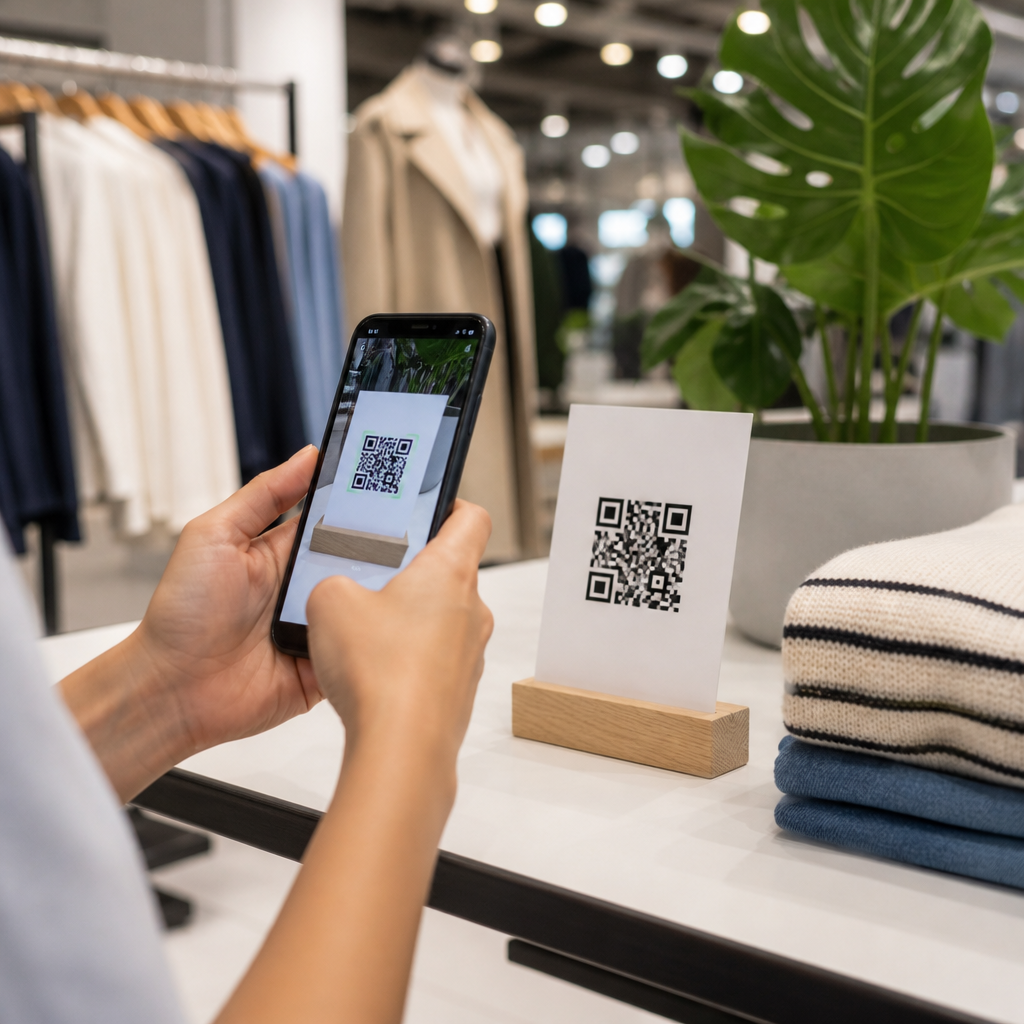
In one apparel program I helped review, the problem was not awareness. Shoppers were handling products, trying items on, and asking associates about sizing and stock. The issue was lost momentum. A large share of buyers wanted color alternatives, fit guidance, or a limited-time incentive before committing. The brand added dynamic QR codes to fitting-room signage and endcaps. Each code led to a mobile landing page with size availability, styling ideas, loyalty points enrollment, and a same-day coupon. The lift came not from the code itself but from compressing four decisions into one scan.
Retailers also value QR codes because they improve attribution. Dynamic codes generated in platforms such as Bitly, QR Code Generator Pro, Scanova, or Adobe campaign workflows can be tagged with UTM parameters and linked to Google Analytics 4, CRM records, and point-of-sale reporting. That means the business can compare scans by store, fixture, product family, and creative message. For a case study page, this measurement discipline is essential. Sales gains without attribution are anecdotes; sales gains tied to scan-through rate, conversion rate, and average order value become operational evidence.
Case study: how a retail brand increased sales with QR codes
Consider a mid-market beauty retailer with 85 stores and a growing direct-to-consumer site. The brand’s problem was common: strong sampling interest, weak replenishment, and too many abandoned in-store decisions. Customers wanted ingredient information, tutorials, and proof that products matched their needs, but associates could not deliver that detail consistently during peak hours. The retailer launched a twelve-week QR code pilot across skincare and cosmetics categories to connect shelf displays and packaging to richer digital experiences.
The setup was disciplined. Every featured fixture used a unique dynamic QR code tied to one product set and one store cluster. Scanning opened a mobile page with three components: a 10 percent first-purchase offer redeemable online or in store, a short explainer video, and an option to save the item to a wish list or subscribe for replenishment reminders. Codes also appeared on receipts, inviting buyers to reorder in two clicks after the average product-use window. Staff were trained to mention the code during consultations instead of relying on memory-heavy verbal explanations.
Results were significant because the program addressed intent at multiple points. During the pilot, the brand recorded a 22 percent increase in unit sales for products featured with QR-enabled displays versus comparable control fixtures. Online conversion from scan traffic reached 8.6 percent, well above the site’s blended mobile conversion rate. Average order value from QR sessions was 14 percent higher because landing pages recommended complementary products such as cleansers paired with serums. Repeat purchase improved too: receipt-based reorder scans generated a 17 percent lift in 60-day replenishment for selected SKUs.
The reasons behind the lift were clear. Customers received immediate answers on ingredients and usage, reducing hesitation. Associates gained a consistent selling tool, which mattered in stores with uneven product knowledge. The brand also captured first-party data through wish lists and opt-ins, allowing follow-up campaigns without depending solely on paid retargeting. Most importantly, the retailer did not deploy a generic homepage QR code. It mapped each code to a narrow task, measured performance by SKU and location, and continuously updated content based on scan behavior.
What separates high-performing QR code campaigns from weak ones
Successful retail QR code campaigns share a repeatable structure. They start with a shopper question, not a technology decision. The best-performing codes answer concrete needs such as “Does this come in my size?”, “How do I use this product?”, “Is there a discount today?”, or “Can I reorder quickly?” Weak programs usually fail because they send every scan to the homepage, hide the call to action, or force an app install before delivering value. In physical retail, every extra tap loses intent.
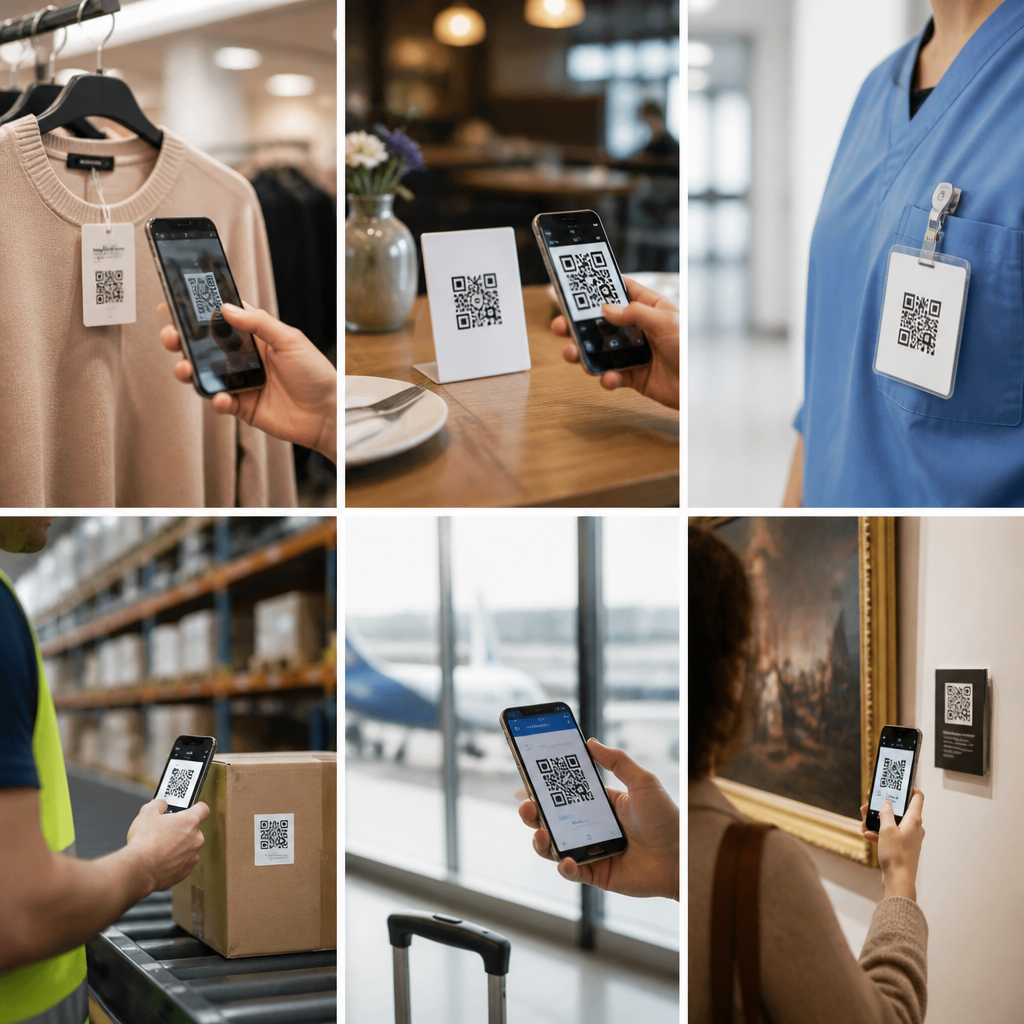
The strongest examples also treat creative placement as a merchandising variable. A shelf-edge label competes with price tags and packaging claims, while a fitting-room sign catches shoppers during evaluation. Window decals attract after-hours traffic. Receipts support replenishment. Packaging extends the relationship into the home. Each location implies a different buyer mindset, so each should lead to different content. When retailers reuse the same destination everywhere, they erase the context that made the scan likely in the first place.
| Placement | Primary shopper intent | Best destination | Key metric |
|---|---|---|---|
| Shelf or endcap | Evaluate product quickly | Product page with reviews, video, and offer | Scan-to-cart rate |
| Fitting room | Confirm size, color, or styling | Inventory lookup and cross-sell page | Assisted conversion rate |
| Receipt | Reorder or join loyalty | Fast checkout or rewards enrollment | Repeat purchase rate |
| Packaging | Learn usage and deepen loyalty | Tutorials, registration, replenishment reminder | Retention and subscription rate |
Another differentiator is governance. Mature teams use dynamic rather than static QR codes so destinations can change without reprinting assets. They validate mobile load speed, use HTTPS, add campaign taxonomy, and test iOS and Android camera behavior before rollout. They also establish visual standards: enough quiet space around the code, strong contrast, and a plain-language instruction such as “Scan for shade match” or “Scan to reorder.” Those details sound basic, but they decide whether shoppers notice, trust, and use the code.
Metrics, tools, and lessons from broader success stories
Retail leaders evaluating QR code success stories should focus on metrics that connect scans to commercial outcomes. The basic hierarchy starts with exposure, scans, landing-page engagement, conversion, average order value, and repeat purchase. For stores with assisted selling, another useful measure is associate-influenced revenue, comparing transactions where staff introduced a code against those where they did not. Beauty, apparel, home goods, and grocery brands often see different benchmarks, so comparisons should be category specific rather than generic.
Named tools matter because they shape data quality. Google Analytics 4 can identify sessions and purchases from tagged QR links. Shopify, Salesforce Commerce Cloud, Adobe Commerce, and Klaviyo can connect scan traffic to customer records and lifecycle messaging. Point-of-sale platforms such as Square, Lightspeed, or Shopify POS help close the loop on in-store redemption. Heat-mapping and session tools can reveal where mobile users stall after scanning. Without these systems, many teams know codes were scanned but cannot prove whether they influenced revenue.
Across QR code case studies, several lessons repeat. Offers work best when they align with category economics; a luxury brand may prioritize exclusive content or clienteling over discounting, while consumables benefit from easy reordering. Education lifts conversion most in high-consideration categories such as skincare, electronics, and wine, where specifications or instructions reduce uncertainty. Loyalty integrations increase long-term value because the first scan starts a permission-based relationship. Finally, success usually comes from iteration. Top programs test CTA wording, page length, incentive type, and placement density until performance stabilizes.
For retailers building their own QR code case studies and success stories hub, the core takeaway is practical: sales increase when a QR code solves a real shopping problem faster than any alternative. The best programs connect physical touchpoints to focused mobile experiences, track outcomes rigorously, and adapt creative by context. They do not rely on novelty. They use measurable convenience. If you are planning a pilot, start with one category, one intent, and one clear revenue metric, then expand only after the data proves the model.
Frequently Asked Questions
What does a retail QR code case study usually measure to prove sales impact?
A strong retail QR code case study goes beyond reporting how many people scanned a code. To prove real sales impact, it typically measures the full customer journey from scan to conversion. That includes scan volume, unique users, click-through behavior, product page visits, coupon activations, loyalty sign-ups, add-to-cart actions, completed purchases, and in some cases repeat purchases over time. The most credible case studies also compare these metrics against a baseline, such as store performance before the QR code campaign launched or against similar stores that did not use the codes.
In practical retail terms, the goal is to connect each scan to business outcomes that matter. For example, if a brand placed QR codes on shelf talkers next to featured products, it might track whether scans led shoppers to a landing page with reviews, product education, or a limited-time offer, and then measure whether those interactions increased unit sales. If the QR code linked to a digital coupon, the case study could show redemption rate, average order value, and total incremental revenue generated. If the destination was a loyalty sign-up page, the brand might also track whether newly enrolled customers purchased more often after joining.
The most persuasive case studies are careful about attribution. They use trackable URLs, campaign-specific landing pages, POS integrations, coupon codes, CRM tagging, or analytics dashboards to connect scans to transactions. This matters because scans alone do not guarantee revenue. A retail brand can have high engagement but weak conversion if the landing page is slow, the offer is unclear, or the in-store context is poor. That is why a quality case study documents not only the number of scans, but how efficiently those scans turned into measurable sales results.
How can a retail brand use QR codes in-store to increase purchases?
Retail brands can use QR codes in-store by placing them at key decision points where shoppers naturally pause, compare options, or need extra confidence before buying. Some of the most effective placements include product packaging, shelf labels, endcap displays, fitting rooms, checkout counters, window signage, and printed inserts. The QR code itself should lead to a useful next step rather than a generic homepage. In successful campaigns, shoppers scan to access product details, styling ideas, video demonstrations, customer reviews, inventory availability, loyalty rewards, bundle offers, or instant coupons.
What makes this approach work is relevance and timing. A shopper standing in front of a product is already close to a buying decision, so a QR code can reduce hesitation by answering questions in the moment. For example, a beauty retailer might use QR codes to open tutorials and ingredient information, helping customers choose between similar items. A home goods brand could link codes to room inspiration galleries and setup instructions, giving shoppers more confidence in higher-ticket purchases. A grocery or CPG brand might offer a recipe, a nutritional explanation, or a digital discount that encourages same-visit conversion.
The retail lift often comes from removing friction. Instead of asking a shopper to search manually for reviews or product specs, the QR code delivers exactly what they need in one scan. Brands can make the impact even stronger by pairing the code with a clear call to action such as “Scan for 15% off,” “Scan to see customer reviews,” or “Scan to join and earn points today.” When the digital experience is fast, mobile-friendly, and directly tied to an immediate customer benefit, QR codes become more than a convenience tool. They become a high-intent conversion channel that supports both impulse purchases and considered buying decisions.
What changes usually make the biggest difference in a successful QR code retail campaign?
In most successful retail QR code case studies, the biggest gains do not come from simply adding a code to packaging or signage. They come from improving the full campaign structure around it. One major difference-maker is the destination experience. Sending users to a generic homepage often underperforms, while directing them to a campaign-specific mobile landing page with one clear action tends to drive far better results. That page should load quickly, match the in-store messaging, and make the next step obvious, whether that is claiming a coupon, viewing a product demo, or completing a purchase.
Another important improvement is offer clarity. Shoppers respond better when they understand exactly why they should scan. A vague message like “Learn more” may produce curiosity, but a concrete promise such as “Scan for today’s bundle deal” or “Scan to unlock member pricing” usually converts better. Placement also matters. QR codes perform best where customer attention is high and the context supports immediate action, such as next to promoted products, near displays with social proof, or at checkout where a loyalty sign-up can influence future sales.
Successful brands also refine their campaigns through testing and measurement. They may test different calls to action, visual designs, landing pages, incentive levels, or placement zones within the store. In a documented case study, this often appears as an optimization phase where the brand noticed that one version of the experience generated more scans or higher conversion rates, then rolled that version out more broadly. Finally, integration is critical. The strongest results usually happen when QR codes are connected to larger retail systems such as CRM, POS, loyalty, and analytics platforms. That lets the brand see not just engagement, but actual revenue contribution, customer acquisition value, and long-term retention effects.
Are QR codes more effective for promotions, loyalty, or product education in retail?
QR codes can support all three, but their effectiveness depends on the retail category, customer intent, and stage of the buying journey. Promotions often generate the fastest visible sales lift because they create a direct incentive to act now. A shopper who scans to unlock a discount, limited-time bundle, or free gift is already moving toward a transaction, so this use case tends to perform well for conversion-focused campaigns. In many retail case studies, promotional QR codes produce strong short-term results, especially when tied to high-traffic displays or seasonal campaigns.
Loyalty use cases can be just as valuable, but the return is often broader and longer-term. A QR code that makes loyalty enrollment simple at checkout or in the aisle can help a brand capture customer data, encourage repeat purchases, and build stronger retention. In that scenario, the immediate sale may be only part of the value. The deeper impact comes from turning anonymous foot traffic into known customers who can be re-engaged through email, SMS, app notifications, or personalized offers. Case studies that focus on loyalty often highlight increases in member acquisition, repeat visit rate, and customer lifetime value rather than only same-day revenue.
Product education is especially effective for products that require more consideration or explanation. In categories like electronics, skincare, furniture, supplements, and premium food, shoppers often need more confidence before buying. QR codes can bridge that gap by delivering video demos, comparison guides, FAQs, care instructions, ingredients, or reviews right on the shopper’s phone. This can reduce uncertainty and improve conversion, particularly for higher-margin or more complex items. In many successful retail examples, the best overall strategy is not choosing only one use case, but matching the QR code experience to customer intent. Promotions work well for urgency, loyalty works well for long-term value, and education works well for confidence-building. The strongest case studies show how brands selected the right destination for the right context.
What should a retail brand include in its own QR code case study to make it credible and useful?
A credible retail QR code case study should clearly document the starting problem, the campaign setup, the measurement framework, and the business results. It should begin by explaining the challenge the brand wanted to solve, such as low conversion on featured products, weak loyalty enrollment, underperforming in-store promotions, or difficulty linking offline engagement to digital sales. From there, it should describe exactly what changed. That includes where the QR codes were placed, what destination they opened, what call to action was used, how long the campaign ran, what audience it targeted, and what supporting assets were involved, such as signage, packaging, or staff prompts.
The methodology section is what turns the story into a useful business document. A strong case study should explain how scans were tracked, how sales were attributed, what benchmarks were used, and whether results were compared against prior performance, control locations, or campaign variants. It is also helpful to show both engagement metrics and bottom-line outcomes. For instance, the study might report scan-through rates, mobile sessions, coupon redemptions, loyalty sign-ups, purchase conversions, average basket size, and total revenue lift. If the brand learned something important during testing, such as one offer outperforming another or one placement driving a much higher conversion rate, that insight should be included as well.
Finally, the most valuable case studies are honest and specific. They do not just say the campaign “performed well.” They explain what worked, why it likely worked, and what the brand would repeat or improve next time. Including practical lessons makes the case study more useful for marketing teams, retail operators, and decision-makers who want to apply the same strategy. When a case study combines clear objectives, documented tactics, measurable outcomes, and actionable insights, it becomes more than a success story. It becomes evidence that QR codes can function as a trackable, scalable retail growth channel.