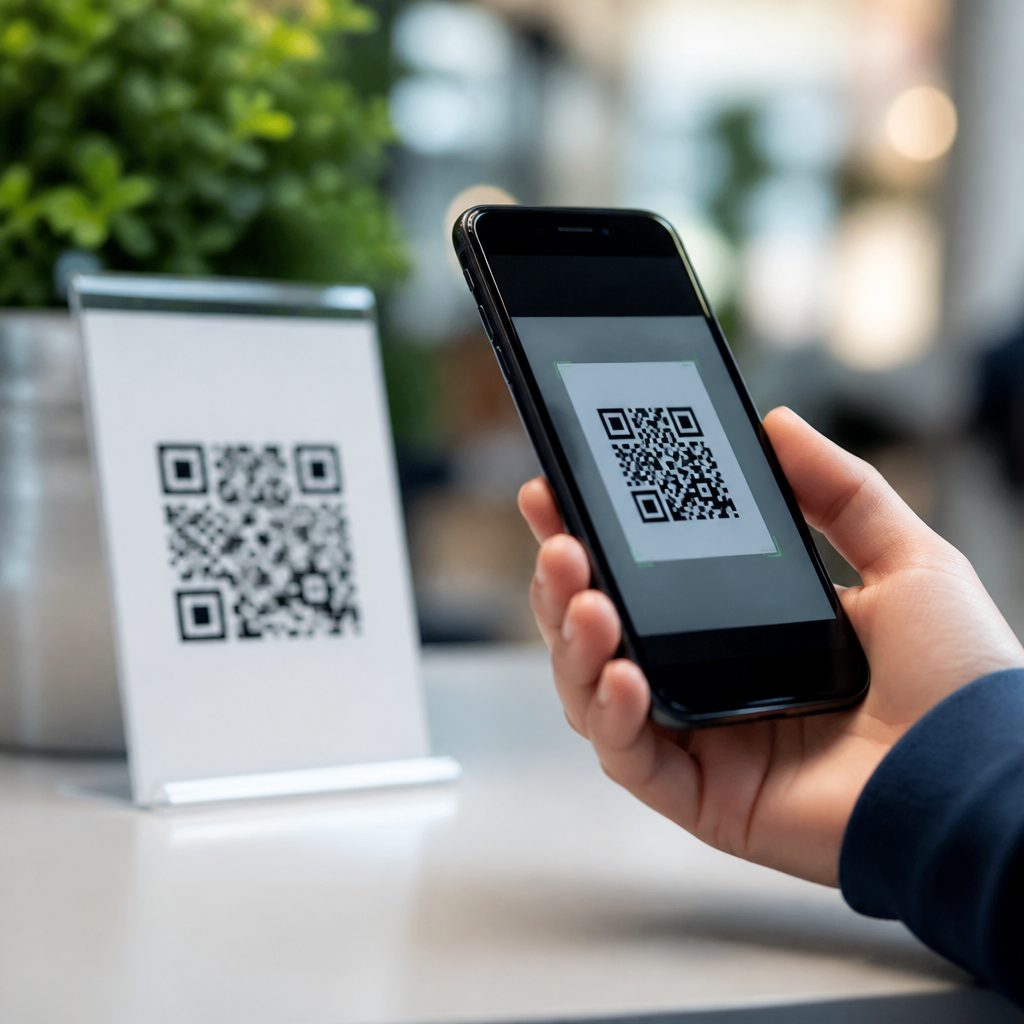

Advanced QR code security strategies for businesses start with a simple reality: the square code on a poster, package, invoice, or login page is now part of the attack surface. A QR code is a machine-readable matrix barcode that stores data such as a URL, payment address, Wi-Fi credential, or authentication token. Secure QR code implementation means controlling how those codes are created, delivered, scanned, tracked, updated, and retired so they do not become an easy path for fraud, malware, data leakage, or compliance violations.
I have worked with marketing teams, retail operators, and IT administrators that treated QR codes as harmless graphics until a campaign was hijacked or an employee scanned a malicious sticker placed over a legitimate code. That is why this topic matters. QR code adoption expanded across payments, menus, logistics, field service, identity verification, and omnichannel marketing because scanning is fast and familiar. The same convenience also removes friction for attackers. Users cannot visually inspect the destination behind a code, and many mobile devices open links quickly, which reduces the pause that normally helps people spot suspicious domains.
For businesses, the risk is not limited to cybercrime headlines. A weak QR workflow can expose customer data, distort attribution, break trust, and trigger legal issues under privacy and payment rules. Secure QR code implementation combines technical controls, operational governance, and user education. It includes dynamic code management, domain protection, redirect hardening, access control, signed content where appropriate, tamper detection, analytics review, and clear incident response. When these controls are designed well, QR codes remain useful without becoming a blind spot.
Threat model: how QR code attacks happen in practice
The first step is to define the main attack paths. In business environments, I usually see five categories. One is code replacement, where a criminal places a fraudulent sticker over a restaurant payment code, parking meter code, or product label. Another is destination abuse, where the original code points to a redirect service or landing page that later gets changed to a malicious site. A third is credential theft through fake login pages reached by QR links in emails, posters, or conference materials. Fourth is data exposure, especially when the code contains personal information, internal identifiers, or long-lived tokens in plain text. Fifth is operational manipulation, where someone changes analytics parameters, redemption rules, or inventory workflows by exploiting weak permissions in the QR management platform.
These attacks work because QR codes compress trust into an image. Users assume the code came from the visible brand. They often scan from a phone, where browser chrome is limited and domain scrutiny is weaker. In payments, the problem is sharper because users are primed to act quickly. The Federal Trade Commission and multiple national cyber agencies have warned about QR phishing, often called quishing, because it bypasses habits people learned for email links. Security teams should therefore assess QR use by context: public display, employee workflow, payment journey, customer support, packaging, and access control each have different risks and controls.
Build secure QR code architecture from creation to retirement
Strong security begins before a code is printed. Businesses should standardize on an approved QR generation and management platform rather than letting teams use free online generators. Approved platforms need role-based access control, audit logs, custom domain support, TLS everywhere, redirect governance, expiration settings, and API controls. Dynamic QR codes are usually better than static ones for business campaigns because they let teams update destinations without reprinting materials, but they also create a control point that must be protected. Every change to a destination URL should require authentication, logging, and ideally approval for high-risk use cases such as payments, account access, or regulated disclosures.
Use a dedicated branded domain or subdomain for QR destinations, such as scan.example.com, and protect it with DNS security monitoring, certificate management, and registrar lock. Avoid generic shorteners when possible. A branded domain improves user trust and helps monitoring systems detect anomalies. Behind the code, minimize redirect chains. Each extra hop adds latency, obscures visibility, and creates another point of failure or abuse. For sensitive actions, point the QR code to a landing page that explains the next step rather than launching the action immediately. That landing page can validate campaign context, display the full domain, and apply fraud checks before the user continues.
Token design matters. Never encode secrets, session IDs, or personal data directly into a QR code that may be copied indefinitely. Instead, encode a short reference that maps server-side to controlled data. Use time limits for high-risk flows such as passwordless sign-in, device pairing, ticketing, or account recovery. Single-use tokens and nonce validation sharply reduce replay risk. For printed assets with long lifespans, define retirement rules. A code on packaging may need years of support, while a trade show code may need only a month. Security failures often happen because nobody owns the end-of-life process.
Protect public-facing QR codes against tampering and fraud
Any QR code placed in a public environment should be treated like a physical security object. In retail, hospitality, transportation, and healthcare settings, tampering is one of the most common threats. Use tamper-evident labels, difficult-to-remove adhesives, or integrated printing under laminate where practical. Place codes where staff can inspect them easily during opening and closing checks. Include human-readable destination cues near the code, such as the primary domain, campaign name, or support number. That gives users and staff a second signal and makes sticker replacement easier to spot.
For payments, never rely on a plain static code attached to a counter if the merchant can support a more controlled alternative. Safer patterns include digitally generated transaction-specific codes displayed on a screen, cashier-confirmed amounts, or app-mediated payment requests that show merchant identity before approval. If a static payment code must exist, pair it with daily visual inspection, CCTV coverage, and reconciliation alerts for unusual beneficiary changes or transaction patterns. In field operations, such as equipment maintenance or warehouse scanning, match QR labels with asset IDs and geolocation checks in the app so a copied code used in the wrong place raises an alert.
| Business use case | Primary risk | Recommended control |
|---|---|---|
| Storefront payments | Sticker replacement and payment diversion | Dynamic on-screen codes, tamper-evident placement, settlement monitoring |
| Marketing posters | Malicious redirects and brand spoofing | Branded domain, landing page validation, change approval workflow |
| Product packaging | Counterfeit codes and long-lived exposure | Serialized references, verification page, retirement policy |
| Employee login or device pairing | Credential theft and token replay | Single-use short-lived tokens, MFA, server-side nonce checks |
| Asset tracking and service labels | Workflow manipulation and copied tags | RBAC, audit logs, app-based location and asset verification |
Governance, compliance, and privacy controls that reduce business risk
Secure QR code implementation is not just a technical project. It needs ownership across marketing, security, IT, legal, and operations. I recommend a written standard that answers basic questions: who can create codes, which platform is approved, which domains may be used, what data can be encoded, what approvals are required, how analytics are retained, and how incidents are escalated. This standard should classify QR codes by risk. A poster driving traffic to a blog post does not need the same controls as a code that initiates payment or account access.
Privacy design is essential because QR campaigns often collect device data, location, UTM parameters, and behavioral analytics. Data minimization should be the default. Collect only what the business needs, disclose tracking clearly, and define retention periods. If the QR journey leads to forms, loyalty enrollment, or health information, make sure consent, notices, and processor agreements align with the jurisdictions you operate in. Payment flows must also respect the rules of the payment provider and any relevant standards around account data handling. Even when the QR code itself contains only a URL, the landing experience can still create compliance exposure if tracking pixels, cookies, or hidden redirects are not governed.
Third-party vendor review is another often-missed area. Many teams adopt QR platforms for convenience, then discover weak logging, poor access control, or opaque data-sharing practices. Vendor due diligence should cover encryption in transit, data residency options, subprocessor disclosure, incident notification commitments, support for SSO or SAML, SCIM provisioning if available, and exportable logs for investigations. If the vendor cannot provide clear answers, the business is accepting unnecessary risk.
Monitoring, testing, and incident response for QR ecosystems
Once QR codes are deployed, continuous monitoring is what keeps a manageable program from drifting into blind trust. Track destination changes, scan volumes, geographies, device patterns, conversion anomalies, and spikes in error rates. A sudden traffic shift from one region, scans outside business hours for a store-only code, or a drop in expected conversions can indicate tampering or redirect abuse. Web application firewalls, DNS monitoring, certificate transparency alerts, and SIEM integration all help detect issues early. For public campaigns, mystery scanning by internal staff is a simple but effective control: regularly scan live codes from different devices and networks to verify the exact user journey.
Testing should include more than checking whether a code scans. Review redirect behavior, token expiration, cache handling, mobile rendering, content security policy, and app deep link fallbacks. If a QR code opens a mobile app, define what happens when the app is absent. If it opens a browser, validate that the landing page displays enough context to reassure the user before any login or payment step. Red team exercises can be very practical here: place simulated fraudulent stickers in controlled environments, test whether staff notice, and measure how quickly monitoring or reconciliation catches the issue.
Incident response plans need QR-specific playbooks. When a code is compromised, speed matters. Teams should know how to disable a destination, rotate tokens, update redirect rules, notify affected users, inspect nearby physical assets, and preserve logs. Customer support also needs scripts for common scenarios such as payment diversion, suspicious domains, or failed scans after takedown. The goal is not just recovery; it is restoring trust with clear communication and visible corrective action.
Advanced QR code security strategies for businesses work best when security is built into the lifecycle, not added after a campaign launches. The essential practices are consistent: use approved platforms, protect branded domains, avoid embedding sensitive data, deploy short-lived server-side tokens, harden redirects, secure public placement, monitor scan behavior, and document ownership from creation to retirement. Businesses that do this well reduce fraud, protect customer trust, and keep QR convenience without accepting hidden exposure.
As this subtopic hub, secure QR code implementation connects every other issue in QR code security, privacy, and compliance: phishing resistance, payment protection, analytics governance, vendor risk, and incident handling all depend on the controls described here. Review your current QR inventory, classify each code by risk, and close the highest-impact gaps first. A short audit this quarter can prevent a long investigation later.
Frequently Asked Questions
1. Why are QR codes considered part of a business’s attack surface?
QR codes are often treated like simple marketing or operational tools, but in practice they function as direct access points into digital systems. A QR code can open a website, trigger a payment request, connect a device to Wi-Fi, launch an app, or pass authentication data. That means a printed code on a poster, product label, invoice, kiosk, or login screen can influence user behavior just as much as an email link or a web form. If an attacker can replace, imitate, redirect, or manipulate that code, they can steer customers, employees, or partners toward malicious destinations without needing to compromise the core system first.
This is what makes QR codes part of the attack surface: they bridge the physical and digital worlds. A tampered sticker placed over a legitimate code can redirect users to a phishing page. A code in a PDF invoice can point to a fraudulent payment portal. A fake check-in QR code at an event can harvest credentials. Even legitimate dynamic QR campaigns can become risky if the redirect infrastructure, analytics platform, or linked destination is poorly secured. Businesses that ignore this reality tend to focus only on the landing page or app, while overlooking the code creation workflow, print supply chain, deployment environment, and scan experience.
From a security strategy standpoint, organizations should treat QR codes as controlled digital assets. That means applying governance over who can generate them, where they can point, how changes are approved, how destinations are monitored, and when codes are retired. The code itself may look static, but the business risk around it is highly dynamic. Once companies recognize that a QR code is not just an image but an operational entry point, they can start applying the same discipline used for links, credentials, and customer-facing applications.
2. What are the most effective ways to prevent QR code phishing and tampering?
The strongest defense is to secure the full lifecycle of the QR code rather than relying on one control. Start by limiting QR code generation to approved systems and authorized teams. Businesses should maintain an inventory of active codes, their intended destinations, campaign owners, and expiration dates. If teams are creating codes ad hoc through public generators or embedding links without review, security visibility disappears immediately. Centralized creation and governance make it easier to verify what is legitimate and spot unauthorized changes.
Physical protection is also critical. Printed QR codes should be placed in tamper-evident formats where possible, especially in public spaces, retail environments, shipping labels, payment stations, and event signage. Businesses should inspect high-risk locations regularly for stickers, overlays, or substitutions. On packaging and official documents, design choices can help as well. Incorporating branding, human-readable destination cues, short explanatory text, and anti-counterfeit features makes it harder for attackers to swap codes without raising suspicion. A plain black-and-white square with no surrounding context is far easier to imitate than a branded, validated design tied to known business materials.
On the technical side, use secure redirect infrastructure, enforce HTTPS everywhere, and monitor destination URLs continuously. If dynamic QR codes are used, access to modify the target should require strong authentication, role-based permissions, logging, and approval workflows. Businesses should also deploy domain monitoring and certificate monitoring to catch lookalike phishing pages. An effective tactic is to route scans through a controlled preview or validation layer that confirms brand identity and destination details before the user proceeds. This gives customers and employees a chance to detect something unusual rather than being dropped directly onto an unsafe page.
Finally, user education matters. Employees and customers should be taught to treat unexpected QR prompts with the same caution they would use with suspicious email links. They should know how to inspect the preview URL, verify the domain, avoid entering credentials after scanning unknown codes, and report questionable materials. Phishing succeeds when the scan feels frictionless and trustworthy. Security succeeds when the organization adds validation, monitoring, and awareness at each stage where manipulation could occur.
3. Should businesses use static or dynamic QR codes for better security?
In most business environments, dynamic QR codes offer stronger security and operational control than static QR codes, provided they are implemented properly. A static QR code permanently encodes the final destination or payload. That makes it simple and sometimes appropriate for limited use cases, but it also means the business cannot change the destination if a link becomes outdated, compromised, or noncompliant. If a static code is printed on thousands of packages or invoices and later needs to be redirected, revoked, or monitored more closely, the organization has very few options beyond replacing the materials themselves.
Dynamic QR codes, by contrast, typically point to a managed redirect service that can be updated without changing the printed code. From a security perspective, that flexibility is valuable. A business can reroute traffic away from a compromised destination, expire old campaigns, block scans from suspicious geographies, apply analytics, and monitor scan behavior for anomalies. Dynamic infrastructure also supports incident response. If a phishing concern or malware issue emerges, the organization can disable or quarantine the destination quickly instead of allowing the risk to persist in the field.
That said, dynamic QR codes are only more secure if the redirect platform is itself well protected. The management console must use strong authentication, least-privilege access, detailed audit logs, and change approval controls. Redirect rules should be validated to prevent open redirect abuse, and domains used in the scan path should be branded, trusted, and monitored. If an attacker compromises the dynamic platform, they may be able to redirect large volumes of traffic instantly. So the security advantage comes from governability, not from the format alone.
A practical approach is to use static codes only for low-risk, nonchanging destinations where no sensitive interaction is involved, and to use dynamic codes for campaigns, payments, onboarding flows, product verification, authentication support, or any scenario where visibility and control matter. Businesses should choose based on risk, update frequency, and incident response needs rather than convenience alone.
4. How can businesses secure QR codes used for payments, authentication, and sensitive transactions?
High-risk QR use cases require layered security because the impact of abuse is much greater. Payment QR codes can redirect funds, authentication QR codes can help establish sessions, and transactional codes may expose customers to fraud or account compromise. The first principle is to minimize what the QR code itself contains. Instead of embedding sensitive data directly, businesses should prefer short-lived references, signed tokens, or controlled URLs that retrieve transaction details securely from the backend. This reduces the value of the code if it is copied, intercepted, or reused.
For payment scenarios, businesses should tie the QR flow to transaction validation on the server side. That means confirming the merchant identity, amount, currency, timestamp, and session integrity before completing the payment. Codes should expire quickly where appropriate and be bound to a specific order, terminal, or customer interaction. If a payment code is static, attackers may be able to replace or replicate it more easily. Dynamic, transaction-specific QR codes are generally safer because they support expiration, reconciliation, and anomaly detection. Clear branding and confirmation screens are also essential so the payer can verify they are paying the correct business before authorizing the transfer.
For authentication and login flows, QR codes should never become a shortcut that bypasses identity assurance. Use them as part of a broader secure session design with device binding, short validity periods, nonce values, signed requests, and backend verification. If a QR code is used for passwordless login or pairing, ensure that the user receives a separate confirmation step on a trusted device. This helps prevent session hijacking or rogue pairing attempts. Logging and alerting should track unusual scan patterns, repeated failures, impossible travel indicators, and device mismatches.
Across all sensitive use cases, businesses should add continuous monitoring, fraud analytics, and revocation capabilities. If a code is abused or copied, teams must be able to disable it immediately. Security testing should include replay testing, redirect manipulation, token forgery attempts, and mobile client behavior analysis. In short, businesses should design sensitive QR transactions with the same rigor they apply to payment gateways and authentication systems, because that is effectively what these QR workflows have become.
5. What policies, monitoring, and retirement practices should businesses put in place for long-term QR code security?
Long-term QR code security depends on governance, not just technical setup. Businesses should create a formal QR code policy that defines approved use cases, generation standards, ownership, branding requirements, destination rules, access controls, review procedures, and retirement timelines. Every production QR code should have a business owner, a documented purpose, and a record in an asset inventory. That inventory should include where the code appears, what it links to, whether it is static or dynamic, when it was last reviewed, and when it should expire. If an organization cannot answer those questions, it is operating with blind spots.
Monitoring should cover both the scan path and the destination environment. This includes uptime checks, certificate monitoring, domain reputation monitoring, redirect integrity validation, anomaly detection in scan patterns, and alerting for unauthorized destination changes. Sudden spikes in scans, unexpected geographies, out-of-hours activity, or sharp conversion drops can all signal abuse or tampering. Public-facing physical deployments should also be inspected periodically, especially in locations where attackers could place fraudulent overlays. For regulated industries or high-volume consumer campaigns, businesses may benefit from combining digital telemetry with field audits and customer reporting channels.