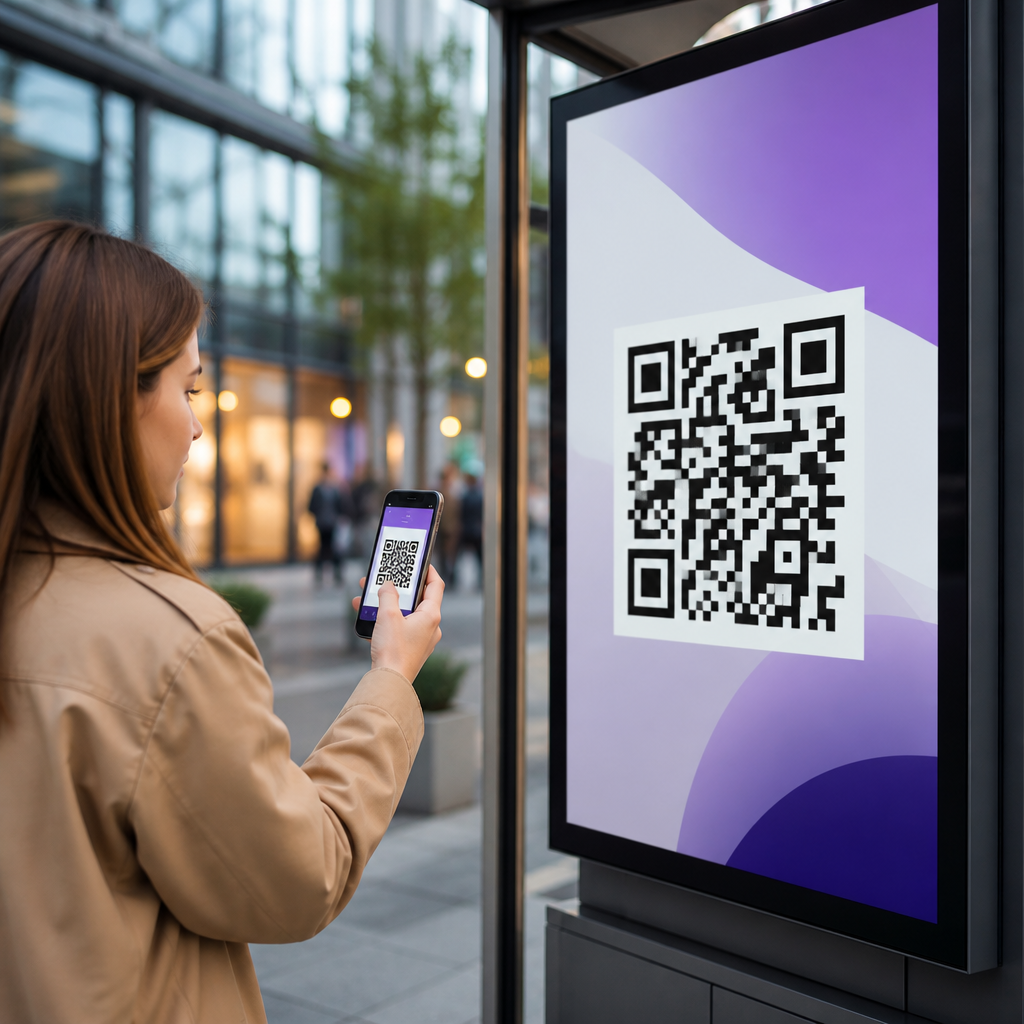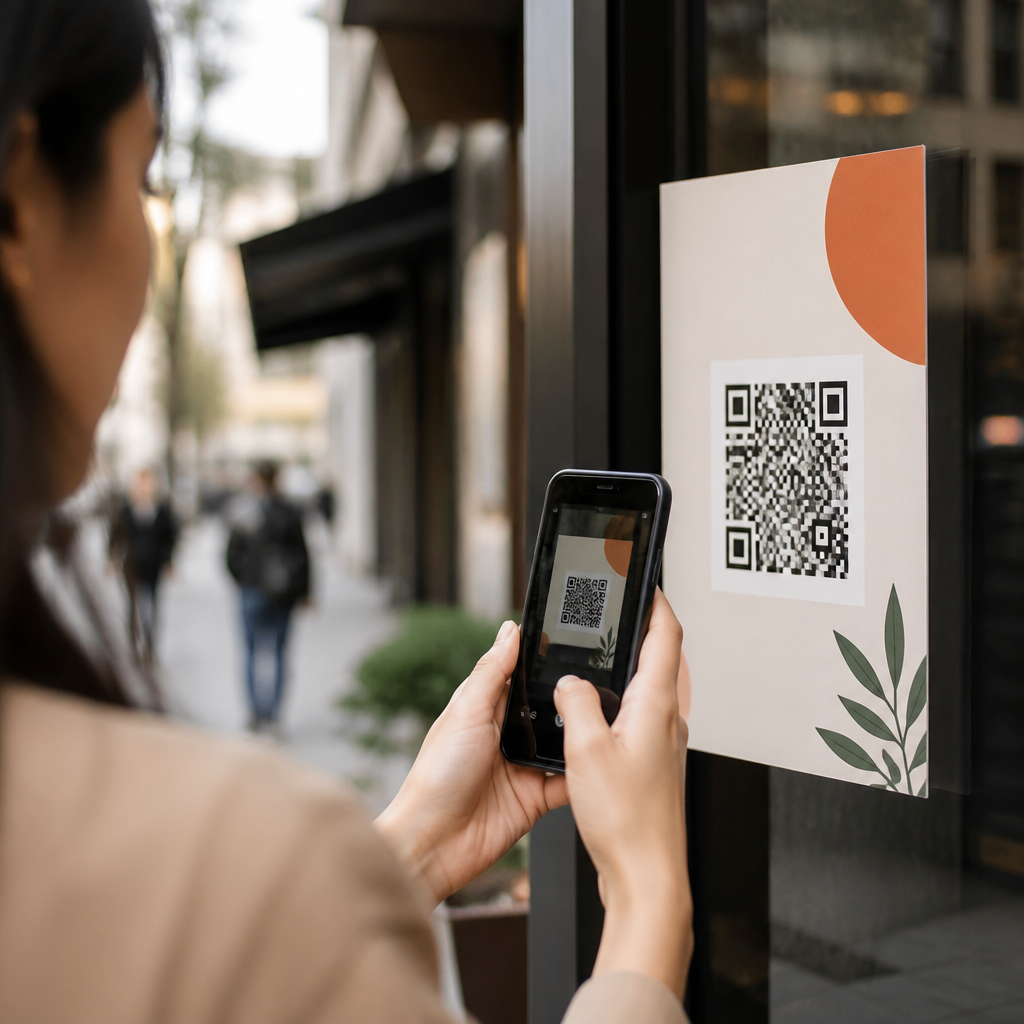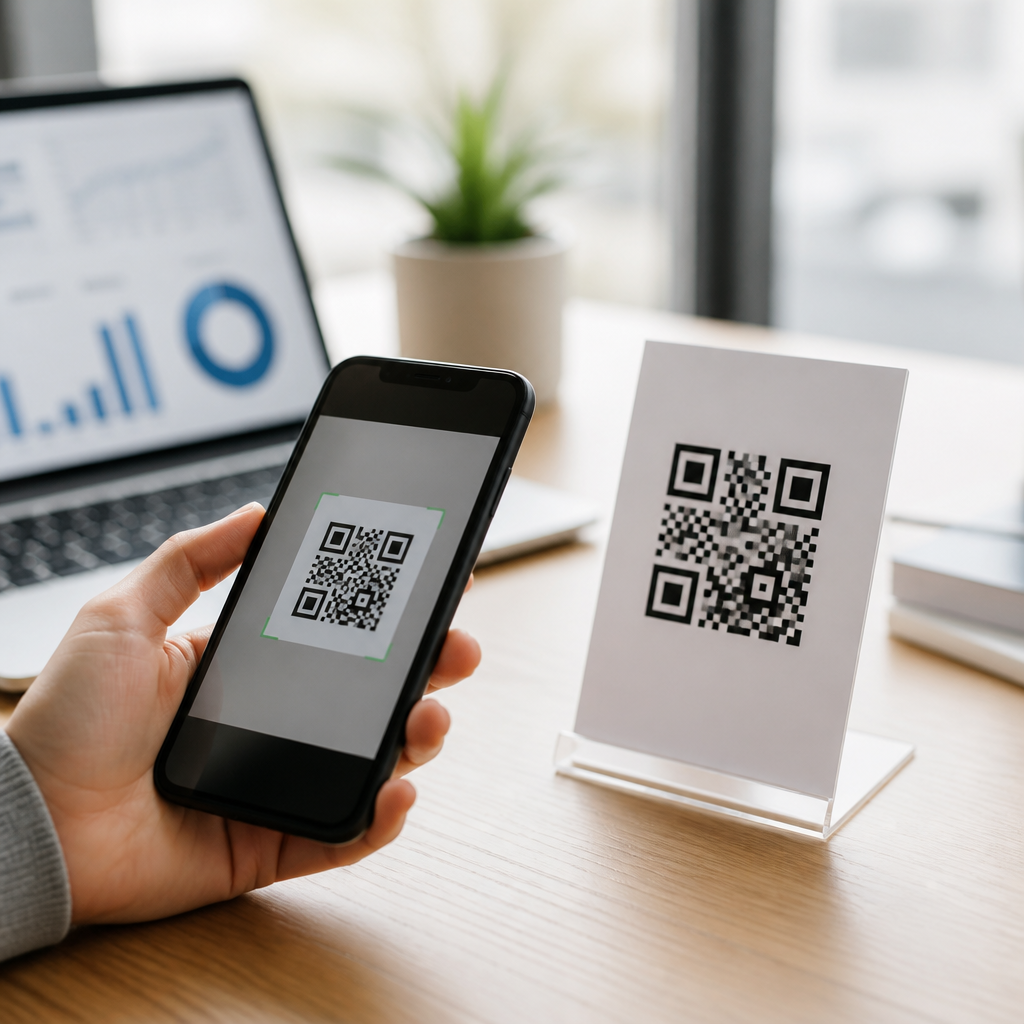
QR codes have become a practical bridge between offline attention and online action, which makes optimizing QR codes for conversions essential for any brand using mobile QR codes for marketing. A QR code, or Quick Response code, is a two-dimensional barcode that a smartphone camera can scan to open a landing page, download an app, save contact details, claim an offer, or trigger another digital action. In lead generation, the code itself is never the goal. The goal is the conversion that happens after the scan: a form submission, booked demo, newsletter signup, coupon redemption, event registration, or qualified sales inquiry.
I have worked on QR campaigns for retail stores, trade shows, direct mail, restaurant promotions, and field sales teams, and the pattern is consistent: companies often focus on getting more scans when they should be designing for better post-scan outcomes. A code placed on a poster may attract curiosity, but curiosity alone does not build a pipeline. Conversion happens when the offer is relevant, the destination is fast and mobile friendly, the friction is low, and tracking is in place to measure what actually worked.
This matters because QR codes compress the customer journey. Instead of asking someone to remember a web address, search for a brand, or type a long form on a desktop later, a well-built QR experience turns intent into immediate action. The best campaigns reduce the time between interest and response to a few seconds. That short path is powerful for QR codes for lead generation because every extra step usually causes measurable drop-off. When marketers optimize the code, the context, and the landing experience together, QR codes become a reliable acquisition channel rather than a novelty.
Start with conversion intent, not scans
The first rule of QR code optimization is to define one primary conversion for each code. If a restaurant table tent sends one visitor to a menu, loyalty signup, survey, careers page, and catering inquiry at the same time, most users will do nothing. High-converting QR campaigns are singular. A code on product packaging might drive warranty registration. A code on a real estate sign might collect tour requests. A code at a conference booth might book a follow-up consultation. One placement, one audience, one next step.
The strongest offers answer an obvious user question. What do I get if I scan right now? Good examples include “Get the spec sheet,” “Claim 10% off your first order,” “Book a free consultation,” or “See inventory at this location.” Weak calls to action such as “Scan me” underperform because they hide the value. In practice, I have seen response rates improve simply by changing the line next to the code from a generic instruction to a specific benefit statement tied to urgency and relevance.
Dynamic QR codes are the standard choice for lead generation because they allow destination changes, campaign tagging, and scan analytics without reprinting the asset. Static codes are acceptable for permanent actions such as Wi-Fi access or vCard downloads, but they limit optimization. If the landing page changes, if UTM parameters need to be adjusted, or if traffic must be redirected by region or device, a dynamic code preserves flexibility. That flexibility directly supports conversion testing.
Design QR codes that scan instantly in real environments
A QR code that does not scan easily will never convert well. Reliable scanning depends on contrast, size, quiet zone, placement, and print quality. The code should usually be dark on a light background, with a clear margin around it so phone cameras can isolate the symbol. Decorative styling is fine only if scannability survives. I regularly test codes across iPhone and Android devices, under indoor light, bright sun, and low-light conditions, because a design that looks sharp on a monitor can fail on textured packaging or reflective signage.
Size should match distance. A common field guideline is a scan distance-to-code size ratio of roughly 10:1, meaning a code viewed from ten feet away should be about one foot tall. For brochures or product labels handled at arm’s length, much smaller sizes work, but tiny codes often frustrate users with larger phones or shaky hands. Placement matters too. On a storefront window, reflections can block scans. On a moving vehicle, the user has no time. On direct mail, codes near the fold or edge may distort. Optimizing for conversions starts with respecting the physical environment.
| Placement | Primary user intent | Best conversion goal | Optimization note |
|---|---|---|---|
| Trade show booth | Get information fast | Book demo or download brochure | Use a short form and staff follow-up within 24 hours |
| Direct mail postcard | Redeem an offer | Coupon claim or appointment request | Add clear incentive and campaign-specific landing page |
| Retail shelf talker | Evaluate product | Email capture for discount or restock alert | Load page in under three seconds on mobile data |
| Restaurant table tent | Act during wait time | Loyalty signup | Keep input fields minimal and support autofill |
Build landing pages for mobile completion
The landing page is where most QR campaigns win or fail. Because scans happen on mobile devices, the destination must load fast, present the offer immediately, and ask for the minimum information needed to qualify the lead. According to Google research on mobile behavior, delay sharply increases abandonment, and that pattern is easy to confirm in analytics. When I audit underperforming QR pages, common issues include bloated scripts, intrusive pop-ups, walls of text above the form, and forms that require too much typing on a small screen.
For QR codes for lead generation, every field should earn its place. If the goal is top-of-funnel newsletter acquisition, ask for email only. If the goal is a sales-ready consultation, capture name, company, email, and a single qualifying field such as team size or location. Progressive profiling can collect more data later. Mobile autofill, large tap targets, clear labels, and a visible privacy statement improve completion rates. So does message match: the promise near the QR code must be the first thing the visitor sees after scanning.
Strong landing pages also remove uncertainty. Include one headline, one core benefit, one primary action, and proof that the offer is trustworthy. Proof can be a customer logo strip, review count, short testimonial, accreditation, or a factual statement such as “Used by 2,000 local businesses.” For B2B campaigns, a calendar embed for booking can outperform a long contact form because it converts intent into a scheduled meeting without back-and-forth emails. For local service businesses, click-to-call and map integration can capture high-intent leads immediately.
Use targeting, incentives, and context to raise lead quality
Not every scan should produce the same experience. The highest-converting QR programs adapt to context. A code on in-store signage can send users to a location-specific page with inventory or pickup details. A code in a sales presentation can route enterprise prospects to a consultation form while sending small businesses to self-serve pricing. If your QR platform supports conditional redirects by device, language, time, or geography, use them. Relevance increases both conversion rate and lead quality.
Incentives work, but they need discipline. Discounts, giveaways, gated downloads, and exclusive access can lift scan-to-lead rates, yet they can also attract low-intent submissions. The fix is to align the incentive with the commercial goal. A home services company might offer a seasonal maintenance checklist plus a booking discount, which filters for real homeowners rather than freebie hunters. A software company might gate a benchmark report and include one qualifying question about company size to identify the right segment for sales outreach.
Context also shapes copy. At an event, visitors are distracted and time-poor, so the page should emphasize speed: “Get the deck in 30 seconds.” On product packaging, the user may be comparing features, so the page should focus on education and reassurance. On a table tent, the user has idle time, making loyalty enrollment or referral offers effective. Matching the lead magnet to the moment is one of the most reliable ways to improve conversions from QR codes.
Track the full funnel and test continuously
If you cannot tie scans to pipeline outcomes, you cannot truly optimize. At a minimum, use campaign parameters, event tracking, and conversion goals in Google Analytics 4 or an equivalent platform. Connect form submissions to your CRM, whether that is HubSpot, Salesforce, Zoho, or another system, so you can see not just volume but qualified leads, meetings held, opportunities created, and revenue influenced. Scan count is a top-of-funnel signal. Conversion rate and downstream quality are the real performance metrics.
A rigorous measurement setup includes unique dynamic QR codes by channel, placement, and creative variant. For example, a retailer might use separate codes for window signage, shelf displays, receipts, and bag inserts, all pointing to closely matched pages. That structure reveals which touchpoint drives the highest-value leads. It also supports A/B testing. Test headline language, CTA phrasing, form length, incentive type, and hero image. In my experience, reducing a form from six fields to three often improves completion materially, but not in every case. Sometimes one qualifying field lowers raw volume while increasing sales acceptance, which is the better business result.
Operational follow-up is part of optimization. A QR-generated lead left untouched for two days is worth far less than one routed instantly to email, SMS, or a sales queue. Set service-level expectations, automate confirmation messages, and make sure attribution survives the handoff. Review performance monthly, retire weak placements, and expand the winners. Done well, QR codes become a measurable, scalable lead generation system embedded across print, packaging, signage, events, and in-person sales.
Optimizing QR codes for conversions comes down to treating the scan as the start of a funnel, not the finish line. The highest-performing campaigns pair a clear offer with a fast-scanning code, a mobile-first landing page, context-aware targeting, and full-funnel measurement. They also respect tradeoffs: more incentive can mean lower lead quality, more fields can improve qualification while reducing submissions, and stylish code design is useless if scanning suffers. The right balance depends on the audience, placement, and business goal.
As a hub for QR codes for lead generation, this topic connects directly to deeper work on landing page design, dynamic QR code strategy, trade show execution, direct mail attribution, and CRM integration. Start with one use case, define one conversion, and instrument it properly. Then test copy, offer, and form friction until the scan-to-lead path feels effortless. When brands apply that discipline, mobile QR codes for marketing stop being an experiment and become a dependable source of qualified demand. Audit your current QR placements, fix the weakest step, and launch the next iteration this week.
Frequently Asked Questions
What does it mean to optimize a QR code for conversions?
Optimizing a QR code for conversions means improving every part of the scan experience so more people complete the action you actually care about after scanning. The QR code itself is only the entry point. Real performance is measured by what happens next, whether that is a form submission, purchase, app download, appointment booking, coupon redemption, or lead capture. A high-performing QR campaign connects the physical placement, the code design, the call to action, and the landing page into one seamless journey.
In practice, optimization starts with matching the QR code to a clear intent. If someone scans from product packaging, a store display, direct mail piece, event sign, or restaurant table tent, the destination should feel immediately relevant to that context. The landing page must load quickly, display well on mobile devices, and make the next step obvious. If users have to pinch, zoom, search, or guess what to do, conversion rates drop quickly.
Conversion optimization also includes technical decisions. Dynamic QR codes are often better than static ones because they let marketers update the destination URL without replacing the printed code. They also make it easier to track scan data, test different landing pages, and refine campaigns over time. In short, optimizing a QR code for conversions means treating it as part of a complete conversion funnel, not as a standalone graphic.
Where should QR codes be placed to generate the most scans and conversions?
The best placement depends on visibility, convenience, and user intent. A QR code should appear where people have enough time and motivation to scan it. Good examples include product packaging, in-store signage, trade show booths, receipts, flyers, posters, brochures, table displays, print ads, and direct mail. In each case, the person should be able to spot the code easily, understand why they should scan it, and complete the action without friction.
Placement affects not just scan volume, but scan quality. For example, a QR code on a busy billboard may attract attention, but if people cannot safely stop to scan it, performance will suffer. By contrast, a code on packaging or a checkout counter may produce fewer impressions but stronger conversion intent because the audience is already engaged with the brand. Context matters. Someone at an event may scan for schedules, demos, or giveaways, while someone in a retail aisle may scan for reviews, discounts, or product comparisons.
Physical execution matters too. The code should be large enough to scan comfortably, printed with strong contrast, and positioned where lighting, glare, or curved surfaces will not interfere. It should never feel hidden or decorative without purpose. The best placements combine high visibility with a strong reason to act, such as “Scan to get 15% off,” “Scan to see pricing,” or “Scan to book your consultation.” When location and message align, conversions improve significantly.
What makes a QR code call to action more effective?
An effective QR code call to action tells users exactly what they will get and why it is worth scanning right now. Generic text like “Scan me” is rarely enough on its own because it creates curiosity without value. Stronger calls to action are specific, benefit-driven, and immediate. Examples include “Scan to claim your discount,” “Scan to watch the demo,” “Scan to get your free quote,” or “Scan to download the app.” These messages reduce uncertainty and set clear expectations before the scan happens.
Clarity is one of the biggest conversion drivers. People are much more likely to scan when they know what the destination is and what action comes next. A QR code that leads to a menu, coupon, lead form, video, event registration page, loyalty program, or how-to guide should say so directly. This helps attract more qualified scans from users who are genuinely interested, which improves conversion rates even if total scan volume stays the same.
Urgency and relevance also help. Limited-time offers, event-specific incentives, and location-based messages often outperform broad generic prompts. The CTA should match the environment and the audience’s stage in the buyer journey. Someone discovering a brand for the first time may respond to educational content or a giveaway, while someone already considering a purchase may be more motivated by reviews, pricing, or a promotional offer. The most effective calls to action combine specificity, benefit, relevance, and simplicity.
How important is the landing page after someone scans a QR code?
The landing page is critical because it is where conversion actually happens. Even a well-designed QR code with a compelling call to action will underperform if the destination page is slow, confusing, or not optimized for mobile. Since most QR scans happen on smartphones, the post-scan experience must be fast, clean, and focused. Users should instantly see that they landed in the right place and understand what to do next.
A strong QR landing page removes distractions and supports one primary goal. If the goal is lead generation, the form should be short and easy to complete on a phone. If the goal is a purchase, the offer and checkout path should be obvious. If the goal is an app install, the page should direct users to the correct app store without extra steps. Headlines, copy, visuals, and buttons should all reinforce the same promise made before the scan. Consistency between the offline message and the online page builds trust and reduces abandonment.
Technical performance also has a direct impact on conversions. Pages should load quickly, use responsive design, and avoid intrusive pop-ups or cluttered layouts. Tracking should be in place so marketers can see which placements, audiences, or campaigns drive the best results. A useful rule is to think of the QR code as the click and the landing page as the closer. If the closer is weak, conversions will be weak no matter how many scans you generate.
How can marketers track and improve QR code conversion performance over time?
Marketers can improve QR code performance by tracking both scans and downstream actions. Scan counts alone do not tell the full story. What matters is how many users complete the intended goal after landing on the destination page. That means measuring metrics such as conversion rate, bounce rate, time on page, form completions, purchases, coupon redemptions, app installs, or booked appointments. This broader view reveals whether a QR campaign is attracting the right audience and delivering a strong post-scan experience.
Dynamic QR codes are especially useful for optimization because they support analytics and flexible destination management. With dynamic codes, marketers can change the URL, segment traffic, and test different landing pages or offers without reprinting the code. This makes A/B testing far more practical. For example, you can compare one CTA against another, test short forms versus longer forms, or send different audiences to different pages based on campaign source, location, or product line.
Continuous improvement usually comes from refining a few key areas: placement, design, messaging, offer quality, and landing page usability. If scans are low, visibility or CTA clarity may be the issue. If scans are high but conversions are low, the landing page or offer likely needs work. Reviewing campaign data regularly helps identify where friction occurs. The most successful marketers treat QR codes as measurable conversion assets, not one-time print elements. When performance data guides updates, QR codes become much more effective at turning offline attention into online action.