QR codes have become one of the most practical bridges between physical marketing and mobile action, especially as smartphones now scan codes natively through the camera app. In offline marketing campaigns, a quick response code turns a poster, package, flyer, direct mail piece, event badge, or storefront sign into a measurable digital touchpoint. I have used QR codes across retail launches, trade show follow-up programs, restaurant promotions, and local service campaigns, and the lesson is consistent: the code itself is not the strategy. The strategy is the mobile experience, tracking plan, and offer behind it.
For marketers building a mobile QR code program, this topic sits squarely inside the broader field of QR codes in digital marketing. The offline asset gets attention, but the digital destination captures intent, records engagement, and drives conversion. That is why this sub-pillar matters. It connects print, outdoor, packaging, in-person events, and point-of-sale materials to landing pages, app downloads, coupon redemption, lead forms, reviews, and omnichannel attribution. When executed well, QR codes reduce friction, shorten response time, and make offline media far more accountable.
Key terms are straightforward. A static QR code contains fixed destination data that cannot be edited after printing. A dynamic QR code points to a short redirect URL, allowing you to change the destination, apply campaign parameters, and collect analytics without reprinting the asset. Error correction determines how much damage or obstruction a code can tolerate and still scan. A call to action is the instruction next to the code, such as “Scan for 15% off” or “See the installation guide.” The best offline campaigns combine all four elements: scannable design, a clear incentive, mobile-friendly content, and measurement through tools such as Google Analytics 4, UTM parameters, and CRM integration.
Why QR codes work in offline marketing
QR codes work because they eliminate the gap between seeing a message and taking action. Typing a long URL from a billboard or magazine ad creates drop-off. Scanning a code takes seconds. That speed matters when attention is limited, whether someone is walking through a station, standing in a checkout line, or browsing product packaging at home. In my campaigns, scan rate improves most when the code resolves a specific user need immediately: claim an offer, watch a demo, register for an event, save contact details, or open directions in a map app.
They also make offline channels measurable in ways traditional print rarely was. A postcard can now reveal scans by date, device, location, and campaign source. A restaurant table tent can send visitors to a menu page with separate parameters from the front window decal. A trade show booth graphic can route enterprise buyers to a meeting scheduler while attendees with general interest go to a product overview. This level of segmentation turns offline media from broad awareness into performance marketing with traceable customer journeys.
Another advantage is flexibility. Dynamic code platforms such as Bitly, QR Code Generator Pro, Beaconstac, and Flowcode let marketers update destinations, pause campaigns, or conduct A/B tests after materials are already distributed. If inventory changes, a printed code on packaging can shift from a sold-out product page to a category page, a support article, or a store locator. That adaptability protects budget and extends the life of printed assets.
Where to place QR codes for the highest impact
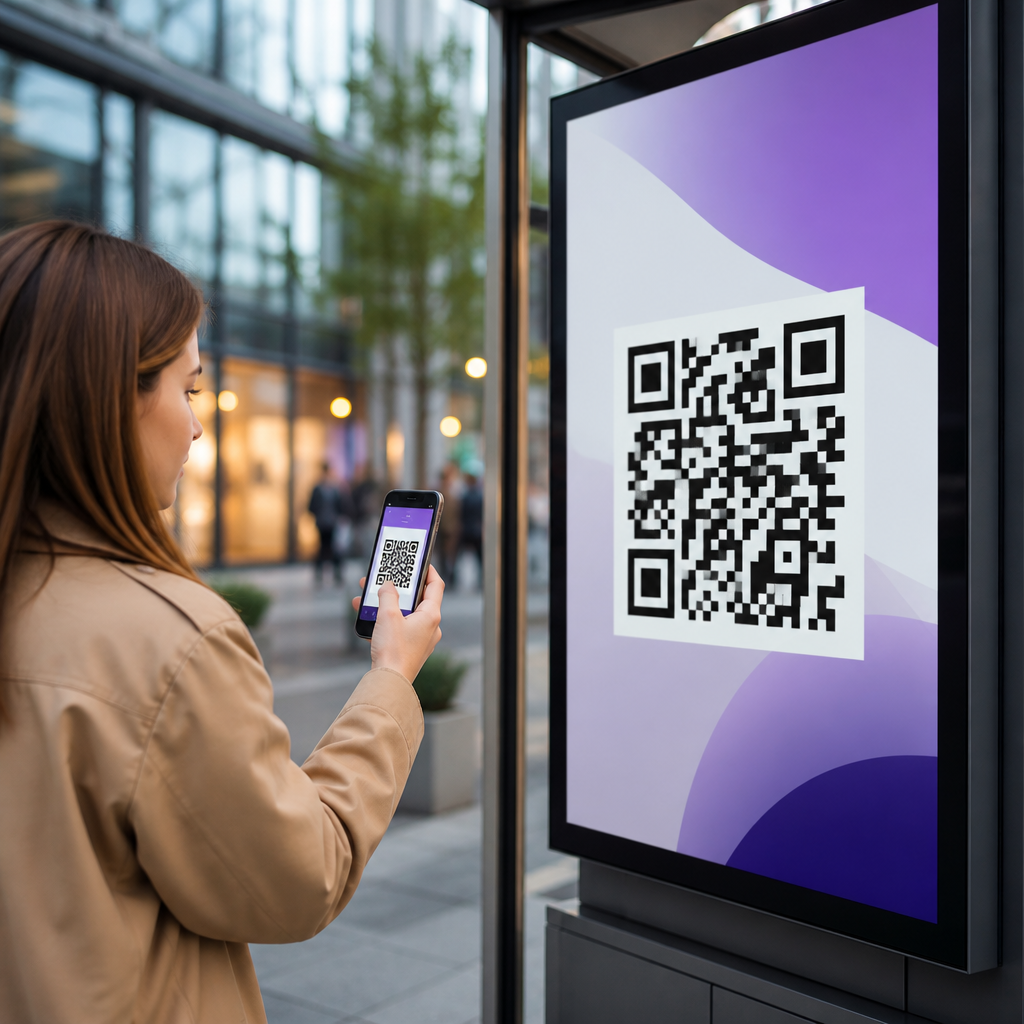
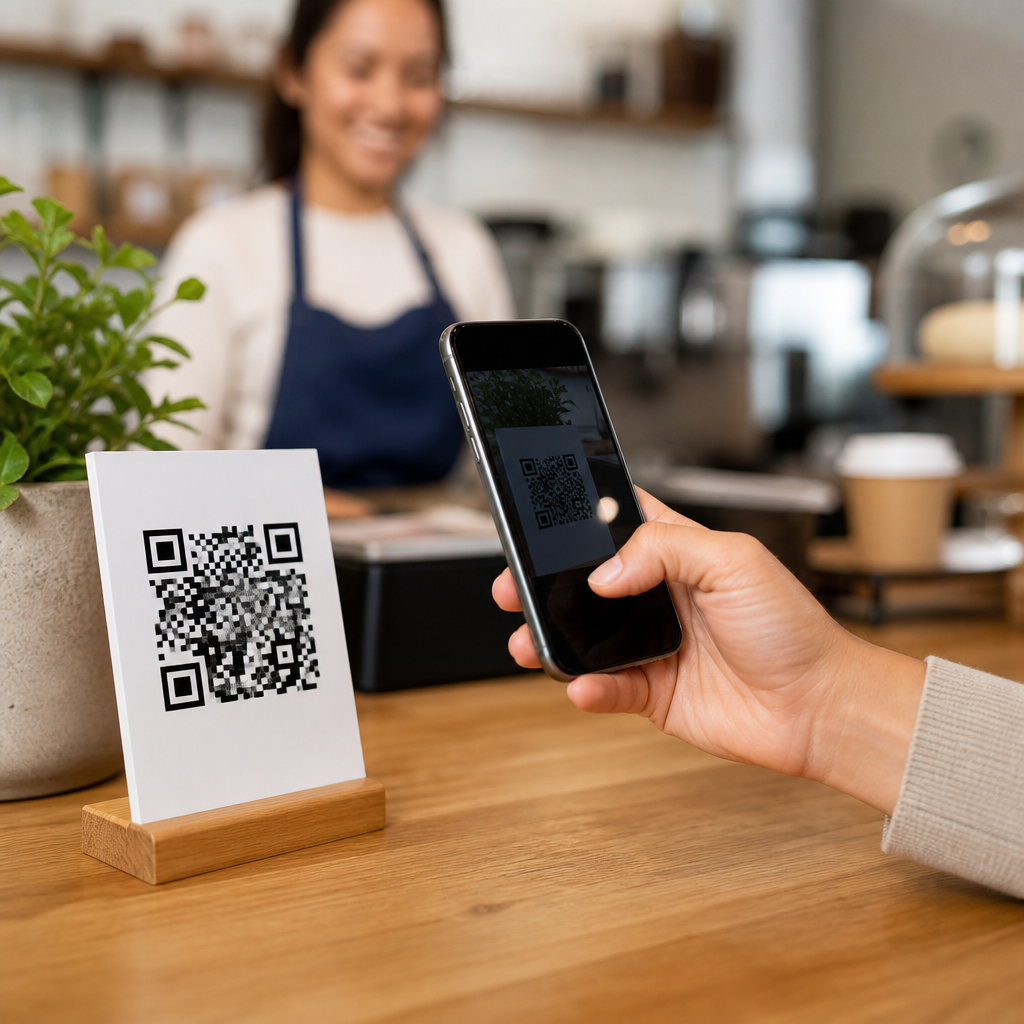
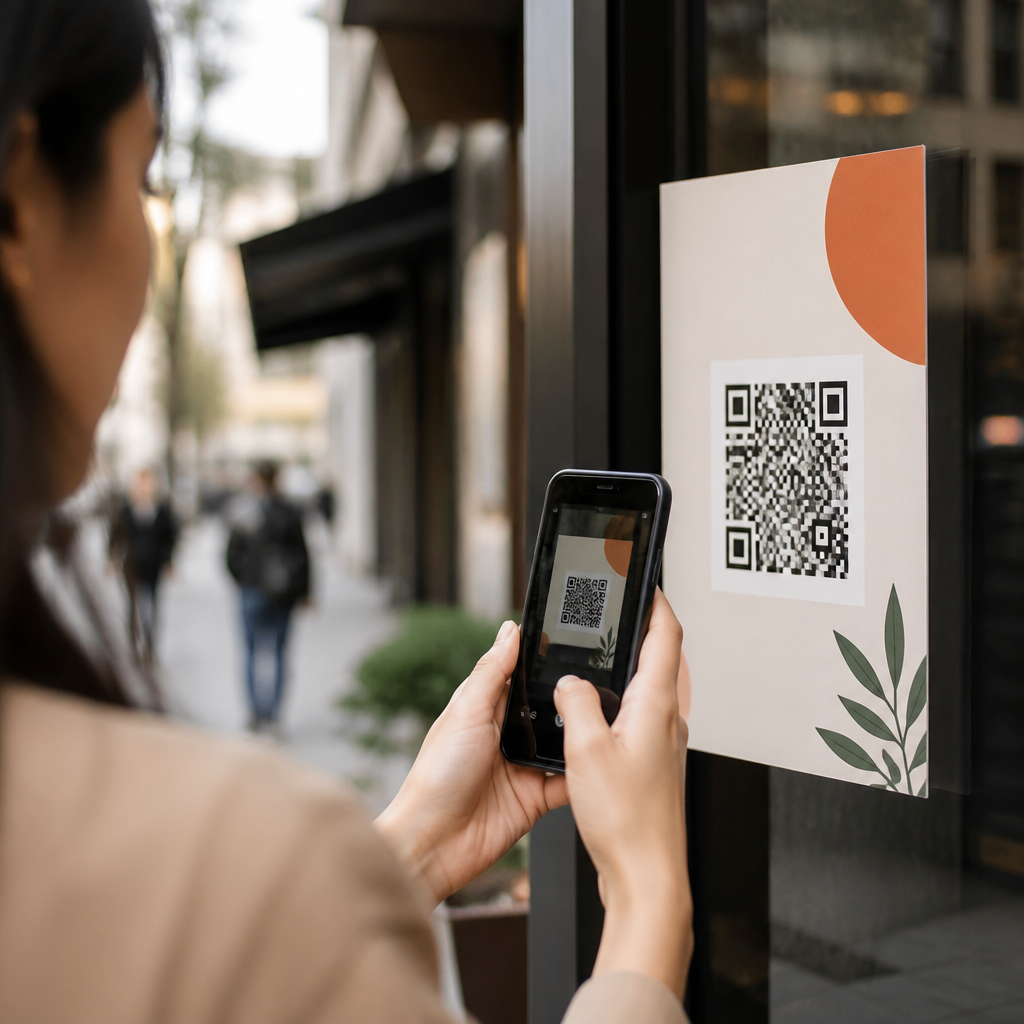
The best placement depends on context, distance, and user intent. On direct mail, codes perform well near the primary offer and above the fold, with enough white space to stand out. On posters and window clings, they should sit where people can approach safely and scan without glare. For product packaging, side panels and inserts usually outperform curved surfaces because distortion hurts readability. In-store signage works best at decision points: shelf talkers, end caps, fitting rooms, menus, checkout counters, and receipts.
Events create especially strong opportunities. A badge QR code can open a speaker agenda, exhibitor map, or networking form. A booth backdrop can link to a case study library, while tabletop signage drives instant lead capture. I have seen the biggest gains when each event asset has its own destination and tracking, because entrance banners, demo stations, and post-session handouts serve different intents. The same principle applies to vehicle wraps, print ads, real estate signs, and outdoor placements. Always ask what the user needs in that physical moment, then match the landing page to it.
| Offline placement | Best QR destination | Primary metric |
|---|---|---|
| Direct mail postcard | Offer landing page with form or coupon | Scan-to-conversion rate |
| Retail shelf sign | Product demo, reviews, or comparison page | Assisted sales uplift |
| Packaging insert | Setup guide, warranty registration, cross-sell page | Registrations and repeat purchase |
| Trade show booth | Meeting scheduler or lead qualification form | Qualified leads captured |
| Restaurant table tent | Menu, loyalty signup, or limited-time offer | Orders or enrollments |
How to design QR codes that people actually scan
A QR code must be easy to notice, easy to scan, and easy to trust. Start with size. A common field rule is at least one inch square for close-range uses, larger for anything viewed from farther away. High contrast is nonnegotiable: dark code on a light background performs best. Preserve the quiet zone, the blank margin around the code, because crowded graphics interfere with detection. Avoid placing codes on reflective, textured, or curved surfaces unless you have tested them under real lighting conditions.
Branding helps, but only within limits. You can add a logo mark in the center if the code still scans reliably and the error correction level supports it. Do not over-stylize finder patterns or invert colors just to look different. In practice, conversion gains come from message clarity, not decorative complexity. Use a direct call to action next to the code, state the benefit, and remove uncertainty. “Scan to book a free consultation” will outperform “Learn more.” If no app is required, say so. If the result is a PDF, menu, coupon, or video, say that too.
Testing is where many campaigns fail. Scan with both iPhone and Android devices, under daylight and artificial light, from expected distances, and using native camera apps rather than only third-party scanners. Check page speed with PageSpeed Insights and mobile usability in Search Console. Slow pages waste hard-won scans. A code that works in the conference room but fails on a bus shelter in afternoon glare is not ready for production.
Tracking, attribution, and campaign measurement
If you cannot measure the scan path, you cannot improve it. Every serious offline QR campaign should use dynamic codes plus UTM parameters aligned with your analytics naming convention. At minimum, define source, medium, campaign, and content so you can separate postcard version A from version B, or front-window signage from checkout signage. In GA4, review sessions, engaged sessions, key events, revenue, and assisted conversions. In a CRM such as HubSpot or Salesforce, connect form fills and downstream pipeline value to the originating code.
Attribution requires discipline. A scan is not the goal; business outcomes are. For ecommerce, track product views, add-to-cart rate, checkout starts, purchases, and average order value. For lead generation, track form completion, meeting bookings, lead quality, and closed revenue. For local businesses, include calls, direction requests, review submissions, and coupon redemptions. If the destination is an app store, mobile measurement partners such as AppsFlyer or Adjust can help connect scans to installs and post-install events.
Use benchmarks carefully because scan rates vary sharply by channel, audience, and offer. A highly targeted package insert may outperform a mass-market outdoor placement by a wide margin. Instead of chasing generic averages, compare like with like inside your own program. Run controlled tests on offer language, destination type, placement, and visual hierarchy. Small changes, such as replacing a homepage destination with a dedicated landing page, often produce outsized gains because relevance increases immediately.
Best practices, common mistakes, and compliance issues
The strongest best practice is message-match. The promise on the offline asset must be fulfilled instantly on the landing page. If a flyer says “Scan for same-day quote,” do not send users to a generic homepage with no form above the fold. If a shelf tag says “See how it works,” autoplaying a long brand reel is the wrong experience; a concise demo or comparison chart is right. Relevance is the difference between curiosity and conversion.
Common mistakes include printing static codes too early, linking to non-mobile pages, asking for too much information, and forgetting basic accessibility. Provide readable surrounding text, meaningful page headings, and forms that are easy to complete on a phone. Do not rely on QR codes as the only path when the audience may need alternatives; include a short URL where practical. For regulated industries, review privacy disclosures, consent language, and data handling. If codes trigger SMS, email capture, payments, or health-related interactions, legal review is not optional.
Security matters as well. Consumers have learned that unknown codes can be risky. Use recognizable branded domains, HTTPS, and consistent visual identity to signal legitimacy. Monitor redirects so outdated or compromised destinations are caught quickly. For public installations, inspect for tampering, especially sticker overlays placed on top of original codes. Trust directly affects scan willingness.
QR codes are most effective when treated as a complete offline-to-mobile system rather than a graphic added at the last minute. Choose dynamic codes, give people a concrete reason to scan, send them to a fast mobile destination, and measure outcomes all the way to revenue or retention. For marketers investing in mobile QR codes for marketing, this hub topic connects packaging, print, retail, events, and local media to digital journeys that can be optimized with the same rigor as paid search or email.
The core takeaway is simple: offline marketing performs better when response friction is low and intent is captured in real time. QR codes make that possible, but only when placement, design, offer, landing page, and attribution are planned together. Start with one high-intent use case such as direct mail, in-store signage, or event lead capture, build the measurement framework, and expand from there. Audit your current offline assets, identify one scan opportunity, and launch a test you can measure this month.
Frequently Asked Questions
1. How do QR codes improve offline marketing campaigns?
QR codes improve offline marketing by connecting physical materials directly to digital actions with almost no friction. Instead of asking someone to remember a website, type in a long URL, or search for a business later, a QR code lets them act immediately from a poster, flyer, menu, product package, event sign, direct mail piece, or storefront display. That speed matters. The easier it is for someone to respond in the moment, the more likely they are to engage.
They also make offline marketing more measurable. Traditional print advertising often struggles with attribution, but QR codes can help track scans, landing page visits, coupon redemptions, signups, and other campaign outcomes. When each placement uses a unique code or URL, it becomes much easier to see which channel, location, design, or offer is driving results. In practical terms, this turns static media into a trackable performance channel.
Another major advantage is flexibility. A QR code can lead to many different destinations depending on campaign goals, including product pages, event registration forms, restaurant menus, review pages, appointment booking tools, loyalty programs, app downloads, videos, downloadable guides, or limited-time promotions. That makes QR codes useful across awareness, consideration, and conversion stages rather than only as a novelty. When used well, they create a smoother customer journey, shorten the path from attention to action, and help marketers tie offline exposure to real business outcomes.
2. Where should I place QR codes in an offline campaign for the best results?
The best placement depends on context, visibility, and user intent. A QR code works best where people have both the time and ability to scan it comfortably. Good examples include product packaging, table tents, brochures, direct mail pieces, in-store signage, trade show booths, event badges, window displays, receipts, and point-of-sale materials. In each case, the person is already close enough to the code and typically has a phone in hand or within easy reach.
Placement should also match the likely motivation of the audience. On a retail shelf, a QR code might link to product details, reviews, or a demo video. At a trade show, it may connect to a lead capture page, downloadable brochure, or meeting scheduler. In a restaurant, it can open a digital menu, ordering page, or loyalty offer. In a local service campaign, it may lead to a booking form, estimate request page, or map directions. The strongest campaigns do not use the same destination everywhere. They adapt the experience to the specific moment and environment.
Physical execution matters just as much as strategic placement. The code should be easy to spot, large enough to scan quickly, and positioned where lighting, distance, and movement will not interfere. Avoid placing QR codes too high, too low, on curved surfaces, behind reflective glass, or in areas where people cannot safely stop. It is also smart to include a short call to action near the code, such as “Scan for 10% off,” “Scan to book,” or “Scan to view the full catalog.” That brief instruction gives people a reason to engage and sets expectations for what happens next.
3. What should a QR code link to in an offline marketing campaign?
A QR code should link to a destination that is relevant, mobile-friendly, and closely aligned with the intent of the person scanning it. This is one of the most important decisions in the campaign. A code should not simply send everyone to a generic homepage unless the homepage is genuinely the most useful next step. In most cases, a dedicated landing page performs better because it continues the exact message, offer, or promise made on the printed material.
For example, if the QR code appears on a direct mail piece promoting a seasonal offer, the best destination is likely a landing page with that exact offer, clear details, a simple redemption path, and minimal distractions. If the code is on product packaging, it might link to setup instructions, a tutorial video, warranty registration, or cross-sell recommendations. If it is used at an event, the destination could be a contact form, presentation download page, or calendar booking tool. The common thread is relevance. People should feel that the scan gave them something useful immediately.
It is also essential to optimize the destination for mobile behavior. The page should load quickly, display properly on smaller screens, and make the next action obvious. Long forms, slow sites, and cluttered navigation can erase the convenience the QR code created. Whenever possible, the landing page should feature one clear objective, such as claiming an offer, placing an order, signing up, downloading a resource, or contacting the business. A focused experience almost always outperforms a broad one because it reduces decision fatigue and keeps momentum high after the scan.
4. How can I track the performance of QR codes in offline marketing?
Tracking QR code performance starts with using unique URLs, dynamic QR codes, or campaign-specific parameters for each placement. This allows marketers to identify exactly where scans are coming from and compare results across channels, locations, creatives, and offers. For instance, you might use separate QR codes for a poster campaign, product packaging, event signage, and direct mail. Even if all of them point to similar content, distinct tracking lets you measure which source is generating the strongest engagement and conversions.
Dynamic QR codes are especially useful because they let you change the destination without reprinting the code, and they often provide scan analytics such as total scans, time of scan, device type, and general location data. Combined with web analytics tools, CRM tracking, coupon codes, or booking records, this creates a much clearer view of campaign performance. You can see not only how many people scanned but also how many completed a valuable action afterward, which is what really matters.
To get meaningful insights, define your key metrics before launching the campaign. Depending on the objective, those might include scan rate, landing page conversion rate, form completions, purchases, reservations, app installs, email signups, or coupon redemptions. It is also wise to test variables over time, such as call-to-action wording, code placement, page design, or the value of the offer. The brands that get the most from QR codes usually treat them as an optimization tool, not just a convenience feature. The scan itself is only the beginning; the real value comes from understanding what happens after it.
5. What are the most common mistakes to avoid when using QR codes offline?
One of the most common mistakes is using QR codes without a clear purpose. If a code is added simply because it seems modern or trendy, it often fails to generate meaningful results. Every QR code should support a specific goal, whether that is driving sales, capturing leads, increasing bookings, distributing information, or improving customer experience. Without that strategic role, the code becomes decorative rather than functional.
Another frequent problem is poor user experience after the scan. Marketers sometimes place a QR code on printed material but send people to a non-mobile page, a generic homepage, an expired promotion, or content that does not match the original message. That disconnect reduces trust and wastes attention. Similarly, codes that are too small, low contrast, visually distorted, or placed in awkward locations can be difficult to scan. Design and usability should always come before novelty. A plain, highly scannable code with a strong offer usually performs better than an overdesigned one that sacrifices function.
It is also a mistake to skip testing and attribution. Before launch, the code should be tested on multiple devices, under realistic lighting conditions, and from expected scanning distances. The linked page, conversion path, and tracking setup should all be verified. Finally, many campaigns fail because they do not tell people why they should scan. A QR code needs context and incentive. A short, direct call to action and a clear value proposition can dramatically improve engagement. When the code is easy to scan, tied to a useful destination, and backed by solid tracking, it becomes one of the most effective tools for turning offline interest into measurable digital action.