QR code marketing strategies work when the code solves a real customer problem faster than a search bar, a typed URL, or a downloaded app. In digital marketing, a QR code is a scannable two-dimensional barcode that sends a smartphone user to content such as a landing page, coupon, product demo, review form, payment screen, or event registration. I have used QR campaigns across retail, hospitality, events, and B2B lead generation, and the pattern is consistent: performance rises when the destination is useful, the context is obvious, and the scan produces an immediate benefit. That matters because smartphones have made the scan behavior normal, while privacy changes have made first-party engagement more valuable. A well-built QR code campaign can connect offline attention to digital action, shorten conversion paths, improve attribution, and increase response rates without adding friction. Done poorly, it becomes a dead link in a fancy square. This hub explains how QR codes fit into digital marketing, which campaign types perform best, how to design and measure them, and where marketers should be cautious.
Why QR codes matter in digital marketing now
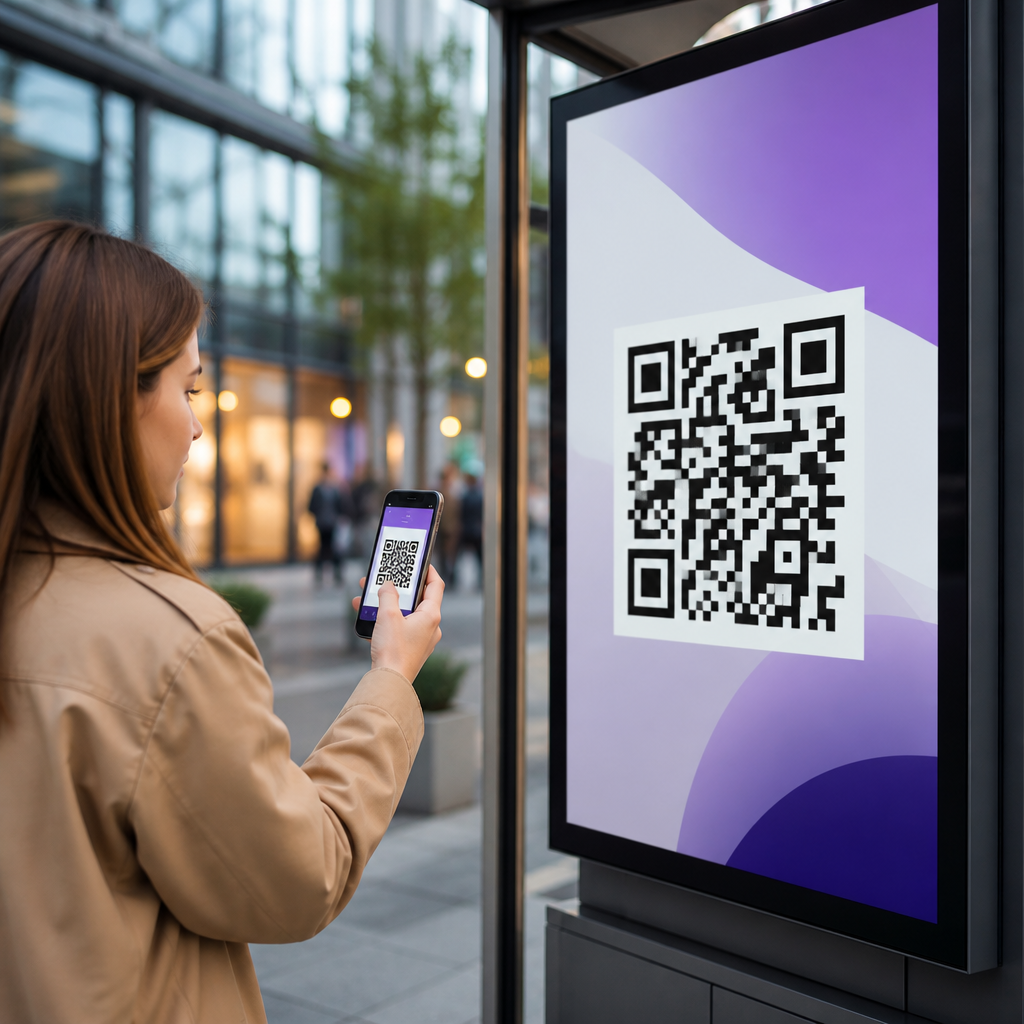
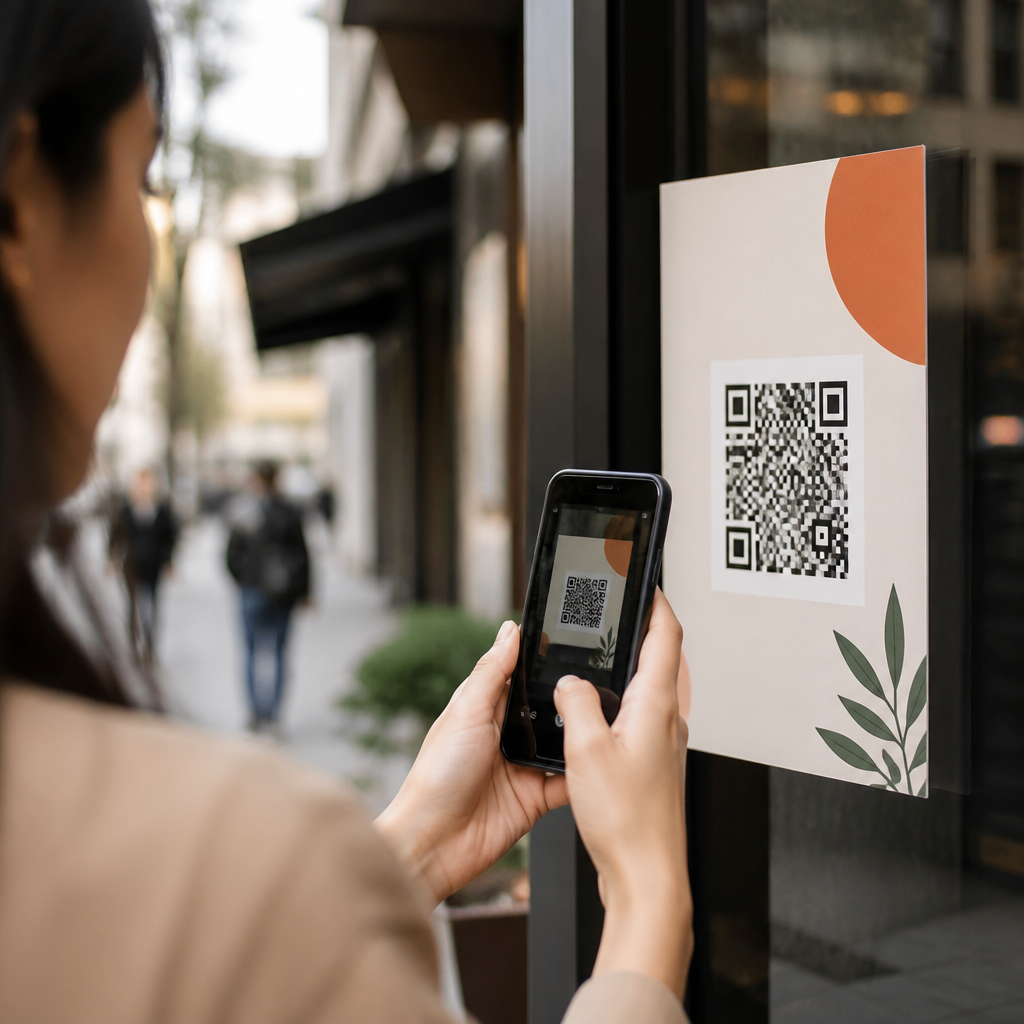
QR codes became mainstream because phone cameras removed the need for separate scanning apps and because consumers grew comfortable moving between physical and digital touchpoints. For marketers, that shift changes the economics of response. A poster, package insert, direct mail piece, shelf talker, receipt, restaurant table tent, trade show badge, or product label can now send a user to a trackable digital destination in one step. In practical terms, that means fewer drop-offs than asking people to remember a URL or search for a brand later.
The strongest use cases share three characteristics. First, the user intent is already present. Someone holding product packaging, standing in a store aisle, or attending an event has context and attention. Second, the value exchange is immediate: access a menu, claim an offer, watch setup instructions, join Wi-Fi, register for a webinar, or save contact details. Third, the marketer can measure the interaction through tagged URLs, dynamic redirects, and analytics platforms such as Google Analytics 4, Adobe Analytics, HubSpot, or Salesforce campaigns.
QR codes also support channel integration. I often use them to bridge print and social, out-of-home and email, packaging and retention, or in-store merchandising and ecommerce. A code on a display can launch a product explainer video. A code in a catalog can open a filtered collection page. A code after checkout can request a review, trigger loyalty enrollment, or deliver care instructions. The code is not the strategy. It is the transport layer connecting intent to action.
QR code marketing strategies that consistently perform
The most effective QR code marketing strategies are built around a clear user task rather than a generic homepage visit. Sending every scan to the home page is one of the most common mistakes I see. Instead, match the destination to the moment. For awareness campaigns, use a fast-loading landing page with a headline that mirrors the creative the user just saw. For consideration, link to a short demo video, comparison chart, case study, or product configurator. For conversion, direct the scan to a prefilled form, mobile checkout page, coupon wallet pass, or appointment scheduler.
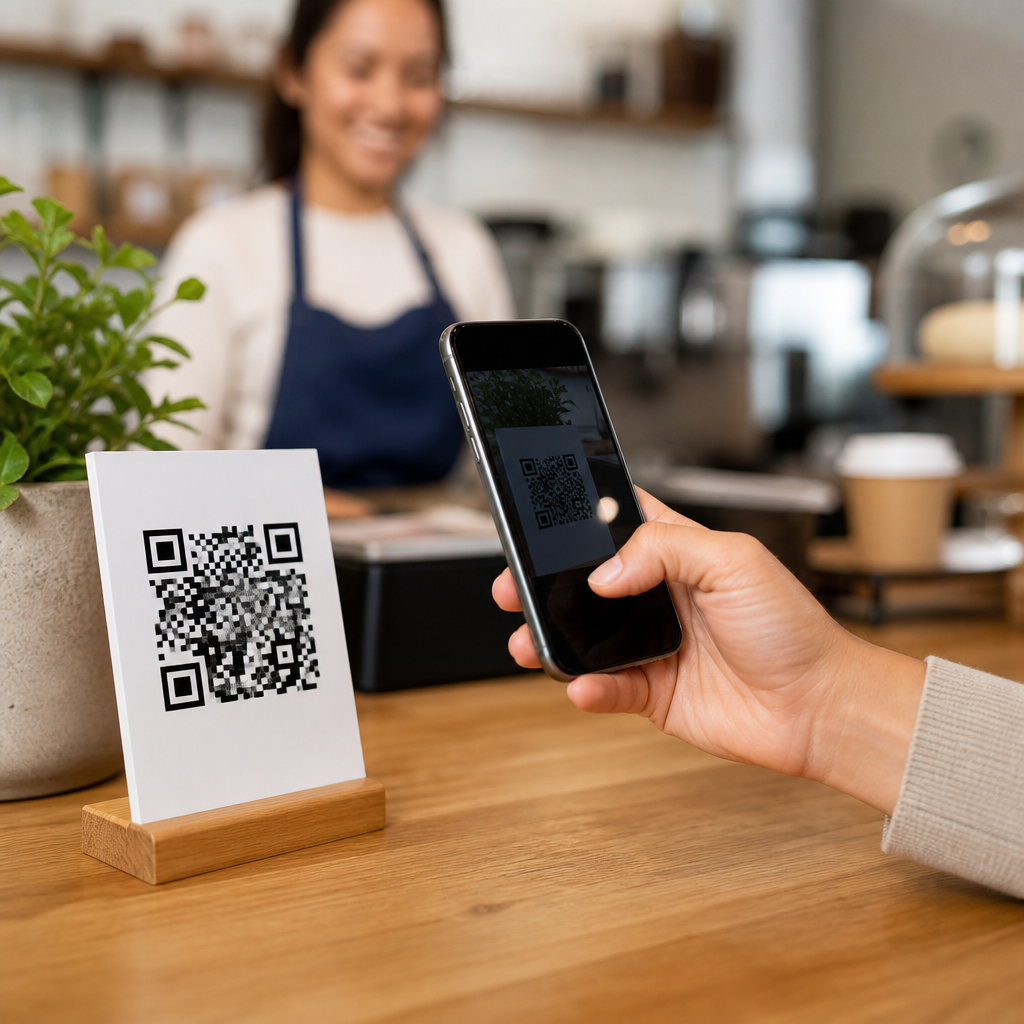
Packaging is one of the highest-performing placements because the product is already in the customer’s hand. Consumer brands use packaging QR codes to provide recipes, authenticity verification, warranty registration, replenishment ordering, and post-purchase education. B2B companies use them on brochures, booth graphics, and leave-behind cards to route prospects to industry-specific landing pages. Restaurants use tabletop codes for menus and upsells, but the better operators go further and collect consent for SMS clubs, feedback, and loyalty. In each case, the scan leads to one primary action.
Dynamic QR codes are usually the right choice for campaigns because the destination can be changed without reprinting the asset. That is essential when a promotion ends, inventory changes, or a market needs a localized page. Static codes still have uses, especially for permanent information like contact cards or fixed URLs, but they offer little flexibility. If the campaign will be measured, updated, segmented, or reused, dynamic is the professional standard.
| Use case | Best destination | Why it works |
|---|---|---|
| Retail shelf display | Product comparison or coupon page | Helps shoppers decide without leaving the aisle |
| Product packaging | Setup guide, reorder page, or loyalty signup | Captures attention at the moment of ownership |
| Direct mail | Personalized landing page | Reduces friction and improves attribution |
| Event signage | Registration, agenda, or lead form | Converts in-person interest while intent is high |
Design and placement rules that improve scan rates
Good QR code performance starts with scannability. The code needs sufficient contrast, an adequate quiet zone around it, and a size appropriate to viewing distance. A practical rule used in print production is roughly one inch of code size for every ten inches of scanning distance, though testing always matters more than rules of thumb. Dark code on a light background is safest. Inverted codes, busy patterns, low contrast brand colors, and decorative frames often reduce successful scans, especially under poor lighting or on curved surfaces.
Placement matters as much as design. Put the code where a person can pause long enough to scan. That seems obvious, but many out-of-home executions fail because they are mounted too high, too far away, or where glare blocks the camera. On packaging, avoid folds, seams, and highly reflective finishes. At events, place the code at entry points, booth counters, and presentation slides, not only on a banner ten feet back. In direct mail, position it near the offer and repeat the value proposition in plain language.
Every code should have a visible call to action. “Scan to save 15%,” “Scan for a two-minute demo,” or “Scan to book a fitting” outperforms a bare code because it answers the user’s first question: why should I bother. I also recommend including a fallback short URL. It helps accessibility, supports desktop users, and protects response if scanning fails.
Landing pages, tracking, and attribution
The landing page determines whether the scan becomes a conversion. Mobile speed is nonnegotiable. A QR code campaign that opens a heavy page with autoplay media, intrusive pop-ups, or a generic navigation maze wastes the click equivalent you worked to earn. The destination should load quickly, restate the promise from the physical asset, and present one obvious next step. If form fill is the goal, keep fields minimal. If purchase is the goal, pre-apply the discount and reduce taps to checkout.
Attribution should be planned before the code is generated. Use UTM parameters consistently so platforms like GA4 can classify source, medium, campaign, and content. For example, a retailer might distinguish scans from window signage versus fitting-room mirrors, or a B2B team might separate booth banner scans from presentation slide scans. Dynamic QR platforms such as Bitly, QR Code Generator, Uniqode, Beaconstac, and Flowcode can add scan analytics, but their dashboards should complement, not replace, your main analytics stack.
Track outcomes beyond scans. Scans measure curiosity; conversions measure business impact. I usually monitor scan-through rate by placement, landing page engagement, form completion, revenue per scan, coupon redemption, assisted conversions, and repeat visits. In physical environments, QR codes can also reveal intent pockets. If one aisle display drives many scans but few purchases, the issue may be pricing, product detail, or stock availability rather than creative weakness.
Common mistakes, compliance issues, and practical limits
Not every audience, environment, or objective suits a QR code. If cellular coverage is poor, if hands are occupied, or if the user is moving quickly, response will fall. Elder audiences are not inherently resistant, but they do respond better when instructions are explicit and the reward is obvious. Internal tests I have run repeatedly show that complexity kills adoption faster than age does. A code that asks for an app install, account creation, and a long form is asking too much.
Security and trust deserve attention. Because people cannot see the destination by looking at a code, branded context matters. Use your brand name near the code, point to a recognizable domain, and avoid redirect chains that feel suspicious. If personal data is collected, the landing page should clearly explain consent, cookies, and data use. Marketers operating in regulated sectors should align with applicable requirements such as GDPR, CCPA, CAN-SPAM, TCPA, and industry-specific rules. Review links should also follow platform policies; for example, incentives tied to ratings can violate marketplace or review-site guidelines.
Another common mistake is treating QR codes as a one-time creative add-on instead of an optimization channel. Codes should be tested like emails, ads, and landing pages. Compare calls to action, placements, incentive levels, destination formats, and page layouts. Even small changes matter. I have seen a packaging code outperform after shifting from “Learn more” to “Watch setup in 90 seconds,” because the user need was not education in general but immediate problem solving.
Building a scalable hub for QR codes in digital marketing
As a hub topic, QR codes in digital marketing should connect several deeper subjects: dynamic versus static codes, packaging campaigns, direct mail integration, event lead capture, retail signage, restaurant ordering, QR code analytics, QR landing page design, and QR code security practices. This structure helps readers move from strategy to implementation and helps teams build repeatable playbooks. Each subtopic should answer a specific question and link naturally back to the main framework: audience, context, destination, measurement, and optimization.
The brands that win with QR codes are not chasing novelty. They remove friction at moments of intent. They give the scanner a clear payoff, deliver a mobile experience that matches the promise, and measure results with discipline. If you are building or refining a mobile QR code program, start with one high-intent use case, implement dynamic tracking, and test the landing experience relentlessly. That is how QR code marketing strategies actually work, and that is the foundation for scaling them across your broader digital marketing mix.
Frequently Asked Questions
What makes a QR code marketing campaign actually effective?
An effective QR code marketing campaign works because it removes friction at the exact moment a customer is ready to act. The best-performing campaigns do not use QR codes as decoration or novelty. They use them to solve a real problem faster than any alternative, whether that means opening a coupon instantly, viewing a restaurant menu, accessing a product demo, leaving a review, joining an event waitlist, or completing a payment. If scanning the code feels easier than typing a URL, searching for the brand, or downloading an app, response rates usually improve.
In practice, effectiveness comes down to message-to-moment fit. The destination has to match the user’s intent where they encounter the code. A QR code on product packaging should lead to product support, setup instructions, or replenishment options. A code on an event sign should lead to registration, agenda details, or speaker information. A code on a table tent in hospitality should lead to ordering, reservations, or a loyalty offer. When the destination is relevant to the situation, scans are more likely to convert.
Strong campaigns also make the value obvious before the scan happens. People should know exactly what they get by using the code. A short call to action such as “Scan for 15% off,” “Scan to watch the demo,” or “Scan to book in 30 seconds” consistently outperforms vague prompts like “Learn more.” Add visual hierarchy, enough white space around the code, and placement where users can comfortably scan with their phones. Then make sure the landing experience is mobile-first, fast-loading, and focused on a single next step.
Where should businesses place QR codes for the best results?
The best placement depends on when and why the customer would want instant access to something. High-performing QR codes are usually placed where attention, intent, and convenience overlap. In retail, that often means shelves, packaging, window displays, receipts, direct mail, and point-of-sale counters. In hospitality, it can include tables, guest rooms, menus, lobby signage, and check-in materials. At events, strong placements include badges, booth graphics, presentation slides, handouts, and follow-up signage near exits. In B2B, QR codes work well on trade show materials, sales leave-behinds, product one-pagers, and print ads that offer a specific resource.
Physical context matters just as much as industry. The code must be easy to notice and physically easy to scan. Avoid placing QR codes too high, too low, behind reflective surfaces, in dim lighting, or on moving objects where people cannot pause. If a user has to step back awkwardly, zoom in, or fight glare, scans drop. Printing quality matters too. The code should be large enough for the expected scanning distance, with strong contrast and enough quiet space around it to ensure camera recognition.
One of the most reliable rules is to place the QR code as close as possible to the decision point. If a customer is considering a product, put the code near the product. If they are waiting in line, offer a code that speeds ordering, signup, or payment. If they just completed a purchase, use a receipt or packaging insert to drive reviews, referrals, or repeat orders. The closer the code is to a natural action point, the more likely it is to generate meaningful engagement instead of curiosity-only scans.
What should a QR code link to in order to increase conversions?
A QR code should link to the shortest possible path between interest and action. That destination might be a dedicated landing page, a coupon, a review form, a product video, a payment screen, an event registration page, a digital menu, or a lead capture form. The key is that the destination must feel like the natural continuation of the context in which the code appears. If someone scans from a product label, they should not land on a generic homepage and have to search for the item again. If someone scans at a conference booth, they should not have to navigate through a full corporate site just to download the promised resource.
Conversion rates improve when the page is intentionally built for mobile users and single-task completion. Keep the destination page fast, uncluttered, and designed around one primary outcome. Remove unnecessary navigation, reduce form fields, and restate the promise from the call to action so users immediately know they are in the right place. For example, if the sign says “Scan to claim your free sample,” the landing page should repeat that offer clearly and let the user claim it with minimal effort.
Dynamic destinations are especially useful for marketers who want to optimize over time. A dynamic QR code allows you to update the linked destination without reprinting the code, which is valuable for seasonal campaigns, A/B testing, local offers, event schedules, or inventory-sensitive promotions. It also supports better measurement and attribution. In most cases, the highest-converting destination is not the broadest one. It is the most specific one, built for the exact audience, moment, and action the campaign is trying to create.
How can you track and measure QR code marketing performance?
Tracking QR code performance starts with giving each campaign, channel, and placement its own measurable path. The most practical way to do this is by using dynamic QR codes paired with analytics-friendly URLs, campaign parameters, and dedicated landing pages. This lets you distinguish scans from in-store signage versus direct mail, packaging, event booths, or print ads. Without that separation, it becomes much harder to understand which placements are actually producing results and which are only generating surface-level engagement.
The first layer of measurement is scan activity: total scans, unique scans, scan time, device type, and location data where available and privacy-compliant. But scan volume alone is not enough. The more important metrics are what happens after the scan. Track landing page visits, bounce rate, form completions, coupon redemptions, purchases, review submissions, menu orders, booked demos, or event registrations. In other words, treat the QR code as the entry point, not the final success metric. What matters most is whether the scan leads to the intended business outcome.
To improve performance over time, compare results across variables such as call to action, placement, destination type, incentive, and design. A small wording change from “Scan for details” to “Scan to get today’s discount” can materially change scan behavior. Testing also reveals whether a campaign has a friction problem after the scan, not before it. If scans are high but conversions are low, the issue is probably the landing experience, offer relevance, or form complexity. If scans are low from the beginning, the problem is more likely visibility, placement, trust, or weak value messaging. Good measurement turns QR codes from a gimmick into a dependable acquisition and conversion tool.
What are the most common QR code marketing mistakes to avoid?
The biggest mistake is using a QR code when it does not make the customer’s life easier. If the code leads to a homepage, a slow-loading page, a desktop-only experience, or information users could access more quickly another way, the campaign loses credibility. People scan because they expect speed and convenience. When that expectation is not met, response drops and the brand experience suffers. A QR code should never add a step without adding clear value.
Another common mistake is failing to tell people why they should scan. A code with no context, no benefit statement, and no next-step explanation usually underperforms. Users want certainty. They want to know whether they are about to get a discount, a demo, directions, a menu, a payment option, or a sign-up form. Trust also matters. Brands that add a recognizable logo, clean design, and a direct call to action often see better engagement because the experience feels intentional rather than suspicious or random.
Marketers also frequently overlook technical and usability basics. Poor contrast, tiny print size, low-resolution files, bad placement, and inadequate testing across different phone cameras can all hurt scan rates. On the back end, not using dynamic codes, not setting up analytics, and not aligning the landing page with the campaign goal are strategic mistakes that limit optimization. The most successful QR code marketing strategies stay simple: put the code where intent is highest, promise one clear benefit, deliver a fast mobile experience, and measure what happens after the scan. When those fundamentals are in place, QR codes become a practical conversion tool rather than just a trend.