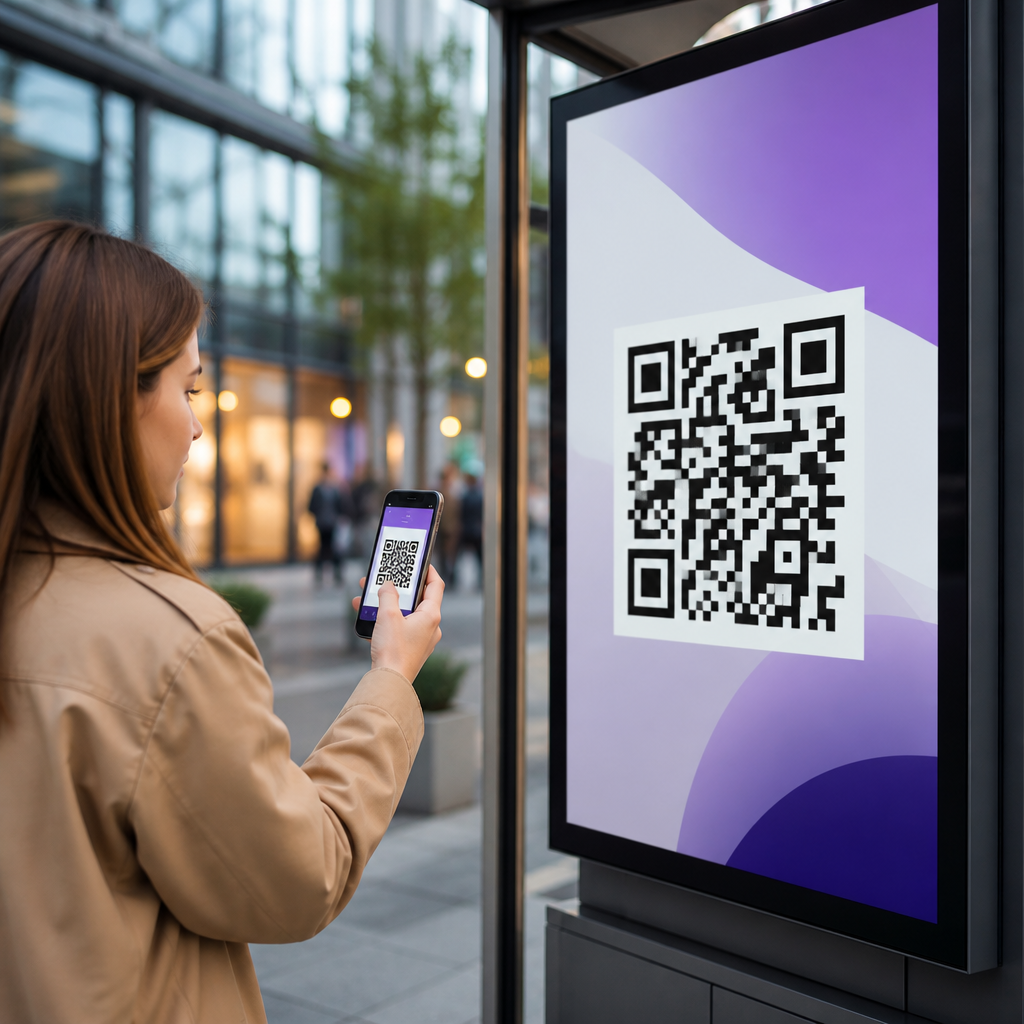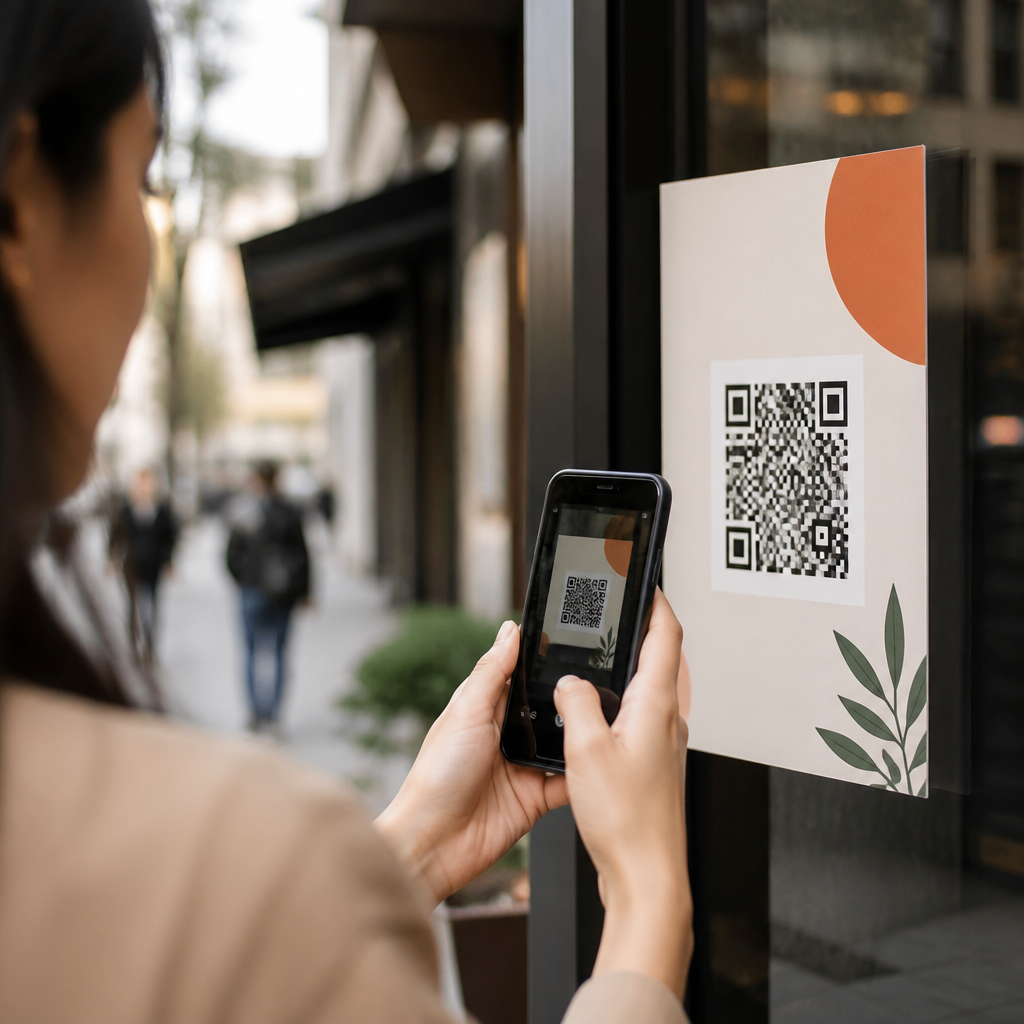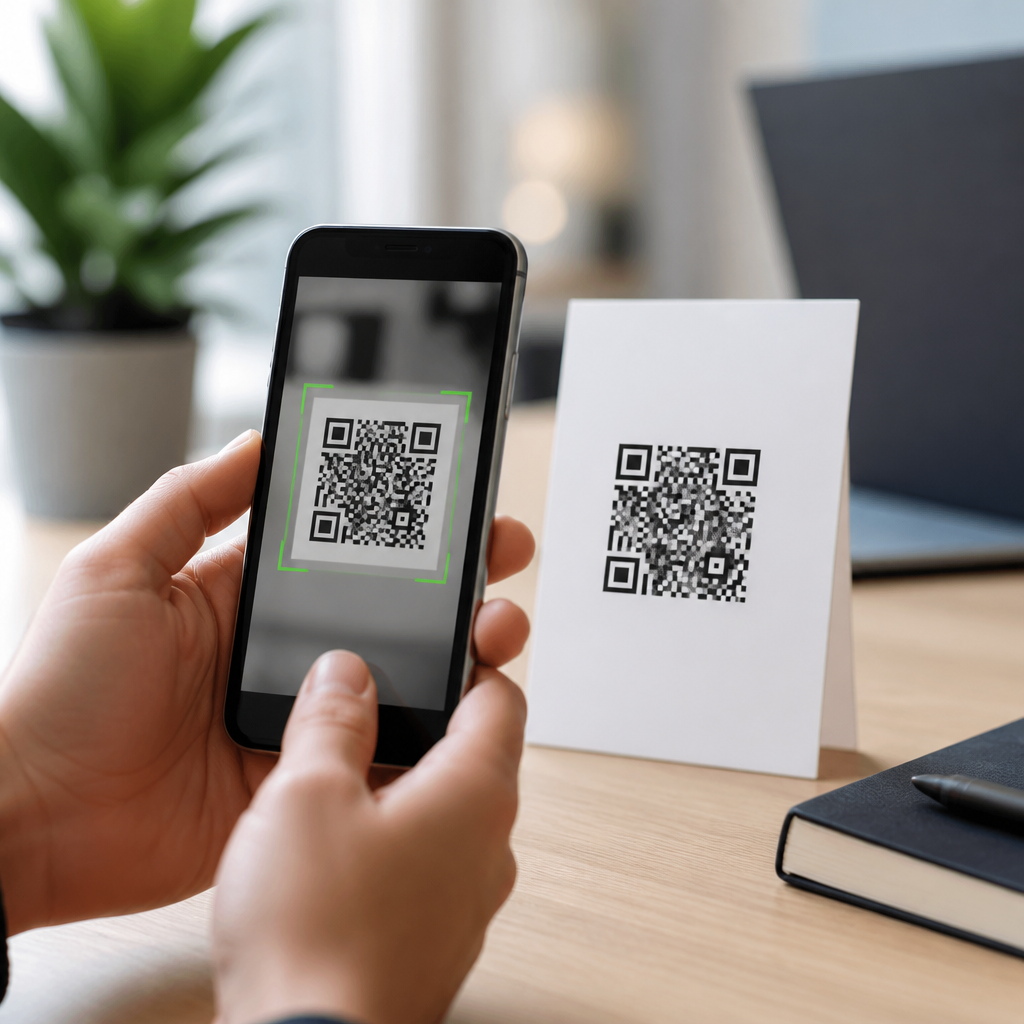
QR codes for re-engagement campaigns give email marketers a practical way to reconnect with inactive subscribers by moving them from a crowded inbox to a fast mobile experience. In this context, re-engagement means winning back people who stopped opening, clicking, purchasing, or visiting, while QR codes are scannable two-dimensional barcodes that send a smartphone user to a landing page, app screen, coupon, survey, store locator, or support flow. I have used them in lifecycle email programs because they remove friction: a subscriber can scan from a desktop screen, printed insert, or secondary device and continue instantly on mobile. That matters because dormant audiences are expensive. They lower engagement rates, distort segmentation, and can hurt deliverability if brands keep mailing people who no longer respond. Used well, QR codes in email marketing help recover revenue, clean lists intelligently, and create measurable touchpoints between inbox activity and mobile behavior.
As a hub topic within mobile QR codes for marketing, this subject goes beyond placing a code in a newsletter. It includes strategy, creative, measurement, compliance, and channel coordination. Marketers need to know when a QR code is better than a button, what destination best fits a reactivation goal, how to tag scans for attribution, and how to test performance across devices and mailbox providers. They also need to understand limitations: not every email client displays images the same way, some users do not know why to scan, and a weak landing page cancels the benefit of the code. The strongest campaigns answer a simple question clearly: what should an inactive subscriber get by scanning right now? When the answer is immediate, useful, and mobile-friendly, QR codes become a reliable re-engagement tool rather than a decorative add-on.
Why QR codes work in email re-engagement
QR codes work because they compress intent into one action. A subscriber may ignore a standard “come back” email, but a scan-to-redeem offer or scan-to-update-preferences prompt creates a different behavior pattern. In practice, I see three advantages. First, the code bridges devices. Many people read email on a laptop while shopping later on a phone. Scanning removes the need to remember a URL or search for the brand. Second, a QR code feels task-oriented. “Scan to claim your 15% win-back offer” is more concrete than “click here to learn more.” Third, it supports offline-to-online loops. A dormant email subscriber can receive a catalog, package insert, or event handout with the same code family used in email, making reactivation consistent across touchpoints.
The use cases are broader than discounts. Retail brands can send a QR code that opens a prefilled cart with previously browsed items. A restaurant chain can route lapsed loyalty members to a wallet pass or location finder. A software company can invite inactive trial users to scan for a guided product tour, webinar registration, or support callback. Healthcare and financial services brands, where sensitivity and compliance matter, often use QR codes for secure preference updates, appointment reminders, or educational content rather than aggressive promotions. Across sectors, the principle is the same: reduce steps, set a clear expectation, and make the mobile destination immediately valuable.
Campaign types and the best destination for each
Different re-engagement goals require different QR destinations. If the goal is to recover a sale, send the scan to a product collection page, saved cart, or limited-time offer page with inventory visibility and mobile checkout. If the goal is to preserve list health, route the scan to a preference center where the subscriber can reduce frequency, choose topics, or pause messages instead of unsubscribing. If the goal is research, send the user to a one-question survey asking why they disengaged: too many emails, irrelevant products, price, or switched providers. These answers sharpen segmentation and content strategy.
App-focused brands should consider deep links. A QR code can open a specific in-app screen for loyalty points, order history, or a renewal page. If the app is not installed, deferred deep linking can send the user to the app store first and then continue to the intended content after installation. Hospitality brands can use QR codes to reopen the booking journey with nearby properties already filtered. B2B marketers can direct scans to a scheduling page for a success review, a gated benchmark report, or a customer portal login screen. The wrong destination is a generic homepage. Reactivation fails when the subscriber must search again for relevance.
| Re-engagement goal | Best QR destination | Why it works |
|---|---|---|
| Recover abandoned demand | Saved cart or personalized offer page | Restores shopping context and shortens checkout path |
| Reduce churn | Preference center | Lets subscribers lower frequency instead of leaving entirely |
| Gather feedback | One-question survey | Captures the reason for inactivity with minimal effort |
| Increase app usage | Deep link to loyalty or account screen | Moves dormant users into high-retention mobile behavior |
| Drive local visits | Store locator or map route | Turns email attention into measurable foot traffic |
Designing QR codes in email so people actually scan
Placement and explanation matter as much as the code itself. A QR code without context underperforms because subscribers do not know what happens next. The label should state the benefit and destination plainly: “Scan to reactivate your rewards,” “Scan for your personalized menu,” or “Scan to set email preferences in 10 seconds.” In my campaigns, codes perform best when they are paired with one primary value proposition, enough white space for recognition, and a fallback text link for users already reading on mobile. The image must be large enough to scan from a desktop screen; around 180 to 240 pixels square is typically safe, though creative testing should confirm readability across layouts.
Use dynamic QR codes rather than static ones for most campaigns. Dynamic codes let marketers change the destination after send, rotate offers, pause broken links, and collect scan analytics without creating a new image every time. Error correction should be balanced: too little can hurt readability if the email is compressed; too much can make the pattern denser than necessary. Branded frames and logos are acceptable if contrast remains strong. Black on white is still the most dependable choice. Always test in major clients such as Apple Mail, Gmail, and Outlook, and validate scans on both iOS and Android cameras. A beautiful code that fails in one common client is not a creative win; it is a conversion leak.
Measurement, attribution, and list strategy
A QR code campaign should be measured beyond scans. The basic stack includes unique campaign parameters, first-party analytics, and downstream conversion events. At minimum, tag the destination URL with source, medium, campaign, audience segment, and creative version. If your email platform supports user-level identifiers, pass them securely to the landing page and analytics layer so you can connect scan behavior with opens, clicks, purchases, and unsubscribe actions. Google Analytics 4, Adobe Analytics, Branch, AppsFlyer, and major CRM systems can all support this model when naming conventions are disciplined.
The most useful metrics are reactivation rate, post-scan conversion rate, revenue per reactivated subscriber, and suppression avoided through preference changes. Scan rate alone can mislead. A campaign with modest scans but strong preference-center completions may outperform a flashy discount that drives low-margin orders and high future churn. Segment carefully. I usually separate recently cooling subscribers from deeply inactive ones, because the incentive and message tone should differ. A 30-day lapsed customer may respond to new arrivals, while a 180-day inactive buyer often needs a stronger reason, such as loyalty recovery, exclusivity, or service reassurance. QR behavior can also become a signal in lead scoring and customer health models, especially for app-first brands.
Compliance, security, and common mistakes
QR codes create convenience, but they also create trust questions. Subscribers have learned to be cautious about unfamiliar links, and a code hides the visible URL unless the user previews it. The solution is transparency. State where the scan leads, keep branding consistent, use your owned domain, and avoid link shorteners that look generic. For regulated sectors, confirm that the landing experience follows consent, authentication, and data handling requirements. CAN-SPAM, GDPR, and industry-specific rules still apply even when the path begins with a code in an email. If the destination collects personal information, explain the purpose clearly and minimize form fields.
The most common mistakes are straightforward. Marketers place a QR code in an email that is primarily opened on mobile, where scanning is awkward unless another device is available. They fail to include a clickable alternative. They send everyone to the homepage. They use codes as decoration instead of as a direct response mechanism. They skip QA on dark mode, image blocking, and rendering in Outlook. They also overuse discounts, training subscribers to wait for a reactivation coupon. A stronger practice is to match the offer to the lapse reason: convenience for busy users, education for confused users, and value for price-sensitive users. Re-engagement becomes sustainable when the QR code delivers relevance, not just urgency.
Building a hub-and-spoke content program around QR codes in email marketing
As the hub page for QR codes in email marketing, this topic should support deeper articles that answer specific operational questions. Useful companion pieces include QR code landing page best practices, dynamic versus static QR codes, how to track QR scans in analytics platforms, QR codes for cart recovery emails, QR codes for loyalty reactivation, and email client testing checklists. This structure helps readers move from strategy to execution without leaving gaps. It also reflects how teams actually work: email specialists care about creative and deliverability, lifecycle managers care about segmentation, analysts care about attribution, and mobile teams care about deep links and app events.
The core lesson is simple. QR codes for re-engagement campaigns work when they remove friction, clarify the next step, and connect email intent to a mobile outcome that matters. Start with one dormant segment, one explicit offer, and one destination built for fast completion. Measure scans, but optimize for reactivation and retained value. If you are building a broader mobile QR marketing program, use this page as the foundation, then expand into the spoke topics that match your stack and customer journey. The brands that win back inactive subscribers are not the ones sending more reminders; they are the ones making return effortless. Audit your current win-back emails, identify one place where scanning would save a step, and test it.
Frequently Asked Questions
1. How do QR codes help with re-engagement campaigns?
QR codes help re-engagement campaigns by giving inactive subscribers a faster, lower-friction path back into your brand experience. Instead of asking someone who has ignored several emails to read a long message, click a text link, wait for a browser page to load, and then figure out what to do next, a QR code lets them scan and move directly into a mobile destination built for action. That destination might be a personalized landing page, a limited-time coupon, a product collection, a survey, an app deep link, a preference center, or even a support flow that solves a problem blocking future purchases.
From an email marketing perspective, this is valuable because re-engagement is often less about sending more reminders and more about removing barriers. Many inactive subscribers are not truly uninterested; they may simply be overwhelmed, too busy to search for an offer later, or disconnected from the experience you are presenting in a standard inbox format. A QR code creates a bridge from email to mobile behavior, which is especially useful when your audience is more likely to complete a purchase, redeem an offer, or browse content on a phone.
QR codes also create flexibility in campaign design. You can place them in win-back emails, direct mail follow-ups, in-store signage, packaging inserts, or customer service outreach so the same re-engagement strategy reaches customers across channels. When paired with a strong call to action such as “Scan to reactivate your offer,” “Scan to update your preferences,” or “Scan to unlock your return discount,” the code becomes more than a visual element. It becomes a clear next step for subscribers who have stopped opening, clicking, purchasing, or visiting.
2. What should a QR code in a win-back email link to?
A QR code in a win-back email should link to a destination that matches the subscriber’s likely reason for disengagement and makes the next action easy. The best destination is usually not your homepage. Sending an inactive user to a generic page often creates confusion and forces them to do too much work. Instead, the QR code should lead to a focused mobile experience with one clear goal.
For example, if your objective is to recover purchases, the code could open a landing page with a time-sensitive discount, a curated selection of bestsellers, or a saved cart reminder. If the subscriber may have lost interest because your messaging was not relevant, the code should lead to a preference center where they can choose email frequency, product interests, location, or content type. If you suspect friction in the customer journey, the QR code might point to a support page, FAQ flow, store locator, or app screen that simplifies the next step.
High-performing destinations usually share a few traits: they are mobile-optimized, fast-loading, visually clean, and tied to the exact promise made in the email. They also reduce distractions. If the email says “Scan to claim 15% off your next order,” the landing page should immediately show the offer, explain how to use it, and present a direct call to action. If the email says “Still want to hear from us? Scan to update your preferences,” the page should open straight to those settings rather than making the subscriber log in and search.
Whenever possible, use dynamic QR codes and campaign tracking parameters so you can update destinations without changing the printed or embedded code and measure the performance of each experience. This allows marketers to test whether an offer page, survey, app prompt, or content hub is more effective for bringing inactive subscribers back into the funnel.
3. Are QR codes better than regular links for re-engaging inactive subscribers?
QR codes are not automatically better than regular links, but they can be highly effective when used in the right context. In a standard email open on a smartphone, a tappable button is usually the most direct option because the user is already on the device they need. However, QR codes become especially useful when you want to connect channels, encourage a second-screen action, or create a more memorable reactivation experience that goes beyond a simple click.
For instance, if a subscriber opens your email on a desktop at work but is more likely to browse, shop, or redeem an offer on a phone later, a QR code gives them a convenient handoff from one device to another. The same is true when QR codes appear in direct mail, catalogs, receipts, packaging, event signage, or retail displays as part of a broader re-engagement journey. In those situations, the QR code can be more practical than asking someone to type a URL or search for your brand manually.
The smartest approach is usually to treat QR codes as a complement, not a replacement, for regular links. Include a strong button for immediate clicks and a QR code for subscribers who want a fast mobile path from another device or physical touchpoint. This gives users choice and helps you capture more forms of intent. It also improves resilience in your campaign design, since some audiences are very comfortable scanning codes while others still prefer traditional links.
The real advantage of QR codes is strategic, not just technical. They can make re-engagement feel more interactive, more immediate, and more connected to mobile behavior. But for them to outperform a regular link, they need a clear value proposition, a well-designed destination, and a campaign setup that fits how your audience actually interacts with email and other brand channels.
4. What are the best practices for using QR codes in re-engagement emails?
The best practices start with clarity. A QR code should never appear without context. Inactive subscribers need a compelling reason to scan, so the surrounding copy should explain exactly what they will get and why it matters now. Phrases like “Scan to claim your comeback offer,” “Scan to restart your membership benefits,” or “Scan to tell us what you want to receive” work better than a code with no explanation.
Design matters as well. The QR code should be large enough to scan easily, placed in a visually obvious position, and surrounded by enough white space for reliable readability. It should also maintain strong contrast between foreground and background. If you add brand styling, logos, or color customization, test the code thoroughly across devices and lighting conditions so aesthetics do not reduce usability.
Equally important is the mobile experience after the scan. The landing page should load quickly, reflect the same offer or message from the email, and focus on one primary action. If your re-engagement page asks for too much information, includes too many navigation options, or hides the benefit behind multiple steps, you risk losing the subscriber again. Simplicity is a major part of successful win-back strategy.
Marketers should also think about segmentation. Not all inactive subscribers disengage for the same reason. Some need a discount, some need reassurance, some need content relevance, and some simply want fewer messages. Use QR codes in targeted versions of your campaign so each segment gets an experience aligned with its likely intent. This increases the chance that the scan results in meaningful action instead of curiosity without conversion.
Finally, measure everything. Use trackable QR codes, campaign parameters, and downstream analytics to monitor scans, landing-page engagement, form completions, purchases, app opens, and preference updates. Re-engagement campaigns are only useful if they restore customer value, so success should be judged by business outcomes, not just scans alone.
5. How can marketers measure whether QR codes are improving re-engagement results?
Marketers should measure QR code performance as part of a full re-engagement funnel rather than looking at scan volume in isolation. A scan is only the first signal. What matters is whether the subscriber takes a meaningful step toward renewed engagement, such as updating preferences, opening future emails, making a purchase, revisiting the site, downloading the app, or redeeming an offer.
Start by tracking core QR code metrics: scan count, unique scans, device type, location if relevant, time of scan, and destination performance. Then connect those actions to landing-page behavior such as bounce rate, time on page, click-through rate, form completion, coupon activation, and checkout starts. If the re-engagement campaign includes personalized destinations, compare which versions drive the strongest outcomes for different subscriber segments.
It is also important to compare QR-based re-engagement against other paths. For example, test a win-back email with a standard call-to-action button against a version that includes both a button and a QR code, or compare different QR destinations such as a discount page versus a preference center. This helps determine whether QR codes are creating incremental value or simply shifting behavior that would have happened anyway.
To assess true reactivation, extend the measurement window beyond the initial interaction. Review whether people who scanned the code return to opening emails, clicking through future campaigns, purchasing again, or visiting your site over the next 30, 60, or 90 days. That longer view is critical because the purpose of a re-engagement campaign is not just to spark one response. It is to rebuild an active customer relationship.
Finally, tie the data back to lifecycle and revenue goals. If QR code users show higher retention, stronger repeat purchase rates, or lower unsubscribe rates than similar inactive subscribers who did not scan, that is strong evidence the tactic is working. In other words, the best measurement framework asks not only “Did they scan