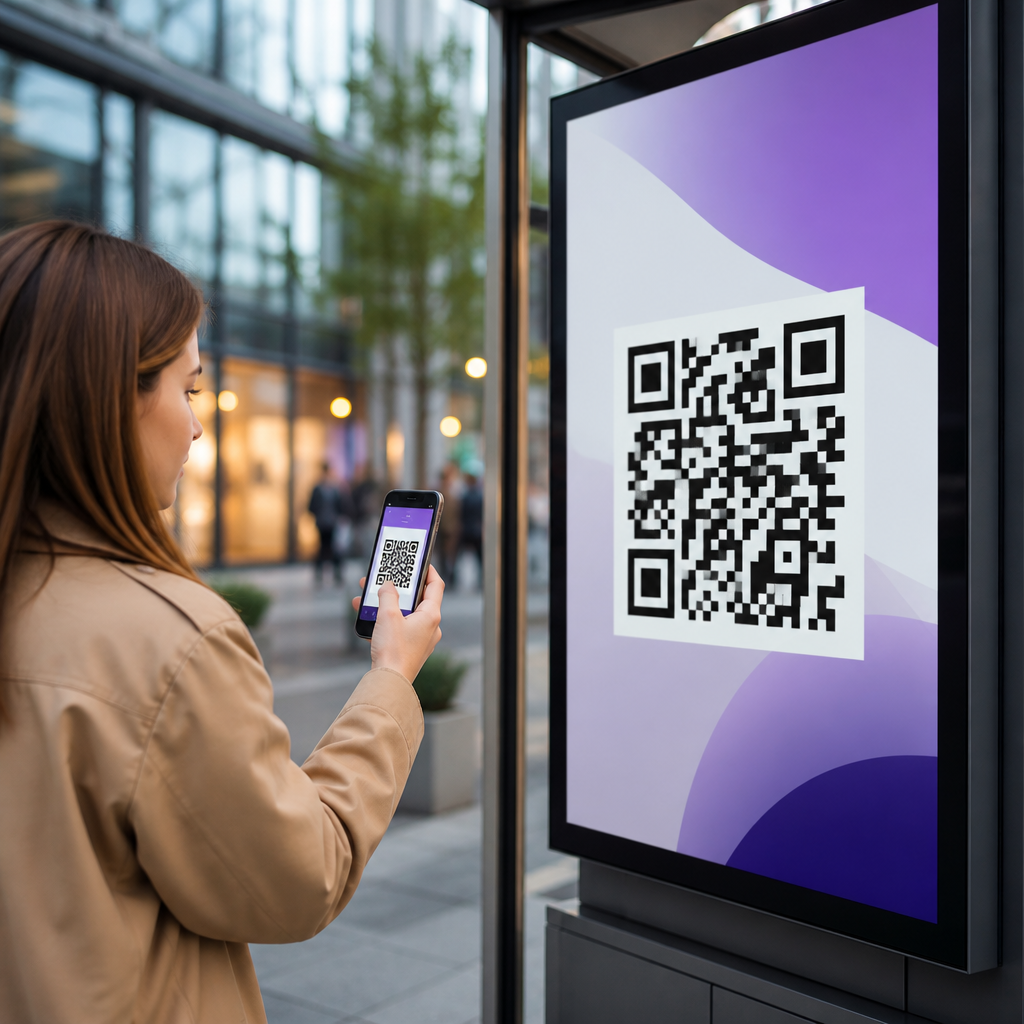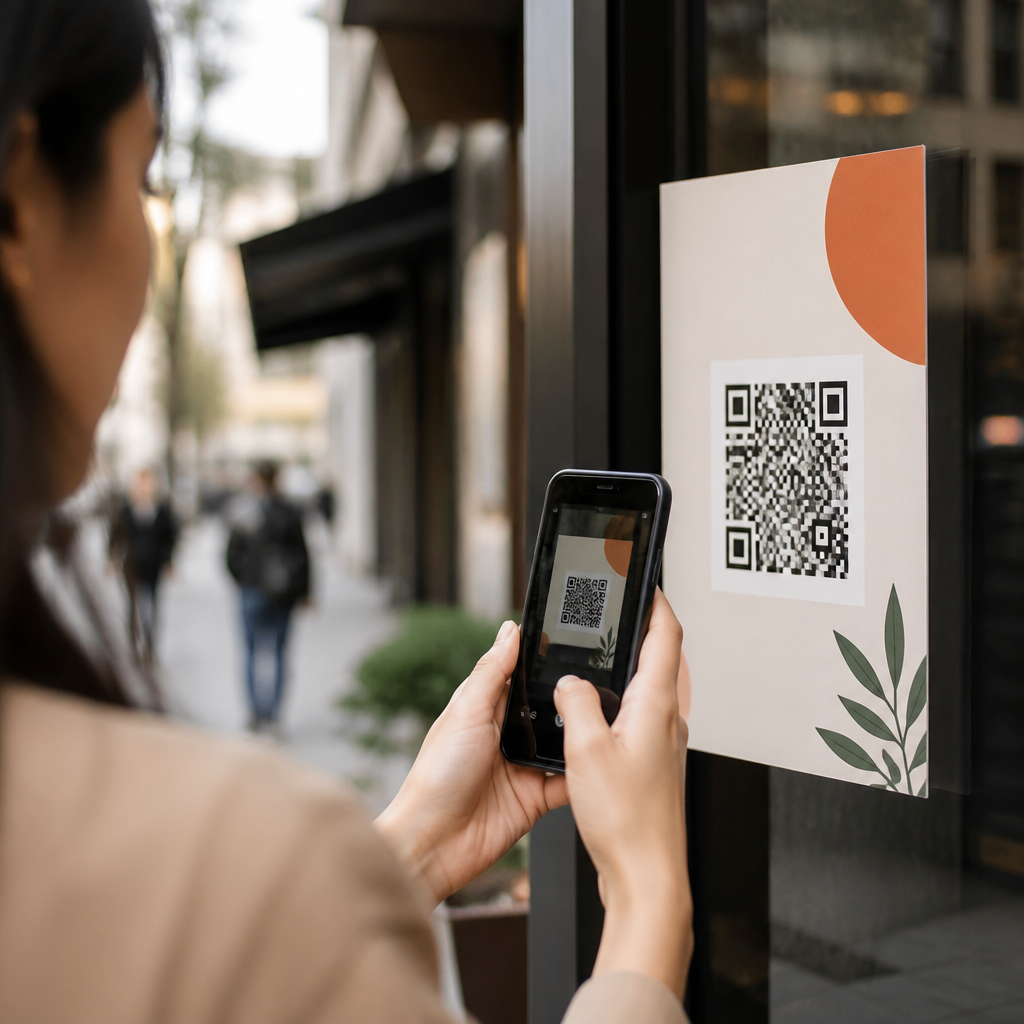

QR codes have moved far beyond restaurant menus and contactless payments. In B2B marketing, they now serve as measurable bridges between offline touchpoints and digital lead capture, helping teams turn booth traffic, direct mail, packaging, print ads, sales collateral, and field events into qualified pipeline. When I have implemented QR campaigns for manufacturers, software vendors, and service firms, the strongest results came when the code was treated not as a novelty, but as a conversion path with a clear audience, offer, landing page, and follow-up workflow. That is the core of effective QR codes for B2B lead generation strategies.
A QR code, or Quick Response code, is a two-dimensional barcode that a smartphone camera can scan to open a URL, download a file, save contact details, start a message, or trigger another mobile action. In lead generation, the most useful application is dynamic URL routing. Instead of hard-coding one destination forever, a dynamic QR code points to a short redirect that can be updated, tagged, and measured over time. That flexibility matters in B2B because campaigns often run across long sales cycles, multiple regions, and several stakeholders.
Why does this topic matter? B2B buying journeys rarely start and end online. Prospects encounter brands in trade show halls, on product packaging, inside showrooms, in mailed dimensional kits, at conferences, and through channel partners. Without a scannable bridge, those interactions are hard to attribute. QR codes solve that gap by making response immediate and trackable. They also reduce friction on mobile, which is important because decision-makers frequently research vendors between meetings, during travel, or while walking an event floor. Used well, QR codes help marketing and sales collect intent signals, personalize follow-up, and improve cost per lead.
How QR Codes Fit the B2B Lead Generation Funnel
QR codes support every major funnel stage when the destination matches buyer intent. At the top of funnel, a code can link to an industry report, benchmark study, webinar registration, or product explainer built to educate rather than sell. In the middle of funnel, the same format can drive demo requests, ROI calculators, comparison guides, or case studies. Near the bottom, sales teams can place a code on proposals, one-pagers, or booth displays that opens a meeting scheduler, technical documentation library, or proof-of-concept signup page.
The strategic advantage is context. A visitor scanning a code on a machine panel at a manufacturing expo has different intent from someone scanning a code in a mailed executive briefing pack. The code placement tells you what likely motivated the interaction. When that context is combined with campaign parameters, CRM fields, and lead scoring rules, the scan becomes a meaningful signal, not just a vanity metric. In platforms such as HubSpot, Salesforce, Marketo, and Pardot, that signal can trigger segmentation, attribution, and follow-up sequences.
Good B2B funnel design also accounts for role differences. Procurement may want pricing frameworks, engineers may want specifications, and senior leadership may want a business case. Separate QR destinations for separate stakeholder concerns usually outperform a single generic landing page. The practical lesson is simple: map QR experiences to buying-stage questions and job-role needs, then measure progression from scan to form fill to meeting to opportunity.
High-Performing Use Cases Across Channels
The best QR codes for lead generation are attached to moments of real attention. Trade shows are the most obvious example. Booth graphics can invite scans for a prize draw, product demo, spec sheet, or post-event consultation. Badge scans alone often produce weak follow-up lists because they capture presence, not intent. A voluntary QR scan tied to a valuable asset is stronger evidence of interest and can enrich event leads with clearer first-party data.
Direct mail is another standout channel. In account-based marketing programs, I have seen dimensional mailers use QR codes to send targeted accounts to personalized landing pages with the recipient’s company name, a short custom video, and a meeting offer. Response rates improve when the landing page continues the exact message on the package. Print ads, sales brochures, case study handouts, invoices, product labels, vehicle wraps, and in-office signage also work when they offer something specific and relevant.
Channel partners can benefit as well. A distributor can place a vendor’s QR code in catalogs or showroom materials, routing traffic to co-branded pages that identify partner source without requiring a complex login experience. Field sales teams often use QR-enabled leave-behind cards so prospects can request drawings, compliance documents, or consultations after the meeting. In each case, the code performs one job: remove steps between curiosity and conversion.
| Channel | Best QR Offer | Primary Metric | Typical Follow-Up |
|---|---|---|---|
| Trade show booth | Demo signup or spec sheet | Scan-to-form rate | Sales outreach within 24 hours |
| Direct mail | Personalized landing page | Meetings booked | ABM sequence |
| Print collateral | Case study or calculator | Content downloads | Nurture email track |
| Product packaging | Registration or training | Known-user conversions | Customer expansion campaign |
Designing a QR Offer That Converts
A QR code does not generate leads by itself; the offer does. The strongest offers answer an immediate business question: How can I reduce downtime, benchmark costs, shorten implementation, maintain compliance, or justify investment? In B2B, practical utility usually beats novelty. An engineer is more likely to scan for a CAD file, checklist, or troubleshooting guide than for a vague “learn more” page. A finance stakeholder is more likely to engage with a savings calculator or total-cost-of-ownership worksheet.
Landing page quality matters just as much. Keep the message match exact, the form short, and the mobile experience fast. A page reached via QR should load quickly, show the value proposition above the fold, and avoid navigation distractions. If the ask is a form, request only essential fields at first. Progressive profiling can gather deeper details later. Adding trust elements such as customer logos, ISO certifications where relevant, privacy language, and concise proof points improves completion rates.
Calls to action should be explicit and tied to a reward. “Scan to get the compliance checklist” is stronger than “Scan here.” Visual placement matters too: use high contrast, quiet space around the code, and a size appropriate for viewing distance. For print, test under real conditions. A code on a trade show wall must scan from several feet away; a code on a brochure can be smaller. Error correction supports branded designs, but heavy customization can reduce readability, so test on multiple devices before launch.
Measurement, Attribution, and CRM Integration
For B2B teams, measurement is where QR codes become strategically valuable. Track more than scans. At minimum, capture unique scans, landing page sessions, form completion rate, meetings booked, influenced opportunities, and pipeline generated. Use UTM parameters consistently so analytics platforms can distinguish campaigns, channels, assets, locations, and partner sources. Dynamic QR platforms commonly provide scan counts, timestamps, device types, and rough geography, but website analytics and CRM data are needed to connect scans to revenue.
Integration should be planned before creative production starts. In Google Analytics 4, define conversion events for form submissions or scheduler completions. In HubSpot or Salesforce, pass hidden fields that identify the QR campaign, source asset, event name, sales territory, or account list. Then align lead scoring with scan context. For example, a scan of a pricing guide after an event may deserve more score than a scan of a general ebook ad. If the campaign is account-based, route known target-account responses directly to the account owner.
Attribution still has limits. A QR scan may happen on one device while the eventual form completion happens later on another. Privacy settings, VPNs, cookie restrictions, and offline discussions can obscure the path. That does not make QR data useless; it means teams should combine direct response data with self-reported attribution, sales notes, and campaign-level lift analysis. The most reliable practice is to treat QR measurement as one signal within a broader attribution model, not the sole source of truth.
Compliance, Security, and Operational Best Practices
B2B lead generation must be compliant and trustworthy. If a QR code leads to a form collecting personal data, make consent language clear and align the process with applicable regulations such as GDPR, CCPA, and industry-specific requirements. Explain what the prospect will receive and how data will be used. For global campaigns, regional preferences may require different notices or opt-in mechanics. Data governance matters because QR responses often flow quickly into marketing automation and sales systems.
Security is another operational concern. Because users cannot see a full destination before scanning, brands need to reduce uncertainty. Use recognizable domains, branded short links, and landing pages secured with HTTPS. Avoid frequent destination changes that could create confusion. Internally, maintain ownership of the QR platform, redirect rules, and campaign documentation so links are not lost when agencies or employees change. I recommend a simple naming convention covering region, channel, offer, and date, plus a testing checklist for scanability, redirects, analytics, and form routing.
There are also strategic tradeoffs. Not every audience wants to scan, especially in highly regulated or device-restricted environments. Some prospects prefer a memorable short URL or NFC tap option. QR should therefore complement, not replace, other response methods. When teams offer both a scannable code and an easy fallback path, they capture more intent while respecting user preference.
Building a Scalable Hub Strategy for QR Lead Generation
As a hub topic within mobile QR codes for marketing, QR codes for lead generation should connect naturally to deeper pages on event marketing, direct mail, dynamic versus static codes, QR code analytics, landing page optimization, CRM integration, packaging, ABM, and QR design best practices. That structure helps teams move from concept to execution without gaps. It also mirrors how buyers research: first understanding the strategy, then drilling into channel-specific tactics and technical implementation.
The main takeaway is straightforward. QR codes work in B2B lead generation when they connect a high-intent offline moment to a useful mobile experience and a disciplined follow-up process. Start with one channel, one audience, and one compelling offer. Use dynamic codes, dedicated landing pages, clear measurement, and CRM integration from day one. Test the creative, review compliance, and shorten the path to value. Then expand the program based on conversion data, not assumptions. If you want more qualified leads from events, print, packaging, or direct mail, make QR codes part of your demand generation system and optimize them like any other revenue channel.
Frequently Asked Questions
How do QR codes support B2B lead generation differently than in B2C marketing?
In B2B marketing, QR codes are most effective when they are used as intentional conversion paths rather than simple convenience tools. Unlike many B2C campaigns that focus on impulse actions such as downloading an app, claiming a discount, or completing a quick purchase, B2B lead generation usually involves longer buying cycles, multiple stakeholders, and higher-value decisions. That means a QR code should connect the scan to a meaningful next step in the buyer journey, such as requesting a demo, downloading a technical guide, booking a meeting, viewing a product comparison page, or accessing a case study tailored to a specific industry.
What makes QR codes especially valuable in B2B is their ability to bridge offline engagement with digital attribution. At trade shows, sales meetings, direct mail campaigns, printed brochures, product packaging, showroom displays, and field events, QR codes let marketers capture intent the moment interest occurs. Instead of hoping a prospect remembers a URL later, the scan creates an immediate path to conversion while preserving campaign context. That context matters because it helps marketing and sales teams understand which channel, asset, event, or message generated the lead.
When implemented well, QR codes also improve lead quality because they can be matched to highly specific offers. A generic homepage destination rarely performs well. A targeted destination that speaks directly to a known audience segment usually performs much better. For example, a manufacturer may place one QR code on equipment packaging that leads to maintenance documentation and service upsell opportunities, while another code on trade show signage takes operations leaders to a plant-efficiency calculator. In both cases, the scan is not just an interaction; it is an expression of business interest that can be measured, segmented, and routed into the pipeline.
Where should B2B companies place QR codes to generate the highest-quality leads?
The best placement depends on where buying intent is already forming. In B2B, high-quality leads tend to come from moments where a prospect is actively evaluating a solution, gathering information for internal discussions, or engaging with a sales conversation. That is why QR codes often perform well on trade show booth signage, event handouts, printed sales collateral, direct mail packages, proposal leave-behinds, product packaging, customer onboarding materials, industry publications, and in-office displays at partner locations. These placements work because they reach people in business contexts where the problem being solved is already relevant.
Trade shows and field events are especially strong use cases because they create immediate opportunities to capture interest without forcing the prospect to wait. A booth visitor can scan to schedule a post-event consultation, download a specification sheet, or enter a product-fit workflow. Direct mail is another high-performing placement because it combines physical presence with digital conversion. For account-based marketing campaigns, a well-designed mailer with a personalized landing page behind the QR code can outperform generic outreach by making the next step feel highly relevant and easy.
Printed collateral used by sales teams is also underrated. One of the most practical applications is embedding QR codes in brochures, one-pagers, capability decks, installation guides, or proposal documents so that decision-makers can move from static information to dynamic content such as ROI calculators, video walkthroughs, customer proof, or meeting booking pages. The key is not to place QR codes everywhere, but to place them where they naturally support the buyer’s next question. If the code appears in a context where the user immediately understands why scanning helps, lead generation performance tends to improve significantly.
What should a QR code lead-generation landing page include to maximize conversions?
A strong landing page should continue the exact conversation started by the offline asset that drove the scan. Message match is essential. If someone scans a QR code from a booth banner about reducing procurement delays, the landing page should not send them to a broad corporate homepage. It should immediately reinforce that promise with a focused headline, a concise value proposition, supporting proof, and a clear call to action. Relevance is one of the biggest drivers of conversion because it lowers friction and confirms to the visitor that they are in the right place.
In practical terms, the best QR landing pages for B2B lead generation usually include a specific offer, a short and credible explanation of business value, trust-building elements, and a form or action that matches the visitor’s level of intent. Trust-building elements may include customer logos, industry certifications, testimonials, case studies, analyst recognition, security details, or performance metrics. The call to action should be appropriate to the context. For top-of-funnel interest, that might be a downloadable guide or benchmark report. For mid- to bottom-of-funnel intent, it could be a demo request, consultation, quote request, or meeting scheduler.
It is also important to keep the mobile experience simple, because QR scans begin on a mobile device even when the eventual buying process continues on desktop. Forms should ask only for essential information, and the page should load quickly, display clearly, and make the next step obvious. If additional qualification is needed, progressive profiling can help gather more data over time without creating excessive first-touch friction. Finally, every landing page should be tracked carefully so teams can connect scans to source, campaign, content, and downstream pipeline impact. Without that structure, scans may look interesting, but they will not reliably inform revenue decisions.
How can marketers measure whether QR code campaigns are actually generating qualified B2B pipeline?
Measurement starts by treating every QR code as a trackable campaign asset rather than a static image. Each code should connect to a unique destination URL or tracking structure that identifies the channel, campaign, audience, location, asset, and offer. This allows marketers to distinguish between scans from a trade show booth, a print ad, a direct mail piece, a product insert, or a sales handout. Once that tracking is in place, scan volume becomes only the first layer of performance. The more meaningful metrics are landing page conversion rate, cost per lead, meeting bookings, marketing qualified leads, sales accepted leads, opportunity creation, and influenced or sourced pipeline.
To assess lead quality, marketers should compare QR-generated leads against other acquisition sources. For example, do scans from an industry event convert to meetings at a higher rate than paid social traffic? Do direct mail QR responders move through the funnel faster than general website leads? Do product-packaging scans generate expansion opportunities from existing accounts? These comparisons help determine not only whether QR codes are working, but where they are working best and which use cases deserve more investment.
Sales feedback is another critical part of measurement. A campaign may generate a healthy number of scans and form fills, but if the leads lack buying authority, project urgency, or solution fit, the program needs refinement. The strongest B2B teams close this loop by combining analytics, CRM reporting, and qualitative feedback from sales conversations. Over time, this makes it possible to optimize placement, messaging, offers, and follow-up workflows. The goal is not to celebrate scan counts. The goal is to prove that offline interactions can be translated into attributable, qualified pipeline with consistent conversion paths and clear revenue visibility.
What are the most common mistakes companies make with QR codes in B2B lead generation?
The most common mistake is using QR codes without a strategic reason to scan. If the code leads to a homepage, a generic contact page, or content that does not clearly relate to the asset where it appears, performance usually suffers. People scan when they expect speed, relevance, and value. If the experience feels disconnected or unnecessary, the code becomes decoration instead of a lead-generation tool. In B2B campaigns, every scan should answer a practical question: what specific next step is this helping the prospect take?
Another frequent mistake is failing to align the offer with the stage of the buyer journey. A prospect who scans from a high-level awareness piece may not be ready for a hard sales ask, while someone scanning from a detailed product comparison sheet may be looking for exactly that. When the call to action does not match intent, conversion rates decline. Marketers also often underestimate the importance of mobile usability. Long forms, slow landing pages, cluttered design, and hard-to-read layouts can quickly waste otherwise strong interest generated in the offline moment.
Poor tracking is another major issue. Without unique URLs, campaign tags, CRM integration, and reporting discipline, teams cannot tell which QR placements are contributing to pipeline. This leads to vague conclusions and missed optimization opportunities. Design and placement mistakes matter too. Codes that are too small, poorly contrasted, awkwardly positioned, or surrounded by unclear instructions will naturally underperform. Finally, many teams stop at the scan and neglect follow-up. In B2B, lead generation is rarely won by the code alone. It is won by the complete journey: the context of the scan, the value of the destination, the quality of the data capture, and the speed and relevance of the follow-up process that turns interest into opportunity.