QR codes have become a practical bridge between offline attention and online action, which is why they now play a central role in print advertising and the broader field of QR codes in digital marketing. A QR code, short for Quick Response code, is a scannable matrix barcode that opens a web page, app store listing, video, coupon, contact card, payment screen, or other digital destination when a smartphone camera reads it. In campaigns I have managed for retailers, event brands, and service companies, the best-performing print ads were rarely the most creative in isolation; they were the ones that reduced friction between interest and response. That is exactly what a well-deployed QR code does.
For marketers, this matters because print still earns attention in places digital ads cannot fully dominate: direct mail, packaging inserts, point-of-sale displays, trade show collateral, catalogs, posters, vehicle wraps, magazine placements, and out-of-home signage. The problem has always been attribution and follow-through. A print ad can create awareness, but unless a person remembers a URL or takes a later action, intent disappears. QR codes solve that gap by turning a static format into a measurable entry point. They also support channel integration: one code can send a user to a mobile landing page, trigger analytics events, pass campaign parameters into Google Analytics 4, and connect offline spend to online conversions. When used strategically, QR codes improve response rates, shorten the path to purchase, and make print accountable in the same way marketers expect from email, paid search, or social campaigns.
This hub explains how to use QR codes in print advertising while also covering QR codes in digital marketing more broadly. It answers the questions most teams ask first: when should you use a QR code, what destination should it open, how do you design it for reliable scanning, which metrics matter, and what mistakes reduce performance? The key principle is simple: the code itself is not the campaign. The campaign is the experience after the scan. Print earns curiosity; the QR code captures intent; the mobile destination converts it.
Where QR Codes Fit in Print Advertising and Digital Marketing
QR codes work best when they connect a high-intent offline moment to a useful mobile outcome. In print advertising, that often means direct mail pieces linking to personalized offer pages, posters linking to event registration, brochures linking to product demos, or restaurant table tents linking to menus and loyalty sign-ups. In digital marketing, the same logic extends across owned and paid channels. A code printed on packaging can drive product education videos. A code in a catalog can launch a prefilled cart. A code on an in-store display can collect first-party data with a newsletter form. Because the interaction happens on a smartphone, the handoff feels immediate rather than disruptive.
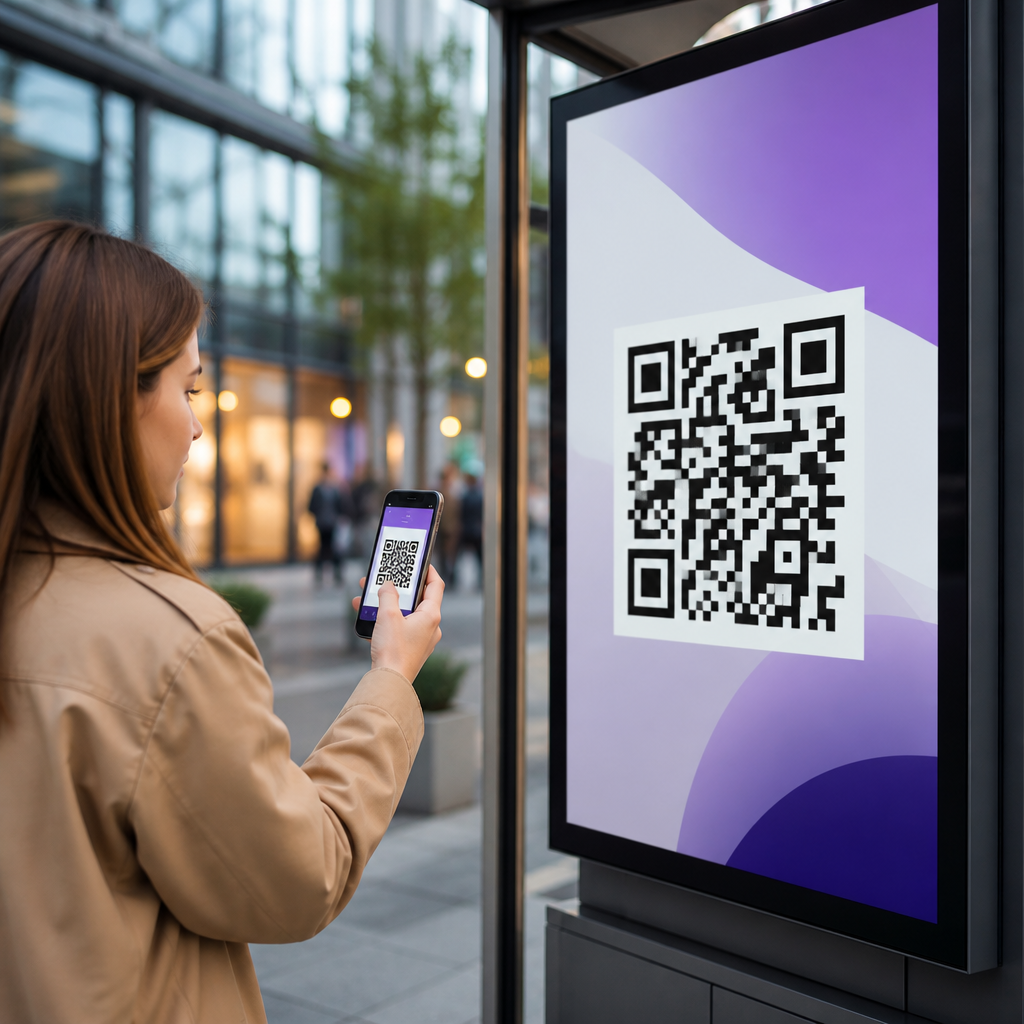
I advise clients to choose QR placements based on audience context, not novelty. A commuter seeing a transit poster has seconds to act, so the destination should be fast and lightweight, such as a location finder or limited-time offer page. A direct mail recipient at home has more time, so you can send that person to a richer experience, such as a buying guide, comparison quiz, or appointment scheduler. This is the same conversion planning used in landing page optimization: match message, intent, and landing page depth. Brands that apply that discipline consistently see stronger scan-to-conversion performance than brands that use one generic homepage destination for every printed code.
Print placements also support the full funnel. At the top of the funnel, a magazine ad might use a QR code to open a brand story video. In the middle, a product flyer might link to detailed specifications, reviews, and FAQs. At the bottom, a coupon mailer can send users directly to a checkout page with a discount automatically applied. B2B marketers use the same pattern in sales sheets, booth graphics, and case study leave-behinds, often routing scans into CRM-tagged forms connected to HubSpot or Salesforce. The lesson is straightforward: QR codes are not only for awareness; they can support education, lead generation, and revenue when the destination matches the stage of the buyer journey.
How to Build a High-Performing QR Code Campaign
The first decision is static versus dynamic QR codes. A static code contains a fixed destination and cannot be edited after printing. A dynamic code uses a short redirect URL managed through a platform such as Bitly, Beaconstac, QR Code Generator Pro, or Flowcode, allowing marketers to change the destination later, track scans, and apply campaign tags. For print advertising, dynamic codes are usually the correct choice because they preserve flexibility if pricing changes, landing pages move, or creative needs regional variations. They also support A/B testing by routing different audiences to different pages without changing the printed asset.
The landing page must be mobile first, fast, and singular in purpose. Google research has repeatedly shown that mobile page speed affects abandonment, and I have seen QR campaigns underperform simply because the page opened with a heavy hero video and a cluttered navigation bar. A strong QR landing page loads quickly, repeats the print ad message, presents one clear action, and removes unnecessary distractions. If the print ad promises “Get 20% off today,” the landing page should immediately show that offer, not force the user to hunt through a homepage. Consistency between print message, code prompt, and landing page content is one of the biggest predictors of conversion.
Measurement should be planned before the code is designed. Use UTM parameters for source, medium, campaign, and content. Track scans, sessions, engagement rate, form submissions, calls, coupon redemptions, and revenue where possible. In GA4, create events for key downstream actions and connect them to conversions. If the campaign spans physical locations, use unique dynamic QR codes by region, store, or publication so performance can be compared cleanly. This turns print advertising from a hard-to-measure awareness tactic into a quantifiable acquisition channel.
| Print use case | Best QR destination | Primary metric | Common mistake |
|---|---|---|---|
| Direct mail offer | Dedicated coupon landing page | Redemption rate | Sending traffic to homepage |
| Event poster | Mobile registration form | Completed sign-ups | Long form with too many fields |
| Product catalog | Product detail or prefilled cart page | Add-to-cart rate | Linking to generic category page |
| In-store display | Loyalty or SMS opt-in page | New subscriber count | No incentive to scan |
Design, Placement, and Scan Reliability
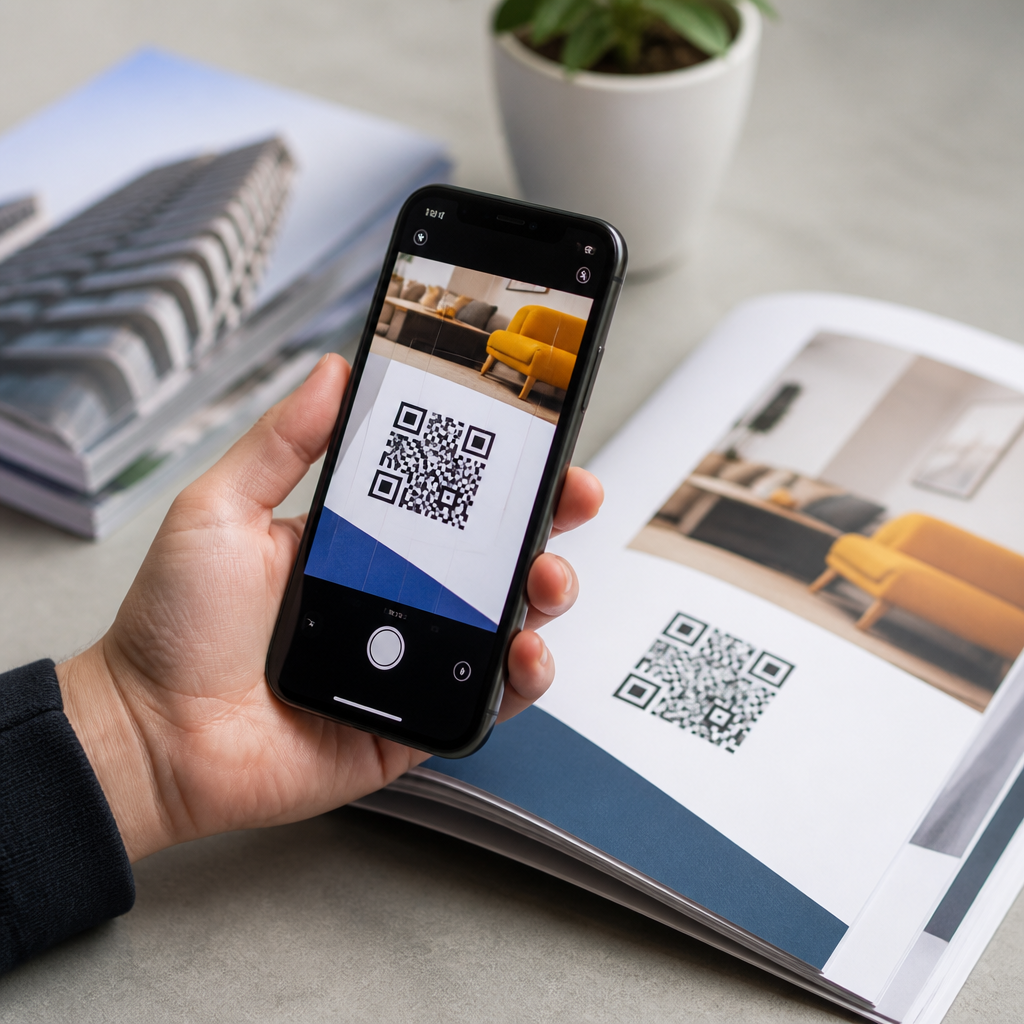
A QR code that does not scan instantly is a failed asset, regardless of how attractive it looks. Use high contrast, typically dark code on a light background, and preserve the quiet zone around the code. Do not distort the square shape or place the code over busy photography. Error correction can help when adding a logo, but over-customization reduces readability. For most campaigns, practicality beats decoration. I typically test every code across current iPhone and Android devices, in bright and dim conditions, from realistic user distances, before approving files for print.
Size and placement should reflect scanning distance. A common rule is roughly one inch of code size for every ten inches of scanning distance, though larger is safer for posters and signage. Put the code where the camera can reach it comfortably and where the call to action is visible. A small code buried near legal copy will be ignored. A strong prompt such as “Scan to book your demo,” “Scan for store directions,” or “Scan to unlock today’s offer” tells users what they get and why it is worth doing now. Clear value increases scan rate more than stylistic design changes.
Production details matter too. Matte finishes often scan better than glossy finishes under direct light because glare interferes with smartphone cameras. Curved packaging can distort codes, so test on the final substrate, not only on a flat proof. Outdoor placements need enough contrast for sunlight and wear resistance for weather. These are operational details, but they determine campaign performance in the real world.
Real-World Strategies That Improve Results
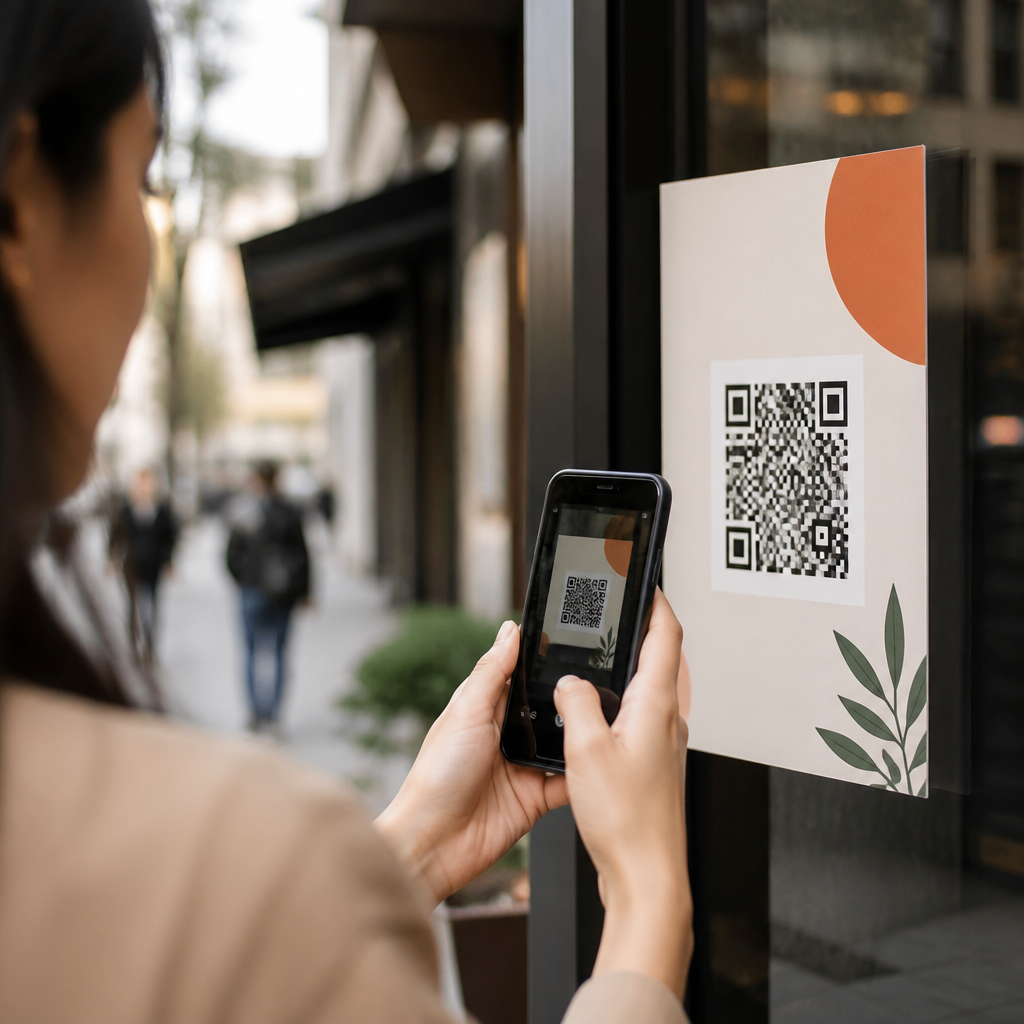
The most effective QR print campaigns give people a concrete next step they actually want. Retailers use QR codes in window signage to show in-stock sizes when stores are closed. Real estate agents place codes on yard signs that open listing galleries, mortgage calculators, and booking forms. Healthcare providers use codes on flyers for appointment scheduling and pre-visit instructions. Museums use them beside exhibits to provide audio guides in multiple languages. In each case, the code replaces friction with utility.
One underused strategy is personalization. Variable data printing can place unique QR codes on each direct mail piece, connecting a recipient to a personalized landing page with location, product recommendations, or account-specific offers already reflected. Another strong tactic is retargeting. If the landing page uses a consented analytics and advertising setup, users who scan from print can later receive coordinated digital follow-up through paid social or display. That creates a measurable offline-to-online journey without requiring the user to type anything. For teams building a content cluster around mobile QR codes for marketing, this hub should lead readers deeper into topics such as dynamic QR code tracking, QR code landing page design, UTM reporting, and QR code best practices for packaging, retail signage, and direct mail. Together, those subtopics form a complete operational playbook.
Common Mistakes and How to Avoid Them
The biggest mistake is using a QR code without a clear user benefit. “Scan me” is not a strategy. Tell people exactly what happens after the scan. The second mistake is sending traffic to a nonmobile page, PDF, or homepage that creates extra work. The third is failing to test analytics, redirects, and page speed before launch. I have seen campaigns produce scans but no usable reporting because UTM tags were missing or redirects stripped parameters.
Another frequent error is overprinting one code everywhere and expecting useful insight. If you use the same code on a flyer, poster, package insert, and magazine ad, attribution becomes muddy. Segment codes by channel and objective. Finally, remember compliance and trust. If a code collects data, the landing page should state what is being collected and why. Trust affects conversion as much as creative execution.
QR codes in print advertising work because they turn passive exposure into active intent, then connect that intent to measurable digital outcomes. The formula is consistent: place the code where attention already exists, give the user a compelling reason to scan, send them to a fast mobile destination, and track every meaningful action. When those elements align, print stops being a disconnected awareness channel and becomes a performance channel that supports lead generation, ecommerce, store traffic, and customer retention.
For marketers building a stronger program around QR codes in digital marketing, this hub is the starting point. Use it to define your campaign goals, choose the right destinations, standardize design rules, and build reporting that ties scans to business results. Then expand into the supporting articles in your mobile QR codes for marketing cluster and apply one improvement at a time. Start with your next print asset, create one focused QR journey, and measure what happens.
Frequently Asked Questions
How do QR codes improve the performance of print advertising?
QR codes make print advertising measurable, interactive, and far more action-oriented than traditional static ads. In a magazine, direct mail piece, flyer, poster, brochure, product insert, or storefront display, a QR code gives people an immediate path from offline interest to online action without asking them to type a long URL or search for a brand later. That reduction in friction matters. When someone can scan and instantly reach a landing page, product page, event registration form, coupon, review page, video, or payment screen, response rates often improve because the next step feels easy and immediate.
They also help connect brand awareness with trackable user behavior. Instead of wondering whether a print ad influenced a purchase or inquiry, marketers can monitor scans, landing page visits, conversions, time of engagement, and even performance by placement or campaign version. This is one of the biggest reasons QR codes play such an important role in modern print advertising and digital marketing strategy. They turn printed materials into gateways that can be optimized like digital campaigns, allowing marketers to compare locations, headlines, offers, and audience segments with much greater confidence.
Another major advantage is flexibility. A single printed ad can send users to dynamic content that changes over time, such as seasonal offers, updated event details, new product inventory, or region-specific messaging. That means print no longer has to feel fixed or disconnected from the pace of digital campaigns. Used well, QR codes transform print from a passive awareness channel into an active response channel that supports lead generation, ecommerce, appointments, content consumption, and customer retention.
What is the best place to put a QR code in a print ad?
The best placement is wherever the code is easy to notice, easy to scan, and naturally connected to the call to action. In most print ads, that means placing the QR code near the headline, offer, or response prompt rather than hiding it in a bottom corner with legal text. People should immediately understand what the code is for and why they should scan it. If the ad says “Scan to claim 20% off,” “Scan to watch the demo,” or “Scan to book your free consultation,” the code should sit directly next to that message so the value is obvious at a glance.
Practical scanning conditions matter just as much as visual placement. The code should have enough surrounding white space, strong contrast against the background, and a size appropriate for the viewing distance. A tiny code on a billboard or a code printed over a busy image often underperforms because people cannot capture it quickly with a phone camera. For handheld materials like brochures, postcards, menus, and product packaging, the code can be smaller, but it still needs to be clearly visible and unobstructed. For posters, transit ads, and window signage, make the code larger and place it where people can comfortably scan without awkward angles or crowding.
It also helps to think about user context. Someone standing on a sidewalk has less patience than someone reading a catalog at home. Someone flipping through a magazine may scan only if the value proposition is immediate and the code is placed where the eye naturally lands. The strongest print executions combine good design with behavior-based placement: visible, accessible, and paired with a simple instruction that tells people exactly what happens after the scan.
What should a QR code in print advertising link to?
A QR code should link to the single most relevant next step for the person seeing the ad. That destination could be a landing page, product page, sign-up form, app download, coupon, event registration page, restaurant menu, contact card, map, or short video, but it should match the intent created by the ad itself. If the printed message promotes a sale, the code should lead directly to the offer. If the ad introduces a service, the code should open a page that explains the service clearly and makes it easy to book, call, or request a quote. If the ad builds curiosity, a video or campaign microsite may be the best fit.
The key is continuity. A user should never scan a print ad promising one thing and land on a generic homepage that forces them to search for it. That breaks momentum and reduces conversions. In successful campaigns, the landing experience feels like a seamless extension of the ad’s promise. The headline, visual style, offer, and call to action should align closely so users know they are in the right place immediately. Mobile optimization is essential as well, since nearly all scans happen on smartphones. Pages should load quickly, display cleanly, and present one clear action.
It is also smart to think beyond the first click. The best QR destinations are built to convert and to capture useful insight. That may include tagged URLs for attribution, dedicated landing pages for each publication or location, and forms tailored to the specific audience. In many campaigns, linking to a custom landing page rather than a general website page produces better results because it creates a more focused experience and enables cleaner measurement of print ad performance.
How can you track the success of QR codes in print campaigns?
Tracking starts with using campaign-specific QR codes tied to unique URLs, ideally with analytics parameters or dynamic QR technology. This allows marketers to distinguish scans from one magazine ad versus another, one mailer version versus another, or one store poster versus another. Once the code is scanned, standard digital analytics can measure what users do next: page views, time on site, form submissions, purchases, coupon redemptions, app installs, calls, or appointment bookings. That is what makes QR codes so valuable in print advertising: they create a clear bridge between physical media and measurable online behavior.
To evaluate performance properly, it helps to look at more than raw scan volume. A high number of scans is encouraging, but the real question is whether those scans produce meaningful outcomes. Compare scan rate, bounce rate, conversion rate, revenue per visitor, and cost per acquisition. If one print placement generates fewer scans but far more sales, it may be more valuable than another placement that attracts curiosity without conversion. Businesses should also review time, geography, device behavior, and repeat engagement to understand when and how people interact with the campaign.
Testing is another important part of measurement. Marketers can experiment with different offers, headlines, destinations, and QR code placements to improve results over time. For example, changing “Scan for more information” to “Scan to get your free estimate” often increases response because the benefit is clearer. Likewise, sending traffic to a dedicated mobile landing page instead of a homepage usually improves conversion. When QR code tracking is set up correctly, print advertising becomes much easier to optimize with the same discipline used in digital campaigns.
What are the most common mistakes to avoid when using QR codes in print advertising?
One of the most common mistakes is using a QR code without giving people a reason to scan. A code by itself is not a strategy. It needs a clear incentive, such as access to a discount, exclusive video, product details, event check-in, booking page, loyalty reward, or limited-time offer. Without that context, many people will ignore it. Another frequent issue is sending users to a generic or poorly optimized destination. If the page loads slowly, looks cluttered on mobile, or does not match the ad’s message, response rates drop quickly.
Design and usability errors are also very common. Codes that are too small, low contrast, distorted, crowded by other visual elements, or printed on reflective or curved surfaces can become hard to scan. Placing a code where users cannot physically access it comfortably, such as too high on signage or too far away on large-format ads, also weakens performance. In print environments, the code should be tested under real viewing conditions before distribution. That includes checking scan reliability across different phone models, lighting conditions, and print finishes.
Finally, many advertisers miss the opportunity to measure and refine. Reusing the same QR code across multiple placements without separate tracking makes it difficult to know what is working. Failing to include a strong call to action, neglecting analytics, and not updating the linked content over time are all avoidable mistakes. The most effective QR code campaigns in print advertising are intentional from end to end: a clear benefit, a visible and scannable code, a relevant mobile-friendly destination, and a measurement plan that turns scans into actionable marketing insight.