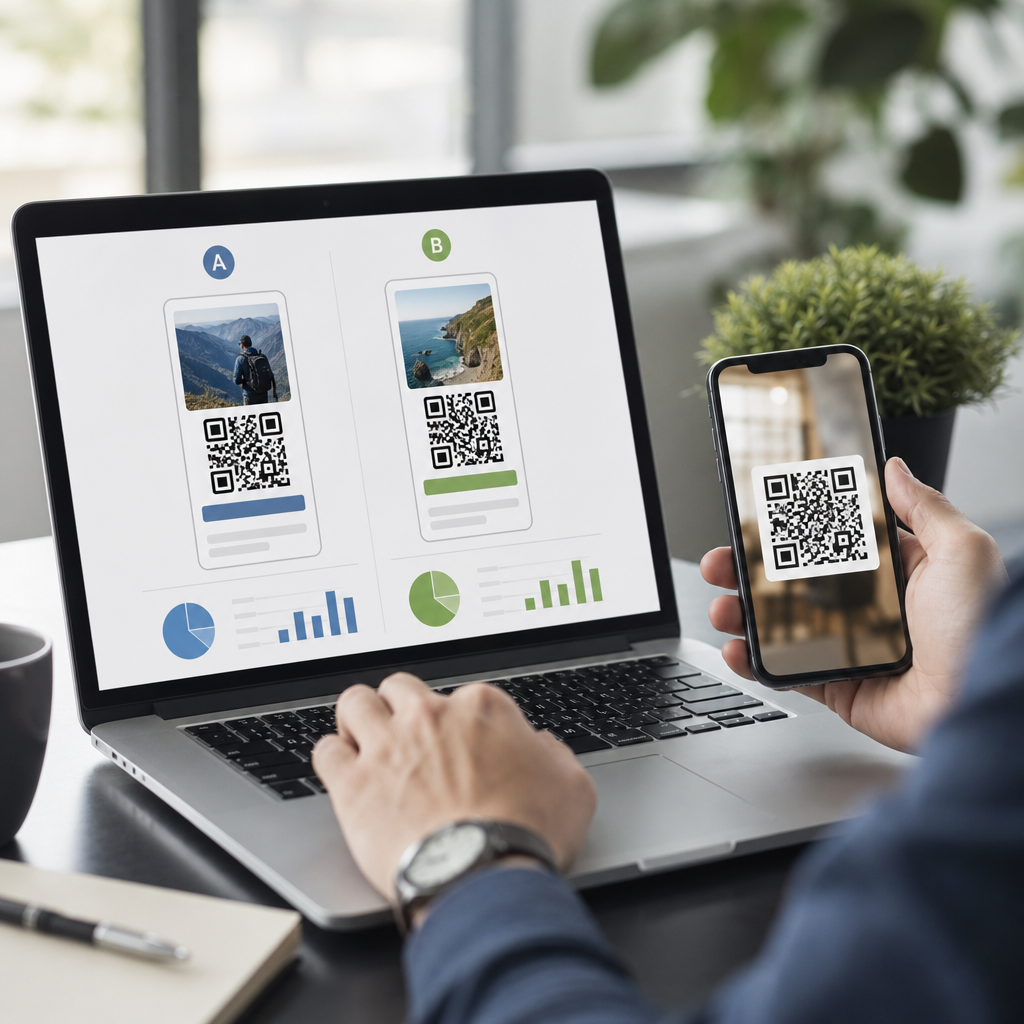
Smart QR code targeting uses artificial intelligence, automation, and real-time data to decide which destination, message, or offer a scanned code should deliver to each person. In practice, that means one printed QR code can serve different landing pages based on context such as location, device type, time of day, previous behavior, language, or campaign source. I have used this approach in retail promotions, event check-ins, restaurant menus, and product packaging, and the core lesson is consistent: the QR code itself is only the access point; the targeting logic behind it creates the conversion lift.
To use AI for smart QR code targeting, start with a dynamic QR code platform, connect analytics and customer data, define routing rules, and then let machine learning optimize what appears after the scan. Dynamic codes matter because they point to an editable short URL rather than a fixed destination. AI matters because it can detect patterns faster than manual segmentation, predicting which content is most likely to earn a click, signup, purchase, or repeat visit. Automation matters because scans happen in real time, often across thousands of locations and audience segments, so manual updates do not scale.
This topic matters because QR code behavior has changed. Consumers now expect fast, relevant mobile experiences. If a code on in-store signage opens the same generic page for every visitor, you lose intent and waste valuable offline traffic. Smart targeting improves relevance, shortens the path to action, and gives teams measurable feedback. It also supports the broader advanced QR code strategies stack: campaign attribution, first-party data capture, personalized landing pages, retargeting, lifecycle messaging, and offline-to-online measurement. When implemented carefully, AI-powered QR code targeting turns a static square into an adaptive acquisition and retention channel.
Build the data foundation before you automate targeting
The first step is collecting the right signals. Smart QR code targeting usually relies on dynamic QR codes, UTM parameters, event tracking, consent-aware identity data, and a rules engine that can pass context to the destination page. At minimum, capture scan timestamp, approximate location, device operating system, browser language, referral source, and campaign ID. If the scan leads to your site or app, connect downstream events such as add-to-cart, booking completion, coupon redemption, or form submission. Without this data model, AI has nothing reliable to optimize.
In projects I have run, the cleanest setup used a dynamic QR code provider tied to Google Analytics 4, a CRM such as HubSpot or Salesforce, and a customer data platform when traffic volume justified it. Server-side tagging through Google Tag Manager helped preserve attribution when mobile browsers limited client-side tracking. For physical placements, we also created unique code variants by store, shelf, direct-mail drop, or event booth. That simple discipline prevented a common mistake: asking AI to infer context that should have been encoded at the source.
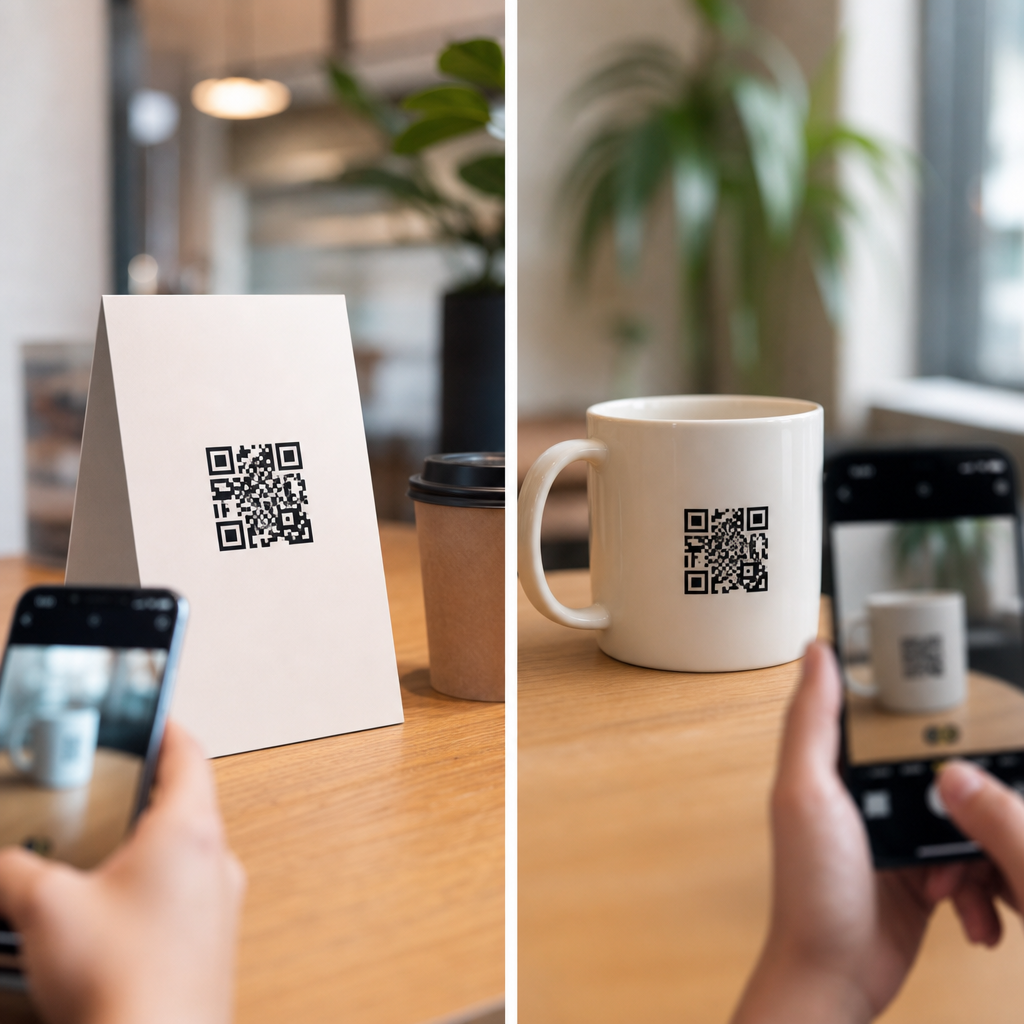
Data quality rules are nonnegotiable. Normalize campaign names, define conversion events consistently, and separate scans from meaningful sessions. A scan is not success by itself. For example, on a restaurant table-tent campaign, raw scans increased 42 percent after redesigning the code and adding a stronger call to action, but revenue did not rise until we used post-scan behavior to route lunch visitors to a fast menu and dinner visitors to reservations and cocktails. Better targeting came from better outcome data, not just more scans.
Use AI to personalize the destination after each scan
Once the data layer is stable, AI can improve what happens after the scan. The most common use case is personalized routing. Instead of sending everyone to one page, a model or decision engine selects the best landing experience based on historical outcomes and current context. A first-time visitor in an airport might see a concise product explainer with Apple Pay, while a returning customer scanning product packaging at home might see reorder options, support content, or a loyalty prompt.
Personalization can be rules-based at first and still be highly effective. For instance, route by geography to show local inventory, by language to remove translation friction, by device to promote App Store or Google Play appropriately, and by time to highlight breakfast, lunch, or late-night offers. AI then sits on top of those business rules, ranking the content variation most likely to convert within each segment. This hybrid approach works better than pure automation because it respects operational constraints such as inventory, store hours, legal disclosures, and franchise boundaries.
Natural language generation and creative optimization also play a role. AI can adapt headlines, summaries, product recommendations, or FAQ blocks on the landing page after a scan. If a consumer scans a code on electronics packaging, the page can prioritize setup videos for new owners or warranty registration for known customers. If they scan from a direct-mail postcard, the page can present a promotional bundle tied to the mail drop. The key is not gimmicky personalization; it is reducing decision friction with contextually useful content.
Apply predictive targeting to improve conversion rates
Predictive targeting goes beyond simple segmentation. Here, machine learning estimates the probability of a user taking a target action and chooses the next experience accordingly. Common models include propensity scoring, churn prediction, uplift modeling, and multi-armed bandit testing. In plain terms, the system asks: based on users who looked like this before, what should we show now to maximize the desired result?
Retail is a clear example. A cosmetics brand can place one QR code design across store displays while the backend adapts by store cluster, weather, and local sales trends. In colder regions, the model may prioritize moisturizer bundles; in college towns, travel-size kits; near payday weekends, premium collections. The consumer sees a relevant page, while the marketing team preserves one printable asset. I have seen this reduce creative production overhead substantially while lifting conversion because the destination reflected local demand instead of headquarters assumptions.
Predictive targeting also supports lead qualification. In B2B, a QR code on trade show signage might route enterprise prospects to a demo booking page, while smaller firms receive a pricing guide or self-serve trial. The model can use company size, industry, prior site behavior, and engagement depth to estimate sales readiness. That does not replace human judgment, but it does reduce wasted traffic and helps sales teams focus follow-up where intent is strongest.
| Targeting method | What it uses | Best use case | Main limitation |
|---|---|---|---|
| Static routing | One fixed destination | Simple flyers, low-stakes campaigns | No personalization or testing |
| Rules-based routing | Location, device, language, time | Local offers, app promotion, menus | Manual maintenance increases over time |
| AI-assisted personalization | Behavioral and contextual signals | Consumer campaigns with repeated scans | Needs clean data and governance |
| Predictive optimization | Propensity scores and experimentation | High-volume conversion programs | Requires enough volume for model confidence |
Automate testing, attribution, and lifecycle follow-up
AI for smart QR code targeting is not only about the landing page. It also improves the entire workflow after the scan. Automation should handle experiment assignment, analytics, CRM updates, and next-best-action messaging. When someone scans a code on packaging, downloads a guide, and abandons checkout, that event sequence should trigger different follow-up than a person who scans in a store, watches a demo, and joins a loyalty program. These are separate intents, and your automation should treat them that way.
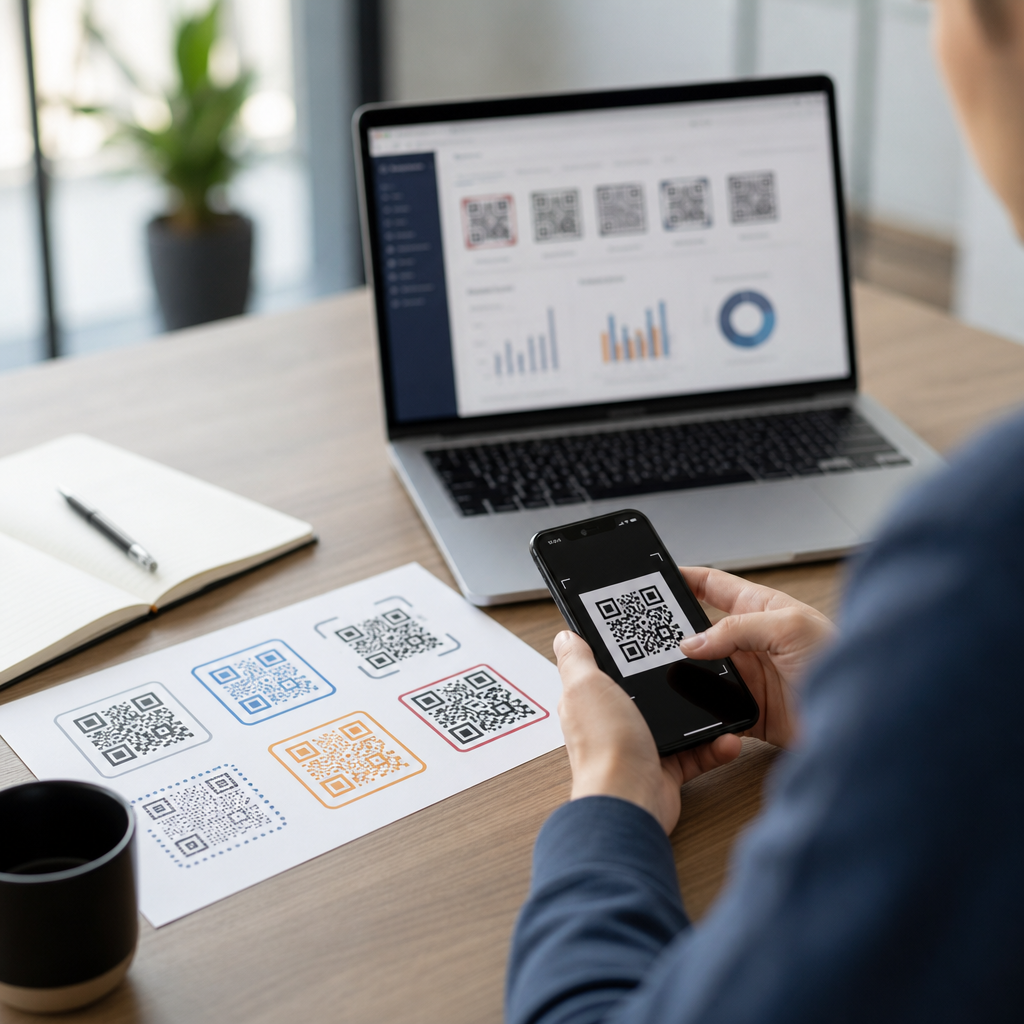
Testing is where many teams underperform. They A/B test QR code artwork but ignore post-scan variables. In reality, the destination page, offer framing, form length, and page speed usually matter more. Use holdout groups so you can measure whether AI-driven targeting truly beats a standard experience. In Google Analytics 4, compare conversion rate, engagement time, assisted revenue, and return visits. In marketing automation systems such as Klaviyo, Marketo, or HubSpot, compare downstream metrics like email capture, repeat purchase, and unsubscribe rate. Optimizing only for immediate clicks can hurt long-term value.
Attribution should connect offline placement to online outcomes. That requires campaign taxonomies, unique QR endpoints, and event stitching. For example, if a printed catalog generates scans that later convert through branded search, a last-click report will undervalue the QR code. Use data-driven attribution where possible and inspect path reports. I have repeatedly found that QR scans perform best as discovery or consideration touchpoints, especially in packaging and out-of-home campaigns. Once you see that pattern, your targeting strategy can focus less on instant purchase and more on moving users to the next measurable step.
Manage privacy, governance, and practical limits
Smart QR code targeting must be useful without becoming invasive. That means limiting sensitive data collection, honoring consent, and avoiding opaque personalization that surprises users. If your logic uses location, be transparent about whether it is inferred from IP or granted through browser permissions. If scans connect to customer profiles, align that processing with your privacy notice and regional requirements such as GDPR and CCPA. Security also matters: use HTTPS everywhere, monitor for redirect abuse, and review third-party QR platforms carefully.
There are practical limits as well. AI models need enough volume to learn; a local campaign with a few hundred scans may do better with well-designed rules than with predictive optimization. Physical context can also distort results. A code on moving transit signage behaves differently from a code on packaging in a home. Network conditions, camera quality, and page load speed all influence conversion before targeting logic has a chance to help. In other words, AI cannot compensate for a weak mobile experience or a poor offer.
For that reason, successful teams treat AI as an optimization layer, not a shortcut. Start with a clear use case, map the user journey, define one primary conversion, and add machine learning only when the baseline experience is already strong. Document your routing logic, review model outputs, and keep a manual override for compliance or operational changes. The strongest advanced QR code strategies combine automation with disciplined measurement and human oversight.
AI for smart QR code targeting works best when it turns scan context into useful action. Dynamic codes provide flexibility, clean data provides visibility, and automation provides speed. From there, AI can personalize destinations, predict likely outcomes, and trigger better follow-up across the customer lifecycle. The payoff is straightforward: more relevant experiences, better attribution, and stronger conversion from the offline moments your audience already gives you.
If you manage packaging, retail signage, direct mail, events, or in-store promotions, this subtopic deserves a central place in your advanced QR code strategies plan. Build the measurement layer first, apply rules before models, and expand into predictive optimization only when you have sufficient volume and governance. Done well, one QR code can support many audiences without sacrificing control.
Audit your current QR campaigns, identify where every scan currently lands, and choose one high-intent use case to personalize this quarter. That small test is usually enough to prove where AI and automation can make QR code targeting smarter.
Frequently Asked Questions
What does AI-powered smart QR code targeting actually mean?
AI-powered smart QR code targeting means a single QR code can dynamically send different people to different destinations based on real-time context and rules. Instead of printing separate QR codes for every audience segment, campaign, or location, you use one code connected to a smart routing system. When someone scans it, artificial intelligence and automation evaluate available signals such as device type, location, time of day, browser language, referral source, scan history, and in some cases previous user behavior. Based on those signals, the system chooses the most relevant landing page, offer, menu, check-in flow, or product information page.
In practical terms, this makes QR codes far more useful than static links. A restaurant can show breakfast items in the morning and dinner specials later in the day. A retailer can direct in-store scanners to a local promotion while sending online campaign traffic to a broader national offer. An event organizer can route VIP guests, staff, and attendees through different check-in experiences using the same printed code. On product packaging, the code can display language-specific instructions or region-specific compliance information without requiring multiple versions of the packaging.
The AI component becomes especially valuable when you want targeting to improve over time. Instead of relying only on fixed if-then rules, advanced systems can learn which destination performs best for certain contexts and optimize routing toward higher engagement, conversions, or customer satisfaction. The key idea is simple: one QR code, many possible outcomes, chosen intelligently at the moment of the scan.
What data can be used to personalize QR code destinations without making the experience overly complex?
The best smart QR code campaigns use a focused set of signals that meaningfully improve relevance without creating unnecessary technical or privacy complications. Common inputs include geolocation, device type, operating system, language settings, time of day, day of week, campaign source, and prior scan behavior. These variables are usually enough to create strong personalization. For example, location can determine which store page appears, language can control localized content, and device type can optimize the landing page for mobile or desktop behavior.
You can also layer in business-specific context. In retail, that might include whether the scan happened in-store, near a shelf display, or from product packaging at home. In hospitality and food service, it might mean routing based on meal period, local inventory, or dine-in versus takeaway intent. For events, useful inputs can include entry point, event schedule timing, and whether the person has already completed registration. The goal is not to collect every possible data point, but to use the fewest signals necessary to improve the user journey.
The most successful implementations stay consistent and easy to manage. Start with two or three variables that clearly affect what users should see. Build predictable routing logic. Then monitor scan-through rate, bounce rate, conversion rate, and completion rate. If the data shows that additional context improves performance, you can gradually expand the targeting model. Consistency matters because a smart QR code should still feel reliable. Personalization should help users get to the right content faster, not create confusion or unpredictable experiences.
How do you set up a smart QR code targeting system for marketing campaigns?
Setting up a smart QR code targeting system starts with defining the business objective before you think about the technology. Decide what you want each scan to accomplish: purchase, registration, menu view, app download, coupon redemption, lead capture, or product education. Once that goal is clear, map out the audience segments and the conditions that should influence where users go. This is where you identify routing factors such as city, device, language, time window, or campaign placement.
Next, create the destination experiences. These should be purpose-built pages or flows tailored to the different contexts you identified. For example, if the code appears on product packaging, one destination might serve first-time buyers with setup instructions, while another serves returning customers with refill offers or loyalty incentives. If the code is used across multiple stores, each location may need its own landing page with inventory details, directions, or local promotions. Build these destinations so they load quickly and are optimized for mobile, since most QR scans happen on phones.
After that, connect the printed QR code to a dynamic QR management platform, redirect engine, or campaign system capable of evaluating scan conditions in real time. Configure routing logic with a mix of rules and AI-driven optimization if available. Add analytics so you can track scan volume, unique users, destination performance, conversion outcomes, and drop-off points. Before launch, test the code under different scenarios, including devices, locations, and times of day. A strong setup also includes fallback behavior, so if a signal is unavailable, users still reach a useful default page. Once live, review performance regularly and refine your routing rules. Smart QR targeting works best as an ongoing optimization process, not a one-time setup.
What are the biggest benefits of using AI for smart QR code targeting?
The biggest benefit is relevance. AI allows each scan to lead to a destination that better matches the scanner’s context, which typically improves engagement and conversion rates. Instead of forcing every user through the same generic landing page, you can match content to intent more effectively. Someone scanning in a physical store may need a coupon or product comparison, while someone scanning from packaging at home may need instructions, support, or replenishment options. Relevance reduces friction and helps people reach what they need faster.
Another major advantage is operational efficiency. You do not have to print and manage a separate QR code for every campaign variation, location, language, or audience segment. One printed code can stay in place while the destinations behind it evolve. This is especially valuable for signage, packaging, table tents, posters, and other materials that are expensive or impractical to reprint. Teams can update promotions, pause offers, redirect traffic, or run tests without replacing the physical code.
AI also improves performance through learning and optimization. With enough data, the system can identify patterns humans might miss, such as which landing page performs best for certain devices or which offer works best at specific times. Over time, this can lead to more conversions, better customer experiences, and clearer campaign insights. In addition, smart QR targeting helps unify offline and online marketing by turning physical scans into measurable digital interactions. That makes it easier to attribute results, compare channels, and understand how people move from real-world touchpoints into online actions.
What are the best practices and common mistakes to avoid when using AI for smart QR code targeting?
The most important best practice is to keep the experience useful and consistent. Smart routing should solve a clear user need, not exist just because the technology is available. Every targeting decision should answer a practical question: what destination will help this person most right now? Use AI and automation to reduce friction, not to make the journey feel random. It is also essential to build mobile-first landing pages, maintain fast load times, and provide a sensible fallback destination when contextual data is missing or uncertain.
Another best practice is to prioritize clean measurement. Track scans, unique visitors, routing decisions, conversions, and downstream actions so you can evaluate whether targeting is actually improving results. Segment reports by location, time, device, and campaign source to identify what is working. Run controlled tests when possible. Good governance matters too. Keep routing logic documented, review it regularly, and make sure teams understand who owns updates to links, offers, and decision rules. This prevents outdated destinations and inconsistent customer experiences.
Common mistakes include overcomplicating the setup, using too many weak targeting signals, and sending users to pages that do not match the scan context. Another frequent problem is ignoring privacy and consent considerations, especially when scan data is combined with behavioral history or customer profiles. Be transparent about data use, comply with applicable regulations, and avoid collecting more information than necessary. Finally, do not treat AI as a substitute for strategy. The strongest smart QR code campaigns succeed because they combine thoughtful user experience design, reliable data, disciplined testing, and consistent optimization. The core lesson is consistency: when the targeting logic is clear and the destinations are genuinely relevant, one QR code can become a highly adaptable and high-performing marketing tool.