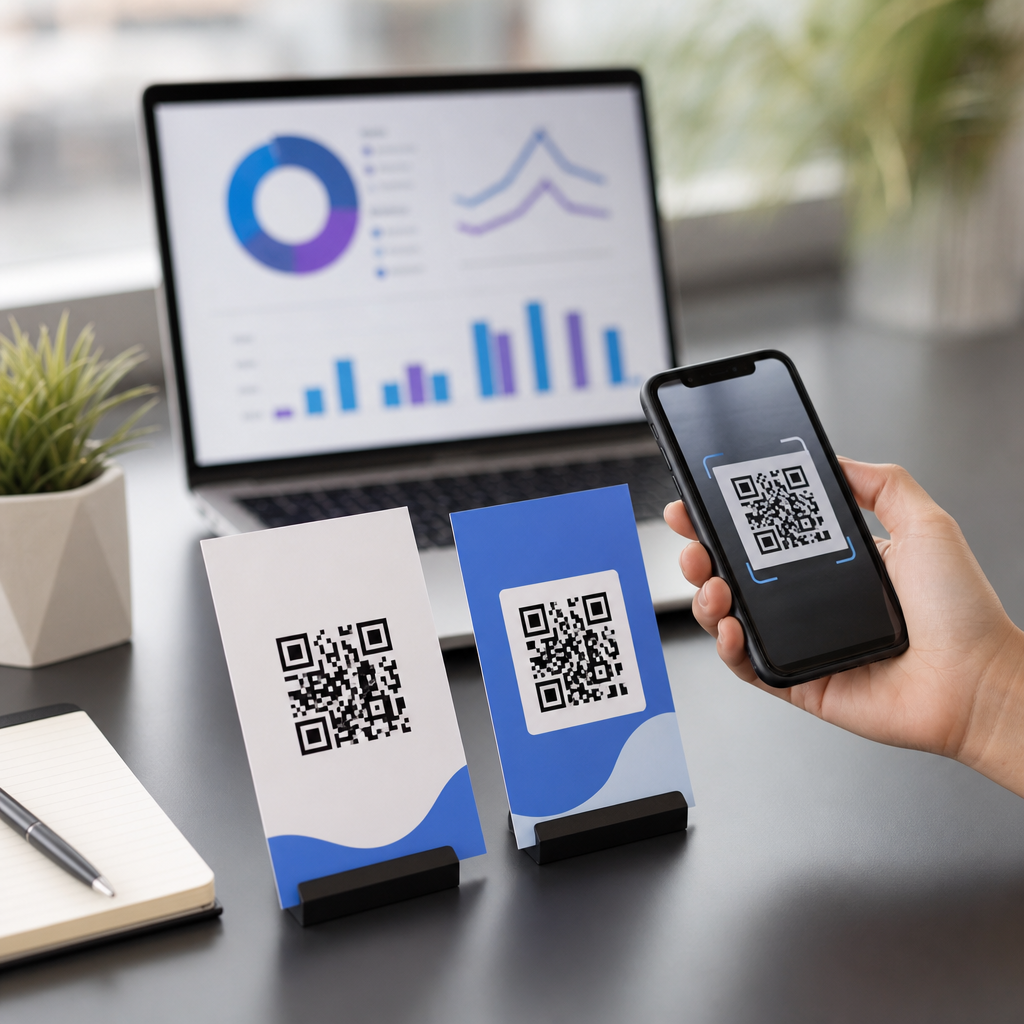
QR codes have evolved from simple links into measurable touchpoints that can feed customer data directly into the marketing stack. When marketers talk about syncing QR code data with marketing tools, they mean capturing scan activity, associating it with campaigns or users when possible, and passing that information into systems such as a CRM, email platform, analytics suite, CDP, or automation tool. This matters because a QR code on packaging, direct mail, signage, events, or product inserts can bridge offline intent and digital behavior in a way few channels can. I have implemented QR tracking for retail promotions, field events, and post-purchase campaigns, and the difference between a static link and a properly integrated workflow is dramatic: one gives you traffic, the other gives you usable customer intelligence.
At a practical level, QR code integration depends on four components. First, the destination URL must contain campaign identifiers, typically UTM parameters or equivalent custom parameters. Second, the landing page needs analytics and consent handling so visits, conversions, and source attribution are recorded correctly. Third, form fills, purchases, or other actions must flow into downstream systems like HubSpot, Salesforce, Klaviyo, Mailchimp, Marketo, or Google Analytics 4. Fourth, reporting has to tie scans to business outcomes, not just impressions. Without that full chain, teams often overstate performance based on scan volume alone. A high scan rate is useful, but if the scans do not create contacts, revenue, or retained customers, the code is only producing curiosity, not measurable marketing value.
Marketers also need to separate anonymous scan data from known-user data. A QR scan by itself usually identifies a device session, not a person. The user becomes known only after a qualifying action such as submitting a form, logging in, redeeming a code, or clicking through an email preference center. That distinction affects compliance, segmentation, and reporting. It also determines which tools should receive the data first. For anonymous traffic, analytics platforms and ad platforms are the right destination. For known contacts, the CRM and marketing automation platform become central. Understanding that sequence is the foundation for integrating QR codes with CRM and tools in a way that supports lifecycle marketing instead of producing disconnected dashboards.
Build the data path before you generate the QR code
The most effective QR campaigns start with data architecture, not design. Before generating any code, define the event you want to measure, the systems that need the data, and the parameters required for consistent attribution. In most implementations, I create a naming convention for source, medium, campaign, content, and placement. For example, a code printed on an in-store display might use source=retail, medium=qr, campaign=spring_launch, content=window_display, and term=store_042. Those parameters allow Google Analytics 4, Adobe Analytics, HubSpot, or Salesforce Campaigns to classify traffic reliably. If teams skip this step, they end up with fragmented reporting where “QR,” “qr-code,” and “print_qr” appear as separate channels and cannot be rolled up cleanly.
Dynamic QR codes are usually the better choice for marketing operations because they route through a managed short URL and can be updated without reprinting creative. That flexibility matters when a product page changes, an event registration link closes, or a region needs a different destination. Dynamic codes also create a server-side logging layer, which can capture scan timestamp, approximate location, device type, and code-level performance before the user reaches the site. Providers such as Bitly, QR Code Generator Pro, Scanova, Beaconstac, and Flowcode support these capabilities. Static codes still work for simple cases, but they lack redirect management and often make downstream optimization harder. For any campaign involving CRM sync, dynamic infrastructure is the safer operational decision.
Landing pages must then preserve the incoming parameters and pass them into forms, cookies, and analytics events. Hidden form fields are standard here. If someone scans a brochure QR code and completes a lead form, the form should store the original campaign values in the CRM record. HubSpot can populate hidden fields from query parameters; Salesforce can do the same through web-to-lead or connected form tools; Marketo and Pardot support URL parameter capture through forms and scripting. This is where offline attribution becomes real. Instead of merely seeing a website session, you can open a contact record and know that the person came from a trade show booth panel, a product insert, or a restaurant tabletop display.
Connect QR codes to CRM, analytics, and automation platforms
Once the scan path is in place, sync rules determine where data should flow. The table below shows the most common connections and what each system should receive.
| Tool category | What QR data to send | Why it matters |
|---|---|---|
| Analytics platform | Session source, medium, campaign, landing page, events, conversions | Measures scan-to-visit and scan-to-conversion performance |
| CRM | Lead source, campaign ID, form submission details, redemption data | Ties offline scans to contacts, opportunities, and revenue |
| Email platform | Signup source, preference selections, coupon claims | Enables segmented follow-up based on scan context |
| Marketing automation | Behavioral triggers, score changes, nurture entry conditions | Turns scans and related actions into workflows |
| CDP or warehouse | Event-level scan logs, identity stitching keys, customer traits | Supports cross-channel analysis and advanced modeling |
Google Analytics 4 should generally be the first measurement layer because it captures the session created by the QR scan. Configure key events such as generate_lead, sign_up, purchase, view_promotion, or redeem_offer, then map those conversions back to campaign parameters. If you use Google Tag Manager, you can pass scan context into custom dimensions for easier analysis. In Salesforce, I recommend creating campaign records for each major QR deployment and associating incoming leads or contacts whenever a form or redemption action occurs. In HubSpot, custom properties like QR campaign, QR placement, and first QR scan date allow reporting by asset and lifecycle stage. Klaviyo and Mailchimp benefit from source tagging so post-scan subscribers enter the right welcome or promotional flows.
For businesses with heavier data needs, middleware makes integration cleaner. Zapier and Make are workable for lightweight automation, such as sending form submissions into a CRM or Slack alert. For more robust pipelines, Segment, RudderStack, Workato, Tray.io, or direct API integrations are better because they handle identity resolution, retries, transformation logic, and large event volumes more reliably. A practical example is an event QR code on a badge or booth sign. The scan opens a product page, the visitor downloads a spec sheet, and the form data enters HubSpot. Middleware can immediately create or update the contact, assign a lifecycle stage, attach the relevant campaign, notify sales, and add the lead to a nurture sequence based on the scanned product category.
Use sync logic that preserves attribution quality
The biggest failure in QR code reporting is attribution decay. A user scans a code, browses, leaves, and returns later through another channel. If your setup does not preserve first-touch and latest-touch values, the original QR interaction disappears from the record. To prevent that, store both original source data and most recent source data in your CRM or automation platform. Most mature systems support this through separate properties or fields. I also recommend using campaign IDs in addition to human-readable names, because naming conventions change while IDs remain stable. When a user becomes known, stamp the contact with the earliest QR campaign seen and the latest campaign that drove conversion. That creates more accurate reporting for both demand generation and sales attribution.
Coupon codes, vanity URLs, and redemption tokens strengthen the sync when direct identity matching is difficult. For example, a restaurant table tent QR code might route to a loyalty signup page with an embedded offer code tied to that placement. Even if the customer purchases later in-store, the code redeemed at checkout can send attribution into the POS, CRM, or data warehouse. Retail and franchise organizations use this approach to measure local print and in-store performance at the location level. Healthcare, education, and financial services teams often prefer form-based QR conversions because they need explicit consent and stronger person-level verification. The right method depends on your environment, but the principle is constant: pair scan behavior with a durable business identifier whenever possible.
Privacy and consent cannot be an afterthought. QR scans often occur on personal devices in public spaces, so the experience should disclose tracking appropriately and respect regional requirements such as GDPR, CCPA, and industry-specific rules. Do not push identifiable data into a CRM unless the user has completed an action that justifies contact creation under your legal basis. If your analytics setup uses consent mode or cookie banners, test that QR sessions still carry campaign values even when advertising cookies are declined. Also document retention periods for scan logs, especially when your QR platform stores IP-based geolocation or device metadata. Trustworthy integration is not only a legal safeguard; it improves data quality because teams become more disciplined about what the scan actually proves.
Measure outcomes and improve the hub strategy over time
To evaluate QR integration properly, track metrics in layers. Operational metrics include scan rate, landing-page load speed, broken-link rate, and form completion rate. Marketing metrics include new contacts, qualified leads, email subscriptions, content downloads, and assisted conversions. Revenue metrics include opportunities created, pipeline value, purchase rate, and average order value from QR-originated users. When I audit campaigns, I compare placement-level performance rather than aggregating all scans together. A product package insert may generate fewer scans than a storefront poster but far more repeat purchases because it reaches existing customers at a high-intent moment. That insight only appears when CRM data and commerce data are synced back to the QR campaign record.
As a hub page within Advanced QR Code Strategies, this topic should guide readers toward deeper implementation content on dynamic QR code tracking, QR code analytics, offline attribution, CRM field mapping, event QR workflows, and QR code lead generation. Those related articles should expand the subtopics introduced here while keeping this page focused on system integration and orchestration. The central lesson is simple: a QR code becomes a serious marketing asset only when scan data is structured, synced, and tied to downstream outcomes. Build the taxonomy first, use dynamic redirects, capture parameters on forms, send data to the right platforms, preserve attribution, and respect consent. If you are refining your QR program now, start with one campaign, map the full data flow end to end, and turn every scan into a measurable signal your marketing tools can use.
Frequently Asked Questions
1. What does it actually mean to sync QR code data with marketing tools?
Syncing QR code data with marketing tools means turning every scan into usable marketing intelligence instead of treating the QR code as a simple shortcut to a webpage. In practice, this starts when a person scans a code placed on packaging, direct mail, in-store signage, event materials, product inserts, or other offline assets. That scan can generate data such as the time of the interaction, device type, approximate location, campaign source, landing page visited, and any follow-up actions the visitor takes. When that information is passed into platforms like Google Analytics, a CRM, an email marketing system, a customer data platform, or a marketing automation tool, marketers can connect offline engagement to downstream digital behavior.
The goal is not just to count scans. It is to make QR interactions measurable, attributable, and actionable. For example, a brand might use one QR code on retail packaging and another on a trade show booth, then send each scan into its analytics and CRM stack with campaign identifiers attached. If the user later fills out a form, redeems an offer, signs up for email, or makes a purchase, the business can associate that outcome with the original scan source. This creates a clearer picture of how physical touchpoints contribute to pipeline, revenue, retention, and customer engagement. In short, syncing QR code data closes the gap between offline media and digital marketing systems.
2. What types of marketing tools can QR code data be connected to?
QR code data can be connected to nearly every major category of modern marketing technology, depending on what the business wants to measure and automate. The most common destination is a web analytics platform, where marketers can track sessions, campaign sources, conversions, and user behavior after the scan. By appending UTM parameters or equivalent campaign tags to the destination URL, each code can feed structured traffic data into analytics tools and reporting dashboards. This is often the first step because it helps marketers compare performance across print ads, product packaging, displays, mailers, and in-person activations.
Beyond analytics, QR code data is often pushed into CRM systems to enrich lead and customer records. If a scan leads to a form submission, gated download, appointment request, or sign-up flow, the CRM can store the original campaign source and help sales or customer success teams understand where the contact came from. Email marketing and marketing automation platforms are another common destination. A QR-triggered interaction can subscribe someone to a nurture sequence, trigger a reminder campaign, deliver a coupon, or personalize future messaging based on scan source or content interest. More advanced organizations may also route QR data into a CDP for identity resolution and audience building, or into business intelligence tools for broader performance analysis across channels.
Other useful integrations include ad platforms for audience retargeting, customer support systems for product onboarding journeys, event platforms for attendee engagement tracking, and ecommerce systems for promotion redemption or product-specific attribution. The exact stack varies, but the principle is the same: use the QR code as an entry point, then distribute the resulting interaction data to the systems that manage acquisition, engagement, conversion, and retention.
3. How do marketers track QR code scans accurately and connect them to specific campaigns?
Accurate QR tracking begins with creating unique, purpose-built codes rather than reusing one generic destination for every placement. Each QR code should be tied to a specific campaign, channel, asset, location, audience segment, or creative variant. That usually means using distinct destination URLs, dynamic QR codes, or tagged links with campaign parameters embedded. For example, a marketer might create separate QR codes for a product box, a store shelf display, a postcard, and a conference banner, even if all of them send users to closely related pages. This separation makes it possible to compare performance by touchpoint instead of losing detail in aggregate traffic.
Dynamic QR codes are especially useful because they allow marketers to update the destination URL without reprinting the code and often include built-in scan reporting. They also make campaign management more flexible, since marketers can redirect traffic to different landing pages over time while maintaining the original printed code. To improve attribution, businesses typically pair the QR code with campaign parameters such as source, medium, campaign name, content, and placement identifiers. When someone scans the code and lands on the site, analytics platforms can capture those parameters and attribute subsequent behavior correctly.
Connecting scans to users requires an additional step. A scan by itself is usually anonymous unless the user takes an identifying action such as submitting a form, logging in, redeeming an offer, registering for an event, or clicking through from an email-authenticated environment. Once that happens, the scan event can be associated with a contact record in a CRM or CDP. Marketers can further improve data quality by standardizing naming conventions, testing links before launch, using dedicated landing pages, and confirming that all destination systems are capturing the same campaign metadata. The more disciplined the setup, the more reliable the reporting and downstream automation will be.
4. What are the best practices for sending QR code data into a CRM, email platform, or automation workflow?
The best approach is to design the entire data flow before the campaign goes live. Start by defining what information needs to move from the QR interaction into downstream systems. At a minimum, that often includes the QR code identifier, campaign name, asset type, scan timestamp, destination URL, and any conversion action taken after the scan. If the user becomes known, you may also want to store product interest, content category, event context, or regional source. Planning these fields in advance prevents fragmented data and makes reporting much easier later.
From there, create a clear path for data capture. A common workflow is: the user scans the code, lands on a tracked page, completes a form or action, and the form submission sends both the user details and campaign metadata into the CRM or email system. Hidden fields, cookies, first-touch and last-touch attribution logic, and integration middleware can help preserve the original QR source. If a marketing automation tool is involved, that same data can trigger tailored follow-up sequences. For instance, a scan from product packaging might launch onboarding content, while a scan from a trade show booth might trigger a lead qualification sequence and alert the sales team.
Best practices also include using standardized campaign taxonomy, validating integrations end to end, avoiding duplicate contact creation, and documenting how QR-related fields are mapped across systems. Marketers should decide whether QR scans will be treated as campaign members, custom events, lead source updates, activity timeline entries, or all of the above. It is also wise to set thresholds for automation so that a scan alone does not overinflate lead quality unless it is paired with stronger intent signals. The strongest implementations combine immediate responsiveness with clean governance: capture the event, enrich the contact, trigger the right action, and keep the data structure consistent across the stack.
5. Are there privacy, consent, or data quality issues to consider when syncing QR code data?
Yes, and they are important. QR code scans often feel simple to the user, but from a data standpoint they can become part of a broader customer tracking and attribution framework. Businesses need to be transparent about what data is being collected, especially if the landing page uses cookies, analytics scripts, retargeting pixels, or forms that gather personal information. In many regions, privacy laws and platform policies require consent for certain types of tracking, particularly when data is used for advertising, profiling, or cross-system identity resolution. If a QR campaign is intended to feed data into a CRM, CDP, or automation platform, the organization should ensure its consent language, privacy notice, and data handling practices are aligned with applicable regulations.
Data quality is another major concern. QR interactions can generate noisy or incomplete information if URLs are tagged inconsistently, redirects strip parameters, forms fail to pass source data, or multiple systems interpret campaign fields differently. A scan count alone may also be misleading because not every scan represents a meaningful user, and not every meaningful user will identify themselves. This is why strong measurement frameworks distinguish between anonymous scans, engaged visits, identified leads, and converted customers. Each stage should be defined separately so teams do not overstate performance.
To reduce risk, marketers should audit their tracking setup regularly, minimize unnecessary data collection, and store only the fields needed for legitimate business purposes. They should also test the full experience across devices, browsers, and app environments, since QR scans often begin in native camera apps or in-app browsers that can affect attribution and cookie behavior. When privacy compliance and technical hygiene are handled well, QR code syncing becomes far more trustworthy. The result is better reporting, more effective automation, and a customer experience that feels relevant without crossing the line into intrusive tracking.