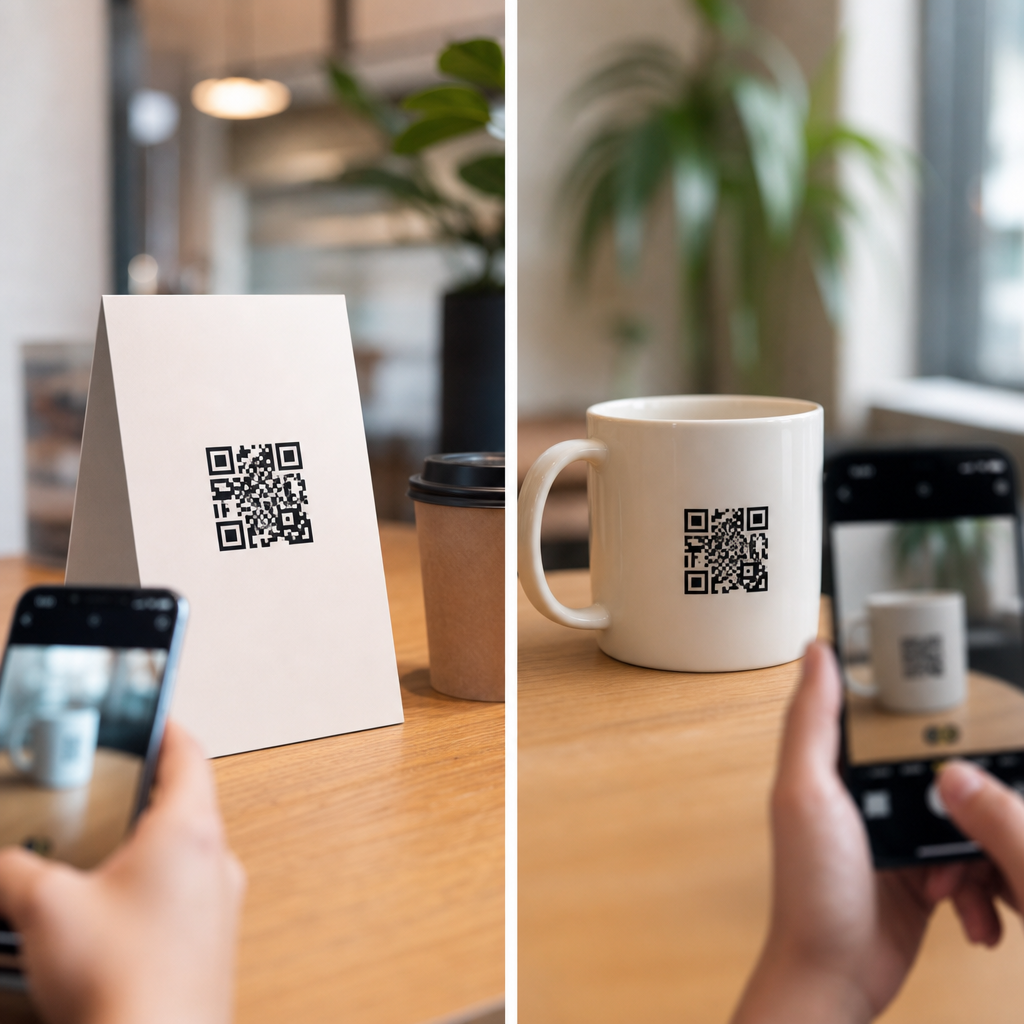

Common A/B testing mistakes with QR codes can quietly distort campaign results, waste budget, and lead teams to scale the wrong creative, landing page, or placement. A/B testing QR codes means comparing two controlled variations of a scannable campaign element to learn which version produces better outcomes, usually scans, click-throughs, form fills, purchases, or assisted conversions. In practice, that comparison may involve different code sizes, calls to action, destinations, print placements, color treatments, incentive offers, or post-scan page experiences. I have run QR code experiments across packaging, direct mail, retail signage, event booths, and restaurant tables, and the pattern is consistent: teams rarely fail because the technology is weak; they fail because the test design is weak.
This matters because QR codes sit at the intersection of offline attention and digital measurement. Unlike a standard web button test, a QR code test depends on camera behavior, printing quality, ambient lighting, scan distance, mobile connectivity, and the user’s motivation in a specific physical context. That creates more variables than many marketers expect. When those variables are not controlled, the “winner” is often just the easier-to-see code or the better shelf position, not the better message. For any brand building an advanced QR code strategy, this topic acts as the hub because every deeper article on creative testing, landing page optimization, attribution, print execution, and channel-specific measurement depends on getting the experimental basics right first.
The central goal of A/B testing QR codes is simple: isolate one meaningful difference, measure outcomes consistently, and make a decision that can be trusted. The common mistakes below undermine that process. Understanding them helps teams produce cleaner evidence, improve scan rates, and connect offline media to reliable performance data.
Testing too many variables at once
The most common failure is changing multiple elements in the same test and then pretending the result identifies one cause. A team might alter the QR code color, move its position on a flyer, rewrite the call to action, and swap the landing page hero image between version A and version B. If B wins, nobody knows why. Was it the higher contrast code, the stronger copy, or the page design? This is not a small methodological issue; it blocks learning. In my own campaign reviews, multivariable confusion is the fastest route to false confidence because stakeholders remember the winning creative but cannot replicate the performance elsewhere.
A clean QR code test changes one primary variable at a time. If the question is whether “Scan to get 15% off” outperforms “Scan to see today’s menu,” keep the code size, error correction level, destination page structure, and physical placement the same. If the question is whether a 20 mm code scans better than a 15 mm code on product packaging, do not also change the surrounding design. Controlled isolation is what makes later internal linking between your packaging QR code article, landing page test article, and attribution article actually useful; each deeper resource should answer one discrete question.
Ignoring scanability before testing persuasion
Teams often test messages before confirming that both QR code variants are equally easy to scan. That reverses the proper order. Scanability is the baseline requirement, not an optional quality check. Before any live experiment, validate that both versions scan across iPhone and Android devices, in bright and dim environments, at realistic distances, and on the actual print substrate. ISO/IEC 18004 defines the QR code symbology standard, but compliance alone does not guarantee field performance when a code is printed too small, placed on reflective packaging, or surrounded by busy graphics.
Direct answer: if one QR code is harder to scan than the other, the test is invalid because friction contaminates user intent. I have seen restaurant table tents where a stylized code lost badly to a plain black-and-white control, not because diners disliked the offer, but because the decorative code required two or three attempts to read. Use practical checks: adequate quiet zone, sufficient contrast, realistic module size, and a short redirect URL behind a dynamic QR code platform so destination changes do not force reprints. Tools such as Bitly, QR Code Generator Pro, Beaconstac, and analytics tagged with UTM parameters help standardize measurement, but no software can rescue poor physical execution.
Using weak metrics or broken attribution
Another major mistake is judging success only by total scans. Scans are an upper-funnel signal, not the final business outcome. A QR code placed on product packaging may generate many curious scans yet few purchases, while a smaller volume from direct mail might convert at a much higher rate. The right metric depends on campaign intent: scan-through rate per impression opportunity, click-through rate from the intermediate redirect, bounce rate, time on page, coupon redemption, lead quality, revenue per scan, or assisted conversions in GA4. If the test objective is unclear, teams optimize the wrong behavior.
Attribution breaks when both variants share the same destination without unique tracking, or when redirects strip parameters. Every variant needs its own trackable path. Use separate dynamic QR code URLs, preserve UTM source, medium, campaign, content, and term fields where relevant, and verify that analytics tools record the session correctly. If offline traffic feeds into CRM records, align naming conventions before launch.
| Mistake | What happens | Better approach |
|---|---|---|
| Track only scans | High curiosity looks like success | Measure conversions and revenue per scan |
| One shared URL | Variant performance is merged | Assign unique dynamic URLs per version |
| Lost UTMs in redirects | Sessions appear as direct traffic | Test redirect chains before launch |
| No CRM tie-back | Lead quality is invisible | Map QR variants to downstream records |
Running tests with poor sample size and uneven distribution
Many QR code tests end too early. Someone sees a 20 percent lift after forty scans and declares a winner, even though the result could easily be noise. Statistical confidence matters more in QR campaigns because physical distribution is often uneven. Two poster locations in the same store may look equivalent but receive very different foot traffic. Two package print runs may ship to regions with different buying behavior. If exposure is unequal, raw scan counts mislead.
Plan the test around expected traffic and minimum detectable effect. If your baseline conversion rate is low, you need more observations than you think. Practical discipline helps: rotate placements when possible, randomize handouts in event settings, split geographic markets thoughtfully, and avoid comparing weekday exposure against weekend exposure without adjustment. In retail, I prefer matched-location designs or time-based alternation because they reduce positional bias. The principle is straightforward: a fair A/B test requires comparable opportunity to be seen and scanned. Without that, your result measures distribution quality, not creative quality.
Forgetting the offline context that shapes behavior
QR code performance is highly contextual, and this is where digital-first teams make avoidable mistakes. A code on transit signage is scanned by people in motion with limited time and variable connectivity. A code on product packaging is scanned at home, often during consideration or post-purchase support. A code on a trade show booth competes with conversation, crowding, and low attention spans. Testing the same call to action across those environments without accounting for user intent produces shallow conclusions.
Ask the obvious question directly: what is the user trying to do at the exact moment of the scan? If the answer is “get a coupon fast,” then sending them to a slow homepage is a testing mistake, not just a landing page flaw. If the answer is “learn how to assemble the product,” then a video support page may outperform a promotional offer even with fewer immediate conversions because it reduces support burden and improves satisfaction. I have seen packaging tests where the best-performing variant used plain language—“Scan for setup instructions”—because it matched the real post-purchase need better than brand-led copy.
Changing the landing page after launch without preserving the experiment
Because dynamic QR codes allow destination edits, teams sometimes change the landing page mid-test and accidentally invalidate their own comparison. This usually happens when a sales team requests copy tweaks or a web team updates the page template. Once the destination experience changes materially for one or both variants, the original hypothesis no longer applies. The data before and after the change are not fully comparable.
The fix is governance. Lock the test window, document the exact hypothesis, freeze page elements that affect conversion, and version-control all changes. If an update is unavoidable, annotate the timeline and restart the experiment. In mature programs, every QR test has a simple test brief: objective, primary metric, secondary metric, variant definitions, launch dates, traffic allocation method, and stop conditions. That level of rigor may sound heavy for a printed square on a poster, but it is what separates dependable learning from anecdotal reporting.
Declaring a universal winner instead of building a testing program
The final mistake is treating one result as permanent truth. QR code behavior changes by audience, channel, season, incentive, and creative fatigue. A bold “Scan to win” message may outperform a utility-driven CTA at an event but underperform on pharmaceutical packaging where trust and clarity matter more than excitement. Likewise, a larger code may improve scans on outdoor signage while being unnecessary on close-range countertop displays. There is no single best QR code design for every context.
The real value of this hub topic is not one tactic but a repeatable system. Start with scanability, isolate variables, define business outcomes, protect attribution, and respect the offline environment. Then connect each learning to deeper work: QR code landing page testing, print placement experiments, packaging performance analysis, redirect strategy, and analytics implementation. Teams that build that testing discipline learn faster and waste less media. Audit your current QR campaigns, identify one mistake from this list, and fix it in the next test cycle. That single improvement can turn QR codes from a novelty into a reliable performance channel.
Frequently Asked Questions
What are the most common A/B testing mistakes teams make with QR codes?
The most common mistake is changing too many variables at once. If one version uses a larger QR code, a different call to action, a new landing page, and a different print placement, there is no reliable way to know which change influenced the outcome. Good QR code A/B testing isolates one meaningful variable at a time so results can be attributed with confidence. Another frequent issue is using inconsistent audiences or environments. A code placed on in-store signage may naturally perform differently than the same code on packaging, direct mail, or a poster in a transit station, so comparing those placements without controlling for context can produce misleading conclusions.
Teams also often stop tests too early. A few extra scans in the first day do not prove a winner, especially when scan behavior changes by time of day, day of week, traffic source, weather, retail volume, or campaign promotion level. Declaring a winner before enough data accumulates can lead marketers to scale the wrong creative or destination. In addition, many organizations focus only on scan volume and ignore downstream outcomes. A version that generates more scans but fewer completed forms, purchases, or qualified leads may not actually be the better performer. Strong testing looks beyond top-of-funnel activity and evaluates the business result that matters most.
Other costly mistakes include poor tracking setup, broken redirects, inconsistent UTM parameters, and failing to test the mobile landing page experience before launch. If the QR code works but the page loads slowly, renders poorly, or asks too much from the visitor, the test may incorrectly blame the code design instead of the destination experience. Finally, some teams overlook practical scanning conditions such as code contrast, quiet zone, print quality, viewing distance, and lighting. These physical execution details can heavily influence performance and distort results if they differ between variants.
Why is it a problem to test multiple QR code elements at the same time?
Testing multiple elements at once is a problem because it destroys clarity. The purpose of an A/B test is to compare two controlled versions with one intentional difference. When several elements change together, the result becomes a blended effect rather than a clean insight. For example, if Version A has a black-and-white QR code with a short call to action and Version B uses a branded color treatment, a larger size, and a stronger value proposition, any lift in scans could be caused by one change, a combination of changes, or even an interaction between them. That leaves the team guessing instead of learning.
This issue becomes even more serious when the end goal is not just scans but click-throughs, form fills, purchases, or assisted conversions. A more prominent code might improve scan rate, while a revised landing page might improve conversion rate. If both are changed at once, you cannot tell whether the gain came from getting more people to enter the funnel or from converting them better once they arrived. That uncertainty makes optimization less efficient and can create false confidence in tactics that do not consistently perform when reused elsewhere.
The better approach is to prioritize the most important hypothesis and test it in isolation. If the team wants to know whether QR code size affects scan rate, keep the destination, call to action, placement, and surrounding design constant. Once that question is answered, move to the next variable, such as headline wording or landing page format. In more mature programs, multivariate testing can be useful, but it requires significantly more traffic, more disciplined design, and stronger analytical controls. For most QR code campaigns, especially in print or mixed offline environments, simpler tests produce more trustworthy insights.
How can poor tracking setup distort QR code A/B test results?
Poor tracking setup can undermine an otherwise well-designed test because it breaks the connection between scans and outcomes. If both QR code variants route to the same URL without distinct tracking parameters, the analytics platform may combine traffic and hide the difference between versions. If one code uses UTM parameters and the other does not, reporting may over-credit one variant or misclassify traffic sources entirely. This makes it difficult to compare scan counts, sessions, engagement, and conversion actions accurately.
Redirect behavior is another common source of distortion. Dynamic QR codes often rely on redirects for destination control and measurement, but if redirects are slow, inconsistent, or incorrectly configured, they can affect user experience and analytics integrity. One variant may appear weaker not because people are less interested, but because the destination takes longer to load or because the redirect strips campaign parameters before the analytics platform records them. Broken links, app deep link failures, and mobile browser quirks can all create false negatives in test results.
Attribution can also become messy when QR scans contribute to conversions later in the customer journey rather than immediately. A person may scan a code, browse briefly, leave, and return later through another channel to purchase. If the analytics setup does not account for assisted conversions or uses an attribution model that minimizes QR influence, teams may undervalue a variant that actually generates strong downstream impact. To prevent these issues, each test variant should have a clearly distinct tracking structure, analytics should be validated before launch, and performance should be measured across both immediate and assisted outcomes. That level of discipline helps ensure the test reveals real behavior instead of technical noise.
What metrics should teams focus on instead of looking only at QR code scans?
Scans are important, but they are only the first step in the journey. A high scan count can look impressive while hiding weak campaign quality. The more useful question is what happens after the scan. Teams should evaluate metrics that align with the campaign objective, such as landing page engagement, click-through rate, form completion rate, purchase conversion rate, lead quality, revenue per visitor, or assisted conversions. If the goal is demand generation, qualified leads may matter more than raw scan volume. If the goal is e-commerce, completed transactions and average order value may be the real indicators of success.
It is also helpful to think in terms of funnel efficiency. For example, if Variant A generates fewer scans than Variant B but a much higher percentage of those visitors complete the desired action, Variant A may deliver better total value. Looking at scan-to-session rate, session-to-conversion rate, bounce rate, time on page, and abandonment points can reveal where performance differences are occurring. This helps teams avoid optimizing for curiosity alone and instead optimize for commercial impact.
In offline and print-driven campaigns, context matters as well. A QR code on product packaging may attract highly intent-driven users, while one on a trade show banner may generate more exploratory scans. Comparing those only by scan counts would overlook differences in user motivation. The best metric framework reflects the role of the QR code within the broader campaign. A mature measurement plan typically includes a primary success metric, a few diagnostic metrics, and guardrails such as page speed or error rate. That way, teams can choose winners based on meaningful performance rather than vanity numbers.
How do placement, design, and landing page issues interfere with valid QR code A/B tests?
Placement, design, and landing page quality can all interfere with test validity because QR code performance depends heavily on the full scan experience, not just the code itself. Placement affects visibility, accessibility, and user intent. A code near eye level on a product display may naturally outperform the same code printed at the bottom of a cluttered flyer or placed where people have little time to stop and scan. If two variants are exposed to different physical environments, any difference in performance may reflect location conditions rather than the tested change.
Design factors matter just as much. QR codes need enough contrast, sufficient size, a proper quiet zone, and high print quality to scan reliably across devices. Over-stylized branded codes may look attractive but become harder to scan, especially in low light or at awkward angles. The surrounding copy also influences behavior. A clear call to action such as “Scan to get 20% off” creates more motivation than a vague instruction like “Learn more.” If design execution differs between variants in unintended ways, the test may measure usability problems instead of marketing effectiveness.
The landing page is often where the biggest distortions happen. Even when a QR code scans perfectly, users can drop off if the page loads slowly, is not mobile optimized, asks for too much information, or does not match the promise made by the call to action. In those cases, teams may mistakenly conclude that a QR creative or placement underperformed when the real problem was post-scan friction. To run a valid A/B test, the end-to-end experience should be checked carefully before launch: scan speed, redirect behavior, page load time, message match, mobile usability, and conversion flow. When these elements are controlled, the test is far more likely to produce insights that can be trusted and scaled.