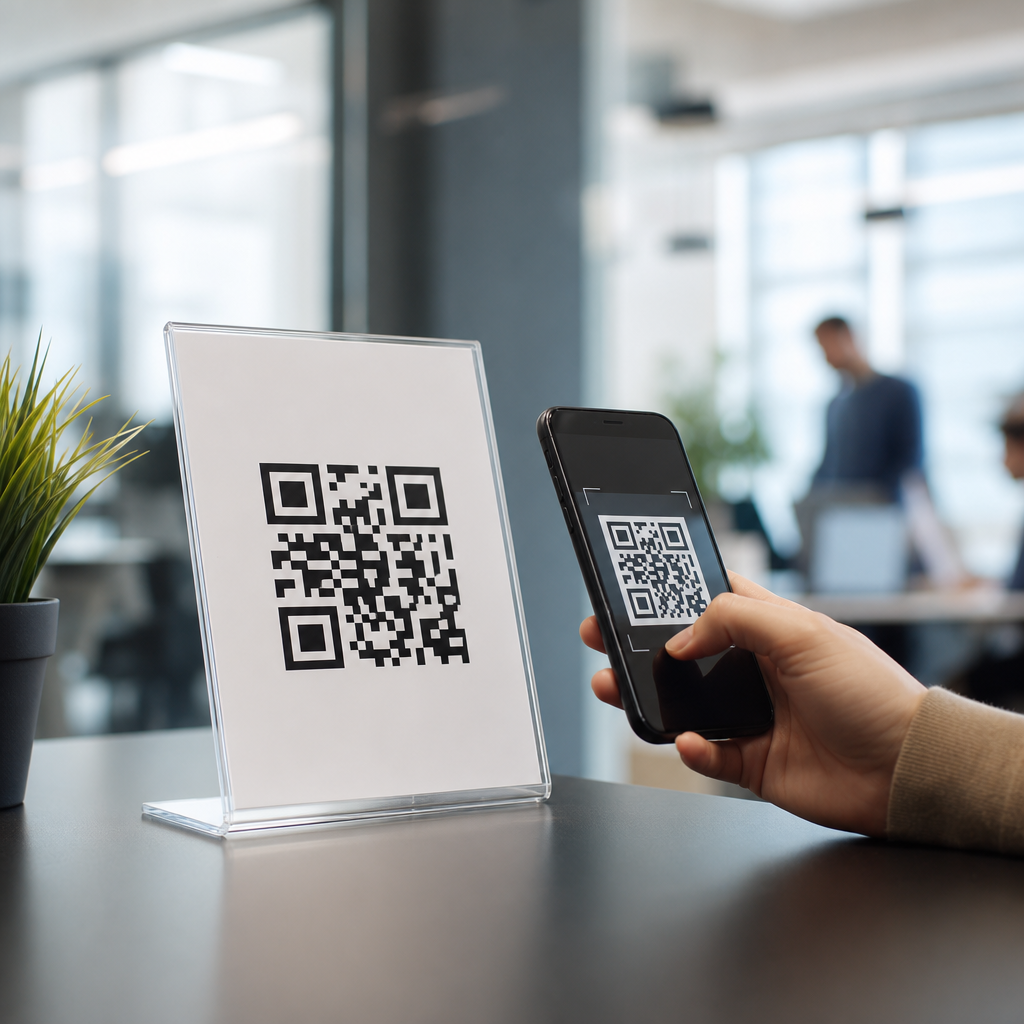
QR codes remain highly relevant in 2026 because they solve a simple, persistent problem: moving people from a physical object to a digital action with almost no friction. A QR code, short for Quick Response code, is a two-dimensional barcode that stores data such as a URL, contact card, payment request, Wi-Fi credential, app deep link, or product identifier. The camera on a modern phone can read that pattern instantly, which removes the need to type a long web address or search manually. In practice, that speed is why restaurants still use menu codes, manufacturers print support codes on packaging, retailers connect shelves to reviews, and event organizers use mobile tickets at scale.
I have worked on QR deployments for packaging, retail signage, field service labels, and onboarding flows, and the pattern is consistent: adoption rises when the destination is useful, fast, and trustworthy. The question is no longer whether people know how to scan. Both iPhone and Android devices have supported native scanning for years, and consumers learned the behavior during contactless service growth in the early 2020s. The real question in 2026 is where QR codes create measurable value, where they fail, and how businesses should use them without creating dead ends. That makes this page a practical hub for general QR code FAQs, from how they work to common mistakes, security concerns, analytics, and troubleshooting basics.
Relevance also depends on context. QR codes are not magical marketing devices, and they are not the right choice for every interaction. Near Field Communication can be better for tap-based access, and a short memorable URL may outperform a code on television. Still, QR codes remain one of the cheapest and most flexible bridges between offline and online channels. They work on paper, screens, labels, posters, invoices, kiosks, direct mail, and equipment tags. For organizations that need a low-cost, standards-based way to trigger scans across many touchpoints, they are still one of the most practical tools available.
Why QR codes still matter in everyday use
QR codes still matter because they reduce friction at the exact moment a person is ready to act. In retail, a shelf tag can open product specifications, inventory status, or care instructions. In healthcare, clinics use codes for appointment check-in, patient forms, and medication information, while still protecting records behind authenticated systems. In transit and events, QR-based tickets are standard because they are easy to issue, easy to validate, and compatible with existing scanner hardware. In manufacturing and field service, a code on a machine can open a maintenance log, serial-specific manual, or replacement part request in seconds.
Payments are another reason relevance has persisted. The EMVCo QR payment specifications gave merchants and payment providers a common framework, especially in markets where card terminal infrastructure was uneven. Static merchant-presented codes and dynamic transaction-specific codes both remain common in 2026. The appeal is obvious: lower hardware costs, simpler merchant onboarding, and familiar user behavior. In hospitality, I still see codes reducing queue times by routing guests to self-ordering or digital concierge pages. When the destination is mobile optimized and loads quickly, scan-to-action conversion is often better than asking someone to navigate manually.
Education and support use cases are equally durable. A printed quick-start guide with a QR code can send buyers to setup videos, warranty registration, multilingual documentation, or live troubleshooting steps. This is especially useful when products have small packaging or ship globally. Instead of printing bulky manuals, brands maintain current information online. That keeps content accurate after product updates and lowers print costs. The same logic applies to facilities management, museums, real estate signs, and business cards. The code survives because it is format-agnostic and cheap to reproduce at scale.
How QR codes work and what types exist
A QR code is built from square modules arranged in a grid with finder patterns in three corners, alignment patterns for distortion correction, and encoded data plus error correction. Most business users do not need to know the symbol mathematics, but a few fundamentals matter. Error correction lets a code remain readable even when part of it is damaged or obscured, which is why branded QR codes can work if design changes stay within limits. Data can be static or dynamic. A static QR code contains the final destination directly. A dynamic QR code points to a short redirect URL controlled by a platform, allowing the destination to be changed later and scans to be measured.
The most common QR content types in 2026 include website URLs, PDF links, vCard contact records, email actions, SMS prompts, Wi-Fi access credentials, app links, payment payloads, and geolocation data. There are also industrial and inventory use cases involving identifiers rather than public links. Dynamic codes are usually best for campaigns, packaging, support materials, and any asset with a long lifespan because they allow edits without reprinting. Static codes are fine for fixed information that will not change, such as a permanent public page or a Wi-Fi password in a controlled environment.
Businesses should also understand that QR codes are governed by practical standards and scanner behavior, not just generator settings. ISO/IEC 18004 defines the symbology. Readability depends on module size, contrast, quiet zone spacing, print quality, viewing distance, and the camera software decoding the symbol. As a rule, black on white remains safest. In my testing, glossy surfaces, low contrast colors, tiny module sizes, and placing a code on a curved seam cause more failures than the data itself. Most troubleshooting starts with physical presentation, not the code generator.
Best practices, analytics, and common mistakes
A useful QR code strategy starts with the destination, not the graphic. Before generating anything, define the user task: buy, register, view instructions, check authenticity, join Wi-Fi, pay, or contact support. Then make the landing page load fast, fit mobile screens, and continue the exact promise made beside the code. If a poster says “See the installation guide,” the scan should open the guide directly, not a generic homepage. Add UTM parameters or equivalent campaign tracking, use a dynamic QR platform when measurement matters, and test on multiple devices and lighting conditions before printing.
| Use case | Best QR type | What success looks like | Common mistake |
|---|---|---|---|
| Product packaging | Dynamic URL | Scans lead to manuals, warranty, support by model | Sending every product to one generic homepage |
| Restaurant table service | Dynamic URL or payment QR | Menu loads fast, ordering is simple, payments reconcile | Heavy menu PDFs and poor mobile design |
| Event ticketing | Unique secure code | Fast validation and fraud controls at entry | Reusing non-unique images without verification |
| Direct mail | Dynamic URL with tracking | Clear attribution by campaign, region, or segment | No analytics, so scan volume cannot be tied to outcome |
The most common mistakes are predictable. One is poor placement: codes printed too small, too high, or where signal is weak. Another is low trust: a code with no label gives users no reason to scan, while a branded cue such as “Scan to verify authenticity” sets expectations. A third is fragile design. Over-customized codes often break when logos are oversized or contrast drops. Finally, many teams forget lifecycle management. If a campaign ends or a domain changes, static codes can become dead links in the field for years. For a hub topic like general QR code FAQs, this is the central lesson: usefulness depends on destination quality, scanability, and maintenance.
Security, privacy, and troubleshooting questions users still ask
People still ask whether QR codes are safe, and the honest answer is that the symbol itself is neutral. Risk comes from the destination. A malicious actor can place a sticker over a legitimate code and redirect users to a phishing page, fake payment screen, or malware download. That is why organizations should inspect public signage, use tamper-evident placement where possible, and print recognizable branding around important codes. Users should preview links when their phone offers that option, avoid entering credentials on unfamiliar pages, and confirm the domain before paying or signing in. Businesses handling payments or identity should use HTTPS, verified domains, and secure redirects without unnecessary hops.
Privacy questions are also common. Scanning a QR code does not automatically expose a person’s full identity, but the destination may collect analytics such as device type, time, campaign source, approximate location from IP, or form submissions. Good practice is simple: collect only what is needed, disclose tracking in the privacy notice, and avoid hidden data harvesting. If the code launches a prefilled message, contact card, or app action, the user should clearly understand what happens next.
Troubleshooting follows a short checklist. If a code will not scan, check contrast, size, quiet zone, lighting, reflections, camera focus, and whether the linked page is live. If scans happen but conversions are low, inspect page speed, message match, form length, and whether the user is sent to a login wall. If scans are inconsistent across locations, look at print vendors, material finishes, and network conditions. These practical fixes explain why QR codes are still relevant in 2026: when done well, they are efficient, measurable, and familiar. Review your current touchpoints, test the scan experience end to end, and update weak codes before they fail customers.
Frequently Asked Questions
Are QR codes still relevant in 2026, or are they becoming outdated?
Yes, QR codes are still highly relevant in 2026, and in many industries they are more useful than ever. Their continued value comes from the fact that they solve a very practical problem: they let people move from a physical object to a digital destination almost instantly. Instead of typing a URL, downloading something manually, or searching for a specific page, a user simply points a phone camera at the code and takes action in seconds. That convenience is still extremely powerful.
What keeps QR codes current is not novelty, but utility. They work across packaging, restaurant tables, retail signage, product manuals, event check-in, payments, customer support, app downloads, and authentication flows. A QR code can contain or point to a website, digital menu, contact card, Wi-Fi credential, payment request, deep link, or product-specific information. As long as businesses need a low-friction bridge between offline and online experiences, QR codes remain relevant.
In fact, their relevance has grown because smartphone cameras, operating systems, and consumer habits have improved. Most users no longer need a separate scanning app, which removes one of the biggest barriers that limited early adoption. In 2026, QR codes are not a trend people are experimenting with. They are a mature, dependable interface for real-world commerce, communication, and customer engagement.
Why do QR codes continue to work so well for connecting physical items to digital actions?
QR codes work well because they reduce effort at the exact point where people are most likely to abandon a task. If someone sees a poster, product box, receipt, menu, instruction sheet, or display sign and wants more information, the easiest path is usually the one they take. A QR code removes several steps at once: no typing, no guessing the correct web address, no searching through results, and no risk of entering the wrong page. That kind of friction reduction has a real impact on conversions.
They are also flexible. A single QR code can trigger many different outcomes depending on the use case. It might open a product demo, launch a payment screen, add contact information, connect a user to Wi-Fi, show setup instructions, verify a ticket, or start an app-specific experience. This versatility is one reason businesses continue to rely on them. The same visual format can support marketing, operations, customer service, logistics, and transactions.
Another reason they remain effective is that they fit naturally into the environments where people make decisions. On packaging, they can answer questions at the moment of purchase. On equipment, they can provide maintenance steps exactly when needed. In hospitality, they can speed up ordering or check-in. In events, they can streamline registration and access control. QR codes succeed because they meet users where they already are and help them complete the next digital step with minimal resistance.
What are the most common uses of QR codes in 2026?
In 2026, QR codes are used across a wide range of everyday scenarios, and their adoption spans both consumer and business environments. In retail and ecommerce, they are commonly placed on packaging, shelf labels, and print materials to connect shoppers to product details, reviews, warranty registration, user guides, and reorder pages. Brands also use them in marketing campaigns to send people directly to landing pages, promotional offers, loyalty programs, or app download links.
In hospitality and food service, QR codes continue to support menus, ordering flows, table service, feedback collection, and payment experiences. In events and travel, they are widely used for digital tickets, boarding passes, access control, and attendee check-in. In offices, apartment buildings, and public spaces, they can help users join guest Wi-Fi, access visitor information, navigate facilities, or complete contactless sign-ins.
They also play a growing role in payments and authentication. Many payment systems use QR codes to launch secure transactions without requiring users to enter account details manually. Businesses use them for invoice payments, point-of-sale transactions, and peer-to-peer transfers. In manufacturing and logistics, QR codes are often tied to inventory systems, part identification, traceability, and service histories. The reason these use cases keep expanding is simple: the format is easy to deploy, easy to scan, and easy to understand.
Are there any drawbacks or limitations to using QR codes?
QR codes are highly effective, but they are not perfect, and their success depends heavily on good implementation. One common limitation is poor placement or design. If a code is printed too small, placed in low light, distorted by reflective surfaces, or positioned where scanning is inconvenient, people may ignore it or struggle to use it. A QR code also needs a clear purpose. If users do not know what will happen after they scan, they are less likely to engage.
Another issue is destination quality. The scan experience may be fast, but if the code leads to a slow page, an irrelevant landing screen, or a mobile-unfriendly website, the user experience breaks down immediately. In other words, QR codes remove friction at the entry point, but they cannot compensate for a poor digital journey after the scan. Businesses need to think beyond the code itself and make sure the destination is optimized for mobile devices and aligned with user intent.
Security and trust are also important considerations. Because QR codes can direct users to websites or trigger actions, bad actors can misuse them in phishing attempts or scams. That does not make QR codes inherently unsafe, but it does mean businesses should use recognizable branding, clear labeling, and trusted domains. Users should also be encouraged to verify the destination before interacting with sensitive forms or payment requests. When deployed thoughtfully, these limitations are manageable, and the benefits still outweigh the risks in most legitimate use cases.
How can businesses use QR codes effectively in 2026?
The most effective QR code strategies start with a clear objective. A business should know exactly what action it wants the user to take after scanning, whether that is making a purchase, viewing a product page, joining Wi-Fi, downloading an app, claiming an offer, registering a warranty, or contacting support. The QR code should be placed in a context where that action makes sense naturally. Relevance is what drives scans.
It is also important to make the experience obvious and trustworthy. Businesses should add a short call to action near the code, such as “Scan to view setup instructions” or “Scan to pay securely.” That simple guidance increases confidence and tells users what they will get in return. Codes should be large enough to scan easily, tested on multiple devices, and linked to mobile-optimized pages. If the destination changes over time, dynamic QR codes can be especially useful because they allow updates without reprinting the code itself.
Finally, businesses should measure performance and improve over time. QR codes can be part of a broader digital strategy, not just a one-off tool. Tracking scans, engagement, conversions, and location-based performance helps organizations understand which placements and messages work best. In 2026, the companies getting the most value from QR codes are the ones using them intentionally, with strong user experience design and a clear connection between the physical touchpoint and the digital outcome.