QR codes in advertising turn a static message into an interactive experience, letting people move from a poster, package, menu, shelf tag, mailer, or storefront window to a digital destination in seconds. A QR code, short for Quick Response code, is a two-dimensional barcode that stores information such as a URL, contact card, coupon, payment link, app download, or event registration page. In business and marketing, the real value is not the square itself but the bridge it creates between offline attention and measurable online action. I have used QR codes in retail campaigns, trade show booths, restaurant promotions, and local service mailers, and the pattern is consistent: when the offer is clear, the landing page is fast, and the code is easy to scan, response rates improve.
Many marketers ask the same practical questions. Where should a QR code appear? What should it link to? How do you track it? Are static or dynamic QR codes better? The short answer is that you use QR codes in advertising to reduce friction. Instead of asking someone to remember a web address, search for a brand later, or type a discount code manually, you give them one immediate path to act. That matters because advertising often wins or loses on convenience. The less effort required between interest and action, the more likely a person is to convert.
QR codes matter now because smartphone cameras scan them natively, consumers are comfortable using them, and modern analytics tools let teams attribute scans to channels, creative versions, and locations. They are especially effective in omnichannel marketing, where physical media supports digital conversion. They also fit a broad range of goals: lead generation, product education, coupon redemption, mobile ordering, event signups, app installs, reviews, payments, and customer support. Used well, QR codes make advertising more measurable, more useful, and easier for customers to respond to at the exact moment attention is available.
Where QR codes work best in advertising
The best use of QR codes depends on context. In out-of-home advertising, they work when the viewer has enough time and physical proximity to scan. Transit shelter posters, in-store signage, point-of-sale displays, real estate boards, direct mail postcards, brochures, product packaging, conference banners, and restaurant table tents are strong placements. Highway billboards are usually weak because drivers cannot safely scan them, and the distance often makes the code unreadable. This is a common mistake: placing a QR code where the environment does not support immediate action.
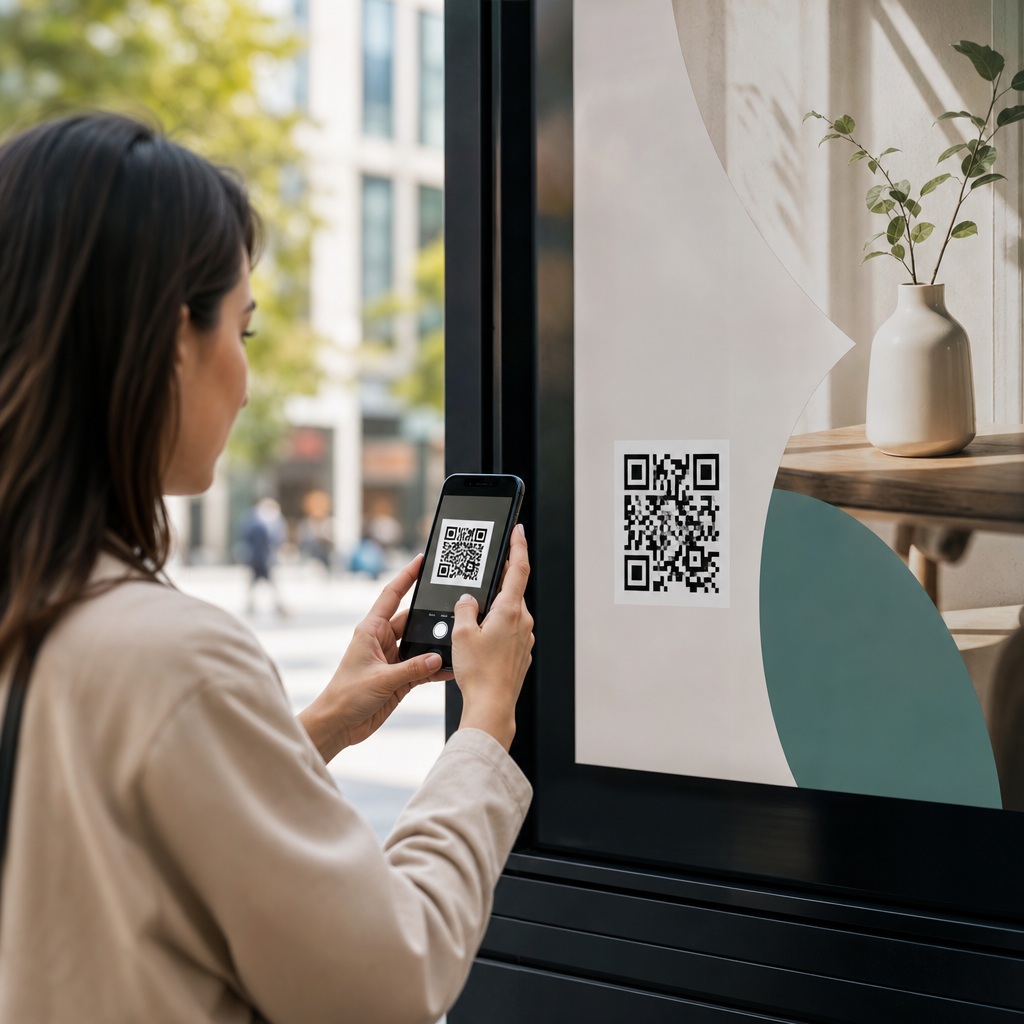
Retail gives some of the clearest examples. A shelf sign can link to product comparisons, reviews, ingredient details, or a limited-time coupon. A cosmetics brand might place a code beside a display so shoppers can watch a 20-second demo, then add the product to a mobile cart. In restaurants, a code on a window cling can open the menu, loyalty signup, or ordering page. At trade shows, a booth code can route visitors to a lead form tagged with the event name, product interest, and sales territory. For local service businesses, door hangers and vehicle wraps can connect directly to quote requests or before-and-after galleries.
The rule I use is simple: match the placement to the user’s level of intent. High-intent moments, such as in-store browsing or event attendance, justify deeper destinations like product specs or registration forms. Lower-intent moments, such as casual brand awareness posters, usually perform better with a simple value exchange like “Scan for 15% off” or “Scan to see today’s menu.”
What a QR code should link to
A QR code should never send users to a generic homepage unless the homepage is intentionally built for that campaign. The destination should complete the promise made by the ad. If the ad says “Scan for a free sample,” the page should open directly to the sample request form, not the main site navigation. If the ad offers “See the full property tour,” the code should load a mobile-optimized listing with photos, map, price, and contact options. Relevance between creative and destination is the difference between curiosity and conversion.
For most campaigns, the strongest destinations are a dedicated landing page, coupon page, app install page, video explainer, product configurator, event registration form, or contact page with one clear next step. The page must load quickly, respect mobile design standards, and minimize form fields. I have seen scan volume remain healthy while conversion collapses because the landing page asked for too much information or buried the offer below the fold. Keep the path short. One screen, one message, one action.
Dynamic QR codes are usually the better choice for advertising because the destination can be changed without reprinting the code. That matters if a campaign runs across several locations, if inventory changes, or if you need to reroute traffic from one offer to another. Static QR codes encode the final URL permanently, so they are fine for evergreen links but weak for active campaign management. Dynamic codes also support analytics, retargeting, and UTM parameters more reliably.
How to design a QR code ad that gets scans
Good QR code advertising depends on clarity, contrast, and motivation. The code must be large enough to scan from the expected distance, printed sharply, and placed on a background that preserves legibility. As a practical standard, keep high contrast between the code and background, leave sufficient quiet zone around the code, and test scans across multiple phones before launch. Branded colors and logo overlays can work, but only if they do not damage readability. ISO/IEC 18004 sets the technical foundation for QR code structure, and respecting scanning tolerances matters more than decorative styling.
The call to action is equally important. “Scan me” is weaker than “Scan for 20% off,” “Scan to book in 30 seconds,” or “Scan to watch the demo.” People need a reason. In my campaigns, adding a specific benefit consistently lifts scan-through rates because it answers the immediate question: what do I get? Pair the code with concise supporting text so the user understands the next step, the reward, and any time sensitivity.
| Advertising placement | Best QR destination | Main success factor |
|---|---|---|
| Direct mail postcard | Coupon or booking landing page | Strong incentive and simple form |
| Retail shelf sign | Product details, reviews, or promo | Immediate buying intent |
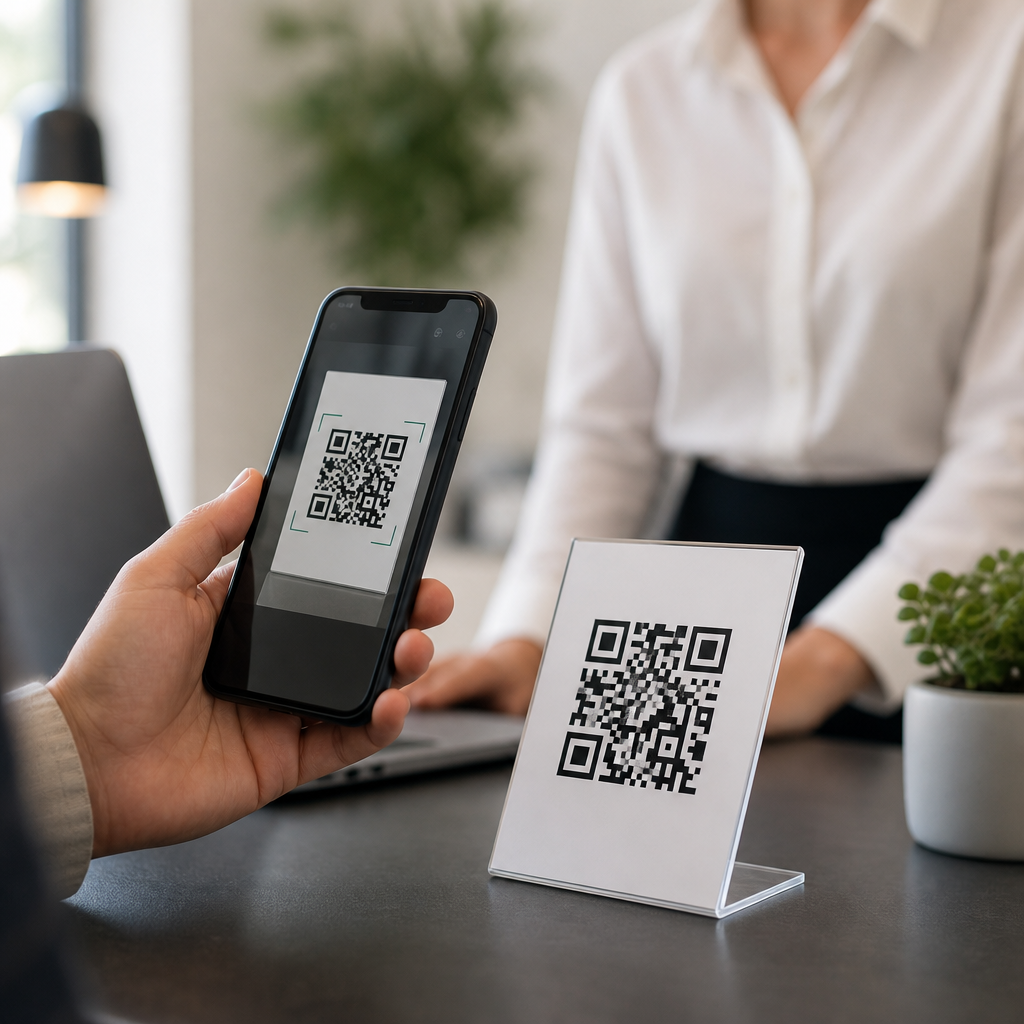
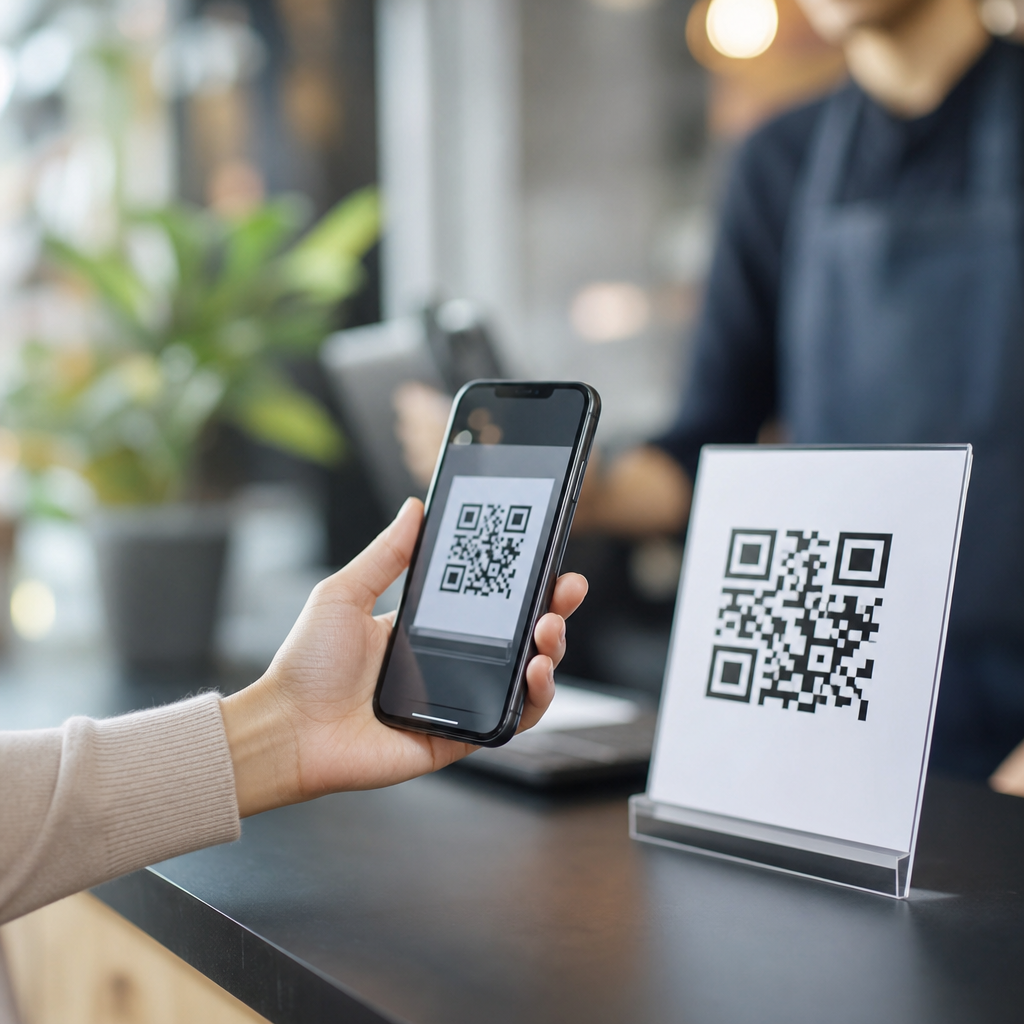
| Restaurant table tent | Menu, ordering, loyalty signup | Fast mobile experience |
| Trade show booth | Lead capture form or product demo | Clear event-specific tagging |
| Packaging | How-to video, warranty, reorder page | Post-purchase usefulness |
Placement also affects performance. Put the code where the eye naturally lands after the headline or image, not hidden in a corner. If the medium is physical, think about lighting, glare, curvature, and motion. A code on glossy packaging may fail under store lighting, while a code on a curved bottle can distort enough to break scans. Those are production issues, not strategy issues, but they influence results just as much.
How to track QR code performance and measure ROI
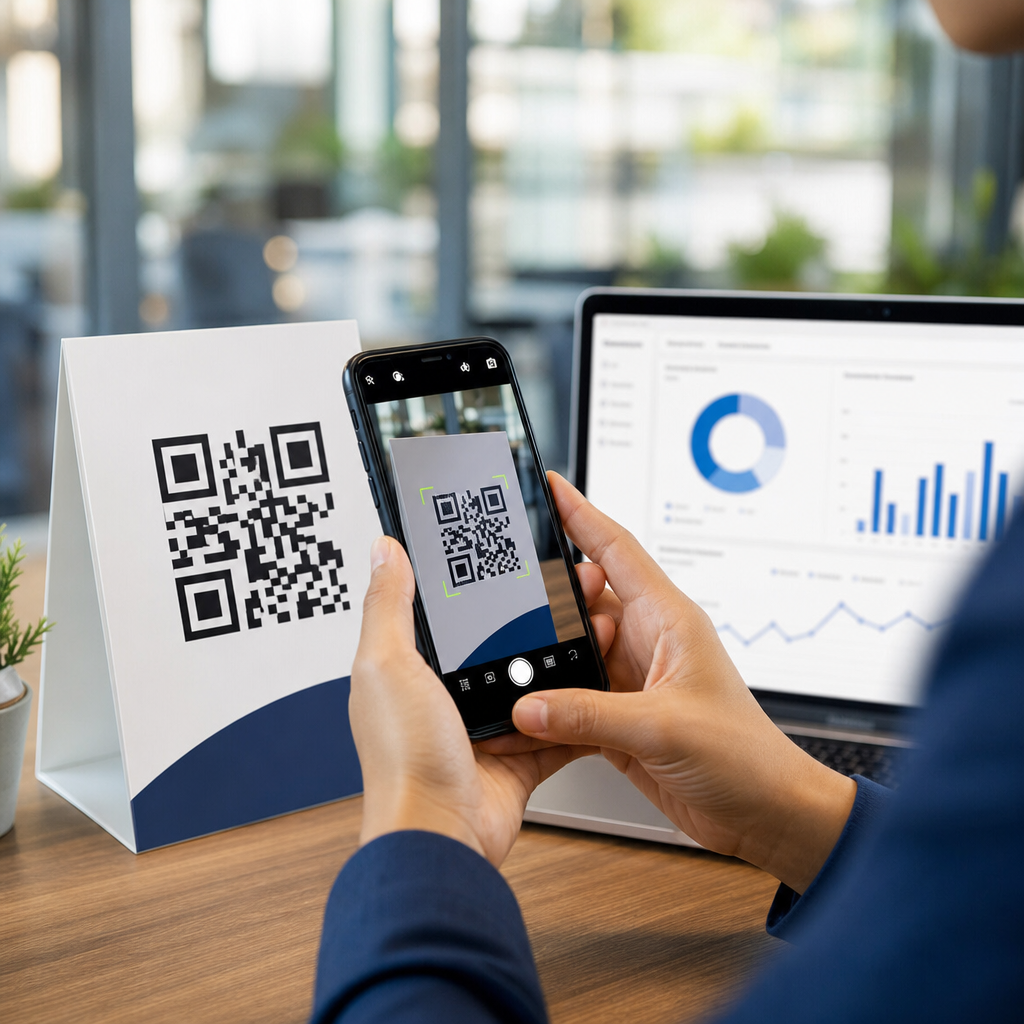
QR codes are valuable because they can be measured precisely when built into a proper tracking system. Start with a unique dynamic QR code for each campaign, channel, location, and creative variation. Add UTM parameters so analytics platforms such as Google Analytics 4 can identify source, medium, campaign, content, and placement. If you run physical ads in multiple stores or cities, create separate codes rather than one shared code. That lets you compare scan volume, landing-page engagement, and conversion by market.
The most useful metrics are scan rate, landing-page sessions, bounce rate, conversion rate, cost per lead, cost per acquisition, redemption rate for offers, and assisted conversions in multi-touch reporting. For lead generation, connect the landing page to a CRM like HubSpot or Salesforce so scans can be tied to pipeline outcomes, not just top-of-funnel activity. For local campaigns, call tracking and store visit analysis add another layer. For ecommerce, compare scans to add-to-cart rate, checkout completion, and revenue per session.
Testing improves performance quickly. A/B test the offer, call to action, landing page headline, and even placement height on posters or displays. One retail client I worked with improved coupon redemptions by changing the text from a generic “Learn more” to “Scan for today’s in-store deal.” Same code size, same location, better message. Another campaign saw higher qualified leads after routing trade show scans to a short quiz before the contact form, which filtered casual interest and gave sales reps better context.
Common mistakes, compliance issues, and practical fixes
The biggest QR code mistakes are linking to the wrong page, using a code that is too small, failing to explain the benefit, ignoring mobile speed, and not testing in real conditions. I would add one more: treating the code as the strategy. A QR code is only a delivery mechanism. The real strategy is the audience, the offer, and the landing experience. When those pieces are weak, the code cannot save the campaign.
Privacy and trust also matter. If the destination collects personal data, the page should disclose what is being collected and why, especially for lead forms, contests, loyalty signups, and payments. If you use retargeting or analytics cookies, your consent approach should match applicable laws and platform requirements. For sectors like healthcare, finance, or education, review compliance standards before sending users to pages that request sensitive information. Secure pages with HTTPS are nonnegotiable, and recognizable branding helps users trust that the scan is legitimate rather than malicious.
Accessibility deserves attention too. Not every customer will scan a code, so provide a short fallback URL or alternate path where practical. In stores, staff should know what the code does. In print, the surrounding text should explain the value clearly enough that a person understands the offer even before scanning. Good advertising removes barriers; it does not create a single point of failure.
QR codes work in advertising because they connect physical attention to digital action with very little friction. The most effective campaigns use them in places where people can safely scan, send them to a purpose-built mobile destination, give a clear reason to act, and measure every step from scan to sale. Dynamic codes, strong calls to action, fast landing pages, and channel-specific tracking turn a simple square into a practical conversion tool for retail, hospitality, events, local services, and ecommerce.
If you are building a Business and Marketing FAQ resource, QR codes deserve a central place because they answer several recurring questions at once: how to make offline media measurable, how to improve response rates, and how to connect print, packaging, and in-person experiences to digital outcomes. They are not magic, and they do have limits, especially in poor placements or weak user journeys. But when the offer is relevant and the experience is designed well, they consistently make advertising easier to act on and easier to optimize.
Start with one campaign, one audience, and one clear conversion goal. Create a dedicated landing page, generate a dynamic QR code, test it on multiple devices, and track results by placement. Then use what you learn to improve the next campaign and link this hub to your deeper guides on landing pages, offer design, analytics setup, direct mail, retail signage, and event marketing.
Frequently Asked Questions
What is the best way to use QR codes in advertising campaigns?
The most effective way to use QR codes in advertising is to connect a physical ad to a clear, valuable digital action. Instead of treating the code as decoration, use it as a direct response tool that helps people do something immediately. For example, a QR code on a poster can open a landing page with a limited-time offer, a code on product packaging can lead to product tutorials or reviews, and a code on a direct mail piece can take the user to a personalized promotion or appointment scheduler. The goal is to reduce friction so that someone can move from seeing your message to taking action in seconds.
Strong QR code advertising starts with intent. Before generating a code, decide exactly what result you want: more sales, more signups, more app downloads, more reservations, more event registrations, or better customer education. Then match the destination to the context of the ad. A person scanning a storefront window may want store hours, directions, or a discount. Someone scanning a menu may want to order online. Someone scanning a shelf tag may want product details, comparisons, or reviews. Relevance is what makes the scan worthwhile.
It also helps to give users a compelling reason to scan. A simple code with no explanation is easy to ignore. Add a short call to action such as “Scan for 20% off,” “Watch the demo,” “See customer reviews,” or “Claim your coupon.” When people understand what they will get, scan rates usually improve. In short, the best use of QR codes in advertising is to make an offline message interactive, measurable, and useful at the exact moment a customer is interested.
Where can businesses place QR codes in advertising materials?
Businesses can place QR codes almost anywhere customers encounter a marketing message, as long as the location makes practical sense and the code is easy to scan. Common placements include posters, flyers, brochures, product packaging, shelf talkers, window displays, menus, magazine ads, direct mail pieces, trade show signage, vehicle wraps, business cards, receipts, and in-store displays. Each placement creates a different moment of intent, so the destination behind the code should match that setting.
For example, in retail environments, QR codes on shelf tags can link to specifications, product comparisons, user guides, or customer testimonials. On packaging, they can provide setup instructions, loyalty rewards, refill ordering, or product authentication. In restaurants, a code on the table or menu can open digital ordering, allergen information, or a promotions page. On event materials, it can connect to registration forms, schedules, maps, or speaker details. On outdoor signage or storefront windows, the landing page might include current offers, click-to-call buttons, directions, or after-hours contact options.
The key is to think about user conditions. A person walking past a bus shelter ad has limited time, so the experience should be fast and mobile-friendly. A shopper standing in an aisle may want deeper information before buying, so a richer product page may work well. Also consider visibility, lighting, distance, and placement height. If a code is too small, distorted, blocked, or placed where people cannot comfortably access it, performance will suffer. Good placement is not just about exposure; it is about scanability and relevance.
What should a QR code in an ad link to?
A QR code in an advertisement should link to a destination that is directly connected to the promise of the ad and easy to use on a mobile device. In many cases, the best destination is a dedicated landing page rather than a generic homepage. A focused landing page lets you continue the message from the ad, highlight one offer, and guide the visitor toward one clear action. This could be making a purchase, booking a demo, downloading an app, joining a loyalty program, redeeming a coupon, registering for an event, or contacting your business.
The most successful destinations are tailored to both the audience and the placement. For instance, a QR code on a product package may lead to assembly instructions, care tips, or a product registration page. A code on a real estate sign may open a listing with photos, pricing, and agent contact details. A code in a print ad may lead to a video, a limited-time campaign page, or a lead form. A code on a table tent in a restaurant might link to digital ordering, a feedback survey, or a sign-up page for promotions. The destination should feel like the natural next step, not a disconnected digital detour.
It is also important to make the linked content fast, clean, and conversion-focused. If the page loads slowly, is hard to navigate on a phone, or asks for too much information, people will leave. Include a clear headline, concise copy, a strong call to action, and any elements needed to build trust such as reviews, pricing transparency, or secure checkout. In advertising, the QR code is just the bridge. The linked experience is what determines whether the scan becomes a measurable business result.
How do you make QR codes effective and easy for customers to scan?
To make QR codes effective, start with the basics: use a high-quality code, keep it large enough to scan comfortably, provide sufficient contrast, and avoid placing it on cluttered backgrounds. Black on white usually performs best because it is easy for smartphone cameras to detect. The code should not be stretched, compressed, or altered in a way that affects readability. If you customize it with brand colors or a logo, test it carefully across multiple devices before launching the campaign.
Size and environment matter more than many advertisers realize. A QR code on packaging viewed at arm’s length can be smaller than one on a poster or billboard. If the code will be scanned from farther away, it needs to be larger. Placement should also account for real-world conditions such as glare, poor lighting, curved surfaces, and motion. A code placed on a reflective window, a folded mailer seam, or the edge of a package may be technically visible but practically unusable. Make sure the code is easy to access physically and visually.
Just as important, tell people why they should scan. A visible code alone is not enough. Pair it with a direct call to action that explains the benefit, such as “Scan to shop,” “Scan for pricing,” “Scan to get your free sample,” or “Scan to see the full catalog.” Once scanned, the page should load quickly and be designed for mobile users. An effective QR code experience is simple from beginning to end: clear incentive, easy scan, relevant page, and immediate next step.
How can businesses track the performance of QR codes in advertising?
Businesses can track QR code performance by using dynamic QR codes, campaign-specific landing pages, and analytics tools that measure user behavior after the scan. A dynamic QR code is especially useful because it allows you to change the destination URL without reprinting the code, and it often includes scan data such as time, date, location, and device type. This makes it much easier to evaluate which placements and messages are generating engagement.
To get meaningful insights, create separate QR codes for different campaigns, channels, or placements. For example, use one code for a poster campaign, another for direct mail, and another for product packaging. You can also use unique URLs with tracking parameters to see which scans lead to conversions inside your analytics platform. That allows you to go beyond raw scan counts and measure actions such as purchases, appointments, form completions, coupon redemptions, and app installs. This is where QR code advertising becomes especially valuable: it helps connect offline exposure to digital outcomes.
Performance tracking should also guide optimization. If one location gets many scans but few conversions, the landing page may need improvement. If one offer outperforms another, you can refine your messaging. If scans are low, the issue may be placement, visibility, or a weak call to action. Over time, this data helps advertisers improve both creative and strategy. Rather than guessing whether print or in-store marketing worked, businesses can use QR codes to gather clearer evidence about customer interest and campaign effectiveness.