
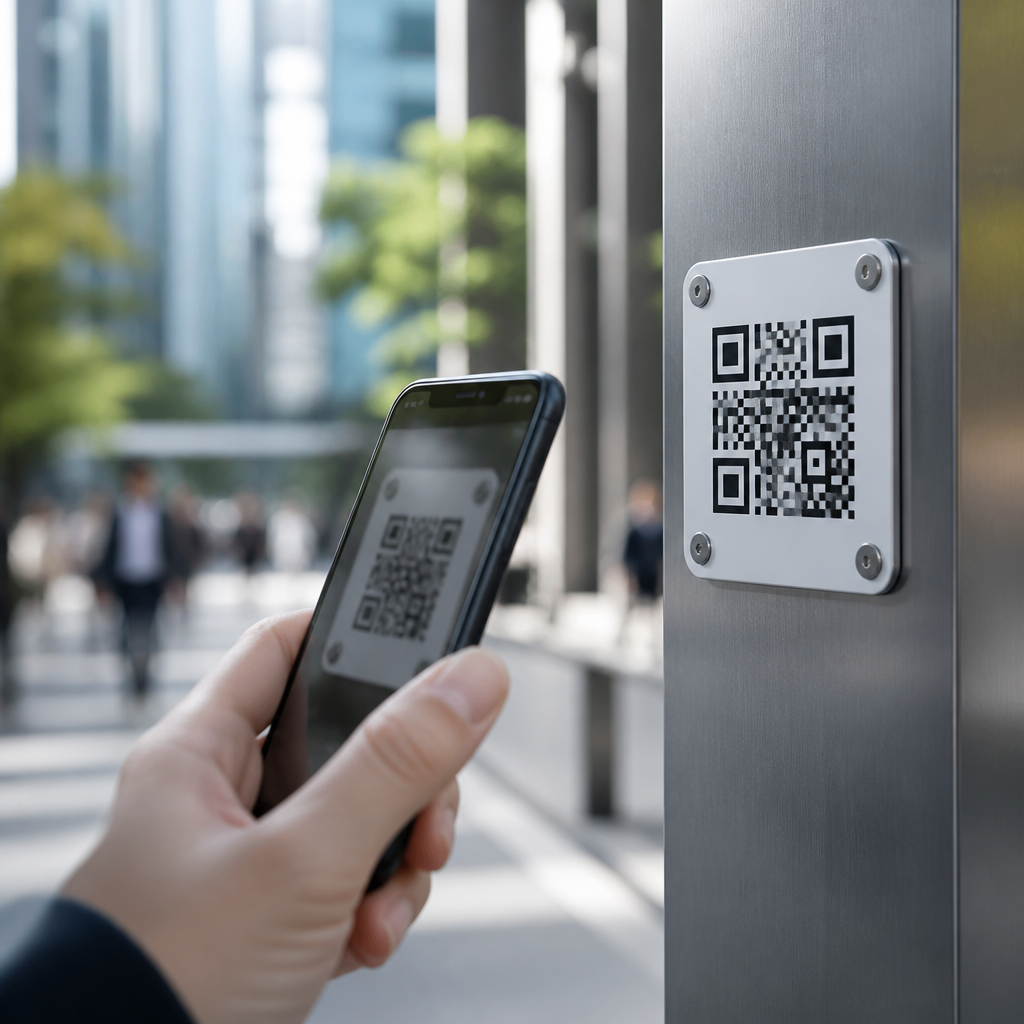
QR codes are now fixtures in restaurants, transit hubs, parking meters, retail displays, hospitals, campuses, and event venues, which makes securing QR codes in public spaces a practical risk-management issue rather than a niche technical concern. A QR code is simply a machine-readable matrix barcode that stores a URL, payment destination, contact record, Wi-Fi credential, or other data, but in public settings it also becomes a trust bridge between the physical world and a user’s phone. If that bridge is compromised, the result can be phishing, payment diversion, malware delivery, credential theft, privacy violations, or brand damage. I have worked with venue operators, marketers, and IT teams on QR deployments, and the same pattern appears repeatedly: the code itself is not usually “hacked”; the surrounding process is weak. Preventing QR code fraud therefore means controlling design, placement, tamper resistance, destination security, monitoring, and user education. It also means understanding that public-space QR risks are different from private operational uses because anyone can approach, scan, cover, replace, photograph, or imitate the code. This hub article explains how to secure QR codes in public spaces, why fraud happens, what controls matter most, and how organizations can reduce exposure without making codes useless.
Public QR fraud usually falls into a few clear categories. The most common is sticker replacement, where a criminal places a fraudulent code over a legitimate one on a parking kiosk, table tent, poster, or utility pole. Another is destination spoofing, where the printed code is real but points to a domain that closely imitates the intended site. A third is unauthorized code creation by internal teams or vendors who bypass approval and publish trackable or insecure destinations. There are also privacy risks: codes can collect unnecessary personal data, use open redirects, or send users to forms that fail basic consent and retention requirements. For operators responsible for the “QR Code Security, Privacy & Compliance” program, the objective is straightforward: make every public QR interaction authentic, expected, encrypted, and auditable. That requires a blend of physical security, web security, operational governance, and response planning. As the hub page for preventing QR code fraud, this guide covers the essential controls and points to the wider set of practices every organization should standardize before deploying codes at scale.
Why public QR codes are frequent fraud targets
Public QR codes are attractive to attackers because they are cheap to imitate, easy to distribute, and scanned on personal devices outside the organization’s security perimeter. Unlike email phishing, which may be filtered by secure gateways, a malicious QR code often reaches the user directly through a camera app. The user sees a familiar context such as a parking meter or cafe menu, assumes legitimacy, and taps quickly. Fraud works because trust is borrowed from location, signage, and brand recognition. In several cities, law enforcement and consumer protection agencies have warned about fake parking payment QR stickers placed on meters, redirecting drivers to lookalike payment pages that capture card details. The attack requires little technical skill. A criminal only needs a printed label, a convincing URL, and a target with steady foot traffic.
The public-space environment also weakens oversight. Assets are distributed across many locations, often maintained by contractors, franchisees, or frontline staff with limited security training. Weather, cleaning, vandalism, and routine replacements can obscure whether a code has been altered. Dynamic QR codes, which are useful for analytics and destination changes, introduce another risk if the redirect platform, DNS records, or content management process is poorly controlled. The lesson is simple: if a QR code can initiate payment, login, data collection, or software download, it should be treated like a public-facing application endpoint, not a marketing afterthought.
Core controls that prevent QR code fraud
The most effective fraud prevention program starts before printing. Use a controlled QR generation process with approved domains, documented ownership, and change management. In practice, I recommend maintaining a QR inventory that records the code’s purpose, final destination, physical location, owner, vendor, installation date, and review schedule. Every destination should use HTTPS, a valid certificate, and a domain that clearly matches the organization’s brand. Avoid URL shorteners that hide the destination unless they are first-party branded links under your own domain. Users are more likely to trust and verify a domain such as pay.cityparking.example than a generic short link.
Physical anti-tamper measures matter just as much. Codes should be printed with design elements that make overlays obvious, such as branded borders, microtext, sequential asset IDs, or instructions telling users what domain to expect after scanning. On kiosks and signs, place codes behind protective covers or under laminate that reveals tearing if someone tries to replace the label. Staff inspections should be scheduled, photographed, and logged, especially for high-risk assets like payment stations, donation signage, transit posters, and unattended displays. Where possible, pair the QR code with a short typed URL or NFC alternative so users have another path if something looks suspicious.
| Control | What it does | Public-space example |
|---|---|---|
| Branded domain | Helps users verify destination legitimacy before tapping | A museum poster uses tickets.museumname.org, not a generic short link |
| Tamper-evident installation | Makes sticker replacement visible during inspection | A parking meter QR is sealed under a destructible laminate |
| QR asset inventory | Creates accountability for every printed code | A retailer tracks each in-store sign by location, owner, and destination |
| Destination access control | Prevents unauthorized edits to redirects or landing pages | Only approved admins can change a stadium event code target |
| User verification cues | Reduces successful phishing by setting expectations | A sign states, “Official payments only at pay.brand.com” |
Secure destination design and payment safety
Once a user scans, the landing page becomes the real control point. For payment flows, route users to a PCI DSS-aligned payment provider or a hardened first-party checkout with tokenized processing, fraud screening, and minimal data collection. Never send users from a public QR code directly to a raw bank-transfer request, downloadable APK file, or login page that is not clearly branded. The landing page should confirm context immediately: “You are paying for Zone 4 parking at Main Street Garage” is much safer than a generic payment form. Context confirmation helps users detect fraud and reduces accidental payments to the wrong destination.
Organizations should also reduce abuse by limiting what a scanned session can do. Use deep links carefully, expire payment sessions quickly, and require server-side validation for price, item, or location data. For example, if a restaurant uses table QR ordering, the server should verify the table identifier, menu availability, and payment amount rather than trusting query parameters embedded in the code. Add a visible support channel on the landing page so users can report suspicious behavior instantly. In my experience, a hotline or help link catches tampering faster than periodic audits because customers notice anomalies first.
Governance, monitoring, and incident response
Preventing QR code fraud at scale requires governance, not one-time setup. Assign ownership across security, marketing, facilities, legal, and operations. Security should define standards for domains, redirects, authentication, and logging. Marketing should control brand presentation and approved campaign creation. Facilities or field teams should own inspections and replacements. Legal and privacy teams should review data collection notices, retention rules, and consent language where applicable. If no one owns the full lifecycle, fraudulent or outdated codes remain in circulation long after campaigns end.
Monitoring should cover both physical and digital signals. Digitally, review web analytics for spikes in traffic from unusual geographies, sudden conversion drops, redirect changes, or an increase in abandoned forms that may indicate destination issues. Protect the redirect platform with multifactor authentication, least-privilege access, audit logs, and alerts for destination edits. Physically, require field verification during routine maintenance, and encourage photo capture so teams can compare current signage against approved artwork. Incident response should be documented in advance: remove or disable the code, redirect users to a safe notice page, investigate whether payment or personal data was exposed, notify affected partners, and replace signage quickly. If fraud involved payments or personal information, evaluate notification duties under local consumer protection and privacy laws.
User education and safer public scanning behavior
Even the best controls benefit from user awareness because public scanning is a shared responsibility. The message should be simple and repeated at the point of use: check the previewed URL before opening, confirm the domain matches the brand, be cautious if the code is covered by a sticker, and avoid entering credentials or card details on a page that feels generic or urgent. Modern phone cameras usually show a preview link before opening, which is an important defense if users are trained to pause for one second and read it. For high-risk use cases like payments, include a note beside the code stating the exact official domain users should see after scanning.
Training should extend to staff as well. Frontline employees often notice fraudulent stickers, customer complaints, or off-brand landing pages before central teams do. Give them a clear escalation path and a simple checklist: inspect for overlays, verify branding, test the destination, and report anything unusual immediately. For organizations with many public assets, a quarterly review is not enough; high-risk locations may need daily or weekly checks. Public QR security works best when it is operationalized like ATM inspection, not treated like a poster campaign.
Building a durable QR code fraud prevention program
A strong program combines secure creation, controlled publishing, tamper-resistant placement, verified destinations, active monitoring, and clear response procedures. Start by classifying each QR use case by risk: informational menu links are lower risk than payments, account access, health intake, or identity verification. Apply stronger controls where user harm is highest. Standardize on first-party domains, maintain an inventory, review redirects, and retire old codes promptly so abandoned assets cannot be hijacked through expired domains or forgotten pages. Test every new deployment in the field, because glare, placement height, poor connectivity, and signage clutter all affect whether users can safely verify what they are scanning.
The main benefit of securing QR codes in public spaces is trust that survives scale. When users know your codes lead to expected, secure destinations, adoption rises and fraud losses fall. When teams know who owns each code and how tampering will be detected, response time improves dramatically. Use this hub as the foundation for your broader QR code security, privacy, and compliance work, then map each control to your environments, from parking and retail to healthcare and events. Audit your public QR inventory this week, remove anything unowned or outdated, and lock down every destination before the next scan happens.
Frequently Asked Questions
Why is QR code security such an important issue in public spaces?
QR code security matters because public spaces create a unique trust problem: people are being asked to move instantly from a physical object they can see to a digital destination they cannot verify at a glance. In restaurants, transit stations, parking kiosks, hospitals, campuses, and event venues, users often scan quickly and assume the code is legitimate because it appears in an official setting. That convenience is exactly what attackers exploit. A malicious sticker placed over a real code, a tampered sign, or a cloned code on an unofficial flyer can redirect people to phishing pages, fraudulent payment portals, malware downloads, fake Wi-Fi credentials, or data-harvesting forms.
The risk is not theoretical. Public QR codes often connect to payments, account logins, health information, ticketing, guest registration, and location-based services. If a bad actor compromises that bridge between the physical environment and a user’s phone, the damage can include stolen credentials, payment fraud, privacy violations, reputational harm, and operational disruption. For organizations, the issue is also one of trust and liability. If customers, patients, students, or visitors cannot tell whether a posted code is authentic, the organization’s brand credibility suffers. Securing QR codes in public spaces is therefore less about the barcode itself and more about securing the entire experience around placement, destination, monitoring, and user confidence.
What are the most common ways public QR codes get abused or tampered with?
The most common attack is simple physical replacement or overlay. An attacker prints a malicious QR sticker and places it over the legitimate one on a parking meter, menu stand, vending machine, transit display, or lobby sign. Because most people do not inspect posted codes closely, even crude tampering can be effective. Another frequent abuse is code cloning, where an attacker copies the visible code and reposts it elsewhere with misleading context, such as a fake “scan to pay” sign or an unauthorized event notice. In these cases, the QR code may look normal while the surrounding message is what deceives the user.
Destination manipulation is another major risk. If a QR code points to a URL that is controlled through a dynamic redirect service or a compromised account, the code itself may remain unchanged while the final destination is quietly altered. This makes back-end security just as important as physical protection. Payment fraud is especially common in public spaces because users are conditioned to scan and pay quickly. Attackers may substitute their own payment destination, leading funds to a fraudulent account. In other scenarios, the code may direct users to a login page that mimics a campus portal, transit app, hospital intake form, or event registration system in order to steal credentials.
There are also lower-visibility but serious threats involving data collection and tracking. A QR code can send users to forms requesting unnecessary personal information, prompt them to join unsafe Wi-Fi networks, or trigger app actions the user did not expect. In short, abuse happens at both the physical and digital layers: the code can be swapped, the sign can be falsified, the destination can be compromised, or the user can be socially engineered into trusting a harmful action.
What are the best practices for organizations that post QR codes in public places?
The strongest approach combines physical controls, digital safeguards, and operational oversight. Start by treating every public QR code as an asset that needs inventory and ownership. Maintain a record of where each code is displayed, what it links to, who is responsible for it, and when it was last verified. Codes should be placed in durable, tamper-evident formats rather than loose paper inserts whenever possible. If the code is attached to a payment terminal, sign, kiosk, or wall display, the surrounding design should make unauthorized overlays obvious. Staff should be trained to inspect these codes routinely, especially in high-traffic areas where stickers and quick substitutions are easy to apply.
On the digital side, organizations should use secure HTTPS destinations, keep linked domains consistent with the brand, and avoid confusing shortened URLs where practical. Dynamic QR codes can be useful because they allow organizations to update destinations without replacing physical materials, but they must be managed carefully with access controls, logging, and multi-factor authentication on the admin account. Landing pages should be branded and clear about what the user is about to do, whether that is viewing a menu, paying a bill, checking in for an appointment, or downloading official information. If payment is involved, the page should show recognizable merchant details and follow the same trust cues users expect from any legitimate checkout flow.
It is also smart to give users an alternate path. For example, signage can include a short official URL, service desk reference, or instruction to use the organization’s main app. That way, if a user doubts a code, they are not forced to choose between blind trust and abandoning the task. Regular audits are essential: inspect physical placements, test scan every code, verify redirects, review analytics for unusual spikes or geographic anomalies, and remove outdated materials promptly. Public QR code security works best when it is built into facilities management, IT security, customer experience, and fraud prevention together.
How can people tell whether a QR code in a public place is safe to scan?
Users should start with the physical context. A code that looks hastily taped on, misaligned, layered over another label, or placed on an unofficial sign deserves skepticism. The environment should also match the action being requested. A code on a restaurant table asking you to view a menu is expected; a random code on the same table asking for account login, app installation, or direct payment to an unfamiliar processor should raise concern. If the code appears on a parking meter, transit machine, campus poster, hospital check-in station, or retail display, look for branding consistency, proper spelling, and other signs that the notice was produced by the actual organization.
Before completing any action after scanning, users should inspect the preview URL that their phone displays, if available. The domain name matters more than the page design because attackers can copy logos and layouts. A legitimate destination should usually reflect the organization’s official website or a clearly associated payment or service provider. Be cautious with lookalike domains, unexpected subdomains, excessive random characters, or generic shortening services when no explanation is given. If the page immediately asks for sensitive information, payment details, or a login without context, pause and verify through another channel.
When in doubt, users should use an alternate route: type the known web address manually, use the official app, ask staff, or navigate from the organization’s homepage instead of trusting the code. It is also wise to keep a device’s operating system and browser updated, because modern phones include better protections against known malicious sites. The key mindset is simple: a QR code is not proof of legitimacy; it is only a method of delivery. Treat it the same way you would treat a link sent in a text or email—convenient, but worth verifying before you trust it.
What should an organization do if it discovers a compromised or suspicious QR code in a public space?
The first priority is containment. Remove, cover, or disable the suspicious code immediately so no additional users can scan it. If the code is attached to a payment flow, kiosk, menu stand, flyer, or facility sign, staff should secure the area and provide a temporary alternative, such as a printed official URL, staffed assistance, or access through the organization’s verified app. At the same time, confirm whether the incident is a physical tampering case, a redirect compromise, or both. That means examining the posted materials, checking the original asset inventory, and reviewing the linked destination, redirect settings, and account access logs.
Next comes investigation and impact assessment. Determine how long the suspicious code may have been active, what users were asked to do, and whether any sensitive data or payments may have been exposed. Web analytics, payment records, customer reports, surveillance footage, and staff observations can all help establish scope. If credentials, personal information, or transactions are involved, the organization may need to involve IT security, legal counsel, privacy teams, payment providers, or law enforcement depending on the situation. Clear internal documentation is important both for response quality and for improving future controls.
Communication is equally important. If users may have been affected, notify them promptly with practical guidance: what happened, which locations or dates were involved, what signs of fraud to watch for, and what actions they should take, such as changing passwords, monitoring bank statements, or contacting support. After immediate response, conduct a lessons-learned review. Strengthen tamper checks, tighten access to dynamic QR management tools, redesign signage to make overlays harder, improve inspection routines, and update staff training. A compromised public QR code should be treated as a real security incident, not just a maintenance issue, because it sits directly at the intersection of customer trust, physical access, and digital risk.





