
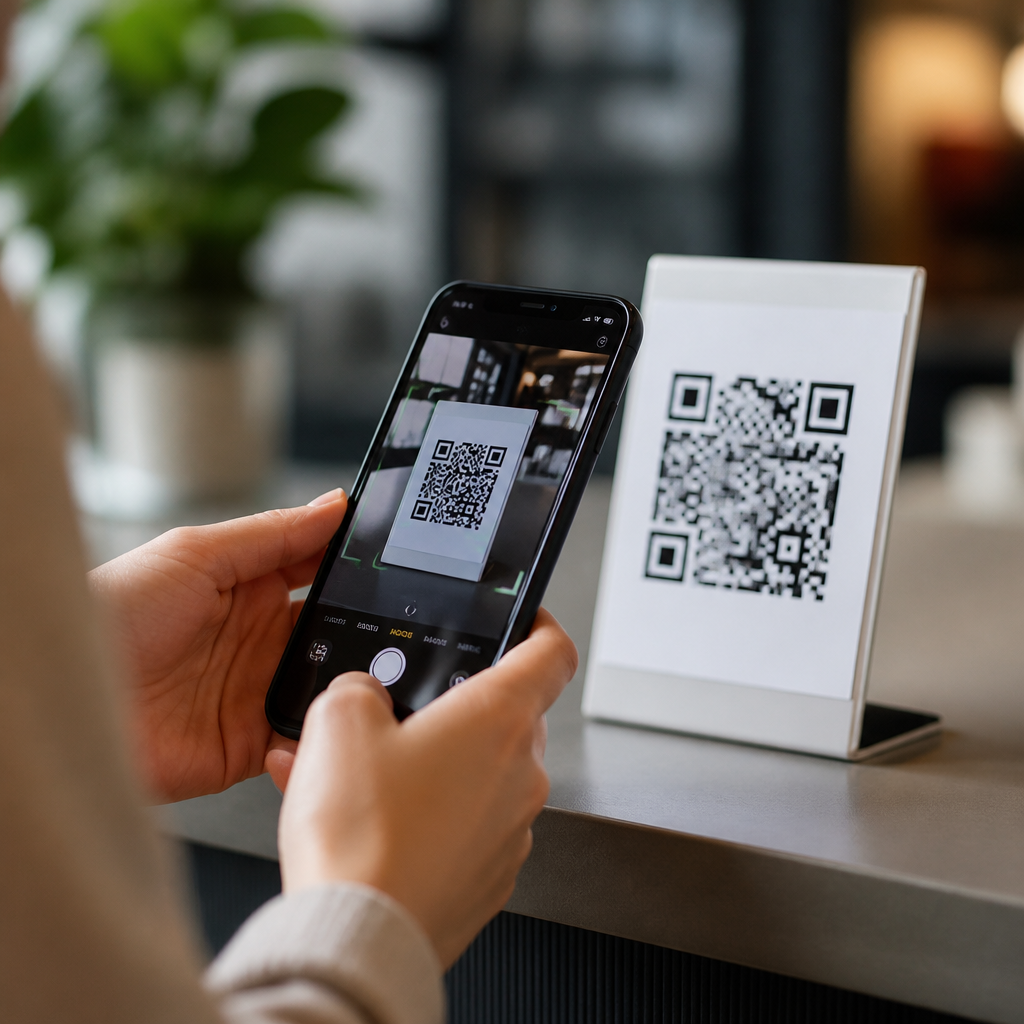
QR codes are now part of everyday commerce, from restaurant menus and parking meters to product packaging, invoices, and payment flows, which makes knowing how to protect customers from QR code scams a core business responsibility. A QR code, or quick response code, is a machine-readable square barcode that stores a destination such as a website, payment request, app download, Wi-Fi credential, contact card, or digital document. QR code scams exploit the gap between what a customer sees on the printed square and where the encoded destination actually leads. In security work, this abuse is often called quishing, short for QR phishing, because the code sends the victim to a malicious page designed to steal credentials, payment details, one-time passcodes, or personal data.
I have seen this risk rise sharply as more organizations shift physical interactions into digital journeys. A customer standing at a kiosk has only seconds to decide whether a code is legitimate. If the code sits on a sticker placed over a real sign, or if the landing page closely imitates a bank, delivery service, parking provider, or event organizer, many people will scan before they think. That moment matters because a successful QR code scam can trigger account takeover, card fraud, malware installation, refund abuse, and long-tail reputational damage. For regulated sectors, it can also create compliance exposure around payment security, privacy, and consumer communications.
Preventing QR code fraud requires more than telling people to be careful. Effective protection combines secure code generation, tamper-resistant deployment, branded landing pages, device-level checks, payment controls, monitoring, and clear customer education. The goal is simple: help customers verify authenticity before they share money or data. Businesses that treat QR code security as part of the customer journey, not as an afterthought, reduce scam success rates and build trust at the exact point where users are most vulnerable.
Why QR code scams work and where customers are most exposed
QR scams work because the code itself is opaque. Unlike a visible web address printed in plain text, the destination is hidden until a phone camera or scanner resolves it. Attackers use that opacity in several common ways. The first is physical replacement: a fraudster places a malicious sticker over a real code on a parking meter, restaurant table, parcel locker, or public notice. The second is digital impersonation: the victim receives an email, text message, social post, or PDF invoice containing a fake code that points to a credential-harvesting page. The third is redirection abuse, where a short link or poorly governed redirect sends users through a chain that ends at a malicious destination.
Customers are most exposed in rushed, unfamiliar, or high-trust situations. Parking payments are a prime example because people are outdoors, time-sensitive, and expecting to transact by phone. Utility bills and package redelivery notices are another hotspot because the request feels routine and urgent. Retail promotions, loyalty sign-ups, guest Wi-Fi, event tickets, and contactless donations also attract abuse. In my experience, scam rates rise when the code appears in a semi-public environment, when the customer does not know the expected domain, and when the action requested involves payment, login, or installing an app. Those three factors should shape your defensive design.
Design QR experiences that are easy to verify
The best defense starts before a single code is printed. Customers need visible signals that let them confirm legitimacy fast. Use a branded domain that is short, readable, and exclusive to your organization. If your company is Northwind Parking, a destination like pay.northwind.com is safer than a generic shortener because customers can recognize it at a glance when the phone preview appears. Modern smartphone cameras often display the resolved URL before opening it, so domain clarity directly supports fraud prevention.
Keep landing pages consistent with your main site, including logo, typography, color palette, and navigation cues. A customer who scans a code on packaging should arrive at a page that looks unmistakably like your brand, not a generic checkout template. Where possible, prefill context such as location, product SKU, branch ID, or campaign code so users can verify they reached the right destination. For payments, display the merchant name, amount logic, refund contact, and support channel before collecting card details. If account login is required, explain why and offer an alternate route through your main app or website.
Static and dynamic QR codes also matter. Static codes store the final destination directly and cannot be changed after printing. Dynamic codes usually point to a managed redirect that can be updated centrally. Dynamic codes are more flexible and better for analytics, but they create a governance requirement: every redirect rule must be owned, reviewed, and logged. Without that discipline, attackers can abuse weak admin access or stale redirects. For most businesses, dynamic codes are the right choice, but only with strong access control, change management, and domain governance.
Secure generation, deployment, and lifecycle management
Preventing QR code fraud requires a controlled production process. Generate codes only through approved tools and maintain a source-of-truth inventory that records purpose, destination, owner, creation date, print location, and retirement date. I recommend assigning each code a unique asset ID tied to campaign or operational metadata. That inventory makes it possible to investigate incidents quickly and remove or replace affected codes without guessing which version is in the field.
Physical deployment needs the same rigor as any customer-facing payment asset. Use tamper-evident labels, durable materials, and placement that makes sticker overlays obvious. Staff should inspect high-risk locations such as parking machines, hotel lobbies, self-checkout stations, and event venues on a defined schedule. If a code supports payment, pair it with printed plain-text instructions that name the official domain and customer support number. In field audits I have run, that simple addition reduced customer confusion because people had a second trust signal beyond the square itself.
| Control | What it does | Practical example |
|---|---|---|
| Branded domain | Lets users verify the destination before opening | Scanner preview shows tickets.cityarena.com instead of a generic short link |
| Tamper-evident placement | Makes sticker replacement easier to spot | Code is printed under laminate on a parking meter faceplate |
| Inventory and ownership | Supports incident response and retirement | Each restaurant table code maps to a location record and manager |
| Redirect governance | Prevents unauthorized destination changes | Only two admins can edit dynamic code rules, with audit logs enabled |
| Landing-page verification cues | Helps customers confirm they are in the right place | Checkout page shows merchant name, branch, amount basis, and support contact |
Retirement is often neglected. Old codes on flyers, packaging, signs, and archived PDFs continue circulating long after a campaign ends. If the destination expires and the domain lapses, an attacker may register a similar address or exploit a broken redirect path. Set expiration policies, redirect legacy traffic to a safe explanatory page, and remove obsolete codes from physical inventory. QR code security is not just about launch quality; it is about maintaining trust across the full lifecycle.
Protect payment, identity, and mobile app journeys
Payment flows deserve special attention because they are the most heavily targeted. Use a payment service provider that supports tokenization, fraud scoring, velocity controls, and step-up verification such as 3-D Secure where appropriate. Never ask customers to pay by bank transfer solely through a QR landing page unless that is a well-understood method in your market and backed by clear verification details. For card entry, host checkout on a PCI-aligned page under your controlled domain or a transparently embedded provider environment. The customer should always be able to identify who is processing the payment.
Identity protection matters just as much. If a QR code leads to account login, enable phishing-resistant authentication methods where possible, such as passkeys based on the FIDO standard. At minimum, use multifactor authentication and anomaly detection for unfamiliar devices, impossible travel, or suspicious session patterns. Avoid using QR codes as the primary route for password resets or urgent security notices; attackers routinely mimic those messages because fear increases conversion.
App download scams are another major risk. Criminals place codes that claim to unlock loyalty benefits, parcel tracking, or product activation but instead push sideloaded malware or fake app stores. The safest pattern is to send customers to the official Apple App Store or Google Play listing, or to a verified page on your domain that links there. Do not offer direct APK downloads through a QR code for general consumers. Mobile device management teams know this well: even one fake installer can produce credential theft, SMS interception, and broader compromise.
Monitor, educate, and respond when incidents happen
No control set is complete without monitoring and response. Track scan volumes, geolocation patterns where lawful, redirect failures, sudden conversion changes, and spikes in support tickets. If one store’s code suddenly produces traffic from a different country, investigate. If parking scans increase but payment completion collapses, inspect the physical asset for overlay stickers. Web application firewalls, DNS monitoring, certificate transparency alerts, and brand monitoring tools can help detect lookalike domains and malicious landing pages early.
Customer education should be short, repeated, and action-oriented. Tell people to preview the link, check the domain, avoid entering credentials after scanning an unexpected code, and use your official app or homepage if anything looks wrong. Put that guidance where decisions occur: on signage, receipts, emails, packaging, and checkout pages. Frontline staff also need scripts for handling reports. They should know how to remove suspicious materials, preserve evidence, and route incidents to security or fraud teams immediately.
When a scam is found, move fast. Disable redirects, replace compromised signs, notify affected customers, and coordinate with payment providers, domain registrars, hosting companies, and law enforcement as needed. Preserve logs, screenshots, photos of physical tampering, and transaction records. After containment, perform a root-cause review. Was the issue weak domain governance, missing inspections, unclear branding, or an avoidable payment design flaw? The strongest organizations treat every QR fraud event as a design lesson and update standards across locations, vendors, and future campaigns.
Building a long-term QR code fraud prevention program
Protecting customers from QR code scams is ultimately a program, not a one-time project. The most effective approach combines secure code creation, branded destinations, careful physical deployment, payment and identity safeguards, continuous monitoring, and practiced incident response. Customers do not need to understand redirect governance or phishing-resistant authentication to benefit from them; they simply need a scanning experience that feels consistent, transparent, and easy to verify.
If you manage QR codes across marketing, operations, retail, payments, or field service, start with an inventory and risk review. Identify every live code, confirm its owner, validate its destination, inspect high-risk locations, and standardize customer-facing trust signals. From there, build policies for domain usage, redirect changes, retirement, and reporting. Businesses that do this well reduce fraud, lower support costs, and protect brand credibility at the moment of scan. Use this page as your hub, then audit your current QR journeys and close the gaps before attackers find them first.
Frequently Asked Questions
What is a QR code scam, and why are customers so vulnerable to it?
A QR code scam happens when a customer scans a code that leads somewhere dangerous or misleading instead of to the legitimate destination they expected. Because QR codes are designed to be fast and convenient, they hide the underlying link or action until after a person scans them. That creates an ideal opportunity for criminals. A scammer can place a fake sticker over a real code on a parking meter, restaurant table, poster, invoice, kiosk, or package. They can also send QR codes through email, text messages, social media, and printed mailers to push customers toward phishing sites, fake payment pages, malware downloads, or fraudulent login screens.
Customers are especially vulnerable because QR codes feel familiar, routine, and low-friction. People use them to view menus, pay bills, join Wi-Fi networks, download apps, verify accounts, and access promotions, often in a hurry and in public. In those moments, they may not stop to question whether the code is authentic. Unlike a standard web link, a printed or displayed QR code does not immediately show the full destination at a glance. That means customers often trust the surrounding context rather than verifying the actual URL or payment recipient. Businesses should treat this as a customer protection issue, not just a cybersecurity issue, because the damage can include stolen payment details, compromised accounts, identity theft, chargebacks, loss of trust, and long-term brand harm.
How can businesses reduce the risk of QR code scams in physical locations?
The best approach is to make QR code trust visible, consistent, and hard to tamper with. Start by controlling where and how codes appear. Use branded signage, high-quality printing, and standardized placement so customers know exactly where a legitimate code should be. Avoid random paper printouts taped to counters or walls, because they are easy to replace and inherently less trustworthy. If possible, place codes behind protective covers, under laminated surfaces, or within secure fixtures. In high-risk environments such as parking stations, self-service kiosks, apartment lobbies, and retail displays, inspect QR code placements regularly for sticker overlays, damage, misalignment, or changes in design quality.
It also helps to reduce ambiguity around what a scan should do. Add plain-language instructions near each code, such as “This code only opens our official menu at example.com” or “Payments are processed only through our secure checkout.” Include your domain name in visible text next to the code so customers can compare it with the preview shown by their phone before opening the link. For payment scenarios, consider using dynamic QR code systems tied to your own secure platform, rather than relying on static, easily copied codes. Finally, train frontline staff to recognize tampering and to answer customer questions confidently. When employees know what legitimate codes look like, where they belong, and how customers are supposed to use them, they become an important layer of defense.
What should customers look for before scanning a QR code?
Customers should be encouraged to pause and verify context before they scan. The first question is whether the code appears where it should. If a QR code is attached as a sticker on top of another label, placed in an unusual location, printed with poor quality, or inconsistent with the business’s branding, that is a warning sign. The second question is whether the requested action makes sense. For example, if a code on a product package asks for immediate payment, account login, or software installation when that is not part of the normal customer experience, people should be cautious.
After scanning, the most important step is checking the destination preview. Customers should look closely at the full URL, not just the brand name in the page design. Misspellings, extra words, unfamiliar domains, suspicious subdomains, or shortened links can all signal fraud. Customers should also be skeptical of pages that create urgency, ask for sensitive information too early, request unusual payment methods, or try to trigger an app download from outside a trusted app store. Businesses can strengthen protection by teaching customers these habits through signage, onboarding messages, receipts, packaging inserts, and support content. The goal is not to make QR codes feel scary, but to normalize smart verification so scanning becomes a conscious, informed action rather than an automatic reflex.
Are QR code payments safe, and how can companies secure them?
QR code payments can be safe, but only when the payment flow is tightly controlled and easy for customers to verify. The biggest risks come from code replacement, destination spoofing, and redirection to fraudulent payment pages. A customer may think they are paying a merchant, municipality, or service provider when they are actually sending money to a scammer. That makes payment use cases one of the highest-stakes environments for QR code security. To reduce that risk, businesses should route QR payments through secure, trusted domains they control and use encrypted payment pages that clearly display the merchant name, order details, amount due, and customer support information.
Companies should also design the process so customers can independently confirm legitimacy. Before a payment is submitted, the page should show recognizable branding and enough transaction context to reassure the user that they are in the right place. Static payment codes should be reviewed carefully, because they are easier to copy and replace. Dynamic, transaction-specific codes are often safer because they can be monitored, updated, and linked to backend validation. It is also wise to implement fraud monitoring, anomaly detection, and clear post-payment confirmations. If a customer scans a code and lands on a page with vague branding, no order details, or a payment request that does not match expectations, they should stop immediately. Businesses that combine secure payment infrastructure with customer education significantly reduce the chance of successful QR-related payment fraud.
What should a business do if it discovers a QR code scam affecting customers?
Speed matters. The first priority is containment. Remove or disable the malicious QR code, take down the compromised destination if it is under your control, and inspect all locations and channels where similar codes appear. If the scam involves physical tampering, document the affected area with photos, preserve evidence if needed, and check whether the issue is isolated or part of a broader pattern across stores, kiosks, properties, or printed materials. If digital systems are involved, review logs, redirect behavior, analytics anomalies, and any recent changes to domains, pages, or campaign assets.
The second priority is communication. Notify affected customers promptly and clearly, using the channels they are most likely to see. Explain what happened, which codes or locations were involved, what information may have been exposed, and what customers should do next. That may include monitoring card activity, changing passwords, enabling multi-factor authentication, or contacting their bank. Avoid vague statements that create confusion. Practical guidance builds trust. Internally, update support teams with a response script so customer-facing staff can answer questions consistently and accurately.
Finally, treat the incident as a process improvement opportunity. Review how the scam was able to succeed, whether physical inspections were too infrequent, whether code placements were too easy to tamper with, or whether customer instructions lacked clarity. Consider adding tamper-evident materials, stronger branding, destination preview guidance, more secure payment architecture, and better staff training. If appropriate, involve legal counsel, payment providers, cybersecurity partners, and law enforcement. A well-managed response can limit immediate harm, support affected customers, and strengthen your long-term defenses against future QR code scams.





