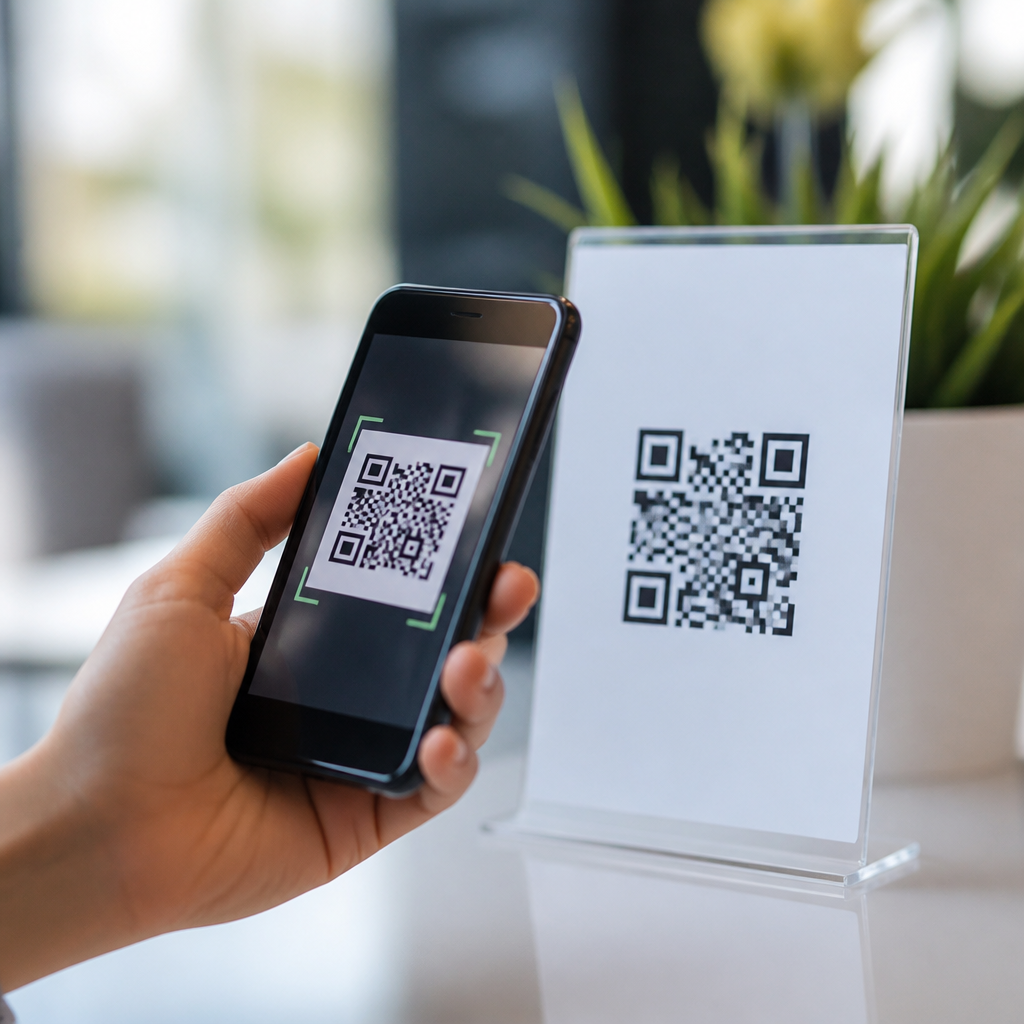
QR codes sit at the intersection of convenience and compliance, making privacy regulation a practical business issue rather than a legal afterthought. A QR code is simply a machine-readable matrix barcode, but the moment it points to a tracked URL, payment flow, sign-up form, ticketing platform, or app deep link, it becomes part of a data processing chain. That chain can involve personal data, device identifiers, location signals, behavioral analytics, and payment credentials. Global privacy regulations govern those data flows, especially when organizations use QR campaigns across borders. For teams responsible for marketing, retail operations, events, healthcare, hospitality, or product packaging, understanding QR codes and global privacy regulations is essential because a small design choice, such as adding analytics parameters or forcing an app install, can create major compliance obligations.
In my work reviewing QR code deployments, the most common mistake is assuming the printed code itself is the privacy risk. Usually, the larger issue is what happens after the scan. If the destination page drops cookies, logs IP addresses, profiles users, or collects names and emails without a lawful basis, the organization must meet the requirements of laws such as the EU General Data Protection Regulation, the UK GDPR, the California Consumer Privacy Act as amended by CPRA, Brazil’s LGPD, and similar statutes in Canada, Singapore, South Africa, and several U.S. states. This hub explains how data privacy rules apply to QR experiences, what lawful collection looks like, where consent is necessary, and how to design QR campaigns that remain useful without becoming a compliance liability.
How QR codes trigger privacy obligations
A QR code can be static or dynamic, and that distinction matters. A static code usually contains fixed information, such as a URL or Wi-Fi credential, and cannot be changed after printing. A dynamic code typically redirects through a short link or management platform, allowing destination changes and scan analytics. Dynamic systems are often better for operations, but they increase the number of parties processing data. If a retailer uses a QR code on shelf tags to measure scans by region, time, and device type, the retailer and the QR platform may each play a role in determining purposes and means of processing. Under GDPR terms, that can raise controller, processor, or joint controller questions.
Personal data is broader than many teams expect. IP addresses, advertising IDs, order numbers tied to named customers, and device fingerprints can all qualify depending on context. Even when a QR interaction seems anonymous, analytics logs may still reveal enough to identify or single out a person. A restaurant menu QR code that records timestamp, table number, and repeat behavior may seem harmless, yet if the venue also links scans to loyalty accounts or payment sessions, it has moved into identifiable tracking. That means transparency, retention limits, security controls, and data subject rights must be addressed before launch, not after a complaint.
GDPR principles applied to QR campaigns
GDPR is the benchmark many global teams use because its principles are precise and influential. For QR code experiences, the most important principles are lawfulness, fairness, transparency, purpose limitation, data minimization, accuracy, storage limitation, integrity, confidentiality, and accountability. In plain terms, collect only what is needed, tell people clearly what happens, secure the flow, and document the reasoning. If a manufacturer places a QR code on product packaging for warranty activation, it should not silently repurpose that interaction for behavioral advertising unless it has an appropriate legal basis and clear notice.
Lawful basis is often misunderstood. Consent is not the only option, but it must be freely given, specific, informed, and unambiguous when used. For a QR code that opens a basic PDF manual, legitimate interests may cover limited server logging for security and performance. For a QR code that triggers retargeting pixels or geolocation-based profiling, consent is more likely required, especially under the ePrivacy rules in Europe when cookies or similar technologies are involved. I advise teams to map the user journey screen by screen: scan, redirect, landing page, cookies, form fields, confirmation message, and follow-up emails. That exercise usually reveals unnecessary collection and weak disclosures quickly.
Global regulatory differences teams cannot ignore
Although GDPR often anchors policy decisions, QR code compliance is global, and local differences matter. California law gives consumers rights to know, delete, correct, and opt out of selling or sharing personal information, with special scrutiny on cross-context behavioral advertising. Brazil’s LGPD tracks closely with GDPR but has its own enforcement environment and legal interpretations. Canada’s PIPEDA emphasizes meaningful consent, while Quebec Law 25 adds stronger governance expectations. China’s PIPL imposes strict rules on necessity, transparency, and cross-border transfers. If a global brand prints one QR code on packaging distributed in multiple markets, the destination experience cannot assume one notice and one consent model fit everywhere.
The table below highlights how major laws affect common QR code use cases.
| Regulation | What it means for QR codes | High-risk scenario |
|---|---|---|
| GDPR / UK GDPR | Requires lawful basis, transparency, minimization, rights handling, processor controls, and transfer safeguards | Tracked QR landing page with cookies and profiling but no consent banner or privacy notice |
| CCPA / CPRA | Requires notice, consumer rights workflows, and opt-out for sale or sharing of personal information | QR loyalty signup feeding ad retargeting audiences without clear opt-out mechanisms |
| LGPD | Requires legal basis, transparency, and security measures similar to GDPR | Event QR registration collecting excessive attendee data without necessity |
| PIPL | Requires strict necessity analysis, clear notice, and careful cross-border transfer management | Product QR scans routed to overseas analytics services without compliant transfer steps |
Consent, notices, and user expectations
The best QR privacy design aligns legal requirements with what a reasonable person expects at the moment of scan. If someone scans a code next to “view menu,” they expect a menu, not immediate marketing enrollment. Layered notice works well here. The first layer appears on or just after the landing page and explains the key points: who is collecting data, what data is collected, why, whether analytics or marketing technologies are used, and where the full privacy notice lives. On small mobile screens, brevity matters, but omission creates risk. A concise just-in-time disclosure often performs better than burying the answer in a long footer policy.
Cookie and tracking consent remains a frequent failure point. A QR code does not bypass consent rules simply because the interaction began offline. If the landing page sets nonessential cookies or invokes software development kits for measurement or advertising, the same standards apply as any other mobile web session. Consent management platforms such as OneTrust, TrustArc, and Didomi can help, but implementation quality matters more than vendor selection. Buttons must be symmetric, categories must be accurate, and no nonessential trackers should fire before choice is made in jurisdictions that require prior consent.
Data minimization, retention, and vendor control
Strong compliance usually comes from reducing data, not drafting longer policies. For QR campaigns, start by asking what must be collected to deliver the promised function. A digital manual needs almost nothing beyond basic server logs. A prize draw may need contact details, age confirmation, and fraud controls, but not full birth dates, precise location, or broad marketing permissions bundled into one checkbox. Dynamic QR platforms often offer dashboards rich with metrics, yet many organizations do not need row-level logs for long periods. Aggregated reporting can often satisfy business goals while lowering risk.
Retention limits should be specific. “We keep data as long as necessary” is not enough for internal governance. Set schedules by use case: scan analytics retained for 30 or 90 days unless needed for security investigations; contest entries kept through winner verification and statutory record periods; support interactions retained under customer service policies. Vendor management is equally important. If the QR provider, hosting platform, CRM, email tool, and analytics stack all process personal data, contracts should include data processing terms, security commitments, breach notification timelines, subprocessor transparency, and deletion obligations. Article 28 GDPR requirements are the floor, not the ceiling.
Security, cross-border transfers, and DPIAs
Privacy and security are inseparable in QR ecosystems because attackers exploit trust in quick scans. Secure implementation starts with HTTPS everywhere, hardened redirects, access controls on QR management dashboards, and monitoring for destination tampering. I have seen campaigns where a forgotten admin account on a QR platform created more exposure than the public landing page itself. Organizations should also protect against open redirect abuse, malicious code replacement in printed materials, and phishing lookalikes that imitate legitimate QR destinations.
Cross-border transfers deserve careful review because many QR campaigns rely on globally distributed vendors. If scan data from the European Economic Area goes to U.S.-based services, teams may need Standard Contractual Clauses, transfer impact assessments, and supplementary measures depending on the facts. High-risk uses may require a data protection impact assessment, especially where large-scale monitoring, location tracking, children’s data, health information, or systematic profiling is involved. A hospital using bedside QR codes for patient education has very different risk levels from a museum using codes for exhibit maps. The assessment should reflect those differences, document mitigations, and be updated when the flow changes.
Building a privacy-first QR governance model
The most effective organizations treat QR privacy as a repeatable governance process, not a one-time review. Create a deployment checklist covering purpose, lawful basis, notice, consent, cookie behavior, accessibility, retention, vendor roles, international transfers, and security testing. Maintain an inventory of active codes, destinations, owners, and campaign end dates. Train marketing, product, and print teams so they know that changing a landing page can alter compliance status even when the printed code never changes. When a code is retired, archive or redirect it safely rather than letting expired domains or unmanaged paths create risk.
QR codes are valuable because they connect physical spaces to digital services instantly, but that same convenience compresses the time users have to evaluate privacy implications. Businesses that win trust make those implications easy to understand and proportionate to the task. The core lesson is simple: regulate the experience behind the scan, not just the square on the label. If your organization uses QR codes in any customer journey, audit every linked destination, reduce unnecessary tracking, align notices with local laws, and build governance that scales before the next campaign goes live.
Frequently Asked Questions
How do QR codes become a privacy compliance issue under global regulations?
A QR code by itself is usually just a visual way to encode information, but the compliance picture changes as soon as that code connects a person to a digital experience. If a scan opens a tracked landing page, launches an app, starts a payment transaction, captures form data, or logs analytics, the QR code becomes part of a broader data processing workflow. At that point, organizations may be collecting or inferring personal data such as IP addresses, device identifiers, location information, purchase history, event attendance, marketing preferences, or account details. That means privacy obligations can apply even if the code image itself contains no personal data.
Under regulations such as the GDPR in Europe, the CCPA and CPRA in California, Brazil’s LGPD, and other modern privacy laws, businesses are expected to understand what data is collected, why it is collected, where it is sent, how long it is retained, and with whom it is shared. QR-enabled interactions often involve multiple vendors, including analytics providers, payment processors, CRM tools, ticketing platforms, and marketing automation systems. Each participant in that chain can affect compliance responsibilities. In practice, the legal risk rarely comes from the QR code format itself; it comes from invisible downstream processing that users may not reasonably expect when they scan.
That is why businesses should treat QR campaigns like any other digital data collection channel. They should map the data flow, identify the legal basis for processing where required, provide clear notice at or before collection, assess vendor roles, and make sure security and retention rules are defined. A convenient scan experience does not reduce regulatory expectations. In many cases, it raises them because QR interactions often happen quickly, on mobile devices, and in real-world environments where users may have less context about what happens next.
What kinds of personal data can be collected through a QR code interaction?
The answer depends on what happens after the scan. A static QR code might simply redirect a user to a webpage, but even that can trigger the collection of technical identifiers such as IP address, browser type, operating system, referral data, time of access, and approximate geolocation. If the destination page includes cookies, SDKs, pixels, or analytics scripts, the business may also collect behavioral data such as click activity, session duration, conversion events, and repeat visits. These details may be enough to qualify as personal data or personal information under many privacy laws, especially when they can be linked to an individual or household.
More sensitive scenarios arise when QR codes are used for payments, digital menus, event check-in, healthcare intake, loyalty programs, warranty registration, or employment workflows. In those cases, a scan can lead to the collection of names, email addresses, phone numbers, shipping addresses, customer IDs, purchase details, and payment credentials. Depending on the context, it may also involve precise location, government identifiers, health-related information, or age-related data. A QR code used in a workplace, clinic, or school can easily trigger heightened obligations because the surrounding context makes the data more sensitive even if the scan itself feels simple.
Businesses should also remember that inferred data counts. If a person scans a code at a specific store, event booth, hospital department, or product shelf, the organization may be able to infer interests, habits, travel patterns, or consumer intent. Those inferences can have compliance implications if they are used for profiling, targeted advertising, or automated decision-making. The safest approach is to evaluate not only the obvious form fields users complete, but also the metadata, analytics, and contextual signals generated by the interaction.
Do businesses need consent before using QR codes for tracking, marketing, or payments?
Not always, but often enough that the question should be addressed before launch rather than after. Whether consent is required depends on the applicable law, the nature of the data collected, the purpose of processing, and the technologies involved. For example, under the GDPR and ePrivacy rules in many European jurisdictions, consent may be required before placing non-essential cookies or using similar tracking technologies for analytics, personalization, or advertising. If a QR code takes users to a page with marketing trackers already firing, the business may need a valid consent mechanism before those tools activate.
For payments, the legal basis may differ. Processing that is necessary to complete a transaction may be justified without separate marketing consent, but that does not give organizations a free pass to bundle unrelated uses of the data. If a payment QR flow also adds the customer to promotional mailing lists, tracks cross-site behavior, or shares data with advertising partners, additional disclosures and consent choices may be required. Likewise, if a QR code opens a sign-up form, businesses generally need to explain what communications the user is agreeing to receive and avoid pre-checked boxes or vague language where stricter consent standards apply.
The practical rule is simple: separate what is necessary from what is optional. If scanning a QR code is required to access a core service, businesses should not hide extra tracking or unrelated marketing behind that interaction. Provide concise notice, collect consent where the law requires it, keep records of user choices, and honor opt-outs. A frictionless user experience is valuable, but it should not come at the expense of transparency or user control. Regulators increasingly expect mobile-first interactions, including QR journeys, to follow the same consent and notice standards as websites and apps.
What should a compliant QR code privacy notice include?
A compliant privacy notice for a QR-driven experience should tell users, in clear and accessible language, what happens when they scan. At a minimum, that usually means identifying the organization responsible for the data collection, describing the categories of data collected, explaining the purposes of processing, listing relevant recipients or service providers, and linking to the full privacy policy. If tracking technologies are used, the notice should also explain whether analytics, personalization, or advertising tools are active and how users can manage their choices. The best notices are specific to the scan context rather than generic boilerplate copied from a website footer.
Timing matters as much as content. Users should not have to search for privacy information after they have already been tracked or asked to submit personal data. In practice, that means placing a short just-in-time disclosure near the QR code itself where feasible, and then providing fuller details immediately on the landing page before optional collection begins. For example, a retail display might say that scanning opens a product page with analytics and optional promotional sign-up, while the destination page offers a more complete notice and consent choices. In a regulated environment such as healthcare, events, or financial services, the notice may need to be more prominent and tailored to the specific risks involved.
International operations add another layer. If scans may come from users in multiple jurisdictions, the notice should align with regional rights and disclosure requirements, including access, deletion, correction, objection, opt-out, and complaint channels where applicable. It should also address cross-border transfers if data is processed outside the user’s country or region. The goal is not to overwhelm people with legal text at the moment of scanning, but to make the essentials understandable and easy to act on. Good QR privacy notice design balances brevity, clarity, and legal completeness.
What are the biggest compliance risks companies face when deploying QR codes internationally?
The biggest risk is assuming that QR codes are a low-stakes marketing tool when they are actually an entry point into a complex global data ecosystem. International campaigns can expose companies to inconsistent consent rules, localization requirements, cross-border transfer restrictions, vendor management problems, and user rights obligations that vary by jurisdiction. A single QR code printed on packaging, signage, menus, or event materials may be scanned by users in the EU, UK, United States, Canada, Brazil, Singapore, and other regions, each with different expectations around transparency, lawful basis, tracking, and consumer choice.
Another major risk is lack of visibility into third-party processing. Many QR campaigns rely on short-link providers, analytics platforms, payment vendors, CRM systems, and adtech tools. If those vendors collect data for their own purposes, transfer it internationally, or retain it longer than necessary, the company deploying the QR code may still face regulatory scrutiny. This is especially true where contracts, data processing terms, transfer safeguards, or security assessments are missing. Businesses also run into trouble when they reuse the same landing page globally without adjusting cookie banners, disclosures, language support, or rights mechanisms for different markets.
Security and fraud issues are also part of the compliance landscape. Malicious QR code replacement, spoofed payment pages, and unauthorized redirects can trigger both data breaches and consumer protection concerns. From a governance perspective, strong compliance means more than drafting a privacy policy. It means inventorying QR use cases, reviewing scan destinations, minimizing data collection, validating vendors, implementing regional consent controls, securing redirects, and documenting the decisions behind the deployment. Companies that treat QR codes as a governed digital touchpoint, rather than a simple printed asset, are much better positioned to meet global privacy expectations.