QR codes have moved from temporary pandemic signage to a permanent part of modern brand identity, and companies that treat them as branded touchpoints rather than generic utilities create stronger recognition, better scan rates, and more measurable customer journeys. In practical terms, branding with QR codes means designing the code, destination, placement, and supporting message so every scan feels consistent with the brand’s visual system, voice, and promise. I have implemented QR campaigns for retail packaging, restaurant menus, trade show booths, and direct mail, and the pattern is consistent: the best results come when the code is planned like a logo application, not pasted in at the end. This matters because a QR code often serves as the bridge between physical media and digital experience. It can connect packaging to tutorials, posters to ticketing, product labels to authentication, and business cards to lead capture. If the code looks untrustworthy, clashes with the brand, or sends users to a weak mobile page, the brand loses credibility in seconds. If it is clear, intentional, and useful, it can reinforce trust while shortening the path to action. For a mobile-first brand system, QR codes are no longer optional extras. They are compact gateways that need identity standards, performance standards, and user experience standards.
Define the role of QR codes in your brand system
Before choosing colors or shapes, define what the QR code is supposed to do inside the brand ecosystem. A code used for product authentication has a different job from one used for loyalty enrollment or social follow prompts. I start by mapping each use case to one of four functions: access, transaction, proof, or engagement. Access codes open content such as menus, installation guides, or event schedules. Transaction codes support payments, checkouts, and coupon redemption. Proof codes verify authenticity, warranty registration, or chain-of-custody data. Engagement codes invite reviews, app downloads, contests, or community signups. This classification matters because it influences placement, copy, size, and error tolerance.
A strong branded QR strategy also defines which moments deserve persistent codes and which need dynamic codes. Static QR codes encode the destination directly and are useful when the URL will never change, such as a permanent support page printed on equipment. Dynamic QR codes route through a short URL that can be updated later, making them better for campaigns, seasonal packaging, and performance testing. Brands that manage QR codes at scale usually need a naming convention, ownership rules, and destination governance. In enterprise settings, I have seen teams maintain a QR inventory that records campaign name, physical asset, target URL, UTM parameters, redirect owner, and retirement date. That operational layer is what keeps branded experiences consistent after launch.
Design QR codes that stay recognizable and scannable
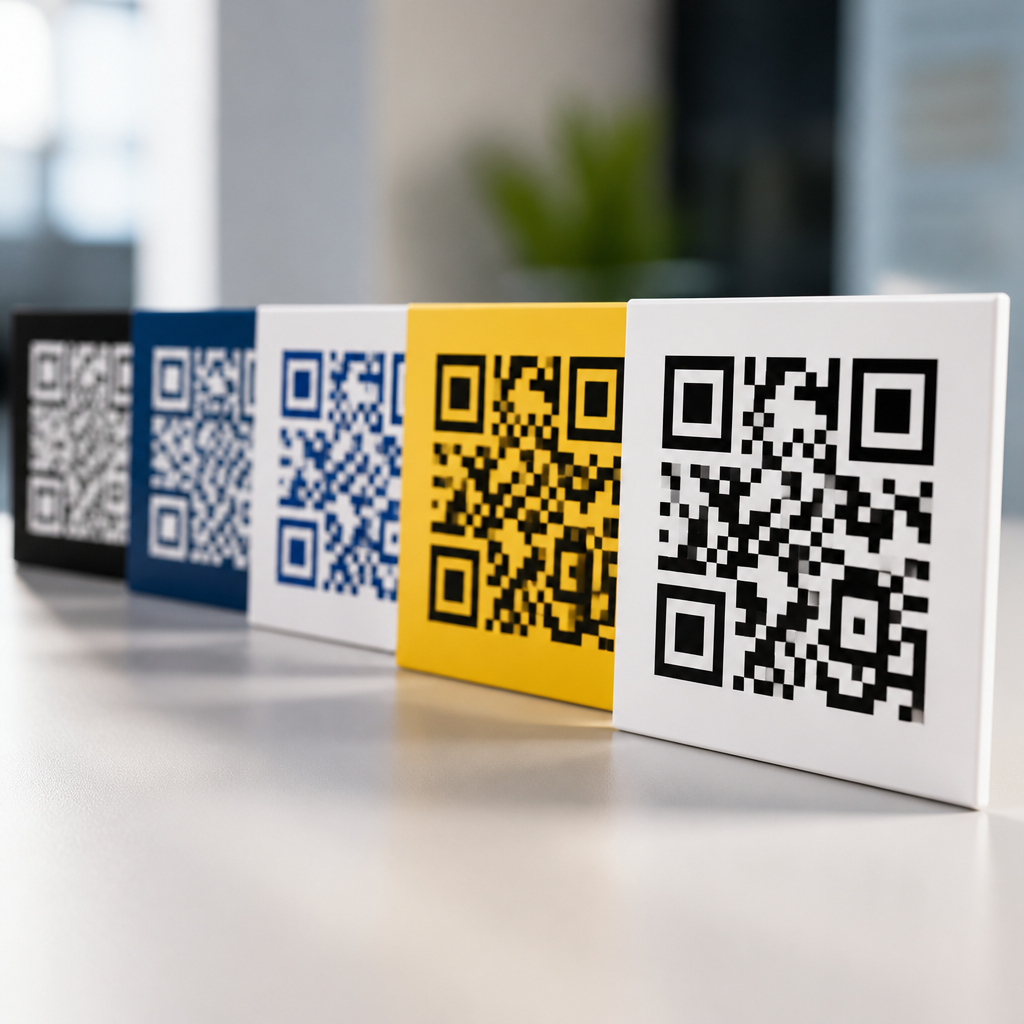
A branded QR code must remain machine-readable first. The ISO/IEC 18004 standard defines how QR symbols are structured, and practical design choices should respect that structure. You can customize color, add a logo in the center, soften corner modules, and frame the code with a call to action, but you cannot destroy contrast or overcrowd the symbol. The basic rule I use is simple: preserve high contrast between dark modules and the light background, maintain a clear quiet zone around the code, and test on multiple devices under realistic lighting. Black on white remains the most reliable combination, but deep brand colors on a light background often work well if contrast is strong.
Logo overlays are popular, but moderation matters. Error correction levels allow some damage or obstruction, with level H providing the greatest recovery capacity. Even so, a giant center logo can make a code fail on older phone cameras or low-resolution print jobs. Rounded patterns and stylized finder eyes can support identity, yet extreme decoration often reduces first-scan success. Brands such as Starbucks, Coinbase, and many DTC packaging companies use customized codes effectively because the visual modifications stop well short of harming geometry. The principle is not “make it artistic at any cost.” The principle is “make it unmistakably yours while preserving instant utility.”
Match the destination experience to the brand promise
The landing experience determines whether a branded QR code feels premium or careless. A scan should never dump users onto a generic homepage and force them to hunt for the promised content. If the printed message says “Scan for setup video,” the destination should open directly to that tutorial, optimized for mobile, with fast load times and clear next steps. Core Web Vitals still matter here, especially on cellular connections. In my projects, the biggest improvement usually comes not from changing the code itself but from tightening the page after the scan: fewer fields, larger tap targets, concise headlines, and visible trust cues.
Consistency across typography, color palette, iconography, and tone also matters. If the package looks premium and minimalist but the landing page feels cluttered or coupon-heavy, the handoff breaks. This is where brand identity and mobile UX intersect. For product pages, include the product name, image, and a clear reason to continue. For service businesses, embed the next action above the fold, such as booking, calling, or starting a chat. For hospitality, a menu QR should open to a legible, responsive menu, not a PDF pinched into a phone screen. The destination is part of the code’s design, because users judge the code by where it leads.
Choose placements and calls to action that increase scans
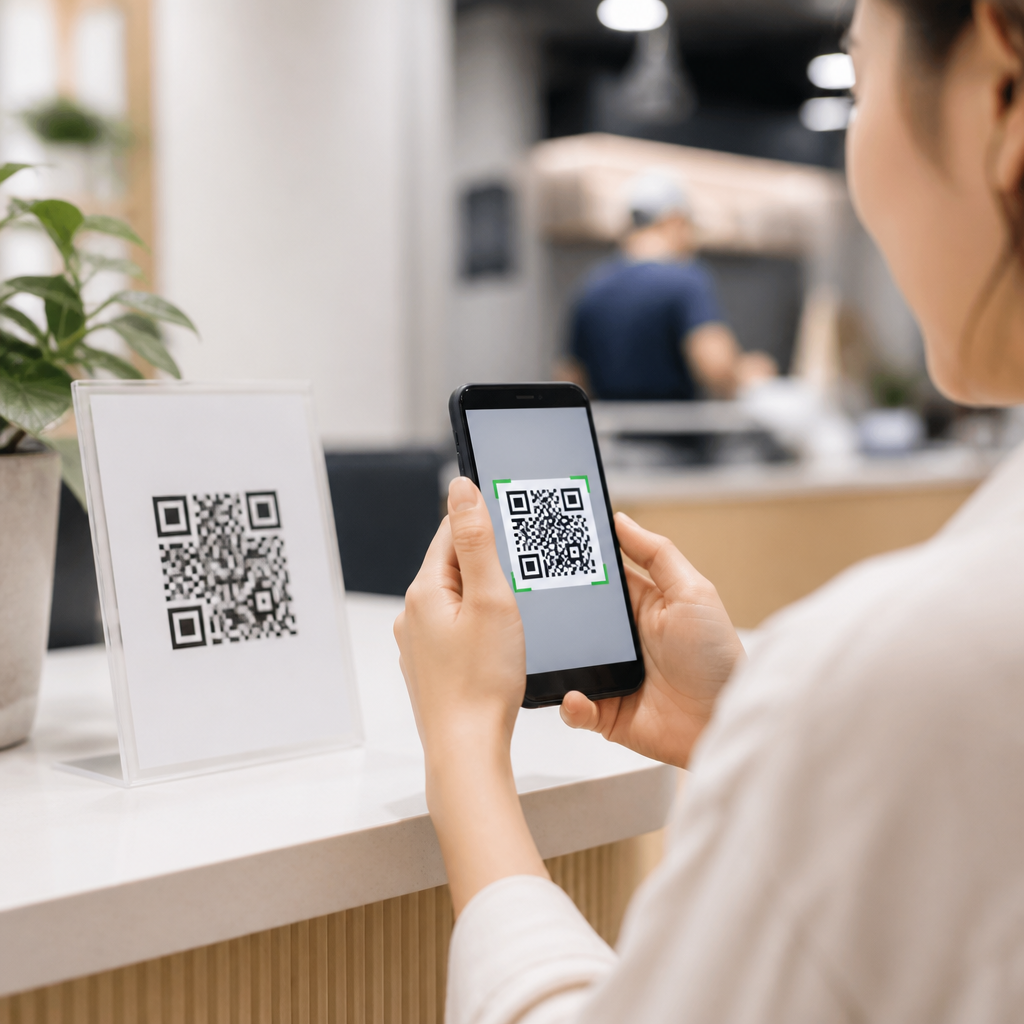
Placement has more influence on scan rate than most teams expect. A perfect code hidden on reflective packaging or mounted too high on a poster will underperform. Put codes where users naturally pause and can scan comfortably with one hand. On packaging, that may be near opening instructions, ingredient stories, or warranty details. In retail signage, place the code between chest and eye level and away from heavy glare. On print ads and direct mail, give the code enough surrounding white space so it is visually isolated. Size also matters. A useful field guideline is a scanning distance ratio of about 10:1, meaning a code meant to be scanned from 10 inches away should be at least 1 inch wide.
The call to action should remove ambiguity. “Scan me” is weaker than “Scan to see assembly steps,” “Scan to verify authenticity,” or “Scan for 10% off today.” Users want immediate value and a reason to trust the action. Framing helps, too. A simple border, short benefit statement, and small icon can make the code feel intentional instead of accidental. When I audit underperforming QR placements, weak CTA language is a common problem. People do not scan because a code exists; they scan because the benefit is obvious, timely, and low effort.
Build governance, measurement, and testing into every campaign
Branding with QR codes is not finished at design approval. It requires analytics, QA, and lifecycle management. Every dynamic QR campaign should include tagged URLs, typically with UTM parameters, so traffic can be attributed in Google Analytics 4, Adobe Analytics, or another measurement stack. For physical environments, I recommend separating codes by placement rather than reusing one code everywhere. A code on shelf talkers, one on packaging inserts, and one on window signage may lead to the same page, but separate redirects reveal which context drives action. That data helps teams refine creative, merchandising, and channel spend.
Testing should cover devices, camera apps, print substrates, and lighting conditions. Gloss coatings, curved bottles, dark inks, and small labels can all reduce readability. I have also seen campaign failures caused by redirects blocked by corporate Wi-Fi or region settings that broke localized pages. The only reliable solution is preflight testing in real conditions. The table below summarizes common branding choices and their operational implications.
| Decision area | Recommended approach | Risk if ignored |
|---|---|---|
| Code type | Use dynamic codes for campaigns and static codes only for permanent destinations | Printed assets become outdated and uneditable |
| Color and styling | Keep strong contrast, preserve quiet zone, test logo overlays carefully | Lower scan success and weaker accessibility |
| Landing page | Send users to a dedicated mobile page matching the printed promise | High bounce rates and damaged trust |
| Placement | Position at natural stopping points with low glare and sufficient size | Good creative underperforms in the real world |
| Measurement | Tag links and separate codes by channel or location | No useful attribution or optimization path |
Apply QR branding across packaging, retail, events, and service
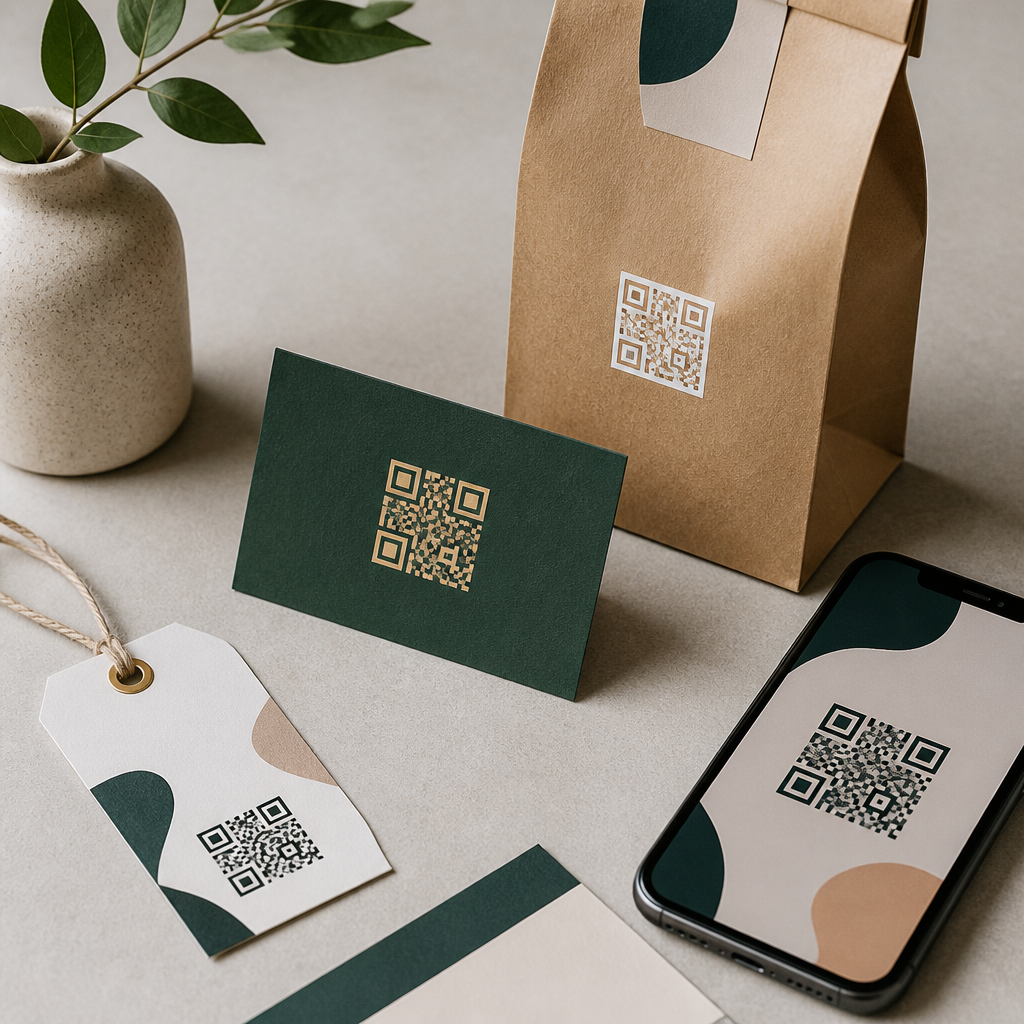
The strongest hub strategy shows how QR branding works across channels. On packaging, QR codes can extend limited label space by linking to ingredients, certifications, tutorials, refill programs, or recycling instructions. Beauty and wellness brands often use them to support authenticity and education, while electronics brands use them for setup videos and warranty activation. In stores, QR codes can connect endcaps to buying guides, apparel racks to size availability, and displays to loyalty signup. At events, a well-branded code can replace paper handouts by linking to speaker slides, lead forms, or demo booking pages. In service settings, codes on receipts, appointment cards, vehicles, or countertop signs can support payment, reviews, and rebooking.
Each context has different constraints. Packaging requires print durability and attention to curved surfaces. Retail signage demands distance legibility and quick comprehension. Events need high throughput and redundancy because networks can be crowded. Service environments need trust signals because users may worry about scams. Across all of them, the brand benefit is the same: a QR code becomes a consistent bridge between offline attention and digital action. The brands that do this best treat the code as part of their identity architecture, with standards for design, messaging, destinations, and analytics. To strengthen your own branding with QR codes, start by documenting use cases, creating a styling and placement standard, and testing every code on real devices before rollout. Done well, QR codes make brand interactions easier, more measurable, and more memorable. Audit your current touchpoints and turn every scan into a branded experience.
Frequently Asked Questions
1. How can QR codes become a real part of brand identity instead of just a functional add-on?
QR codes become part of brand identity when they are treated as intentional brand assets rather than as generic black-and-white tools placed wherever space is available. That means aligning the code’s appearance, the landing page experience, the call to action, and the physical or digital placement with the same standards used for packaging, ads, signage, and other customer touchpoints. A branded QR code should visually feel like it belongs to the company by using approved colors, logo integration where appropriate, and surrounding design elements that fit the brand system. Just as important, the message around the code should sound like the brand. A premium brand may invite users to “Unlock your private preview,” while a playful brand might say “Scan for something good.”
The destination matters just as much as the code itself. If a customer scans a beautifully branded QR code and lands on a generic, slow, or off-brand page, the experience breaks immediately. Strong brand integration means the scan delivers on the company’s promise with a mobile-optimized page that matches the campaign visually and verbally. The best implementations also consider context: on packaging, the code may connect to product education or authenticity verification; in retail, it may lead to styling ideas, tutorials, or reviews; in hospitality, it may support ordering, loyalty, or local recommendations. When the code’s purpose supports the brand story and customer expectation, it stops feeling like a utility and starts functioning like a recognizable extension of the brand itself.
2. What design best practices help branded QR codes stay scannable while still looking distinctive?
The most important rule is that branding should never compromise scan performance. A QR code can absolutely be customized, but it still needs enough contrast, clear quiet space around the edges, and an error-tolerant structure that phones can read quickly. In practice, that means using dark-on-light color combinations, avoiding low-contrast palettes, and testing every variation on multiple devices before launch. Many brands make the mistake of pushing visual customization too far by distorting the code shape, shrinking it excessively, or placing it over busy backgrounds. Those choices may look creative in a mockup but often fail in real-world conditions such as glare, distance, motion, or poor lighting.
A strong branded QR code usually includes subtle customization rather than heavy decoration. You can incorporate brand colors, add a logo in the center if the code has sufficient error correction, round some modules if readability is preserved, and frame the code with supporting brand graphics. It also helps to include a clear call to action nearby so people know what they will get by scanning. From experience, the best-performing branded codes balance aesthetics and usability: they are visually consistent with the brand, large enough to scan easily, placed where a customer naturally notices them, and supported by concise copy that reduces hesitation. Good branding attracts attention, but good usability is what turns attention into measurable scans.
3. Where should brands place QR codes to improve engagement and make the customer journey easier?
Placement should be guided by customer intent, not by convenience for the design team. The best QR code locations are the moments where a customer naturally wants more information, wants to take action, or is deciding what to do next. On product packaging, that might be during unboxing or first use. In a store, it could be near a display where shoppers are comparing options. On print materials, it may work best beside a compelling offer, event detail, or short benefit statement. On menus, posters, direct mail, business cards, receipts, trade show booths, and window displays, the same principle applies: the code should appear exactly where an additional step would feel helpful rather than disruptive.
Brands also need to think beyond visibility and consider scan conditions. If the code is meant to be scanned from a distance, it must be larger and placed at a comfortable height. If it appears on curved packaging, glossy surfaces, or moving objects, the design must account for distortion and reflection. A well-placed QR code also connects logically to the destination. For example, a code on product packaging might link to setup videos, care instructions, ingredients, sourcing stories, or loyalty registration. A code in a retail environment may connect to inventory availability, customer reviews, personalized offers, or app downloads. The key is to remove friction from the next step in the journey. When placement and purpose align, QR codes become one of the simplest ways to bridge offline and digital brand experiences.
4. What should happen after someone scans a QR code to keep the brand experience consistent and effective?
The post-scan experience is where brand trust is either reinforced or lost. After a scan, users should arrive on a mobile-first destination that loads quickly, matches the visual identity of the source campaign, and immediately confirms they are in the right place. That means consistent colors, typography, tone of voice, and messaging. It also means the landing page should fulfill the promise made beside the code without forcing users to search for the relevant content. If the QR code says “Scan for a 15% welcome offer,” the page should open directly to that offer. If it says “Watch the setup guide,” the video should be front and center, not buried behind a menu or email gate.
Effective post-scan experiences also prioritize simplicity. Mobile users have limited patience, so every extra tap lowers conversion potential. Brands should streamline forms, minimize distractions, and guide visitors toward one primary action, whether that is viewing product details, joining a loyalty program, booking an appointment, downloading an app, or making a purchase. Tracking is essential as well. Using dynamic QR codes and campaign-based URLs allows teams to measure scans, device types, location trends, and downstream actions. That data helps refine not only the QR campaign but also the broader brand journey. In the strongest implementations, the scan feels like a seamless continuation of the original touchpoint, not a jump to a disconnected microsite. That continuity is what turns a scan into a branded interaction rather than a one-time click.
5. How can businesses measure whether branded QR codes are actually strengthening recognition and performance?
Measurement should combine performance data with brand consistency goals. At the campaign level, businesses should track core metrics such as total scans, unique scans, scan rate by placement, time-of-day patterns, bounce rate, conversions, and completion of the desired action. Dynamic QR codes are especially useful because they allow updates to destinations without reprinting the code and often provide better analytics. Comparing performance across placements, designs, and calls to action can reveal what customers respond to most. For example, a branded code with a clear benefit statement may outperform a visually similar code with vague supporting text, showing that messaging clarity matters as much as design treatment.
But measurement should not stop at scan volume. Brands should also look at indicators of stronger recognition and customer experience, such as repeat visits, higher engagement time on destination pages, better redemption rates, increased loyalty sign-ups, improved assisted conversions, and fewer drop-offs between offline and digital touchpoints. Qualitative feedback can also be valuable. Customer service teams, retail staff, and post-purchase surveys often reveal whether users found the QR interaction helpful, trustworthy, and on-brand. Over time, the most successful brands build a testing process around QR usage by evaluating code design, CTA wording, destination content, and placement environments. The goal is not simply to generate more scans, but to create a more recognizable, more useful, and more measurable brand journey from first impression to final action.