
Social QR codes look simple, but the mistakes businesses make with them can quietly undermine reach, engagement, and attribution. A social QR code is a scannable code that sends people to a social destination: a single profile, a campaign landing page with multiple social links, or a social link-in-bio hub. Within mobile QR codes for marketing, this format matters because it bridges offline attention and online community growth in one scan. I have used social QR codes on packaging, retail signage, trade show booths, menus, direct mail, and out-of-home placements, and the same issues appear repeatedly: wrong destination, poor design choices, weak tracking, and no operational plan after launch. When those errors stack up, scan rates drop, users bounce, and teams cannot prove return on spend.
Done well, QR codes for social media help brands turn physical touchpoints into followers, user-generated content, customer service conversations, and measurable remarketing audiences. They are especially useful when a prospect is interested but not ready to buy. A scan to Instagram, TikTok, YouTube, LinkedIn, or a multi-link social page gives that person a lightweight next step. This hub article explains the most common mistakes with social QR codes, why they hurt performance, and how to avoid them. It also sets the foundation for deeper articles on QR code design, dynamic QR management, analytics, printing standards, campaign attribution, and platform-specific social strategies. If you manage mobile QR codes for marketing, treating social QR codes as a strategic channel rather than a decorative add-on will improve both engagement quality and reporting accuracy.
Sending people to the wrong social destination
The most common mistake is linking the code to a destination that does not match user intent. A poster at an event should not send people to a generic homepage when they expected a social follow, speaker highlights, or live updates. A product package should not force a user through a cluttered website navigation path when they wanted tutorials, creator content, or community proof. In practice, the best destination depends on context. If the goal is audience growth on one platform, link directly to that platform profile. If the audience may prefer different networks, use a mobile-first social landing page that offers clear choices. If the campaign is time-bound, create a campaign-specific page rather than relying on a permanent profile link.
There is also a technical layer. Native app deep links often outperform plain browser links because they reduce friction for users already logged in. However, deep linking must degrade gracefully to the mobile web if the app is not installed. I have seen campaigns fail because teams used brittle app-only links that opened error screens on some devices. The safest approach is to test on current iPhone and Android devices, across default browsers and in-app camera scanners. For high-traffic environments, use dynamic QR codes so the destination can be changed after printing. That single decision prevents expensive reprints when a username changes, a campaign ends, or a platform URL structure is updated.
Designing codes that scan poorly
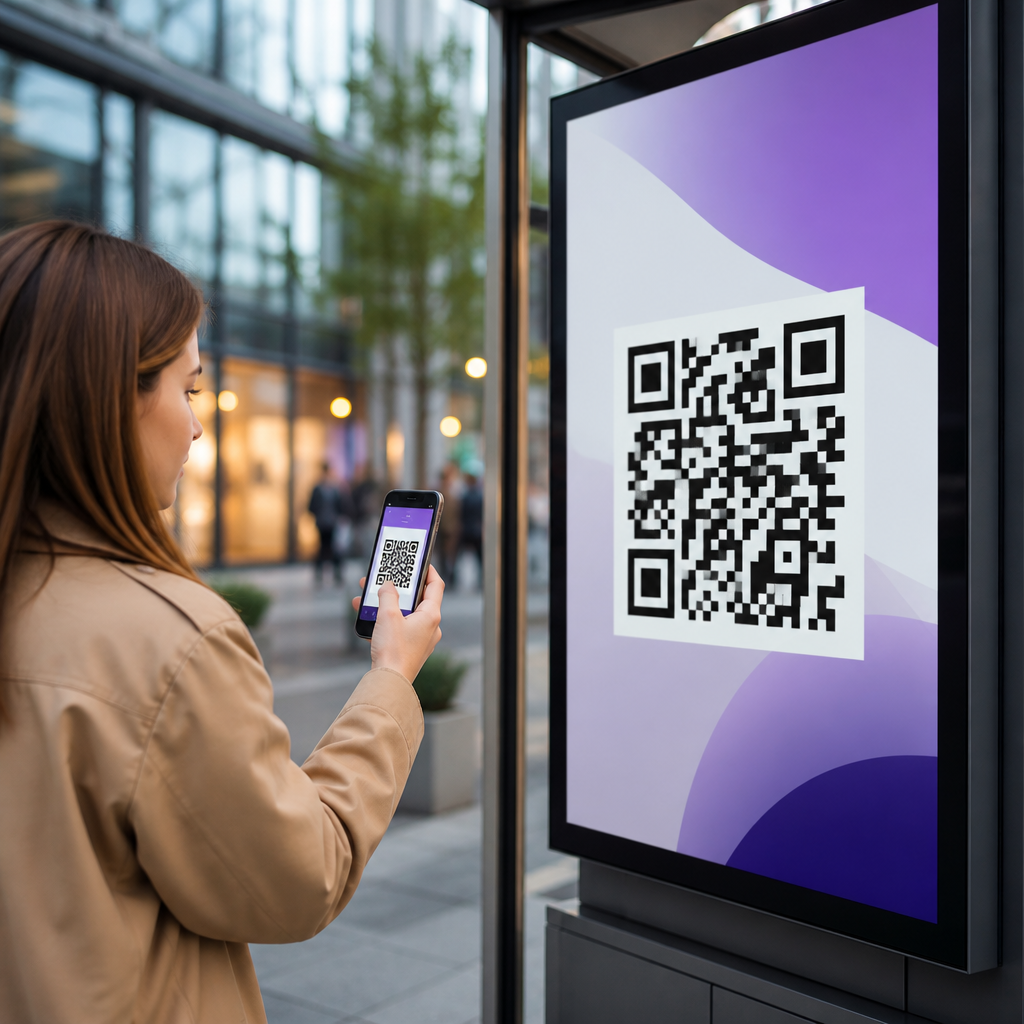
Another major error is prioritizing aesthetics over scan reliability. Social QR codes often appear on packaging and brand collateral, so designers want rounded modules, heavy logo treatments, gradients, and low-contrast color palettes. Some customization is fine, but scannability is non-negotiable. ISO/IEC 18004 defines the QR code symbology, and while marketers do not need to memorize the standard, they should respect its implications: preserve the quiet zone, maintain contrast, avoid excessive distortion, and do not cover too much data area with a logo. A beautiful code that fails in dim retail lighting or from a bus shelter at arm’s length is not a marketing asset.
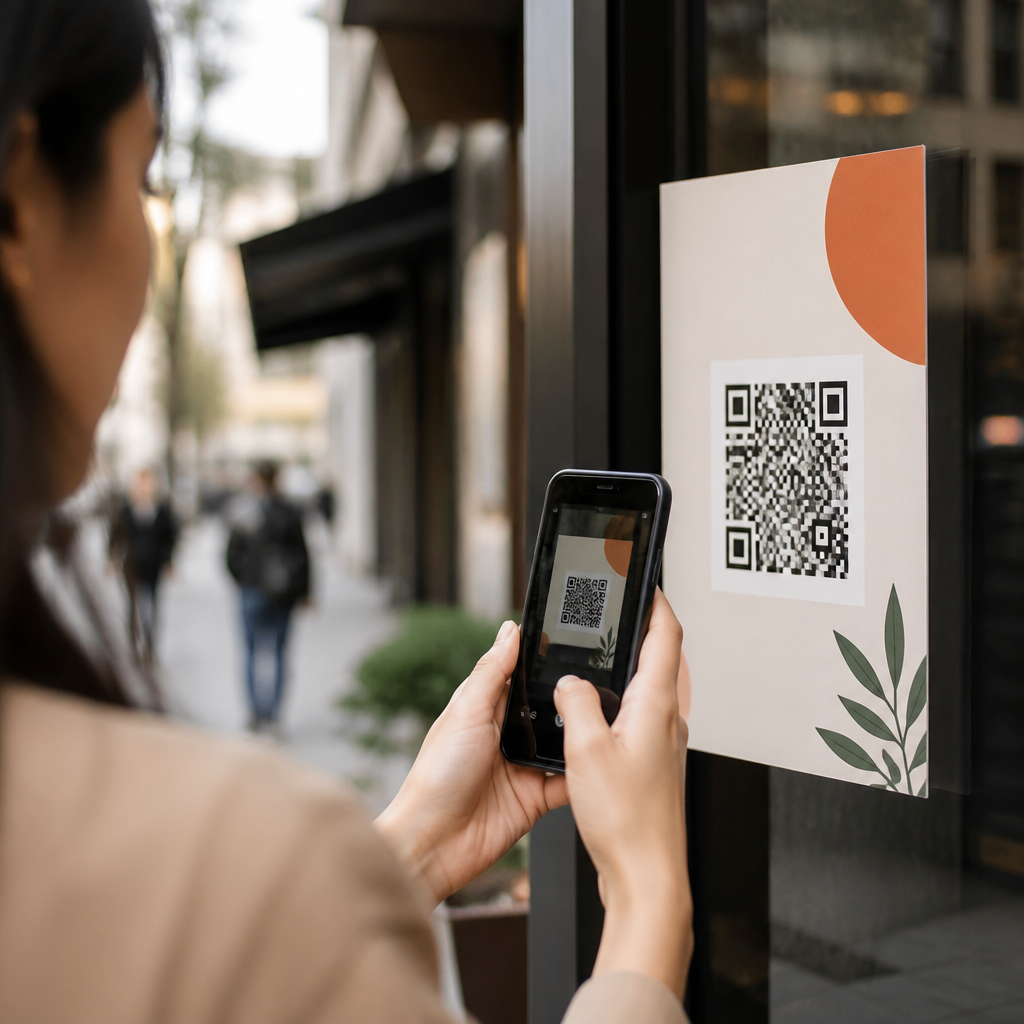
Size and placement matter just as much as visual styling. On print materials, I usually start with at least 2 x 2 centimeters for close-range scans and scale upward for distance using the ten-to-one rule as a practical benchmark: scanning distance should be roughly ten times the code width. A code on a trade show wall, for example, needs to be much larger than one on a business card. Surfaces matter too. Glossy finishes create glare; curved bottles distort patterns; textured substrates reduce edge definition. Before launch, print production samples and test under realistic conditions, including low light, older phone cameras, and weaker mobile connections. Too many teams validate only a digital mockup on a desktop screen, which tells you almost nothing about field performance.
Ignoring measurement, attribution, and governance
Many brands deploy QR codes for social media with no analytics plan, which means they can report scans but not business impact. At minimum, every social QR campaign needs dynamic tracking, UTM parameters, naming conventions, and a dashboard that separates unique scans from total scans. Unique scans estimate reach; repeat scans can indicate stronger intent or confusion, depending on the context. If a code appears across multiple placements, create separate destination URLs or dynamic redirects for each one. Otherwise, a restaurant table tent, window decal, and receipt insert will all blur together in reporting, making optimization impossible.
Governance is the overlooked half of measurement. Someone must own the destination URLs, the social handles, the QR platform account, and the update process. I have seen codes on packaging point to deleted Instagram pages because a regional team changed handles without informing operations. I have also seen agencies generate codes in a tool the client could not access after the contract ended. A simple operating model prevents this. Document who can edit destinations, where source files live, which QR generator is approved, how redirects are tested, and how expired campaigns are retired. For regulated sectors or public institutions, add privacy review, accessibility review, and records management to the workflow.
| Mistake | What Happens | Better Approach |
|---|---|---|
| Linking to a generic homepage | Users bounce because the next step is unclear | Send scans to a platform-specific profile or social landing page matched to context |
| Using static codes for campaigns | Printed materials become obsolete when links change | Use dynamic QR codes with editable redirects |
| Skipping UTM tagging | Traffic appears in analytics without campaign attribution | Apply consistent source, medium, and campaign parameters |
| Overdesigning the code | Scan failures increase, especially in poor lighting | Preserve contrast, quiet zone, and error-correction balance |
| No destination owner | Broken links remain live in the field | Assign ownership and recurring QA checks |
Forgetting the mobile experience after the scan
The scan is only the start. One of the costliest mistakes is sending users into a poor mobile experience that wastes the interest the QR code just captured. Social media traffic is mobile by default, so landing pages should load quickly, respect safe areas on smaller screens, and present one obvious action. If the code opens a social hub page, keep the choices limited and ordered by likely user intent. Five strong links usually outperform fifteen equal-weight options. If the code points to a single social profile, ensure the profile itself is current, branded, and aligned with the campaign promise on the physical asset.
Message match is critical here. If a countertop display says “Scan for creator tutorials,” the destination should immediately show tutorials, not a generic profile grid with no explanation. If a conference badge says “Connect on LinkedIn,” do not send attendees to an all-channel social page. Friction compounds quickly on mobile: a slow redirect, a cookie banner, a cluttered link page, and a profile with no pinned post can turn interest into abandonment in seconds. Strong campaigns reduce those steps. Use a pinned social post for context, align profile bios with the campaign, and consider first-party capture on the landing page when appropriate, such as email signup before offering broader social links.
Treating all social platforms as interchangeable
QR codes for social media perform differently by platform, audience, and environment. Instagram works well for visual inspiration, product discovery, and user-generated content prompts. TikTok is stronger for short-form demos, trends, and creator partnerships. LinkedIn is often the right destination for B2B events, recruiting, executive thought leadership, and professional follow-up. YouTube fits tutorials, product education, and long-form storytelling. A common mistake is building one social QR strategy and pasting it onto every channel. That approach ignores how people behave on each platform and why they scanned in the first place.
Environmental context changes the best platform choice. At a beauty retail shelf, Instagram or TikTok may convert curiosity into social proof because shoppers want real-world looks and creator reviews. At an industrial trade show, LinkedIn and YouTube usually make more sense because buyers need credibility, demos, and follow-up content they can share with colleagues. Restaurants often benefit from Instagram for ambiance and community, but they may also use TikTok for limited-time offers or behind-the-scenes kitchen content. The destination should support a measurable objective, not just increase follower counts. In many campaigns I have managed, a smaller number of high-intent followers on the right platform produced better downstream engagement than a larger volume of low-intent scans sent to a generic multi-link page.
Missing compliance, accessibility, and maintenance requirements
The final category of mistakes appears after launch: teams forget that social QR codes are operational assets that require maintenance. Accessibility starts with placement and supporting text. A code alone is not enough; users need a clear call to action explaining what happens after the scan, such as “Scan to follow our LinkedIn page for product updates.” For users who cannot scan, provide a short fallback URL. In public spaces, place codes where they can be approached safely and scanned without blocking traffic. If the code appears in a regulated promotion, include required disclosures near the code rather than hiding them several clicks away.
Maintenance includes link health checks, profile updates, seasonal refreshes, and performance reviews. Social platforms change features often, and campaigns become stale faster than printed assets wear out. Schedule recurring audits to confirm that every code still resolves correctly, profile bios are current, highlighted stories or pinned posts still match the campaign, and analytics are flowing into your reporting stack. Also watch for security risks. Public QR codes can be replaced with malicious stickers in physical environments, so high-value placements should be inspected regularly. The brands that get long-term value from mobile QR codes for marketing are the ones that treat social QR codes as living infrastructure, not one-time artwork.
Common mistakes with social QR codes usually come down to four failures: weak destination strategy, poor scan design, missing analytics, and neglected maintenance. Correcting those issues is practical, not complicated. Match the destination to user intent, use dynamic codes, preserve scan reliability, build a fast mobile experience, choose the right social platform for the context, and assign ownership after launch. When those fundamentals are in place, QR codes for social media become a dependable bridge between offline visibility and online engagement.
As the hub for this subtopic within mobile QR codes for marketing, this page should guide your next decisions. Use it to audit existing codes on packaging, signage, direct mail, and event assets, then improve the destination, tracking, and upkeep of each one. Start with your highest-traffic placement, fix the most obvious friction point, and measure the lift in scans, follows, and downstream conversions.
Frequently Asked Questions
What is the most common mistake businesses make with social QR codes?
The most common mistake is treating a social QR code like a generic shortcut instead of a strategic part of the customer journey. Many businesses generate a code, place it on packaging, signage, menus, flyers, or event materials, and assume scans will automatically translate into followers, engagement, or conversions. In reality, a social QR code needs a clear purpose. If the destination is vague, the placement is random, or the user has no reason to scan, the code becomes decoration rather than a marketing asset.
Another major issue is sending people to the wrong destination. For example, a business might link directly to a homepage when the real goal is to grow Instagram followers, promote a campaign hashtag, drive traffic to a link-in-bio hub, or move people into a specific social funnel. When the landing experience does not match the context of the scan, people drop off quickly. Someone scanning a code on product packaging expects something relevant to that product, not a broad company profile with no context.
The strongest social QR code campaigns start by answering three questions: who is scanning, what action should they take next, and what value do they get in return? A code placed on retail signage may work best when it leads to a curated landing page with links to social profiles, reviews, user-generated content, and a limited-time promotion. A code on event collateral may perform better when it opens a campaign page built specifically for that audience. The mistake is not the QR code itself. The mistake is failing to align the code, the destination, and the user’s intent.
Why do some social QR codes get scans but fail to generate followers or engagement?
This usually happens when there is friction after the scan. Getting someone to scan is only the first step. If the destination loads slowly, looks cluttered on mobile, asks users to choose from too many links, or lands them on a profile without a clear next action, engagement can stall immediately. Businesses sometimes mistake scan volume for success, but a high number of scans with low follow-through often signals a weak post-scan experience.
A common problem is that the social destination is not optimized for the specific audience or placement. For instance, someone scanning from packaging is likely in a different mindset than someone scanning from an in-store display or a trade show booth. Packaging may work well for loyalty, tutorials, or community content, while in-store signage may be better for social proof, active promotions, or influencer content. If both audiences are sent to the exact same destination with no segmentation, performance often suffers.
Another reason is lack of motivation. People need a reason to engage beyond simple curiosity. “Follow us on social” is weaker than “Scan to see styling ideas,” “Scan for exclusive product tips,” or “Scan to unlock our latest giveaway and social updates.” The best-performing social QR codes communicate the value before the scan happens. They set expectations, reduce uncertainty, and create a clear reward. If you want real engagement, your code should not just open a social channel. It should continue a conversation that already makes sense in the physical environment where the code appears.
Should a social QR code link directly to one social profile or to a landing page with multiple social links?
It depends on the campaign goal, and choosing the wrong format is one of the most overlooked mistakes. Direct links work best when you want one specific action with minimal friction. If your only objective is to grow followers on Instagram, TikTok, LinkedIn, or another single platform, linking directly can be highly effective because it removes a decision step. This is especially useful when the context makes the next action obvious, such as a beauty brand using packaging to encourage customers to scan and watch tutorials on Instagram.
A landing page with multiple social links is often better when the audience may want options or when the business has more than one meaningful channel. It can act as a social hub, helping users choose between Instagram, TikTok, YouTube, Facebook, reviews, user-generated content, or a campaign page. This approach is valuable in broader marketing environments such as retail displays, print ads, conference booths, or outdoor signage, where the business may not know exactly which destination will be most relevant to each scanner.
The mistake is using a multi-link hub when it creates unnecessary complexity, or using a direct profile link when the audience really needs context first. If you choose a landing page, keep it mobile-first, fast, visually clean, and tightly focused. Prioritize the most important links and make the primary action unmistakable. If you choose a direct profile, make sure that profile is ready for traffic with current branding, strong pinned content, and a clear reason to follow. The best choice is not about what looks more advanced. It is about which path creates the fewest barriers between the scan and the intended outcome.
How important is tracking and attribution for social QR codes?
Tracking and attribution are essential, and failing to set them up is one of the most expensive mistakes businesses make. Without analytics, it becomes almost impossible to know whether a social QR code is driving meaningful results or simply generating unqualified curiosity. You may see an increase in profile visits or engagement and assume the code is working, but without proper attribution, you cannot confidently connect that activity back to a specific package design, retail sign, event asset, print placement, or campaign variation.
At a minimum, businesses should use trackable destinations, dynamic QR codes where appropriate, and campaign parameters that distinguish traffic sources. This allows you to measure scans by placement, date range, device behavior, and downstream actions. For example, a code on shelf wobblers might perform differently from a code on product boxes. A seasonal version may outperform an evergreen one. A code that sends users to a creator-led landing page may generate better social engagement than one that sends them directly to the brand profile. Without attribution, all of these insights remain hidden.
Tracking also helps identify silent failure points. You may discover that one code gets many scans but low click-through to actual social profiles, suggesting the landing page is weak. Or you may find that one physical location consistently underperforms, meaning the call to action, visibility, or placement needs improvement. Good attribution transforms QR codes from static assets into measurable marketing channels. That is especially important in mobile QR codes for marketing, where the real value comes from understanding how offline touchpoints contribute to online community growth, engagement, and revenue-related behavior.
What design and placement mistakes reduce the effectiveness of social QR codes?
Design and placement errors can quietly destroy performance, even when the destination and strategy are solid. One of the biggest mistakes is making the code hard to notice or hard to scan. If the QR code is too small, printed on a reflective surface, wrapped around a curved package area, placed in low light, or crowded by other visual elements, scan rates will suffer. Businesses also make the mistake of over-customizing codes with brand colors and logos to the point that contrast and readability decline. A branded code can work well, but it still has to scan instantly and reliably across different phone cameras and lighting conditions.
Placement matters just as much as design. A social QR code should appear where people have enough time and motivation to use it. On packaging, that may mean placing it near unboxing moments, usage instructions, or product storytelling. In retail, it may mean positioning the code at eye level near a compelling offer or benefit statement. At events, it may need to be repeated across booths, handouts, and displays so people can scan when there is less crowding. A code placed where people are rushed, distracted, or physically unable to scan is unlikely to perform well no matter how strong the destination is.
Another frequent mistake is leaving out the call to action. Never assume people will scan just because a QR code is visible. Tell them what they will get: exclusive content, social inspiration, product support, a giveaway entry, creator videos, reviews, or community access. The combination of visibility, usability, and motivation is what drives results. Before launch, test the code in real-world conditions on multiple devices, from realistic scanning distances, and in the actual placement environment. That extra step often reveals problems that are easy to miss on a computer screen but costly once thousands of units or printed materials are already in circulation.