QR codes have become one of the most practical bridges between social media attention and measurable action, especially in influencer campaigns where speed, attribution, and mobile behavior determine results. A QR code, or quick response code, is a scannable matrix barcode that sends a user to a digital destination such as a landing page, product page, coupon, app download, form, or social profile. In influencer marketing, that destination matters because every scan can connect interest generated by a creator to a trackable next step. I have used QR codes in creator briefs, event activations, packaging inserts, retail displays, and short-form video overlays, and the consistent lesson is simple: when the code matches the audience context, conversions rise and reporting gets clearer.
For marketers building QR codes for social media, influencer campaigns are a natural fit because the user journey already begins on a phone. Someone sees a product demo on TikTok, a skincare routine on Instagram Reels, or a restaurant review on YouTube Shorts, then wants to act without typing a long URL. A well-placed code removes friction. It also solves a chronic measurement problem in influencer programs: proving which creator, placement, or audience segment drove action. Dynamic QR codes, UTM parameters, platform-specific landing pages, and first-party analytics turn a simple scan into a reliable performance signal.
This matters beyond convenience. Privacy changes have weakened some forms of behavioral tracking, while brands increasingly need consent-based, first-party data and clearer offline-to-online attribution. QR codes support both. They can be printed on mailers, shown in livestreams, embedded in event signage, added to story frames, or placed on product packaging shipped by creators. They also support social discovery broadly, making this topic the hub for QR codes for social media: creator collaborations, profile growth, contests, reviews, commerce, and community engagement all benefit when users can move from content to action in one scan.
Why QR codes work in influencer marketing
QR codes work in influencer campaigns because they shorten the path from impression to intent. Social users often discover products in moments of high curiosity but low patience. If the next step requires searching manually, many drop off. A scan preserves momentum. In my campaigns, the highest-performing uses were tied to clear user intent: “shop this look,” “claim the sample,” “watch the full tutorial,” or “join the giveaway.” The code was not the strategy by itself; it was the mechanism that made the strategy easy to execute.
There is also a technical advantage. Unlike generic profile links, QR codes can be unique to each creator, asset, region, or retail partner. That means a beauty brand can assign one code to a macro creator’s Reel, another to a micro creator’s in-store event poster, and another to package inserts sent through affiliate seeding. Each route can lead to tailored landing pages with distinct offers and analytics. Platforms such as Bitly, QR Code Generator, Beaconstac, and Flowcode support dynamic redirects, scan data, and campaign management. When connected to Google Analytics 4 through UTMs, they provide usable reporting on scans, sessions, engaged visits, and downstream conversions.
Best placements for QR codes across social platforms
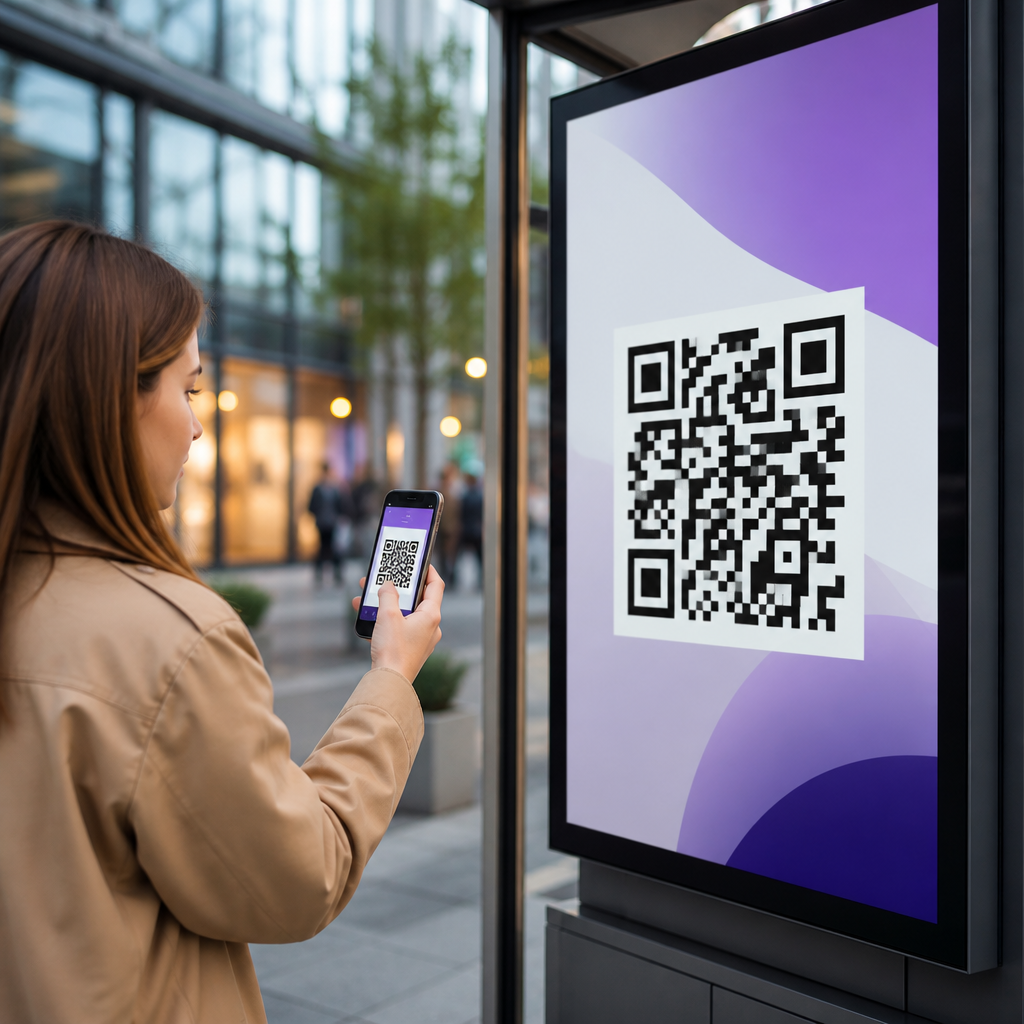
Placement determines whether a QR code helps or fails. On social media, a code must be large enough to scan, visible long enough for a user to react, and shown in a context where scanning is physically possible. For example, codes inside a full-screen mobile video can underperform because viewers are watching on the same device they would need to use for scanning. In those cases, the better use is often on a second-screen environment: livestreams watched on television, YouTube videos viewed on desktop, event backdrops, printed creator cards, or retail endcaps promoted by the influencer.
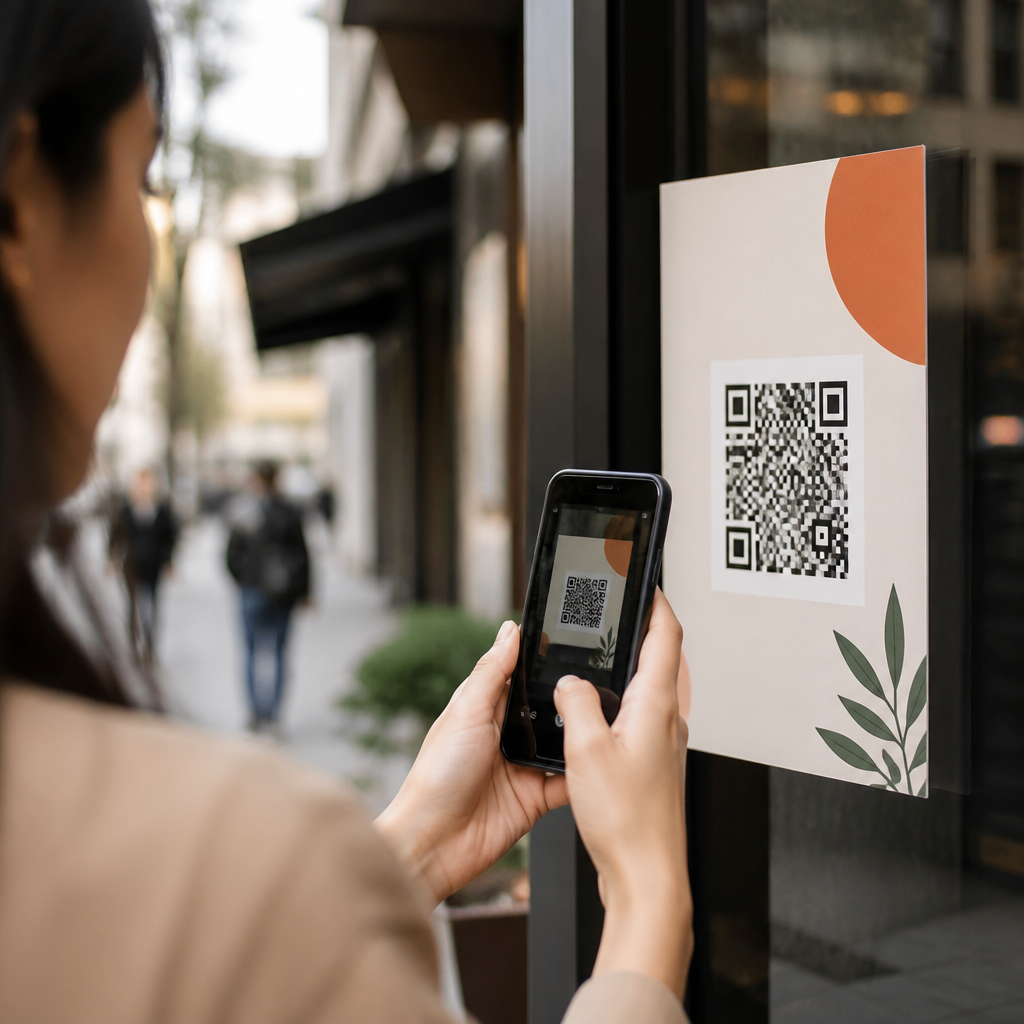
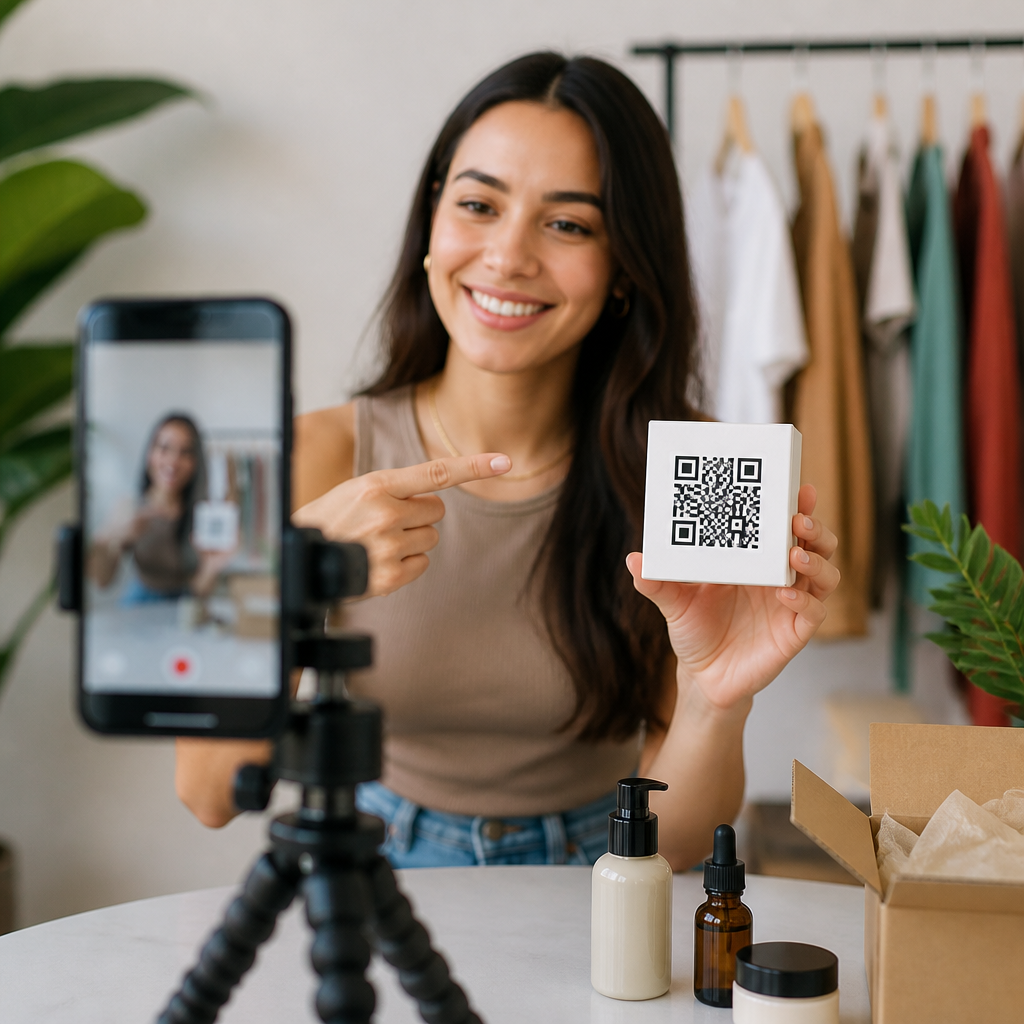
Instagram and TikTok campaigns often perform best when the creator shows a physical object carrying the code, such as packaging, a postcard, a mirror cling in a salon, or a countertop display at a pop-up event. YouTube creators can add a code during sponsorship segments when a large share of viewing happens on connected TV or laptop. Podcasts with video can place a code on studio graphics and companion social posts. Pinterest creators can connect codes to seasonal lookbooks or local store guides. Even Snapchat can support QR-based activations when creators direct viewers to scan codes placed in stores, at concerts, or on outdoor media.
| Platform or setting | Recommended QR use | Primary goal | Key caution |
|---|---|---|---|
| Instagram Reels and Stories | Packaging, printed inserts, event signage, creator backdrop | Product discovery and offer redemption | Avoid tiny on-screen codes during mobile-only viewing |
| TikTok | Creator demos, retail displays, livestream overlays on larger screens | Impulse response and coupon use | Keep destination mobile-first and fast-loading |
| YouTube | Sponsorship cards, desktop-view segments, connected TV prompts | Traffic to long-form landing pages | Leave code on screen long enough to scan |
| Events and pop-ups | Posters, menus, product testers, step-and-repeat walls | Lead capture and social follows | Test lighting, glare, and scan distance |
How to create a high-converting influencer QR code campaign
Start with the campaign objective, not the code style. If the goal is ecommerce revenue, send traffic to a creator-specific product bundle or shoppable landing page. If the goal is lead generation, use a short form with one incentive, such as early access, a downloadable guide, or a local event RSVP. If the goal is community growth, link to a branded profile hub where users can follow the brand across Instagram, TikTok, YouTube, and WhatsApp. The destination must match the promise made by the influencer exactly. Mismatch kills conversion.
Use dynamic QR codes whenever possible. They let you change the destination without reprinting assets and are essential for A/B testing offers, creative, and post-click experiences. Build every destination with UTM parameters naming the platform, creator, campaign, and asset. A consistent taxonomy prevents reporting chaos later. I typically use source for platform, medium for influencer or creator, campaign for the initiative, and content for asset variation. Add scan tracking from the QR provider, then validate page-level behavior in GA4. For ecommerce, connect purchases through your storefront analytics and, where relevant, promo code redemption.
Design matters more than many teams assume. Maintain strong contrast, preserve the quiet zone around the code, and test across different phone cameras and lighting conditions. Branded colors can work, but dark code on a light background remains the safest option. Include a direct call to action beside the code, such as “Scan for 15% off,” “Scan to see the full routine,” or “Scan to join the waitlist.” Users should never have to guess what happens next. If a code appears in print or at an event, add a short fallback URL for accessibility and edge cases.
Measurement, attribution, and campaign optimization
The biggest advantage of QR codes in influencer campaigns is attribution you can actually use. A scan is not the final success metric, but it is a strong intent signal. Evaluate performance across four layers: exposure, scans, on-site engagement, and conversion. Exposure comes from creator reach, video views, story impressions, event footfall, or retail traffic. Scans show response to the offer and placement. On-site engagement includes bounce rate alternatives in GA4 such as engaged sessions, average engagement time, and key events. Conversion should be tied to the real business outcome: purchases, bookings, leads, app installs, or store visits.
Optimization becomes much easier when each creator and placement has its own code. You can compare whether a fitness influencer drove more scans with a challenge-based offer, while a lifestyle influencer drove fewer scans but a higher conversion rate using a product bundle. You can also test timing. In one retail activation, scans spiked when creators posted before shoppers arrived, then rose again when store staff pointed to shelf talkers carrying the same creator-specific code. That kind of blended attribution is valuable because social influence often works in combination with physical context rather than as a single isolated touchpoint.
Be realistic about limitations. QR scans will not capture every influenced purchase, especially when users see creator content on mobile and later buy through search, marketplace apps, or in store. That is why QR data should sit alongside affiliate links, promo codes, post-purchase surveys, and media mix analysis. The best programs treat the code as one high-quality signal inside a broader measurement framework, not as the entire truth.
Common mistakes and practical ways to avoid them
The most common mistake is placing a QR code where scanning is inconvenient. If your audience is almost entirely watching on mobile, an on-screen code inside a Story is weak unless there is a second device available. Another frequent error is sending all creators to the same generic homepage. That wastes intent and erases attribution detail. A third mistake is neglecting page speed. Social traffic is impatient, and a slow landing page can wipe out the gains created by a good influencer mention.
Brands also underestimate creative briefing. Influencers need to explain why the audience should scan, what they will get, and when to do it. A vague “scan here” underperforms a specific value proposition. Compliance matters too. Sponsored content should follow platform disclosure rules and local advertising standards, including FTC guidance in the United States and ASA expectations in the United Kingdom. If you collect personal data after the scan, make sure consent language, privacy notices, and form fields align with applicable regulations. Trust improves performance because users are more willing to continue when the experience feels legitimate and expected.
QR codes can turn influencer attention into measurable action when they are matched to the right platform, placement, and audience intent. The core principles are straightforward: use creator-specific dynamic codes, send scans to tightly aligned mobile destinations, make the value proposition explicit, and measure performance across scans, engagement, and conversion. As the hub for QR codes for social media, this topic connects creator content, profile growth, retail activation, product launches, and community building under one practical framework.
The main benefit is not novelty. It is reduced friction and better attribution at a time when marketers need both. Whether you are running a product seeding program, a livestream launch, an in-store creator event, or a cross-platform awareness campaign, QR codes give users a faster path and give your team cleaner data. Audit your current influencer journey, identify one high-intent moment where users hesitate, and test a dedicated QR code there. Then expand what works across your broader mobile marketing program.
Frequently Asked Questions
How do QR codes improve influencer campaigns compared with regular links or promo codes?
QR codes make influencer campaigns faster, easier to track, and more natural for mobile users than many traditional response methods. Instead of asking someone to remember a URL, type in a long link, search for a product later, or manually enter a promo code, a QR code reduces that process to a quick scan. That matters in influencer marketing because attention is limited and action often happens in the moment. When a follower is interested during a video, story, livestream, event appearance, or unboxing, a QR code turns that interest into an immediate visit to a product page, signup form, app store listing, exclusive collection, or campaign landing page.
QR codes also improve attribution. Each influencer, platform, content variation, or audience segment can use a unique code that leads to a dedicated destination or contains tracking parameters. That gives marketers clearer insight into who generated traffic, which placements drove scans, and which creator content produced downstream actions such as purchases, registrations, downloads, or lead submissions. While promo codes are still useful for conversion reporting, QR codes capture earlier engagement behavior as well, including scan volume, timing, and device context. Used together, QR codes and promo codes create a stronger measurement framework by connecting discovery, intent, and purchase activity more accurately.
Where should QR codes be placed in influencer content for the best results?
The best placement depends on the format, but the core principle is visibility during the moment of strongest intent. In video-based content such as TikTok, Instagram Reels, YouTube videos, and livestreams, the QR code should appear clearly on screen long enough for users to scan without rushing. That usually means displaying it during product demonstrations, calls to action, recap segments, or end screens rather than flashing it for only a second. In story-based content, creators can place the code on a clean frame with a direct instruction such as “Scan to shop,” “Scan for the discount,” or “Scan to get the free guide.” In static posts, event signage, packaging inserts, or influencer mailers, the code should be large enough to scan easily and surrounded by enough white space to remain readable.
Context matters just as much as placement. A QR code performs better when the audience immediately understands what they will get after scanning. Pair the code with a simple, benefit-driven message and a destination that matches the content they just viewed. For example, if the influencer is reviewing a skincare product, the code can lead directly to that product bundle or a campaign landing page with the featured items, testimonial clips, and a limited-time offer. If the creator is promoting an event, the code can open a registration form or calendar link. Strong placement combines scanability, timing, message clarity, and a friction-free landing experience.
What should a QR code in an influencer campaign link to?
A QR code should link to the most relevant next step for the audience, not just a generic homepage. The destination should match the promise made by the influencer and continue the same message, offer, and visual context. In many cases, the best destination is a dedicated landing page built specifically for that creator or campaign. This page can feature the promoted product, a concise explanation of the offer, social proof, a clear call to action, and any campaign-specific tracking needed for attribution. Sending users to a broad homepage often creates drop-off because it forces them to search for the product or offer on their own.
Depending on the campaign goal, the code might lead to a product page, exclusive discount page, app download page, newsletter signup form, waitlist, event registration page, video teaser, digital coupon, or social profile. The destination should be mobile-optimized, fast-loading, and simple to navigate because most influencer-driven scans happen on smartphones. If possible, personalize the experience by creator, audience type, or platform. For example, one influencer’s code can unlock a curated bundle, while another can lead to a beginner guide tailored to their niche. The more aligned the post-scan experience is with the content that triggered the scan, the stronger your conversion potential will be.
How can brands track the performance of QR codes in influencer marketing?
Tracking starts with assigning a unique QR code to each influencer, campaign variation, placement, or even content format. That structure allows brands to measure individual performance instead of grouping all scans together. A code can include UTM parameters, custom landing pages, referral IDs, or platform-specific tags so that scans appear clearly in analytics dashboards. This helps answer practical questions such as which influencer drove the most traffic, which video generated the highest conversion rate, what time scans peaked, and whether certain audience segments responded better than others. Dynamic QR codes are especially useful because they allow brands to update the destination without replacing the code, while also providing scan-level reporting.
For deeper analysis, brands should connect QR code data with downstream metrics such as email signups, purchases, average order value, coupon redemptions, app installs, and return visits. That gives a more complete picture than scan count alone. A high-scan code with weak conversion may indicate landing page friction, unclear offer positioning, or misalignment between the influencer’s audience and the promoted product. A lower-scan code with strong purchase rate may reveal a higher-intent niche audience worth scaling. The most effective campaigns evaluate QR codes as part of a full attribution system that includes creator performance, content quality, audience behavior, and conversion outcomes.
What are the most common mistakes to avoid when using QR codes in influencer campaigns?
One of the biggest mistakes is treating the QR code as an afterthought instead of a strategic conversion tool. If the code is too small, appears too briefly, blends into the background, or lacks a clear call to action, many viewers will ignore it or fail to scan it successfully. Another common issue is sending users to a generic or poorly optimized destination. Even if the influencer creates strong interest, that momentum is lost when the landing page is slow, confusing, not mobile-friendly, or unrelated to the content that inspired the scan. Brands also make measurement harder when they reuse the same code across multiple creators, which limits attribution and reduces campaign insight.
Other avoidable problems include failing to test the code across devices, not customizing the destination by creator or platform, and relying only on scan count as a success metric. It is also a mistake to assume every audience will understand why they should scan. People respond better when the value is explicit, such as early access, a limited offer, bonus content, exclusive products, or a simple next step. Before launch, brands should test every QR experience end to end: the scan itself, the redirect, the landing page speed, the analytics tracking, and the conversion path. When execution is clean and the audience incentive is strong, QR codes can become one of the most efficient ways to connect influencer attention with measurable action.