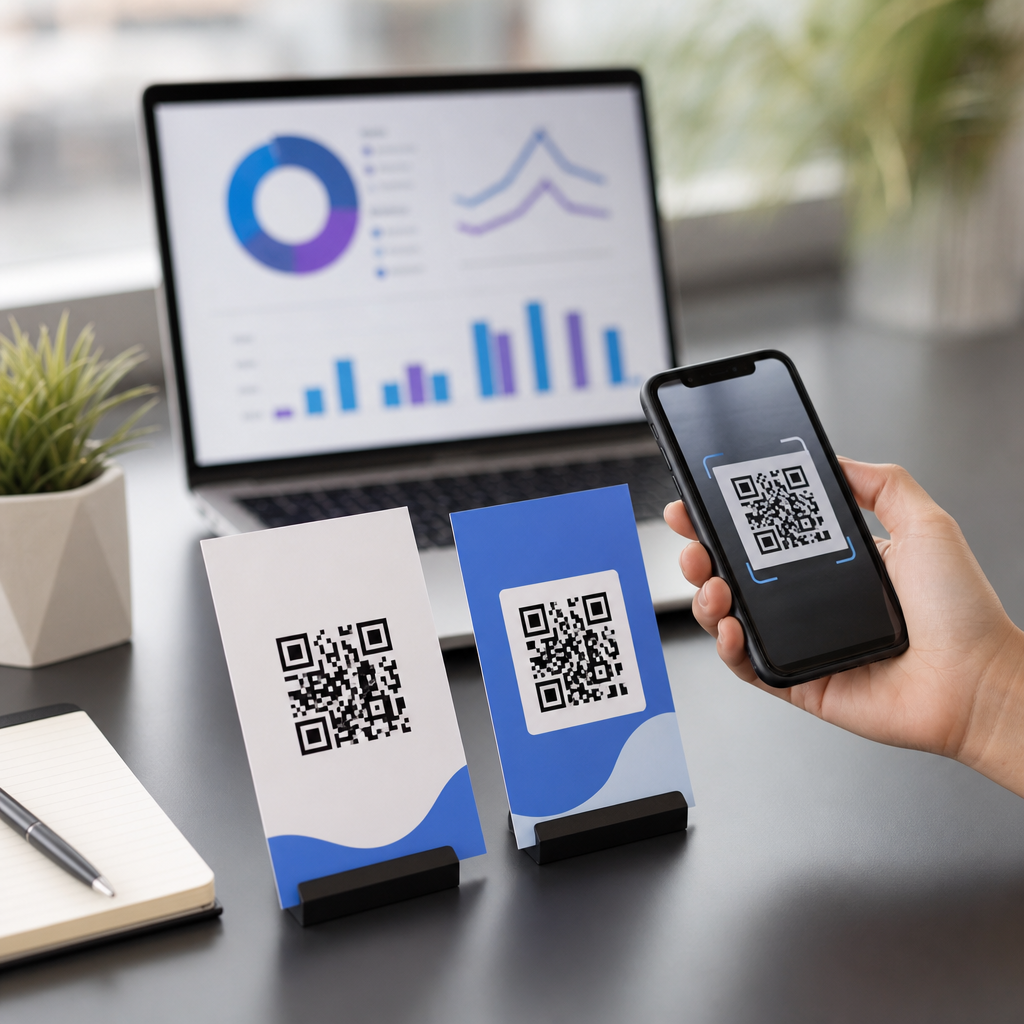

QR code workflows let a printed or on-screen code trigger a measurable business process across websites, mobile devices, customer databases, and automation tools. In practical terms, that means a scan can do far more than open a URL: it can create a lead in a CRM, assign a sales rep, launch an email sequence, log consent, redeem an offer, or update inventory in real time. When teams talk about integrating QR codes with CRM and tools, they are describing the connection between a scan event and the systems that store customer data, manage campaigns, and automate follow-up. I have implemented these workflows for events, retail packaging, field service, and B2B sales teams, and the pattern is consistent: the value is not the code itself, but the data architecture behind it.
This matters because disconnected scans create wasted attention. A customer scans a product card, but no lead record is created. A visitor scans a booth display, but the event team cannot attribute pipeline. A technician scans an equipment tag, but the maintenance platform never records the action. Cross-platform QR code workflows solve that gap by standardizing how scan data moves between landing pages, forms, CRMs, analytics, email tools, help desks, and internal databases. The best workflows are reliable, privacy-aware, and easy to maintain. They use dynamic QR codes, UTM parameters, webhook endpoints, and field mapping rules so every scan has context. This hub explains how to build those workflows, what systems to connect, which implementation choices matter most, and where the common integration failures occur.
Start with workflow architecture, not the QR image
The first step is designing the workflow as a business process. Before generating a QR code, define the trigger, destination, data captured, action sequence, owner, and success metric. For example, a trade show QR code may send users to a mobile landing page with a short form. Form completion creates or updates a contact in HubSpot, assigns lifecycle stage, applies a campaign property, and alerts the booth team in Slack. A packaging QR code might open a warranty registration page, pass product SKU and batch number in the URL, then write the submission to Salesforce and a support platform such as Zendesk.
In my experience, teams that begin with design choices like color, size, and placement often miss the deeper integration questions. What identifier will persist across systems? Will the record be a new lead, a contact update, or a case event? How will duplicate scans be treated? Which source fields are mandatory in the CRM? Answer those questions first. Use a canonical scan schema with fields like campaign ID, asset ID, location, timestamp, device type, and destination URL. That structure makes reporting possible later and prevents a patchwork of one-off campaigns.
Dynamic QR codes are usually the right choice for cross-platform workflows because they let you change the destination without reprinting the code and capture scan analytics at the redirect layer. Static codes are acceptable for fixed informational use cases, but they are limiting for CRM integration because the URL parameters and destinations cannot be updated after distribution. If a campaign owner changes landing pages, consent text, or routing logic, dynamic management avoids expensive reprints and preserves continuity in reporting.
Connect QR codes to CRM systems with clean data mapping
A CRM integration succeeds or fails on field mapping. The scan itself rarely belongs as a standalone business outcome. It is a signal that should enrich a contact, lead, account, opportunity, or service record. In Salesforce, that may mean using Campaign Member Status, Lead Source Detail, and custom fields for scan location or asset identifier. In HubSpot, it often means mapping hidden form fields into Original Source drill-down data, custom properties, and workflow enrollment triggers. In Zoho CRM or Microsoft Dynamics 365, the same principle applies: define exactly which object receives the data and what automation should fire next.
The safest pattern is to pass immutable identifiers in the QR destination URL, capture declared user data through a form, and then normalize the payload before it enters the CRM. For instance, a code on a restaurant table tent can include venue ID and table zone as URL parameters, while the guest enters name and email. Middleware such as Zapier, Make, Workato, or a custom serverless function can validate the submission, standardize country values, check for duplicates, and route the record. This extra layer prevents dirty data from polluting revenue reporting.
Below is a practical comparison of common integration patterns used in QR code workflows across platforms.
| Integration pattern | Best use case | Strength | Limitation |
|---|---|---|---|
| Native CRM form | Lead capture, event follow-up | Fast deployment and direct attribution | Limited logic and design flexibility |
| Webhook to middleware | Multi-step routing and enrichment | Strong validation and branching | More setup and monitoring |
| Custom landing page with API sync | Complex product, support, or loyalty flows | Full control over UX and data model | Requires development resources |
| Spreadsheet bridge | Pilot campaigns and small teams | Simple for quick testing | Poor governance and scalability |
Use hidden fields carefully. They are useful for passing campaign metadata, but they should not be trusted as the only source of truth if users can manipulate URLs. For high-value workflows, validate parameters server-side, sign sensitive values, or resolve campaign metadata from a short code stored in a database. That extra step matters when a scan leads to discounts, warranty claims, gated content, or regulated communications.
Build cross-platform automations that survive real-world usage
Most QR code workflow failures happen after the first successful demo. A scan reaches the form, the CRM creates a record, and everyone assumes the system is done. Then edge cases appear. Mobile browsers block third-party cookies, duplicate submissions inflate lead counts, a CRM API limit pauses sync, or a redirect chain strips tracking parameters. To build reliable automations, treat the scan path as production infrastructure. Test on iOS and Android, on native camera apps and in-app browsers, and on weak cellular networks. Measure redirect speed, form load time, and field completion rate.
A robust workflow includes at least five layers: QR management, redirect logic, landing page or app destination, integration middleware, and the system of record. For example, a property management company might place QR codes in apartment lobbies for maintenance requests. The code opens a mobile form with building ID prefilled, the submission posts to a middleware endpoint, the endpoint checks whether the resident exists in the CRM, creates a ticket in ServiceNow or Zendesk, and sends an SMS confirmation through Twilio. If the support platform is unavailable, the workflow should queue the request and retry instead of dropping it.
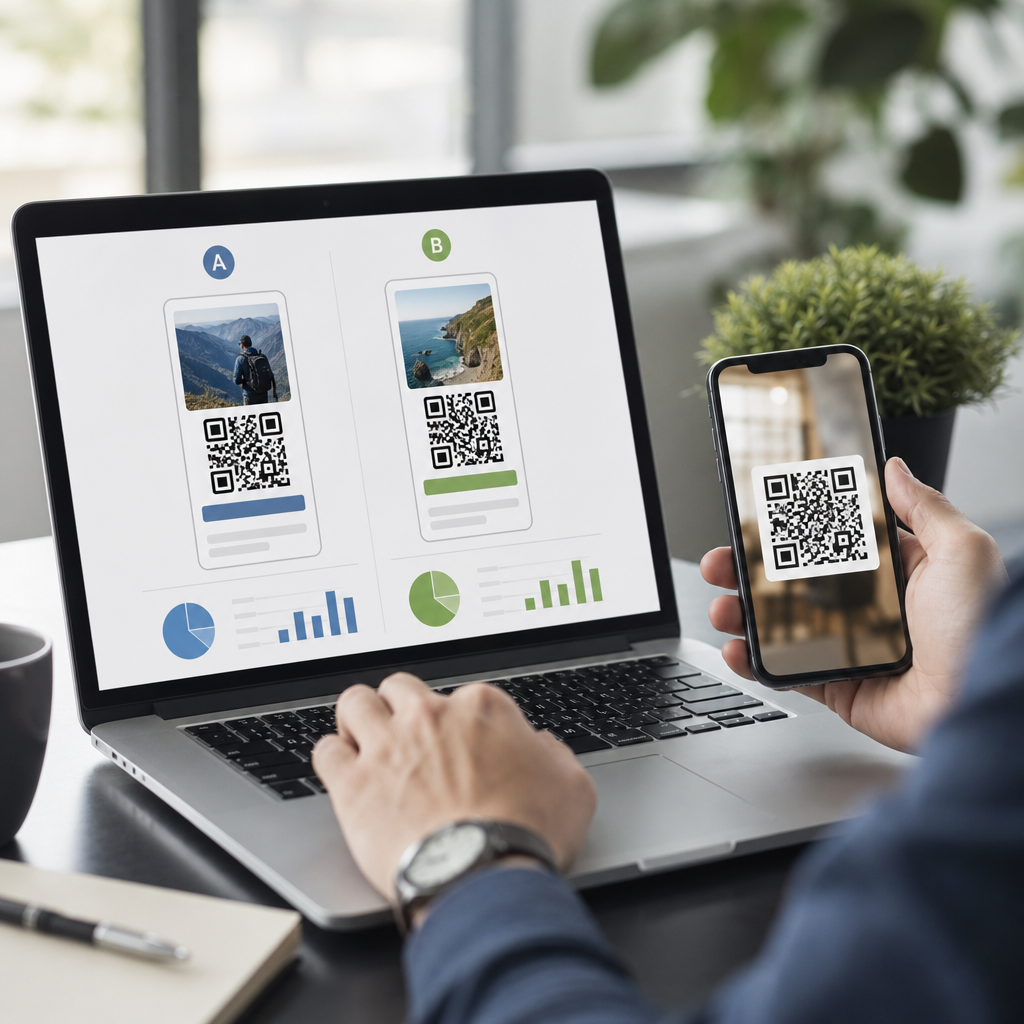
Analytics also need deliberate design. Relying only on scan counts can be misleading because one person may scan multiple times or scan without converting. Better reporting tracks scan-to-visit rate, form completion rate, qualified lead rate, assisted revenue, and time-to-follow-up. Google Analytics 4 can capture landing page events, while CRM campaign reports show downstream pipeline. The most useful dashboards join both views so marketers can compare physical asset performance with business outcomes. That is especially valuable for printed materials, packaging, direct mail, point-of-sale displays, and field installations where offline attribution is otherwise difficult.
Use practical integrations for marketing, sales, support, and operations
Different departments use QR codes differently, so the workflow should match the job. In marketing, a direct mail QR code often points to a personalized landing page with UTM tags and a hidden audience segment ID. When the visitor converts, the record can enroll in an email nurture in Mailchimp, HubSpot, or Marketo. In sales, account executives can place QR codes on one-pagers or presentation leave-behinds that connect prospects to demo booking pages. The booking tool, such as Calendly, writes the appointment back to the CRM and triggers a sequence in Outreach or Salesloft.
Support teams use QR codes to reduce friction. I have seen manufacturers place serial-specific codes on equipment that open a troubleshooting page, then route unresolved issues into Zendesk with the product model and warranty status attached. Hospitals and facilities teams use asset tags linked to maintenance systems so staff can scan and report faults without typing long IDs. Retailers use shelf or packaging codes to tie loyalty enrollment, product education, and post-purchase surveys into a single flow. Each case uses the same core pattern: identify the asset or campaign, capture the user action, enrich the data, and push it to the right operational platform.
For mobile apps, consider deferred deep linking. If the app is installed, the QR code can open a specific screen, such as a claim form or loyalty wallet. If not, the user can land on a mobile web fallback or app store page. Platforms such as Branch and AppsFlyer help preserve attribution across that journey. This is especially useful for restaurants, airlines, and membership programs where repeat engagement matters more than a single web visit.
Governance, privacy, and maintenance determine long-term success
Cross-platform QR workflows touch personal data, so governance cannot be an afterthought. If a scan leads to form submission, be explicit about consent, retention, and purpose limitation. For organizations operating in Europe or serving EU residents, GDPR requires a lawful basis and transparent notice. In California, CPRA adds disclosure and consumer rights obligations. Even outside regulated sectors, basic discipline matters: minimize collected fields, encrypt transmissions with HTTPS, restrict API keys, and document every system that receives scan data.
Maintenance is equally important. Establish naming conventions for codes, campaigns, and destinations. Keep a registry that records owner, live URL, creation date, print location, expiration rules, and connected automations. Broken QR workflows often come from organizational drift: a landing page is unpublished, a webhook changes, or a CRM field is renamed without updating the mapper. Quarterly audits catch these failures early. So do automated uptime checks and alerting for webhook errors.
As a hub for integrating QR codes with CRM and tools, the main lesson is simple: treat every scan as the start of a system, not a shortcut. Build around clean identifiers, tested redirects, validated data, and accountable ownership. Then connect those scans to the platforms that actually run your business, from Salesforce and HubSpot to Zendesk, GA4, Slack, Twilio, and mobile attribution tools. If you are expanding advanced QR code strategies, map one high-value workflow this week, document the data path end to end, and improve it before scaling to dozens of codes.
Frequently Asked Questions
1. What does it mean to build a QR code workflow across platforms?
Building a QR code workflow across platforms means designing a process in which a single scan does more than simply open a web page. Instead, the scan becomes the first step in a connected business action that can span a landing page, a mobile experience, a CRM, an email platform, internal databases, payment or redemption systems, and automation tools. For example, a customer might scan a code on packaging, arrive at a mobile-friendly form, submit their details, and automatically trigger a lead record in the CRM, an ownership assignment to a sales representative, a follow-up email series, and a reporting event in an analytics dashboard. The “across platforms” part matters because most organizations do not operate in one system. Marketing, sales, support, fulfillment, and operations often rely on different tools, so the workflow has to move scan data cleanly from one environment to another.
In practice, this requires connecting the scan event to a defined business outcome. That usually starts with a dynamic QR code that points to a controlled destination, such as a landing page, redirect service, form, app deep link, or workflow endpoint. From there, the system can capture useful context such as campaign source, time of scan, device type, location data where appropriate, offer type, product identifier, and the specific asset the code was printed on. Once that data is collected, it can be pushed into downstream tools using APIs, native integrations, webhooks, middleware platforms, or custom automation logic. The result is a measurable, repeatable process in which offline and online interactions are linked together, making QR codes a practical trigger for lead generation, customer onboarding, promotions, consent collection, event check-in, inventory updates, and other operational tasks.
2. Which platforms and systems should be connected in a cross-platform QR code workflow?
The right platforms depend on the workflow you are trying to create, but most strong QR code implementations connect at least five layers: the QR management layer, the destination experience, the data capture layer, the system of record, and the automation/reporting layer. The QR management layer is where codes are created, tracked, and often redirected dynamically. The destination experience might be a responsive web page, a mobile app screen, a product registration form, a coupon redemption page, or a support portal. The data capture layer includes forms, event parameters, cookie or session logic, app attribution tools, or authentication methods that collect useful scan information. The system of record is usually a CRM, customer data platform, order system, support database, or inventory tool. The automation and reporting layer includes email systems, messaging platforms, analytics suites, dashboard tools, and workflow engines that act on the scan and measure results.
For a marketing and sales use case, a common stack includes a dynamic QR code platform, a landing page or form builder, a CRM such as Salesforce or HubSpot, an email automation platform, and an analytics tool. For retail or operations, the workflow may connect a QR code to product records, warehouse systems, POS tools, and inventory databases. For compliance-sensitive use cases, legal consent systems, audit logs, and identity verification tools may also be involved. What matters most is choosing platforms that can exchange data reliably. Native integrations are useful when available, but webhooks and APIs often provide more flexibility. Middleware tools can simplify orchestration when several systems need to be updated at once. Before connecting everything, define which system owns the source of truth for each data point. If scan attribution lives in analytics, customer identity lives in the CRM, and redemption status lives in commerce software, those roles should be explicit so records stay consistent and duplicates do not multiply over time.
3. How do you connect a QR code scan to a CRM, email automation, or another business tool?
The most reliable approach is to treat the scan as an event that starts a controlled workflow rather than sending the QR code directly to a static URL and hoping the rest works itself out. Typically, the QR code points to a dynamic link, redirect service, landing page, or workflow endpoint where the scan can first be identified and logged. That entry point can capture campaign parameters, code ID, timestamp, product or placement metadata, and sometimes device context. If the next step is a form submission, login, or button click, the workflow can connect that behavior back to the original scan using hidden fields, session identifiers, or URL parameters. Once the visitor completes the action, the system sends the data to a CRM, email platform, support desk, or database through an API call, webhook, or integration platform.
For example, imagine a printed brochure with a QR code promoting a product demo. A prospect scans the code, lands on a mobile form, and requests a consultation. The form captures the campaign source from the QR code, stores the brochure ID, and sends the lead into the CRM. An automation rule then scores the lead, routes it to the correct sales region, sends a confirmation email, schedules a nurture sequence if the lead is not immediately contacted, and logs the original QR campaign in reporting. The same logic applies to customer service, loyalty, onboarding, and redemption flows. A scan can create or update a customer profile, open a support case, add a contact to a segment, trigger a text message, or record proof of action in a fulfillment system. The key technical considerations are identity matching, field mapping, duplicate prevention, and error handling. If an API call fails or the same person scans multiple times, the workflow should know whether to create a new record, update an existing one, or simply log another engagement event. That is what turns a basic QR interaction into a durable business process.
4. What are the most important best practices for designing effective QR code workflows?
The most important best practice is to start with the business outcome, not the code itself. Teams often focus on design, placement, or scan volume first, but the real value comes from defining what should happen after the scan. Decide whether the workflow is meant to capture leads, accelerate sales follow-up, verify attendance, redeem offers, collect consent, register products, or update stock levels. Once that goal is clear, map the user journey and the system journey together. The user journey covers what the person sees and does after scanning. The system journey covers which platforms receive data, what automations fire, who gets notified, and how success is measured. A strong workflow should be simple for the user and structured enough for internal reporting and automation.
Other best practices include using dynamic QR codes instead of fixed URLs whenever possible, because dynamic codes allow you to change destinations, track performance, and manage campaigns without reprinting assets. Mobile optimization is essential since most scans happen on phones; landing pages should load quickly, forms should be short and usable, and calls to action should be obvious. Clear labeling around the QR code also improves performance by telling users exactly what they will get when they scan. From a data perspective, standardize naming conventions, campaign tags, and field mappings so records flow consistently across tools. Build consent and privacy logic into the workflow when personal data is collected, especially if the scan feeds CRM or messaging systems. Finally, plan for monitoring. Good QR workflows include test cases, fallback behavior, scan logging, conversion tracking, and alerting when integrations break. A QR code may look simple on the surface, but when it sits at the front of a multistep business process, operational discipline is what keeps the workflow reliable and measurable.
5. How do you measure and optimize QR code workflows across websites, mobile devices, databases, and automation tools?
Measurement starts by separating scans from outcomes. A high scan count can be encouraging, but it does not necessarily mean the workflow is producing business value. To evaluate performance properly, track the entire funnel: scans, landing page visits, form starts, form completions, CRM record creation, sales acceptance, offer redemption, repeat engagement, revenue influence, or operational completion rates depending on the use case. Each step should have a clear event definition and a consistent identifier that ties activity together across platforms. That may include campaign parameters, QR code IDs, redirect logs, session IDs, user identifiers, or order numbers. Without those linking points, reporting becomes fragmented and it is difficult to know whether the QR code actually contributed to the result.
Optimization comes from reviewing both user behavior and system behavior. On the user side, test placement, creative context, call-to-action wording, page speed, form length, incentive structure, and mobile usability. A small change in landing page friction can significantly improve downstream conversions. On the system side, analyze routing logic, lead assignment speed, duplicate rates, integration failures, delayed syncs, and automation timing. If a scan creates a lead but the follow-up email is delayed by several hours, response rates may fall. If product-level QR codes are updating the wrong inventory field, the operational workflow may appear to work while producing bad data. Advanced teams also segment results by location, asset type, audience, device, campaign, and time period to understand where workflows perform best. The goal is not just to count scans, but to continuously improve how scan activity becomes useful action. When measurement is done well, QR code workflows become a practical bridge between offline engagement and real business performance across your digital systems.