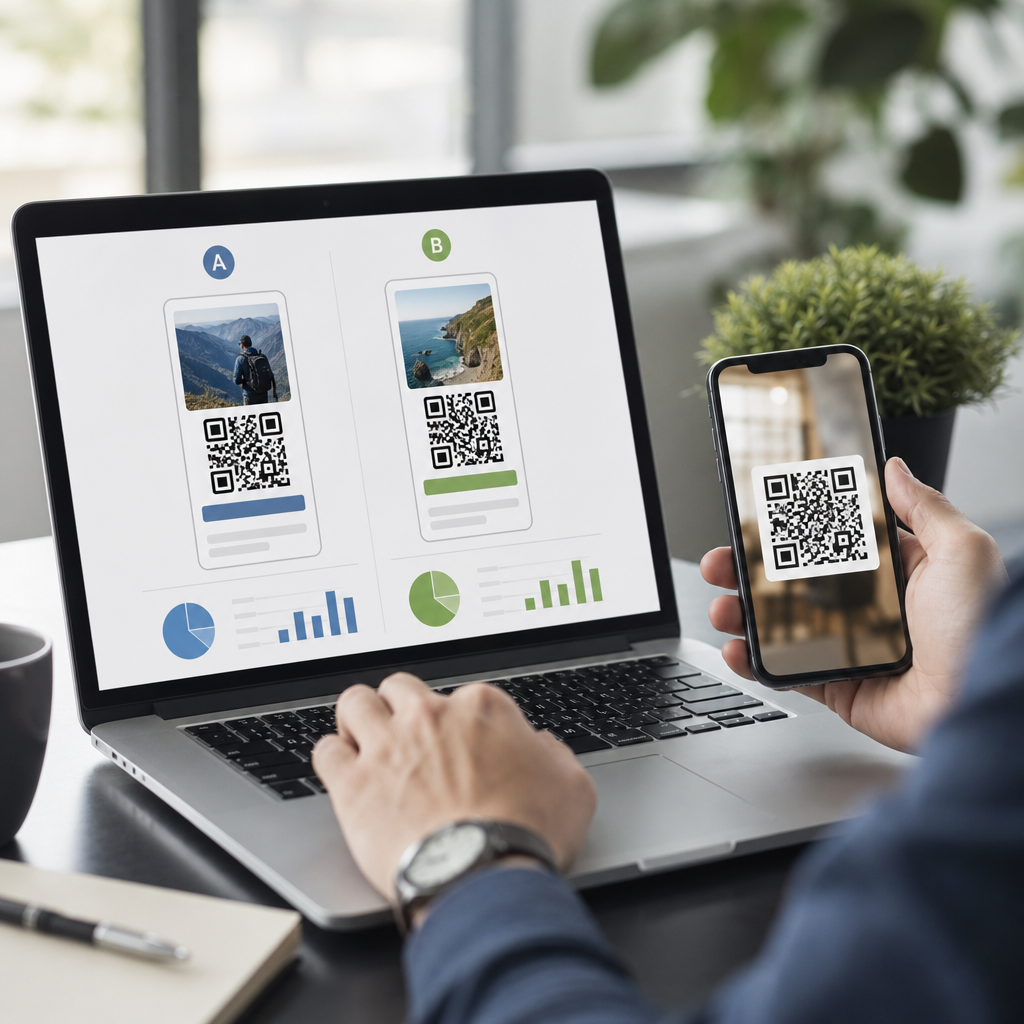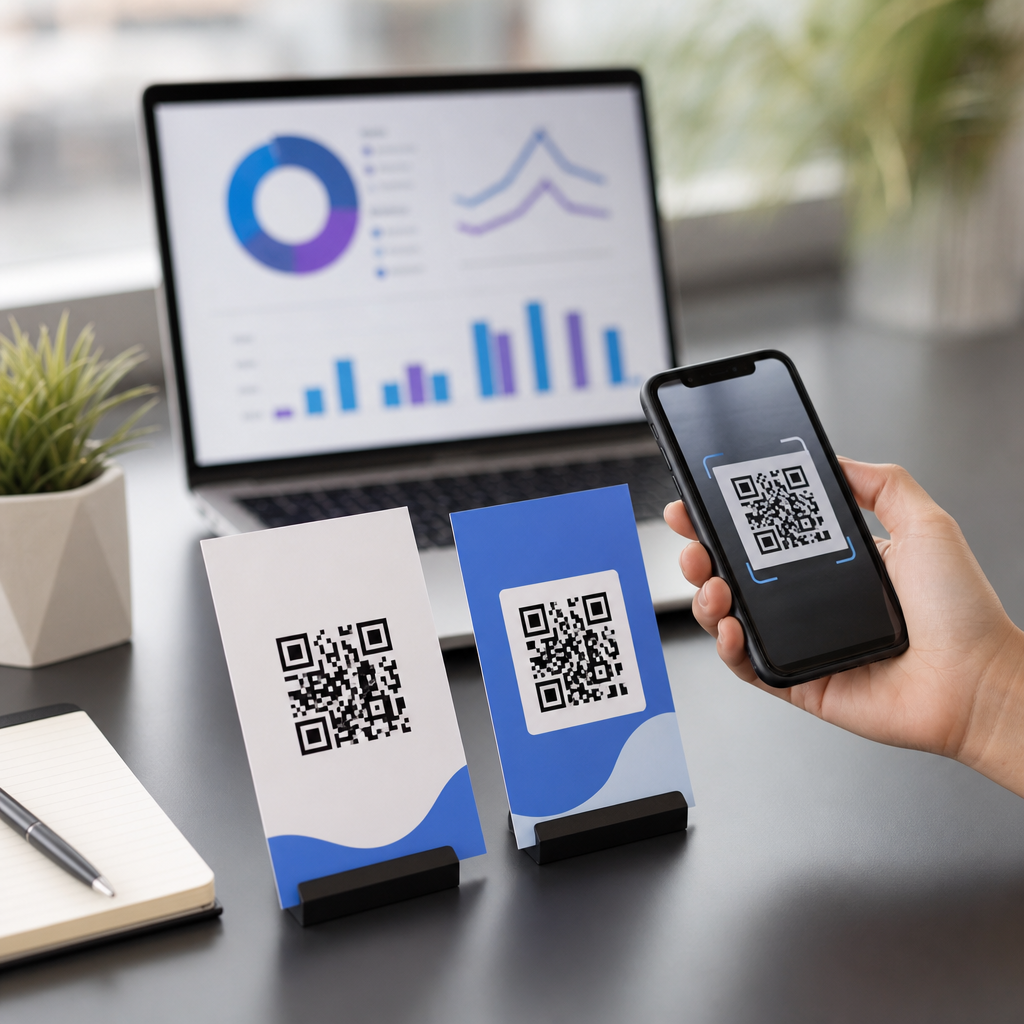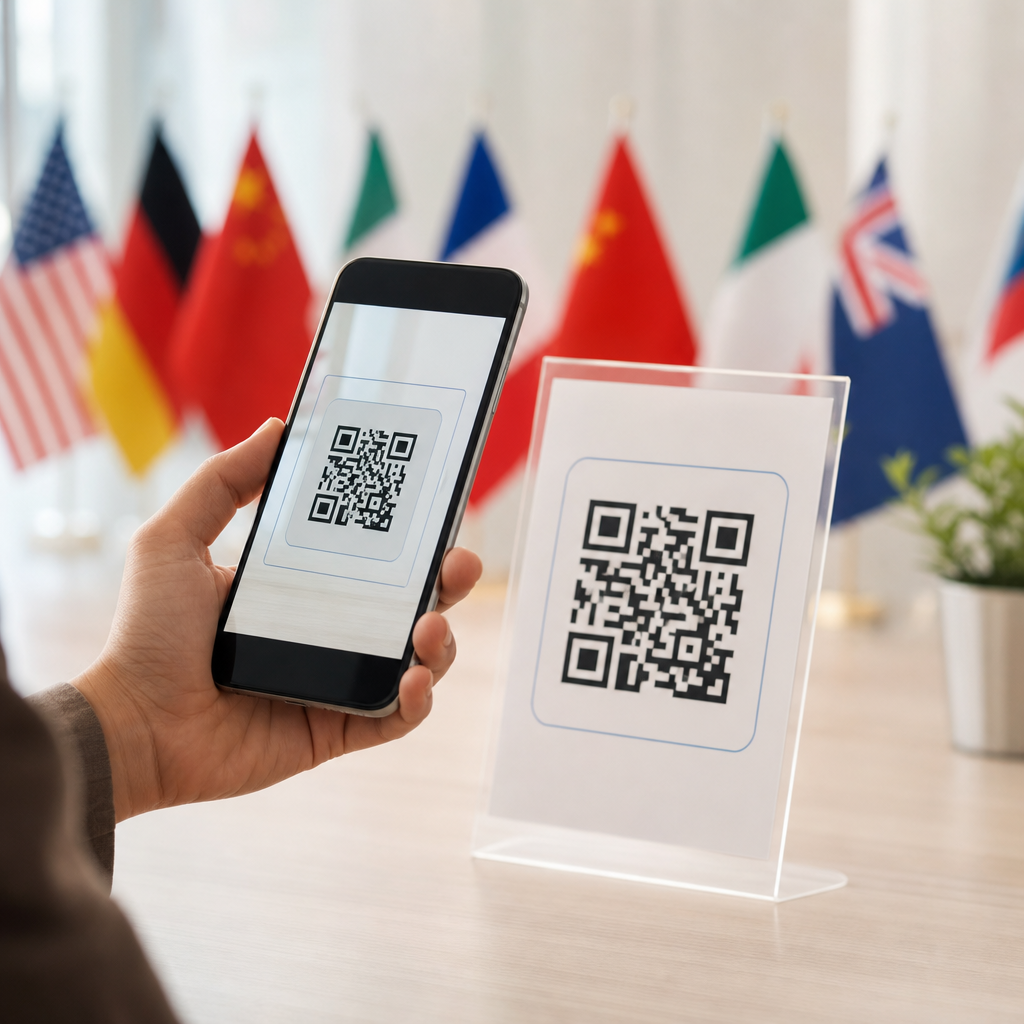
Dynamic QR Codes for Multi-Language Experiences give brands, venues, and public services a practical way to deliver the right content to the right person without changing the printed code. A dynamic QR code points to a short redirect URL managed in a platform, allowing the destination to be updated after printing. For multi-language experiences, that flexibility matters because one code can route users to English, Spanish, French, Arabic, or any other language version based on rules such as browser language, device settings, location, time, or campaign logic. I have implemented these systems for product packaging, museum labels, restaurant menus, and cross-border retail promotions, and the operational difference is dramatic: fewer reprints, cleaner analytics, faster localization, and tighter governance.
The core concept is simple. A static QR code stores a final destination directly in the pattern, so changing content requires replacing the code everywhere it appears. A dynamic QR code stores a managed pointer, which means the destination can change while the visible code stays the same. That distinction turns QR from a one-time link into a controllable delivery layer. When the goal is multilingual access, the code becomes more than a shortcut. It becomes a routing mechanism that can detect intent and serve a language-specific landing page, PDF, app deep link, video, or support flow. For organizations operating across regions, that is not a minor convenience; it is infrastructure for customer experience, compliance, and conversion.
Why does this matter now? Mobile scanning behavior is mainstream, and users expect immediate comprehension. If a shopper in Montreal scans packaging and lands on an English-only page, drop-off rises. If a traveler in Tokyo scans hotel signage and receives a language selector that defaults poorly, support volume rises. Dynamic QR code strategies solve that by balancing automation with user control. They also create a measurable layer for optimization: scan location, device type, language distribution, bounce behavior, and redirect performance can all inform content decisions. As a hub within Advanced QR Code Strategies, this article explains how to build dynamic QR programs for multi-language experiences, what routing models work, which governance rules prevent errors, and how to measure success across campaigns and evergreen assets.
How Dynamic QR Routing Works Across Languages
A dynamic QR workflow has four parts: the printed code, the redirect service, the routing logic, and the destination content. After a scan, the redirect service reads predefined rules and sends the user to the most appropriate language experience. In the simplest setup, the platform checks the device’s preferred language and forwards the user to a matching localized page. More advanced setups layer signals. A manufacturer might prioritize geolocation for packaging sold in Switzerland, then use browser language to distinguish French, German, and Italian visitors inside the same market. A convention center might route by event date first, then offer language versions for each day’s agenda.
The important technical principle is graceful fallback. Language detection is probabilistic, not perfect. VPNs distort location, devices may use a language different from the user’s reading preference, and some scans happen in low-connectivity environments. For that reason, every dynamic QR code for multilingual delivery should support a fallback sequence such as exact locale match, language-only match, market default, then universal language selector. I recommend keeping the selector lightweight, cached, and accessible, especially when serving visitors on public Wi-Fi. The best systems feel invisible when detection is accurate and forgiving when it is not.
Destination architecture also matters. Some teams use subdirectories like /en/ and /es/, others use subdomains or localized parameters. Any model can work if the routing logic is documented and stable. What fails in practice is inconsistency: English pages on one domain, French PDFs in a file repository, Spanish support in a separate knowledge base, and no common analytics tagging. A dynamic QR hub should map destinations to a controlled taxonomy so every code follows the same naming, redirect, and reporting conventions. That consistency becomes essential when thousands of codes are live across packaging, print, signage, and in-store displays.
Choosing the Right Multi-Language Strategy
There is no single best routing pattern. The right approach depends on content volatility, compliance needs, user context, and localization maturity. In my work, four strategies cover most use cases. Auto-detect is best when speed matters and the language versions are equivalent. Selector-first works when legal disclosures differ by market or when a user may be scanning on behalf of someone else. Geo-priority routing fits travel, retail, and public information contexts where location strongly predicts relevance. Campaign-rule routing is useful when language is only one variable among many, such as channel, season, product line, or inventory status.
| Strategy | Best use case | Main advantage | Main risk |
|---|---|---|---|
| Browser language detection | Packaging, menus, help pages | Fastest path to relevant content | Wrong result if device language is shared or outdated |
| Selector landing page | Museums, tourism, public services | User chooses explicitly | Adds one extra tap |
| Geo-priority routing | Regional retail, events, hospitality | Strong market alignment | Location data can be imprecise |
| Rule-based campaign routing | Enterprise programs with many variables | Maximum control and testing flexibility | Requires strict governance |
A practical example is food packaging sold across the EU. The outer pack may remain standardized, but ingredient, recycling, and promotional content often vary by country and language. A single dynamic QR code can direct a customer in Belgium to French or Dutch content, then switch the campaign module after a promotion ends without altering compliance pages. Another example is a university campus. One code on wayfinding signage can open a visitor map in English, Mandarin, or Arabic, while a back-end rule changes destinations during orientation week to emphasize admissions, housing, or emergency information.
When selecting a strategy, prioritize the cost of being wrong. If sending a user to the wrong language merely slows them down, auto-detection may be acceptable. If it could expose the wrong safety instructions, dosage information, or legal notice, use explicit selection or market-locked rules. Dynamic QR code strategies succeed when convenience is matched to risk tolerance rather than treated as a novelty feature.
Content, Localization, and Governance at Scale
Multi-language QR programs fail more often from content operations than from code generation. The redirect layer is easy; maintaining accurate localized destinations is harder. Start with a localization inventory that defines canonical pages, locale variants, owners, review dates, and fallback rules. If a campaign page exists in eight languages but the warranty page exists in three, the redirect system needs to know exactly what happens for unsupported locales. I prefer a source-of-truth spreadsheet or DAM-integrated registry tied to the QR platform, with unique IDs for each code, asset, and destination.
Translation quality must match the scan context. Packaging, healthcare, industrial equipment, and transport signage demand professional localization, not raw machine output. Even when machine translation accelerates drafts, final approval should sit with native-language reviewers who understand terminology and regulation. I have seen simple failures damage trust: a restaurant menu QR code translating allergen information loosely, or a venue map using inconsistent room names that break navigation. Dynamic codes make updates easy, but they do not remove the responsibility to validate content before and after launch.
Governance also includes access control. Enterprise teams should separate roles for code creation, redirect editing, publishing approval, and analytics review. Version history is essential because multilingual content changes frequently and errors need fast rollback. Use naming conventions that expose region, language, campaign, and asset type at a glance. For example, a code labeled PKG-COFFEE-EU-FR-NUTRITION-2026 is easier to audit than a generic campaign slug. If your platform supports expiration rules, password protection, or IP restrictions, reserve them for high-risk cases rather than overcomplicating everyday consumer journeys.
Measurement, Testing, and Platform Selection
The measurable advantage of dynamic QR codes is that every scan becomes operational data. At minimum, track scans, unique users, time, device type, operating system, approximate location, and destination language. Better programs add UTM parameters, event tracking, bounce rate, conversion rate, and post-redirect behavior in analytics platforms such as Google Analytics 4, Adobe Analytics, or Matomo. If one language version shows high scans but weak engagement, the issue may be load time, poor translation, or a mismatch between printed call-to-action and landing content.
Testing should happen before and after launch. Pre-launch, scan across iOS and Android, different browsers, VPN on and off, and all language settings you intend to support. Verify redirect speed, fallback logic, app deep-link behavior, and PDF rendering. Post-launch, run controlled experiments on selector wording, default language order, and page layout. In one museum deployment I worked on, simply changing the selector labels from language names in English to native-script labels increased successful first-click selection noticeably because visitors recognized their language faster.
Platform choice matters because not all dynamic QR services support advanced rules, API access, or enterprise governance. Evaluate redirect latency, SSL handling, bulk management, audit logs, SSO, exportable analytics, and uptime history. If you rely on geolocation or conditional routing, ask exactly how the provider determines location and what fallback occurs when signals are unavailable. Also plan for longevity. Printed QR codes may stay in circulation for years, so vendors should support durable links, domain customization, and migration options. A dynamic QR code strategy is only as resilient as the platform and process behind it.
Conclusion
Dynamic QR Codes for Multi-Language Experiences are the most efficient way to connect one printed code to many localized outcomes. They reduce reprint costs, improve user comprehension, and create a controllable measurement layer that static codes cannot match. The strongest programs combine sensible routing, clear fallback behavior, reliable localization, and disciplined governance. They also respect context: auto-detect when speed is valuable, explicit selection when accuracy carries legal or safety implications, and structured analytics everywhere.
As the hub for Dynamic QR Code Strategies, this approach should guide related decisions about packaging, signage, events, support content, and global campaigns. Build around stable destination architecture, approved language assets, role-based controls, and a testing plan that reflects real scan conditions. When those pieces are in place, a QR code stops being a simple link and becomes a multilingual delivery system that can evolve without changing the print surface. Audit your current QR inventory, identify where language friction exists, and start with one dynamic pilot that can expand into a governed multi-market program.
Frequently Asked Questions
What are dynamic QR codes, and why are they useful for multi-language experiences?
Dynamic QR codes are QR codes that point to a short, managed redirect URL rather than a fixed final destination. That means the printed code itself does not need to change when you update the landing page, switch campaigns, correct a broken link, or add new language versions. For multi-language experiences, this is especially valuable because a single QR code can intelligently send each user to the most appropriate version of your content. Instead of printing separate codes for English, Spanish, French, Arabic, and other languages, brands and organizations can use one code and manage the routing logic behind the scenes.
This approach improves both usability and operational efficiency. A visitor scanning a code on packaging, signage, menus, museum displays, or public service notices can be directed to content in their preferred language based on browser language, device settings, location, time, or custom campaign rules. At the same time, your team keeps control after the code has already been printed and distributed. That reduces reprint costs, supports global audiences more effectively, and makes it easier to maintain consistency across physical and digital touchpoints.
How does one dynamic QR code route users to different language versions?
A dynamic QR code typically sends the scanner to a redirect layer managed inside a QR code platform or campaign management system. At that point, routing rules determine where the user should go next. The most common method is browser or device language detection, where the system reads the visitor’s preferred language settings and forwards them to the matching page if that version exists. For example, a user with Spanish language settings may be sent to a Spanish landing page, while a French-speaking user is routed to the French version of the same content.
More advanced setups can combine multiple signals to improve accuracy. In addition to language preferences, routing can be based on geography, scan time, device type, or even campaign parameters. If no exact language match is available, the experience can fall back to a default language, such as English, or present a language selection page. This is often the best practice when your audience may share devices, travel frequently, or use browsers configured in a language that does not reflect what they actually want to read. The result is a flexible system that balances automation with user choice, making the experience more inclusive and reliable.
What are the main benefits of using dynamic QR codes instead of separate QR codes for each language?
The biggest advantage is simplicity. With a single dynamic QR code, you avoid cluttering printed materials with multiple codes labeled by language. That creates a cleaner design, reduces confusion for users, and makes signage, packaging, brochures, menus, and event materials easier to understand at a glance. It also streamlines production, because you only need to place, test, and maintain one code rather than several. For organizations operating across many locations or languages, that efficiency can translate into meaningful savings in design time, printing costs, and campaign management overhead.
Another major benefit is flexibility after launch. If you need to update a translation, replace a page, add a new market, or redirect users to a seasonal version of the content, you can do that without reprinting anything. Dynamic QR platforms also usually provide scan analytics, which help teams understand how often codes are scanned, where scans are happening, which devices are being used, and how different audience segments engage with each language experience. Those insights can support better localization decisions, improve conversion rates, and reveal gaps where additional language support may be needed. In practice, dynamic QR codes give organizations both a better user experience and better control over performance.
What should businesses and public organizations consider when creating a multi-language QR code experience?
The most important consideration is the quality and consistency of the destination content. A dynamic QR code can route users intelligently, but the experience still depends on having well-structured language-specific pages that are accurate, mobile-friendly, fast-loading, and easy to navigate. Each version should feel complete rather than partially translated, and critical information such as pricing, instructions, safety guidance, accessibility details, and contact information should be clearly localized. It is also wise to think about right-to-left language support for languages such as Arabic, as well as font rendering, date formats, and culturally appropriate wording.
Organizations should also plan for edge cases. Not every scan can be matched perfectly to the right language, so a fallback strategy matters. Many teams include a simple language selector page if automatic detection is uncertain or if multiple languages are commonly used in the same environment. Privacy, analytics, and governance should also be addressed. If you are collecting scan data, make sure your setup aligns with applicable privacy requirements and internal policies. Finally, testing is essential. Before deployment, scan the code on different devices, in different browsers, and from different regions to confirm that the routing behaves as expected. A successful multi-language QR experience is not just technically functional; it is intuitive, accessible, and dependable in real-world conditions.
Can dynamic QR codes be updated after printing, and what kinds of changes are possible?
Yes, that is one of the defining advantages of dynamic QR codes. Once the code is printed, the destination behind it can still be changed because the QR code itself points to a managed redirect URL. This means you can update the final landing page, switch between language versions, correct outdated links, launch new localized content, or temporarily route users to a notice page without replacing the printed materials. For brands, venues, healthcare providers, educational institutions, and public agencies, this flexibility is extremely useful when information changes frequently or must remain accurate over time.
The scope of updates can be broad. You can add new languages, refine routing rules, direct users to region-specific pages, activate a campaign for a limited period, or pause a destination if content is under revision. Some platforms also support A/B testing, scan scheduling, and conditional redirects, which can further improve performance and personalization. For example, the same printed code on an international product package could initially support two languages, then later expand to five without any packaging redesign. This makes dynamic QR codes a future-friendly choice for organizations that want to scale multilingual communication while protecting the value of their printed assets.