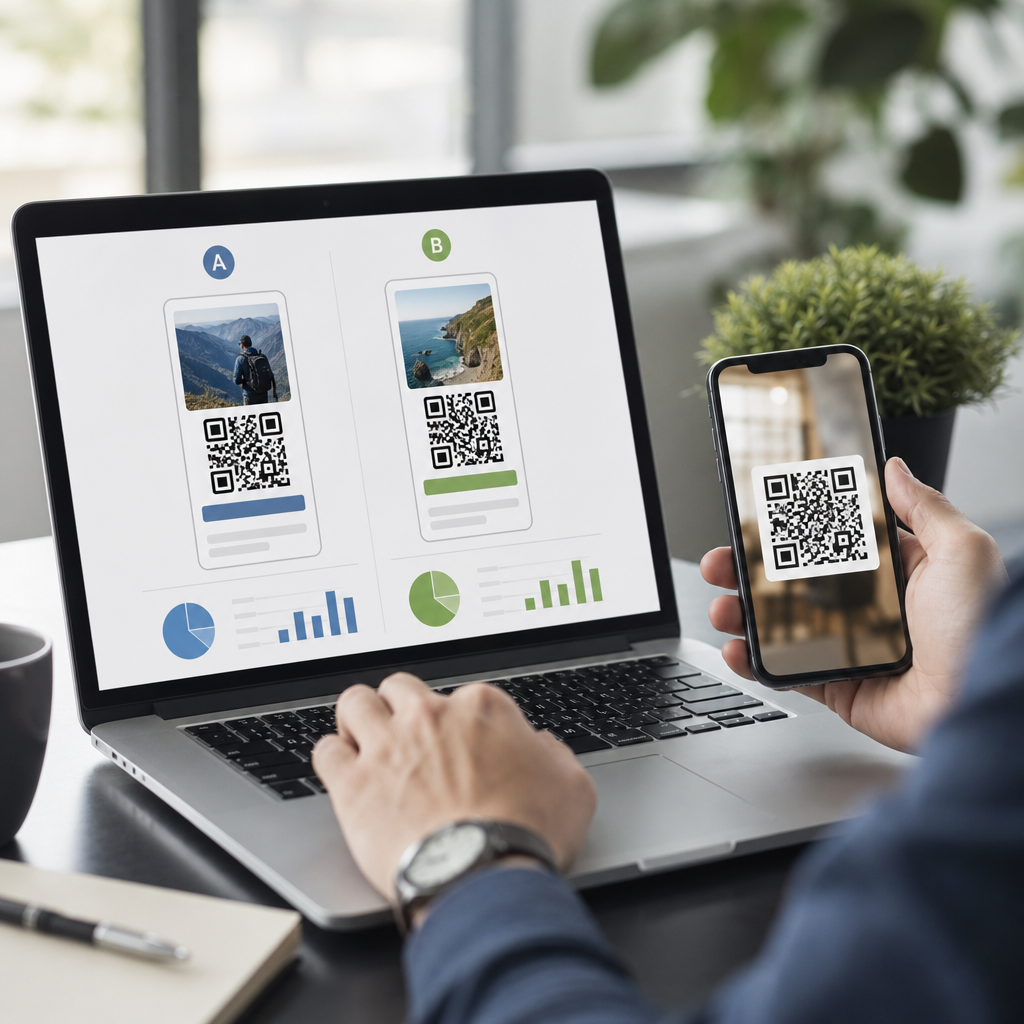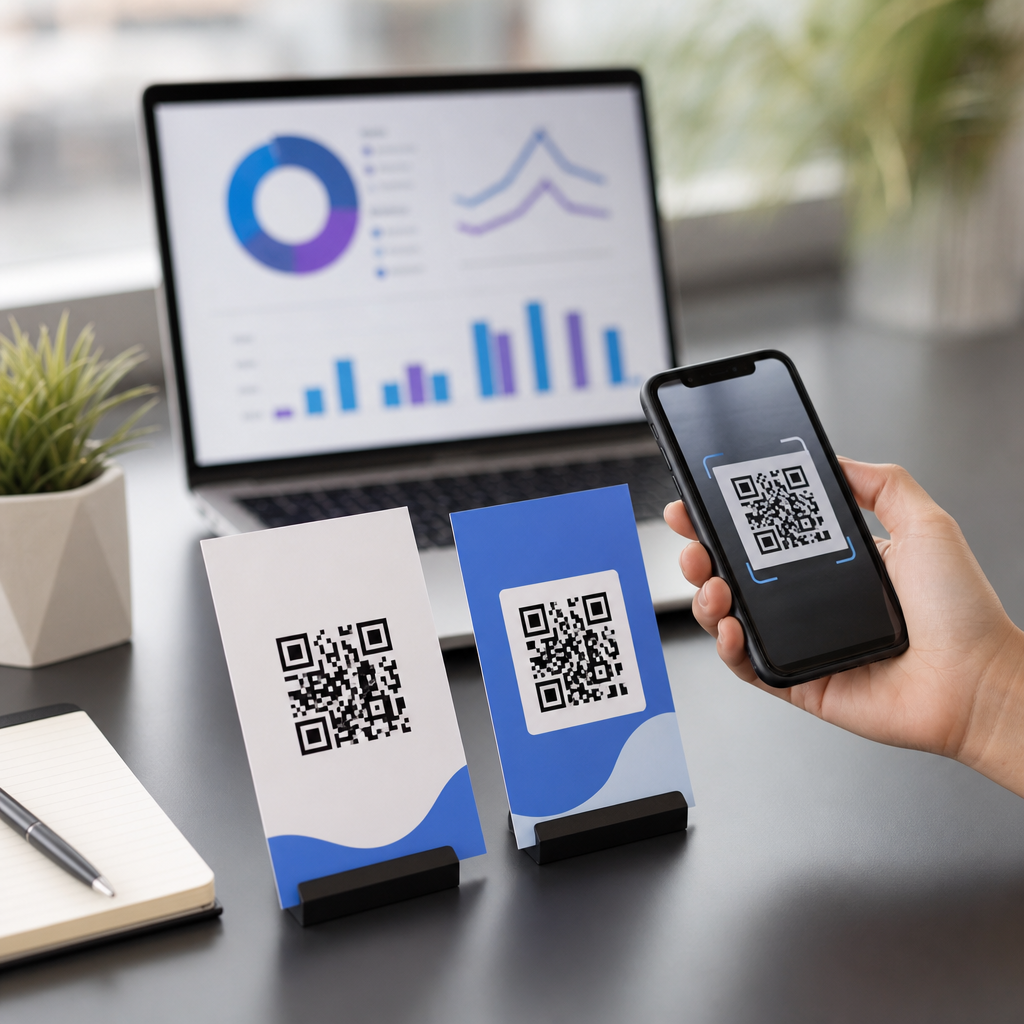

Advanced CRM strategies using QR codes turn offline interactions into measurable customer data, giving sales, marketing, and service teams a faster path from scan to relationship. In practice, this means connecting dynamic QR codes to a customer relationship management system so every brochure, package insert, event badge, direct mail piece, or in-store display can trigger a tracked action. A scan can open a landing page, prefill a form, attach a lead source, log campaign attribution, and start an automated workflow inside platforms such as Salesforce, HubSpot, Zoho CRM, Microsoft Dynamics 365, or Pipedrive. I have implemented these programs for event capture, field sales follow-up, retail promotions, and service onboarding, and the difference is substantial: the best teams stop treating QR codes as simple links and start treating them as data collection and orchestration points.
Why does this matter now? Because modern customer acquisition spans physical and digital touchpoints, while most CRM reporting still struggles to connect them cleanly. Paid social clicks are easy to attribute; a scan from a trade show banner or product manual is not, unless the QR code strategy is designed around campaign structure, identifiers, consent, and automation rules. Integrating QR codes with CRM tools closes that gap. It supports lead generation, customer onboarding, self-service support, loyalty enrollment, field marketing, account-based marketing, and post-purchase engagement. For a sub-pillar hub focused on integrating QR codes with CRM and adjacent tools, the core idea is straightforward: every scan should answer three questions clearly—who engaged, with what asset, and what should happen next.
To do that well, organizations need more than a QR code generator. They need dynamic codes, UTM governance, CRM field mapping, middleware or native integrations, event tracking, and a privacy-safe data capture flow. Dynamic QR codes are especially important because they allow destination updates without reprinting the code and typically provide scan analytics including timestamp, device type, and rough location. CRM integration adds identity, lead status, account ownership, and lifecycle context. Together, these capabilities support advanced reporting and operational efficiency. The result is a practical system for converting anonymous scans into qualified opportunities, existing-customer actions, or support resolutions while preserving a consistent customer experience across channels.
Build the integration architecture before you print anything
The most common mistake I see is generating QR codes before defining the data model. A successful CRM integration starts with architecture. First, decide what the QR code represents: a campaign, a channel, a product, a sales rep, a location, or an asset variation. Then define the identifiers that must persist from scan through conversion. At minimum, use campaign IDs, source and medium tags, content identifiers, and where relevant a unique rep or store code. These values should pass into landing-page forms, hidden CRM fields, and analytics events. If your stack includes Google Analytics 4, HubSpot, Salesforce Campaigns, Marketo, Zapier, or Segment, map the same naming conventions across each system to avoid attribution fragmentation.
Landing pages matter as much as the code itself. The page should load quickly on mobile, clearly state the value exchange, and capture only the minimum data required for the next step. For top-of-funnel use cases, I recommend progressive profiling rather than long forms. A first scan might collect email and company; later interactions can append job title, product interest, territory, or purchase timeline. Native forms in HubSpot or Marketo can write directly to contact records, while Salesforce often benefits from a form layer such as FormAssembly, Typeform, or a custom endpoint that validates and enriches records before insert. This reduces duplicates and keeps lead routing reliable.
Middleware is often the hidden engine behind advanced QR code CRM workflows. Tools like Zapier, Make, Workato, Segment, and Tray.io can send scan events to a CRM, email platform, SMS platform, and warehouse simultaneously. For example, a visitor scans a QR code on a booth panel, submits a short demo request, and within seconds the lead is created in Salesforce, added to a campaign, enriched by Clearbit or ZoomInfo, assigned by territory, and enrolled in a follow-up sequence. That is the practical standard. Printing a static code that dumps every visitor onto a generic homepage is not integration; it is lost intent.
Use QR codes to improve lead capture, attribution, and routing
QR codes are exceptionally effective for lead capture when the scan context matches immediate intent. At trade shows, attendees already expect a fast mobile action. In retail, a shelf tag can bridge discovery to product education. In direct mail, a personalized code can move a prospect from awareness to scheduled consultation. The CRM strategy is to capture not only the lead but also the exact source context. If a code appears on three booth panels, two handouts, and one speaking-session slide, each should have a distinct campaign content value. This allows revenue teams to compare which physical assets actually influenced pipeline.
Personalization increases conversion when implemented carefully. A QR code linked to an account-based marketing package can route contacts from a target company to a page customized with their industry, product use case, and assigned account executive. If the recipient submits a form, the CRM can attach the response to an existing account and notify the owner immediately. I have seen this work particularly well in B2B manufacturing and SaaS, where sales cycles are long and every touchpoint needs attribution. The key is not personalization for its own sake, but relevance tied to CRM records and follow-up rules.
Routing logic must be explicit. New leads may go to an SDR queue, existing customers to the account team, and support-related scans to customer success. This requires matching logic against email domain, account ID, contact status, or serial number captured during the interaction. Without routing rules, teams create avoidable friction by forcing customers through the wrong process. A product packaging QR code should not send paying customers into a generic new-lead nurture. It should identify the context and trigger onboarding, warranty registration, how-to content, or service workflows as appropriate.
| Use Case | QR Code Destination | CRM Data Captured | Recommended Automation |
|---|---|---|---|
| Trade show booth | Demo request page | Campaign, asset, attendee details | Lead creation, owner assignment, follow-up email |
| Direct mail | Personalized landing page | Account, contact, offer response | ABM alert, task creation, sales sequence |
| Product packaging | Registration or onboarding page | Customer ID, product SKU, purchase date | Onboarding workflow, upsell segmentation |
| In-store signage | Product details or coupon page | Location, promotion, opt-in status | SMS/email enrollment, redemption tracking |
Connect QR scans to lifecycle automation and customer service
The strongest QR code CRM programs extend beyond lead generation into the full customer lifecycle. After purchase, codes on packaging, welcome inserts, invoices, or installation guides can trigger registration, onboarding checklists, knowledge-base access, and service case deflection. When integrated correctly, these scans enrich the contact record and reveal customer intent at moments when engagement is naturally high. A customer who scans a setup guide within two days of delivery likely needs onboarding help, not promotional messaging. A customer who scans a troubleshooting code six months later may need support content, replacement parts, or proactive outreach from customer success.
Service teams benefit because QR codes reduce friction and improve case quality. A code on equipment can open a service form that already includes asset type, location, and serial number from the URL structure or selected options. When submitted, the CRM or service platform can create a case with cleaner metadata than a phone transcript usually provides. In ecosystems using Salesforce Service Cloud, Zendesk, Freshdesk, or Dynamics 365 Customer Service, that structure improves queueing, SLA management, and reporting. It also lowers handle time because agents start with context rather than asking basic identification questions.
Automation should reflect customer intent and consent. If someone scans a product care guide, sending an immediate discount offer may be counterproductive. A better sequence might deliver setup instructions, a short educational email series, and only later a relevant accessory recommendation based on product ownership. Marketing automation platforms such as HubSpot, Marketo, ActiveCampaign, and Klaviyo can segment these journeys using scan source, page behavior, form completion, and purchase history. The rule is simple: QR scans are signals, and signals become valuable only when the follow-up matches the reason the person scanned in the first place.
Measure performance with scan analytics, CRM reporting, and governance
Measurement is where advanced CRM strategies using QR codes either prove their value or collapse into anecdote. Start with a shared reporting framework across marketing, sales, and service. Track scans, unique scanners where possible, landing-page conversion rate, known-contact match rate, lead-to-opportunity rate, influenced pipeline, registration completion, support deflection, and downstream revenue or retention outcomes. Compare physical placements, messaging variants, and destination experiences. A QR code on a countertop display may generate many scans but few qualified conversions; a code inside packaging may generate fewer scans yet produce higher retention because it improves onboarding. Both outcomes matter, but they serve different business goals.
Governance protects data quality. Establish naming conventions, campaign taxonomies, QR code ownership, expiration rules, redirect management, and testing procedures before launch. Every code should have a documented purpose, destination, fallback behavior, and CRM mapping. Consent language must be clear, especially when collecting phone numbers, emails, or location-related data. Privacy regulations such as GDPR and CCPA do not disappear because the interaction started offline. Teams should also plan for edge cases: broken pages, poor mobile connectivity, duplicate submissions, and users who scan without converting until later on another device. These realities affect attribution and should be accounted for in reporting logic.
As the hub for integrating QR codes with CRM and tools, this topic comes down to disciplined execution. The best programs define taxonomy first, use dynamic QR codes, connect scans to CRM records and automation, and measure outcomes beyond vanity metrics. They treat each code as part of a customer journey, not an isolated shortcut. If you are building an advanced QR code strategy, audit one existing campaign this week: check the destination, hidden fields, CRM mapping, routing, and reporting. Then redesign it so every scan creates useful context and a next step your team can actually act on.
Frequently Asked Questions
How do QR codes improve CRM performance in advanced customer engagement strategies?
QR codes improve CRM performance by turning offline touchpoints into trackable, actionable digital events. Instead of treating brochures, product packaging, trade show materials, direct mail pieces, and retail signage as disconnected marketing assets, businesses can use dynamic QR codes to connect each interaction directly to their CRM. When someone scans a code, that action can trigger a landing page visit, prefilled form submission, lead capture, campaign attribution update, or automated workflow inside the CRM. This gives teams a much clearer view of how offline engagement contributes to pipeline growth, conversion rates, and customer retention.
At a more advanced level, QR codes help unify customer data across sales, marketing, and service functions. A scan can identify where the interaction happened, which campaign generated it, what asset was scanned, and what action the user took next. That information can be tied to an existing contact record or create a new one automatically. As a result, businesses can segment audiences more precisely, personalize follow-up communication, and shorten the time between initial interest and relationship-building. The real advantage is not just that a customer scanned a code, but that the scan becomes part of a measurable customer journey inside the CRM.
What types of CRM actions can be triggered when a customer scans a QR code?
A QR code scan can trigger a wide range of CRM actions depending on how the campaign is designed and how deeply the QR platform is integrated with the CRM system. Common actions include opening a campaign-specific landing page, prepopulating a lead capture form, assigning a source tag, updating a contact property, logging campaign attribution, enrolling the lead in an email nurture sequence, notifying a sales representative, or creating a task for follow-up. In more advanced setups, the scan can also trigger conditional workflows based on location, product line, event, or customer segment.
For example, if a customer scans a QR code on a product insert, the CRM can record the product associated with the scan, prompt the customer to register the item, and then trigger onboarding emails or support resources. If the scan happens from an event badge or booth display, the CRM can score the lead, assign it to the appropriate territory manager, and launch a follow-up sequence tailored to that event. If the scan comes from direct mail, the system can connect the interaction to a specific campaign and compare response rates across print variations. These actions are valuable because they reduce manual data entry, preserve attribution accuracy, and create a faster, more responsive customer experience.
What is the difference between static and dynamic QR codes in a CRM-focused strategy?
Static and dynamic QR codes serve very different purposes, and in CRM-focused campaigns, dynamic QR codes are usually the stronger choice. A static QR code contains fixed information, which means the destination URL or action cannot be changed once the code is printed or distributed. That can be limiting when campaigns evolve, landing pages need updates, or businesses want to test messaging over time. Static codes also tend to offer fewer analytics options, making it harder to capture the detailed scan data needed for meaningful CRM attribution and optimization.
Dynamic QR codes, by contrast, point to a redirect or managed destination that can be updated without changing the printed code itself. This gives businesses far more flexibility. A single code on a brochure, package insert, or storefront display can be redirected to different landing pages, offers, or workflows as campaigns change. Dynamic codes also make it easier to collect scan analytics such as time, location, device type, and campaign source, then pass that information into the CRM. For advanced CRM strategies, this flexibility is essential because it supports testing, personalization, cleaner attribution, and long-term use of printed assets without losing tracking capabilities.
How can businesses use QR codes to improve lead attribution and sales follow-up?
QR codes improve lead attribution by making offline engagement measurable at the individual campaign and asset level. Each QR code can be uniquely tied to a specific channel, audience, location, event, salesperson, or printed item. When someone scans that code, the CRM can capture metadata that identifies where the lead came from and what prompted the interaction. This solves one of the biggest challenges in offline marketing: proving which physical materials and in-person experiences are actually driving leads, opportunities, and revenue.
They also strengthen sales follow-up because the scan can immediately trigger the next best action. Instead of relying on delayed manual imports or business card entry after an event, the CRM can instantly create or update a contact record, assign the lead owner, and notify the right team member. Sales can then follow up while interest is still high, using context from the scan itself. For instance, if a prospect scans a code from a product-specific sales sheet, the follow-up can focus on that product rather than using a generic outreach message. This speed and relevance often lead to better response rates, improved lead qualification, and more efficient handoffs between marketing and sales.
What are the best practices for implementing QR codes in an advanced CRM strategy?
The most effective QR code CRM strategies start with clear goals and a structured data plan. Businesses should define what each QR code is meant to accomplish, whether that is lead capture, product registration, appointment booking, event engagement, customer support access, or post-purchase onboarding. From there, the destination experience should be tightly aligned with the customer’s context. A person scanning a code from packaging should not land on a generic homepage if a product-specific registration or support page would be more useful. Every code should also include proper campaign parameters, source naming conventions, and CRM field mapping so that data flows into the right records and reports.
It is equally important to focus on user experience, integration quality, and ongoing optimization. Landing pages should load quickly, work well on mobile devices, and ask only for the information needed at that stage of the relationship. Forms should be designed to reduce friction, especially if they are being used in real-world environments like retail stores, events, or public spaces. On the back end, teams should test integrations carefully to ensure scans create the correct contacts, apply the right attribution, and trigger the intended workflows. Once the system is live, businesses should monitor scan rates, conversion rates, follow-up timing, and downstream pipeline results to identify what is working. The strongest QR code CRM programs are not one-time implementations; they are continuously refined based on data, customer behavior, and business objectives.