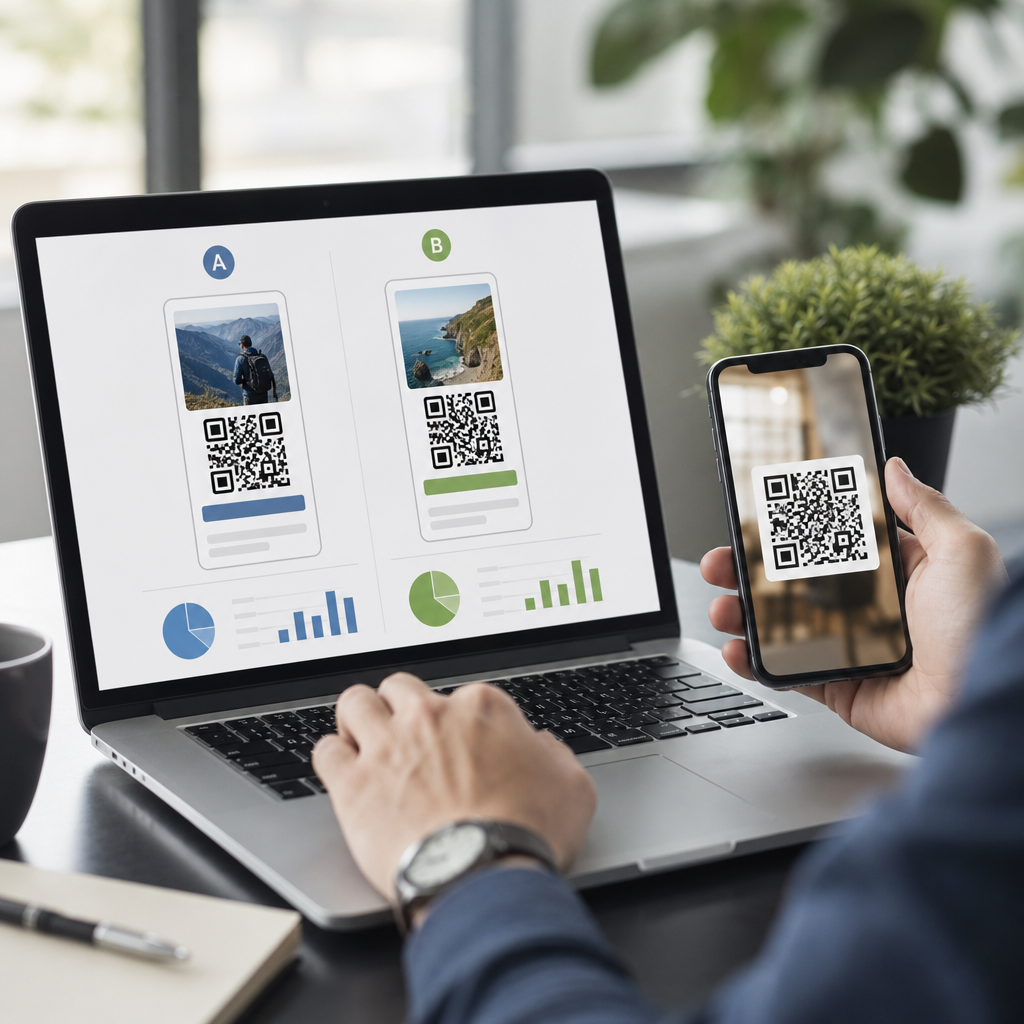

A/B testing QR codes for different audiences is one of the fastest ways to improve scan rates, conversion rates, and campaign efficiency without increasing media spend. In practice, A/B testing means showing two or more QR code variants to comparable audience segments, then measuring which version produces better results against a defined goal such as scans, form completions, app installs, coupon redemptions, or in-store visits. QR codes themselves are simply scannable matrix barcodes, but their performance depends on variables that marketers often underestimate: placement, size, call to action, destination page, design treatment, offer relevance, and the context in which a person encounters the code. I have used QR code experiments across retail packaging, direct mail, event signage, restaurant tables, and field sales materials, and the pattern is consistent: small creative changes can produce outsized performance differences when the audience is segmented correctly.
This matters because QR codes connect physical touchpoints to digital outcomes. They are measurable, adaptable, and increasingly familiar to consumers since smartphone cameras now scan them natively on iOS and Android. Yet many teams still deploy one static code everywhere and hope for the best. That approach hides critical insights. A commuter seeing a transit poster behaves differently from a conference attendee scanning a booth sign. A repeat customer opening a catalog responds differently from a first-time buyer scanning product packaging. A/B testing solves that problem by isolating audience-specific preferences and turning assumptions into evidence. When done well, it reveals not just which QR code gets scanned more often, but which combination of message, design, destination, and incentive produces the highest downstream value. For any brand building an advanced QR code strategy, this discipline is the hub that informs creative, analytics, lifecycle marketing, and channel planning.
What to Test in a QR Code Campaign
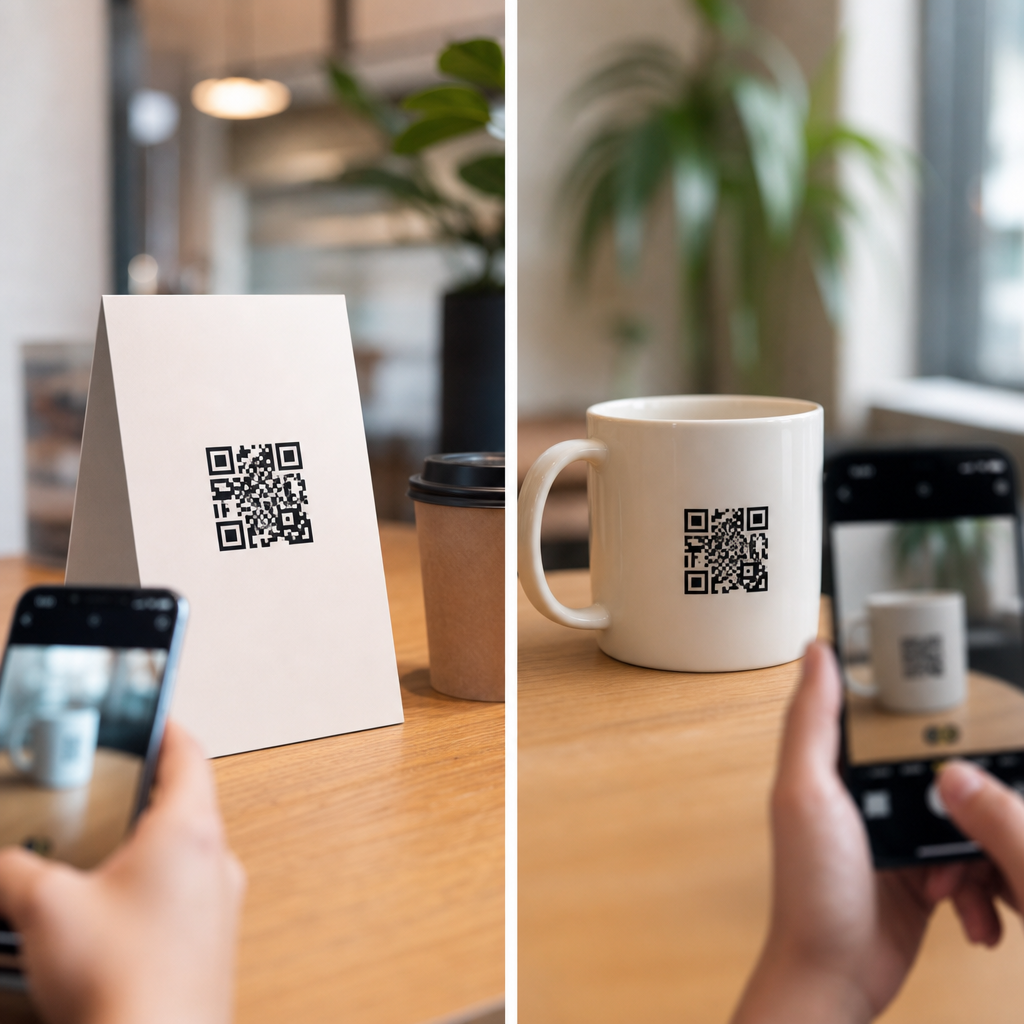
The most effective A/B testing QR codes programs start with a single variable and a clear success metric. Common test variables include the call to action printed near the code, the visual treatment of the code, the landing page content, the incentive offered, and the physical placement. For example, on product packaging I have seen “Scan for recipes” outperform “Learn more” because it promises a specific benefit. In direct mail, “Scan to claim your 15% offer” usually beats generic discovery language because it reduces ambiguity. Design variables matter too, but only within technical limits. Rounded modules, brand colors, and embedded logos can improve noticeability, yet excessive customization can reduce scannability, especially in low light or at awkward angles.
Audience testing should go beyond demographics. Segment by intent, context, and familiarity. A first-time audience may need trust cues such as “No app required” or “Takes 10 seconds,” while loyal customers may respond better to exclusive content or rewards. Event attendees often tolerate longer landing experiences because they are already engaged; outdoor audiences need speed and simplicity because they are distracted. Dynamic QR codes are particularly useful here because they allow teams to maintain one printed code while changing destinations, UTM parameters, and experiment rules in the platform. Tools from Bitly, QR Code Generator Pro, Beaconstac, Uniqode, and enterprise campaign managers make it possible to assign traffic by geography, device type, date range, or source asset, then measure scans and conversions in Google Analytics 4, Adobe Analytics, or a CRM.
How to Structure a Reliable QR Code A/B Test
A reliable test begins with a hypothesis stated in plain language. For instance: “Among new retail customers, a QR code with a savings-focused call to action will generate a higher coupon redemption rate than a code with an education-focused call to action.” Then define the primary metric before launch. If your business objective is sales, optimize for redeemed offers or revenue per scan, not just raw scans. If your objective is lead generation, optimize for completed forms or qualified leads. I recommend documenting six essentials before anything goes live: audience segment, variable being tested, control version, variant version, success metric, and test duration.
Randomization is the next requirement. Comparable audience groups must have equal exposure conditions, or the result will be biased. In email and SMS, that is straightforward because platforms can split recipients randomly. In print and physical environments, it is harder. You may need matched stores, alternating signage locations, or time-based rotation. For example, if one restaurant table tent is near the entrance and another is near the restroom, placement rather than message could explain the result. Sample size matters as well. While exact thresholds depend on baseline conversion rates, do not declare a winner after a handful of scans. Wait until the difference is large enough to be meaningful and stable. In most field programs, I look for both statistical confidence and operational significance: a result can be statistically valid yet too small to justify a production change.
| Test Element | Version A | Version B | Primary Metric | Best Use Case |
|---|---|---|---|---|
| Call to action | Scan to learn more | Scan to save 15% | Coupon redemption rate | Retail packaging, direct mail |
| Landing page | Long product page | Short mobile page | Form completion rate | Lead generation, events |
| Placement | Top-right poster corner | Center with caption | Scan-through rate | Out-of-home, signage |
| Offer type | Discount | Bonus content | Revenue per scan | Loyalty and retention campaigns |
Audience Segmentation Strategies That Produce Better Results
Different audiences scan for different reasons, so segmentation should reflect motivation. For acquisition campaigns, separate cold prospects from existing customers. Prospects usually need clearer value propositions, shorter forms, and stronger trust signals. Existing customers often respond to account-based experiences such as personalized recommendations, reorder flows, loyalty perks, or warranty registration. In B2B, segment by role rather than company size alone. A plant manager scanning a QR code on industrial equipment wants maintenance documentation or compliance details; a procurement lead may want pricing, SKUs, and supplier contacts. Sending both to the same generic page wastes intent.
Contextual segmentation is equally important. I have seen the same QR code creative perform completely differently in-store versus on shipped packaging because the moment of use changes the audience mindset. In-store shoppers are comparing options and want quick proof, reviews, or inventory details. Post-purchase customers are more receptive to setup videos, support articles, care instructions, and cross-sell offers. Geographic segmentation can reveal practical differences too. Urban audiences may scan faster from posters at close range, while suburban drivers are more likely to engage with codes on parked-vehicle signage or at point of sale. Device and network conditions matter as well; a landing page that is acceptable on Wi-Fi at a trade show may underperform on mobile data in a street campaign. The hub principle is simple: define the audience by what they need at the moment they scan.
Creative, Destination, and Measurement Best Practices
The best-performing QR code tests balance visibility with usability. A code should have adequate quiet zone, sufficient contrast, and a physical size matched to viewing distance; a common field rule is roughly one inch of code width for every ten inches of scanning distance, though environmental testing should override rules of thumb. Add a clear call to action next to the code because people do not scan without a reason. If a campaign uses branded QR codes, validate them across multiple devices, camera apps, lighting conditions, and print finishes. ISO/IEC 18004 governs QR code symbology, and following established encoding and error-correction practices reduces avoidable failures.
Destination experience is often where tests are won or lost. A person who scans from a phone expects a mobile-first page that loads quickly, states the value immediately, and minimizes friction. Compress images, keep forms short, and maintain message match between the printed prompt and the landing page headline. Measurement should connect the entire path from scan to business outcome. At minimum, use unique UTM parameters, event tracking in GA4, and server-side confirmation where possible for purchases or completed forms. If offline outcomes matter, tie scans to store-level redemption codes, POS data, CRM stages, or call tracking. Review not only scan rate but assisted conversions, bounce rate, scroll depth, form abandonment, and repeat scans. The strongest QR code optimization programs treat each test as part of a broader learning system, then roll winning patterns into future assets across packaging, print, signage, and sales enablement.
Common Mistakes and How to Avoid Them
The most common mistake is testing too many variables at once. If the code design, headline, offer, and landing page all change together, you will not know what caused the lift. Another frequent error is optimizing for scans when the real objective is revenue or qualified leads. High scan volume can hide poor traffic quality. I have also seen teams overlook environmental factors such as glare on laminated signage, poor placement near folds in direct mail, or low contrast on dark packaging. These are not minor production issues; they can invalidate the test.
Another mistake is ignoring operational reality. If variant B wins because it promises a discount, can the margin support rolling that offer out broadly? If a rich mobile experience wins, can your content team maintain it across markets and languages? Good QR code testing requires practical governance, not just analytics. Maintain a testing log, archive creative, document hypotheses, and set a standard naming convention for campaigns, assets, and UTM parameters. Finally, do not stop at one win. Audience behavior shifts with seasonality, channel fatigue, and market conditions. Re-test high-impact assumptions regularly, especially call to action, incentive structure, and landing page length.
A/B testing QR codes for different audiences works because it replaces guesswork with measured learning at the exact point where physical and digital marketing meet. The key takeaways are straightforward: test one meaningful variable at a time, segment audiences by intent and context, use dynamic infrastructure and analytics to capture downstream outcomes, and judge winners by business value rather than scans alone. When teams follow this discipline, QR codes stop being decorative add-ons and become reliable conversion tools that improve packaging, direct mail, retail signage, events, and customer support journeys.
As the hub for this topic within advanced QR code strategies, this page should guide every related effort: QR code design testing, landing page optimization, offer testing, print placement experiments, and channel-specific measurement. Start with one campaign that already has enough traffic to learn quickly, write a clear hypothesis, instrument the full conversion path, and run the test long enough to trust the result. Then document what you learned and apply it to the next audience segment. That simple process is how better QR code performance compounds over time.
Frequently Asked Questions
What does A/B testing QR codes for different audiences actually mean?
A/B testing QR codes for different audiences means creating two or more versions of a QR-based campaign and showing each version to a comparable but distinct audience segment to see which one performs better. The “version” being tested can include the QR code placement, surrounding call-to-action, offer, destination page, design treatment, incentive, or even the context in which the code appears, such as direct mail, packaging, posters, email, or in-store signage. The QR code itself is simply the access point; what you are really testing is how different people respond to different messages, experiences, and motivations when they scan.
For example, one audience segment may respond best to a value-driven message like “Scan for 20% off,” while another may engage more with “Scan to see how it works” or “Scan to book a demo.” In both cases, the goal is to isolate meaningful differences in user behavior and connect them to the audience being targeted. This approach helps marketers move beyond assumptions and use real performance data to determine which creative and offer combinations are most effective for specific customer groups.
When done correctly, A/B testing QR codes can improve scan rates, landing-page engagement, lead quality, app installs, redemption rates, and overall return on campaign spend. It is especially useful because small changes in messaging or placement can produce large differences in results. Instead of increasing media spend, brands can refine what already exists and get better performance from the same channels.
Which elements of a QR code campaign should be tested for different audience segments?
The best elements to test are the ones most likely to influence whether someone notices the QR code, scans it, and completes the next step. In many campaigns, the highest-impact variables include the call-to-action next to the code, the offer or incentive, the landing page content, the visual presentation, and the physical or digital placement of the code. For one audience, a discount may be the strongest motivator. For another, convenience, exclusivity, speed, educational content, or social proof may lead to better outcomes.
You can also test audience-specific factors such as language, tone, imagery, product emphasis, and device experience. A younger mobile-first audience may respond better to a fast, app-like landing page with minimal text and a stronger visual hook. A professional B2B audience may prefer a more information-rich experience with clear benefits, trust signals, and a short lead form. If your campaign spans locations or channels, test where the QR code appears and what context surrounds it. A code on product packaging may require a different message than a code on a poster in a transit station or a print ad in a magazine.
One important best practice is to test only one major variable at a time when possible. If you change the offer, design, placement, and landing page all at once, it becomes much harder to know which factor caused the difference in performance. Keep the test structured, define the audience segment clearly, and connect every variation to a measurable conversion goal. That discipline is what turns a simple QR campaign into a reliable optimization process.
How do you measure whether one QR code variation is outperforming another?
Success should be measured against a specific business objective, not just raw scan count. Scans are important because they show initial engagement, but they are only the first step. A QR code variation that generates more scans is not necessarily better if those users bounce immediately or fail to complete the desired action. That is why strong A/B testing requires tracking the full funnel: impressions if available, scan rate, landing-page visits, time on page, click-through rate, form submissions, app downloads, purchases, coupon redemptions, store visits, or any other meaningful conversion event.
To compare variants accurately, use unique tracking links, campaign parameters, or dynamic QR codes that allow each version to be tied to a specific audience segment and creative execution. This makes it possible to separate performance by location, placement, time period, device type, and downstream conversion behavior. In practical terms, you want to know not just who scanned, but what happened next and whether one audience-path combination created more value than another.
It is also important to look at quality metrics alongside volume metrics. For example, if Variant A drives more scans but Variant B leads to a higher percentage of completed purchases or qualified leads, Variant B may be the true winner. Review conversion rate, cost per acquisition, average order value, and post-scan behavior to get the full picture. The most useful test result is not simply “this code was scanned more,” but “this version generated more of the outcomes the business actually cares about.”
How long should a QR code A/B test run, and how do you avoid misleading results?
A QR code A/B test should run long enough to gather a meaningful sample size from each audience segment and account for normal fluctuations in behavior. The right duration depends on traffic volume, campaign channel, and conversion frequency. High-traffic campaigns may produce usable insights in days, while lower-volume print or in-store campaigns may need several weeks. The key is to avoid ending the test too early based on a small burst of activity that may not reflect sustained performance.
To reduce misleading results, keep testing conditions as consistent as possible. Audience segments should be comparable, the timing should overlap when feasible, and external factors such as seasonality, store traffic, daypart, promotional calendars, or channel differences should be considered. If one QR code version appears on premium shelf placement and another appears in a less visible area, the placement may be driving the result more than the message or offer. Good testing requires controlling as many outside variables as possible so the comparison remains fair.
Another common mistake is changing the campaign in the middle of the test. If you update the landing page, modify the offer, or shift distribution before enough data is collected, the results become harder to trust. Document your hypothesis in advance, decide what metric determines the winner, and wait until the test reaches a reasonable confidence level. Reliable optimization comes from consistency, patience, and clean measurement, not from reacting to every short-term spike.
What are the most common mistakes brands make when A/B testing QR codes for different audiences?
One of the biggest mistakes is treating the QR code as the only thing being tested. In reality, user response is shaped by the full experience: the context where the code appears, the clarity of the call-to-action, the relevance of the offer, the speed of the landing page, and the ease of completing the desired action. If the post-scan experience is weak, even a well-placed QR code will underperform. Brands often focus on scan activity while overlooking what happens after the scan, which can lead to the wrong conclusions.
Another common issue is poor audience segmentation. If the groups are too broad, overlapping, or inconsistent, the results can become noisy and difficult to interpret. Effective A/B testing works best when audience segments are clearly defined by characteristics such as age, purchase intent, customer status, geography, behavior, or channel source. Without that structure, marketers may think they are learning what a certain audience prefers when they are actually measuring random variation.
Brands also make mistakes by testing too many elements at once, using unclear goals, or failing to track conversions properly. A campaign should have a primary success metric, whether that is scans, form completions, installs, redemptions, or sales. From there, every variation should be built to support that goal. Finally, many teams stop after finding one winner. The strongest programs treat A/B testing as an ongoing process of refinement. Once one audience insight is confirmed, the next test can improve message fit, placement, incentive structure, or landing-page performance even further.