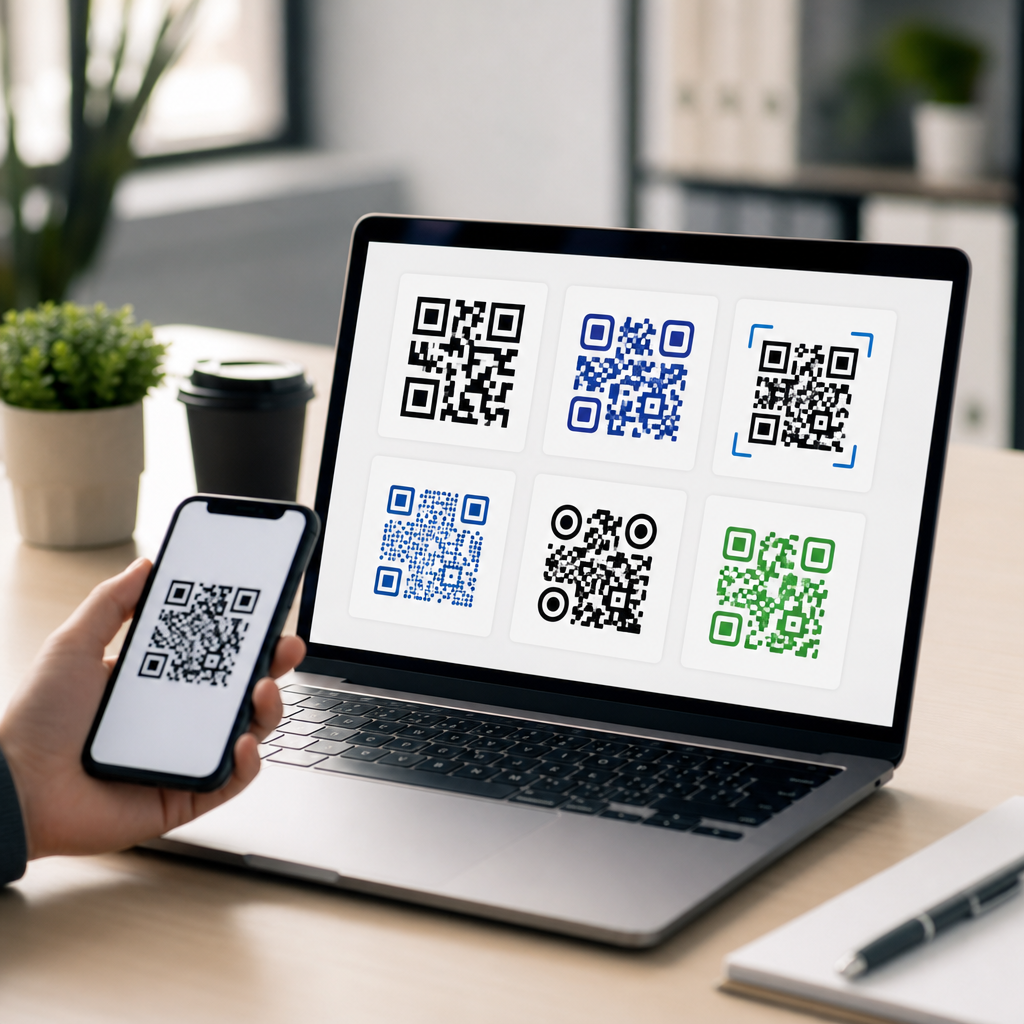
Static QR codes are the simplest way to turn a web address, text string, phone number, or Wi-Fi credential into a scannable square, but choosing them at the right time matters because the decision affects cost, flexibility, analytics, and long-term maintenance. In practical terms, a static QR code stores the final destination directly inside the code pattern itself. A dynamic QR code, by contrast, usually stores a short redirect URL that points to content managed on a server, which means the destination can be changed later without reprinting the code. That single architectural difference explains nearly every tradeoff between static vs dynamic QR codes.
I have used both types in retail packaging, trade show signage, restaurant menus, direct mail, equipment labels, and internal operations workflows. The mistakes are predictable: teams choose dynamic codes for one-time uses that never need editing, then pay recurring platform fees forever; or they choose static codes for campaigns that inevitably change, then discover thousands of printed assets have become obsolete. If you are creating mobile QR codes, the core question is not which type is better in general. It is which type fits the lifespan, ownership model, tracking needs, and risk profile of the information behind the scan.
This article serves as the hub for the static vs dynamic QR codes decision. It explains when static QR codes are the right choice, when dynamic codes are worth the extra complexity, and how to decide before you print labels, posters, packaging, or business materials. For most organizations, static QR codes are best when the underlying content is permanent, public, and unlikely to need edits. Dynamic QR codes are better when campaigns change, performance must be measured, or different destinations may be served over time. Understanding that distinction saves money, reduces operational friction, and prevents broken customer experiences.
What Is a Static QR Code and How Does It Work?
A static QR code encodes the destination data directly into the symbol. If you generate a code for https://example.com/menu, that exact URL is mathematically represented in the modules of the QR code. Any scanner app or phone camera reads the pattern and opens that destination immediately. There is no management layer in the middle unless the destination URL itself redirects. Because the code contains fixed data, it cannot be edited after creation. If the URL changes from /menu to /summer-menu, the original static QR code will continue pointing to the old address forever.
This fixed structure creates two important advantages. First, static QR codes are usually inexpensive or free to generate with tools such as QR Code Monkey, Canva, Adobe Express, Bitly’s generator, or browser-based libraries like qrcode.js. Second, they remain functional without dependence on a paid QR management platform. As long as the encoded destination remains live, the code works. That makes static QR codes attractive for durable, low-maintenance applications such as permanent product documentation pages, contact cards, app store links that do not change, or Wi-Fi access details for a stable network.
Static codes also have limits that are often misunderstood. They generally do not provide native scan analytics because there is no redirect server recording the event. They cannot be paused, geotargeted, A/B tested, or updated after printing. They also become risky when the destination is long, because longer data density can create a more complex pattern that is harder to scan at small sizes. In practice, I recommend static QR codes only when the encoded content can stay accurate for the full life of the printed asset.
When Should You Use Static QR Codes?
You should use static QR codes when the destination is stable, the content does not require post-print edits, and scan-level analytics are not essential. The clearest examples are evergreen pages and fixed utility actions. A manufacturer can place a static QR code on a machine label linking to a permanent safety manual page. A realtor can put one on an office door for the agency homepage. A café can encode its guest Wi-Fi SSID and password if they rarely change. A freelancer can add a static code to a business card for a portfolio URL they control long term.
Static codes are also useful when ownership and portability matter. If you do not want to rely on a third-party subscription to keep codes operational, static is safer. I have seen small businesses print dynamic QR codes from trial accounts, only to find the service watermarking, pausing, or disabling codes after the plan expired. A static QR code avoids that platform dependency. It is especially sensible for local flyers, classroom materials, church bulletins, instruction sheets, or internal asset tags where the value comes from simple access, not campaign reporting.
Another strong use case is high-volume printing with predictable destinations. Packaging runs, serialized inserts, and long-life signage can become expensive to redo. If the linked content is a stable root page rather than a frequently changing subpage, static codes can be highly efficient. For example, linking to a product support hub rather than a temporary promotion gives the code a longer useful life. The rule I use is simple: if you would confidently engrave the URL on metal, a static QR code is probably appropriate.
Static vs Dynamic QR Codes: Key Differences That Affect Real Projects
The difference between static vs dynamic QR codes becomes practical when you map it to business requirements. Dynamic codes insert a controllable layer between the scan and the final destination. That allows edits, redirects, analytics, campaign scheduling, and in some systems conditional routing by device, time, or geography. Those features are valuable, but they come with platform dependence, privacy considerations, and often recurring fees. Static codes remove that management layer and reduce complexity, but they shift the burden to careful planning because mistakes cannot be corrected after print.
| Factor | Static QR Codes | Dynamic QR Codes |
|---|---|---|
| Edit destination after printing | No | Yes |
| Native scan analytics | Usually no | Usually yes |
| Ongoing platform dependency | Low | High |
| Best for | Evergreen content | Campaigns and changing content |
| Risk if URL changes | Code becomes outdated | Destination can be updated |
| Typical cost | One-time or free | Subscription or service fee |
Consider a restaurant menu. During the pandemic, many restaurants adopted QR codes quickly. If the menu changed weekly, dynamic was the right choice because the same table tent could point to updated items over time. But for a permanent code linking to the restaurant’s homepage or reservation page, static often worked better and cost less. In retail, a dynamic code is ideal for seasonal promotions or attribution tracking across stores, while a static code fits permanent care instructions or warranty registration pages that live at stable URLs.
The same logic applies to compliance and documentation. Healthcare, manufacturing, and facilities teams often need labels that last years. When the linked resource is a controlled document page with a durable URL structure, static codes are dependable. However, if document versions are likely to move between systems, dynamic codes provide insurance. Choosing correctly means thinking not just about today’s content, but about mergers, CMS migrations, rebrands, and the people who will maintain the destination two years from now.
How to Decide Before You Print
Before choosing a QR code type, answer five operational questions. Will the destination ever change? Do you need analytics beyond page views in Google Analytics 4 or Adobe Analytics? How long will the printed asset remain in use? Who owns the domain and the QR platform? What happens if the vendor account lapses? These questions expose whether your priority is permanence or flexibility. In most audits I perform, teams underestimate content drift. URLs change during redesigns, campaign pages expire, and PDFs get replaced. That is why short-lived marketing assets often deserve dynamic codes.
If you still prefer static, reduce risk by encoding durable URLs only. Use a canonical page on a domain you control, not a temporary landing page, social profile, or file path likely to move. Keep the URL short to improve code density and scan reliability. Test across iPhone and Android native camera apps, low-light conditions, and different print sizes. Follow ISO/IEC 18004 guidance indirectly through vendor tools that respect quiet zone, contrast, and error correction settings. In production, I avoid placing dense static codes below about 0.8 inches unless testing proves they scan consistently at expected distance.
Also think about measurement alternatives. A static QR code can still support useful reporting if the destination URL includes UTM parameters and lands on a page measured in your analytics stack. You will not get the same redirect-level dashboard as a dynamic platform, but you can still see sessions, source tagging, and downstream conversions. That approach works well for brochures, posters, and packaging where the destination is fixed but marketers want basic performance visibility without committing to a managed QR service.
Best Practices and Common Mistakes
The best static QR code strategy is conservative. Link to stable destinations, maintain the domain, and avoid embedding information that may become sensitive or inaccurate. For contact details, vCard data inside a static code seems convenient, but a profile page URL is often safer because phone numbers, titles, and addresses change. For PDFs, use caution. A direct PDF link can work, but a stable landing page that hosts the current file gives you more control while still letting the QR code remain static. This small architectural choice extends lifespan significantly.
Common mistakes include using URL shorteners you do not control, removing old landing pages during a site redesign, printing low-contrast branded codes that sacrifice readability, and shrinking the code too much on business cards or labels. Another frequent issue is linking to app-specific destinations without fallback behavior. A static code to an app deep link may fail for users who do not have the app installed. In those cases, a dynamic link service or a well-built mobile landing page is usually the better experience. Design should never outrank scan reliability.
For teams building a broader mobile QR strategy, the simplest rule is this: use static QR codes for permanent, public, low-change destinations, and use dynamic QR codes for anything time-bound, measurable, or likely to evolve. That decision protects budgets and prevents reprint waste. As you build out your creating mobile QR codes program, standardize naming, testing, destination governance, and analytics conventions across both types. Then choose intentionally, asset by asset. Start by auditing every planned QR destination and marking it permanent or changeable before generating a single code.
Frequently Asked Questions
When is a static QR code the right choice?
A static QR code is the right choice when the information you are sharing is unlikely to change over time. Because a static code encodes the final destination directly into the pattern, it works best for fixed content such as a permanent website URL, a phone number, a plain text message, an email address, or Wi-Fi login details that are not expected to be updated. This makes static QR codes especially useful for simple, long-term applications like product packaging, business cards, storefront signage, instruction manuals, event handouts, and printed materials that may stay in circulation for months or even years.
They are also a smart option when you want a low-cost, low-maintenance solution. Once created, a static QR code does not depend on a third-party dashboard, redirect service, or subscription platform to keep working. As long as the destination itself remains active and accurate, the code can continue to function indefinitely. If your priority is simplicity, permanence, and minimal overhead, static QR codes are often the most efficient answer.
What are the main advantages of using a static QR code instead of a dynamic QR code?
The biggest advantage of a static QR code is simplicity. There is no redirect layer, no need to manage links through an online platform, and no ongoing dependency on a provider to edit or maintain the destination. The code contains the data itself, which means it can be generated once and used immediately. For many straightforward use cases, that is exactly what makes static QR codes so practical.
Cost is another major benefit. Static QR codes are often free or available at a very low one-time cost, while dynamic QR codes are more likely to come with subscription fees because they rely on server-side management and tracking features. If you do not need scan analytics, link editing, scheduled campaigns, or advanced controls, paying for dynamic functionality may not make business sense.
Static QR codes can also be more durable from an operational standpoint. Since they do not rely on a redirect service, there is one less technical dependency that could fail. This can be valuable in situations where reliability matters more than flexibility. In short, static QR codes are ideal when your content is stable, your budget is limited, and your goal is to provide a direct, no-frills scanning experience.
When should you avoid using a static QR code?
You should avoid using a static QR code whenever the destination might need to change after printing or distribution. This is the most important limitation to understand. Because the final data is embedded directly into the code, you cannot update the link, revise the text, replace a phone number, or switch users to a new landing page without creating an entirely new QR code. If the old code has already been printed on packaging, posters, menus, brochures, labels, or signs, replacing it can become expensive and inconvenient.
Static QR codes are also a poor fit when you need performance insights. They generally do not provide built-in analytics such as scan counts, time of scan, device type, or geographic trends. If you are running a marketing campaign, testing multiple offers, measuring offline-to-online conversions, or optimizing audience engagement, a dynamic QR code is usually the better option because it supports tracking and post-launch adjustments.
Another reason to avoid static codes is when the linked content is tied to short-term campaigns, seasonal promotions, temporary PDFs, or inventory that may change. In those situations, flexibility matters. Dynamic QR codes give you room to adapt without reprinting materials, while static QR codes lock you into the original destination. If there is any realistic chance that the information will evolve, choosing dynamic from the start is usually the safer long-term decision.
Are static QR codes good for printed materials and long-term use?
Yes, static QR codes are often excellent for printed materials and long-term use, provided the encoded information is truly permanent. In fact, this is one of the strongest use cases for them. When you place a QR code on items that are costly or difficult to update—such as packaging, signage, product inserts, business cards, trade show displays, or manuals—you want confidence that the code will keep working without requiring account access or ongoing management. A static code can do that very well if the destination is stable.
That said, long-term success depends on more than the QR code type alone. The destination itself must remain available. For example, if a static QR code points to a webpage, that page URL should be permanent and not part of a site section likely to be reorganized later. Broken links are one of the most common ways QR campaigns fail, even when the code itself still scans perfectly. For this reason, static QR codes are best paired with evergreen URLs and content that is intended to stay live for the foreseeable future.
It is also worth considering print quality and code size. A static QR code should be tested before mass production to ensure it scans reliably across devices and viewing conditions. When these basics are handled properly, static QR codes can be a dependable, long-lasting tool for connecting physical materials to digital information.
How do you decide between a static and dynamic QR code for your specific use case?
The easiest way to decide is to ask four practical questions: Will the destination ever need to change? Do you need analytics? Are you willing to rely on a third-party platform? And how permanent is the printed material? If the answer is that the destination is fixed, analytics are unnecessary, platform dependence is undesirable, and the content is meant to stay the same, a static QR code is usually the right fit.
For example, if you are sharing a permanent company homepage, a customer service phone number, a standard email address, or Wi-Fi credentials for a stable office network, static makes sense. These are direct, simple use cases where flexibility offers little added value. On the other hand, if you are linking to a campaign page, restaurant menu, downloadable file, event registration page, or promotional offer that may need updates later, dynamic is usually the better investment.
Think of static QR codes as a commitment to fixed information. They are efficient, affordable, and reliable when used in the right context. Dynamic QR codes, by comparison, are better for adaptability and measurement. Choosing correctly comes down to matching the code type to the lifespan, purpose, and business importance of the content behind it. If change is unlikely, static is often the smartest and most economical option. If change is likely, flexibility usually outweighs the upfront simplicity.