QR codes for dynamic content delivery have moved far beyond simple link sharing, becoming a practical system for personalization, measurement, and rapid content updates across marketing, support, retail, events, and operations. In this context, dynamic content delivery means a QR code points to a managed destination that can change without reprinting the code itself, while QR code personalization means tailoring what a person sees based on attributes such as location, device type, language, campaign source, purchase history, or time of scan. I have implemented these systems for product packaging, trade show lead capture, restaurant menus, and post-purchase onboarding, and the difference between static and dynamic execution is immediate: static codes freeze content at the moment of printing, but dynamic codes preserve flexibility after distribution. That flexibility matters because physical assets are expensive to replace, customer contexts change quickly, and modern campaigns need measurable outcomes rather than assumptions. A printed flyer may circulate for months, a product box may remain in inventory for a year, and an event badge may be scanned by different audiences on different days. If the destination cannot adapt, the experience degrades. If it can adapt, one code becomes a living access point for segmented experiences, analytics, testing, and lifecycle messaging. This article explains how QR code personalization works, where it delivers the most value, what infrastructure supports it, and how to govern it so campaigns stay useful, accurate, and trustworthy at scale.
How QR Code Personalization Works in Practice
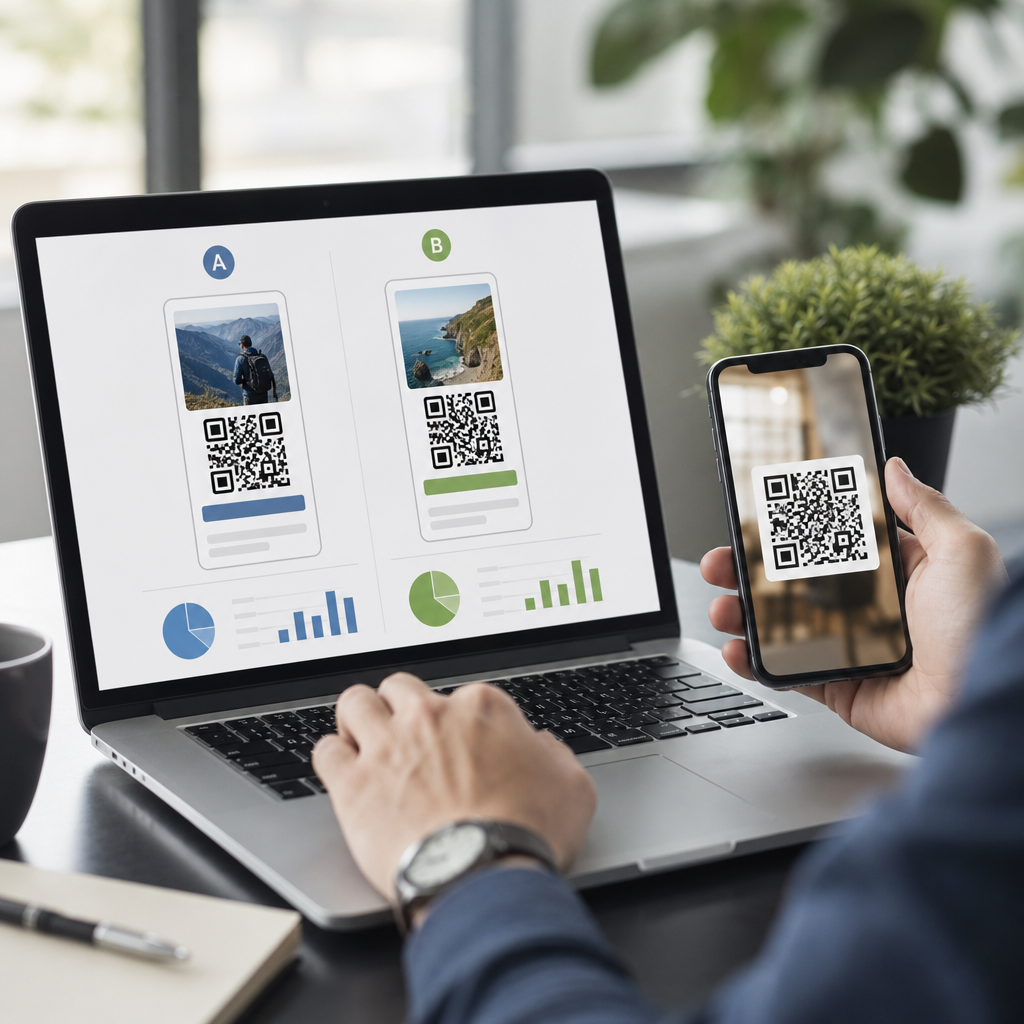
Personalized QR delivery starts with a redirect layer rather than a hardcoded final URL. The code usually resolves to a short managed link hosted by a QR platform, customer data platform, campaign tool, or branded redirect domain. When someone scans, the system evaluates rules and sends that user to the most relevant experience. Common rules include geolocation by IP, device detection, browser language, UTM parameters, time windows, inventory status, and known user identifiers captured through prior consent. For example, a cosmetics brand can place one QR code on global packaging and route French users to localized instructions, U.S. users to compliance details, and returning customers to replenishment offers. A software company can print one code on onboarding cards and send mobile users to app store instructions while desktop users land on account activation guidance. In my experience, the strongest programs keep the first interaction lightweight, then progressively personalize after consent or login. That approach reduces privacy risk and still creates meaningful relevance. Dynamic QR systems also support A/B testing, so marketers can compare landing page layouts, video versus text onboarding, or discount framing without changing the printed asset. The result is not personalization for its own sake; it is reduced friction, higher completion rates, and a measurable path from scan to action.
Core Use Cases Across Marketing, Service, and Commerce
The most effective personalized QR campaigns solve a specific operational or customer problem. In retail packaging, brands use dynamic codes to deliver language-specific instructions, warranty registration, refill reminders, and region-specific promotions. Consumer packaged goods teams often connect scans to recipe content, sustainability disclosures, loyalty enrollment, or authenticated product education. In hospitality, hotels place room cards or in-room placards with codes that open welcome pages customized by property, stay dates, membership tier, or local language. Restaurants use them for menus that vary by time of day, stock availability, and guest segment. In events, one code on signage can direct exhibitors, attendees, sponsors, or media to different schedules, maps, or lead forms based on campaign parameters or badge-linked identities. B2B sales teams add QR codes to direct mail pieces, brochures, and booth graphics, then personalize follow-up pages by account, industry, or stage in the buying journey. In field service, manufacturers place codes on equipment that route technicians to model-specific documentation, maintenance logs, or troubleshooting trees. Healthcare organizations use them carefully for patient education, vaccine information sheets, and multilingual instructions, typically avoiding any direct exposure of protected health information. The common thread is clear: a scan should shorten the path to the next useful action. If personalization does not improve clarity, speed, or conversion, the campaign design needs revision before launch.
Data Inputs, Segmentation Rules, and Delivery Logic
Personalization depends on the quality of the data and rules behind the redirect. Useful segmentation often starts with low-risk context signals: language headers, approximate location, device type, referral source, and scan time. More advanced programs layer in authenticated CRM records, loyalty IDs, marketing automation segments, and product ownership data. The safest pattern is to separate identification from destination logic. The QR code calls a redirect service, the redirect service checks allowed inputs, and only then does it send the user to a destination that matches policy and consent settings. Teams commonly connect QR workflows with Google Analytics 4, Adobe Analytics, HubSpot, Salesforce Marketing Cloud, Braze, Segment, or a headless CMS. Rule engines can be simple if/then conditions or more advanced decisioning models.
| Input | Personalized outcome | Example |
|---|---|---|
| Browser language | Localized landing page | A Spanish-speaking shopper sees setup instructions in Spanish |
| Device type | Platform-specific destination | iPhone users open the App Store, desktop users open a web tutorial |
| Time of day | Timed content variation | A café menu switches from breakfast to lunch at 11 a.m. |
| Campaign parameter | Audience-specific offer | Trade show visitors receive a demo booking page, partners get a portal link |
| Known customer status | Lifecycle messaging | Existing subscribers see account support, new prospects see an introductory offer |
Good governance requires fallback logic for unknown users, VPN traffic, disabled cookies, and expired campaigns. I recommend documenting every rule, source system, and expiration date so no one inherits a redirect maze six months later.
Designing the User Experience for Higher Scan-to-Action Rates
A personalized QR experience succeeds or fails within seconds. The code must scan easily, the call to action must set a clear expectation, and the destination must load fast on mobile. ISO/IEC 18004 defines the QR symbology standard, but practical performance depends on size, contrast, quiet zone, error correction level, and print quality. In packaging tests, I have seen beautifully branded codes underperform because designers crowded the quiet zone or reversed colors on reflective material. A strong baseline is dark modules on a light background, sufficient margin, and a tested minimum size based on scan distance. Beyond readability, the instruction beside the code matters. “Scan for setup in your language” performs better than a generic “Scan me” because it communicates value. Once the user lands, personalization should be obvious but not invasive. Display the right language, product, or offer immediately. Keep forms short, especially on mobile. If deeper customization requires data collection, explain why it is requested and what benefit the user receives. Performance is nonnegotiable; every additional redirect, script, or oversized media asset reduces completion. Compress images, lazy-load video, and host content on reliable infrastructure. Finally, preserve continuity. The message on the package, poster, or insert should match the first screen after the scan so users feel confident they reached the intended destination rather than a suspicious or broken page.
Measurement, Testing, and Optimization Frameworks
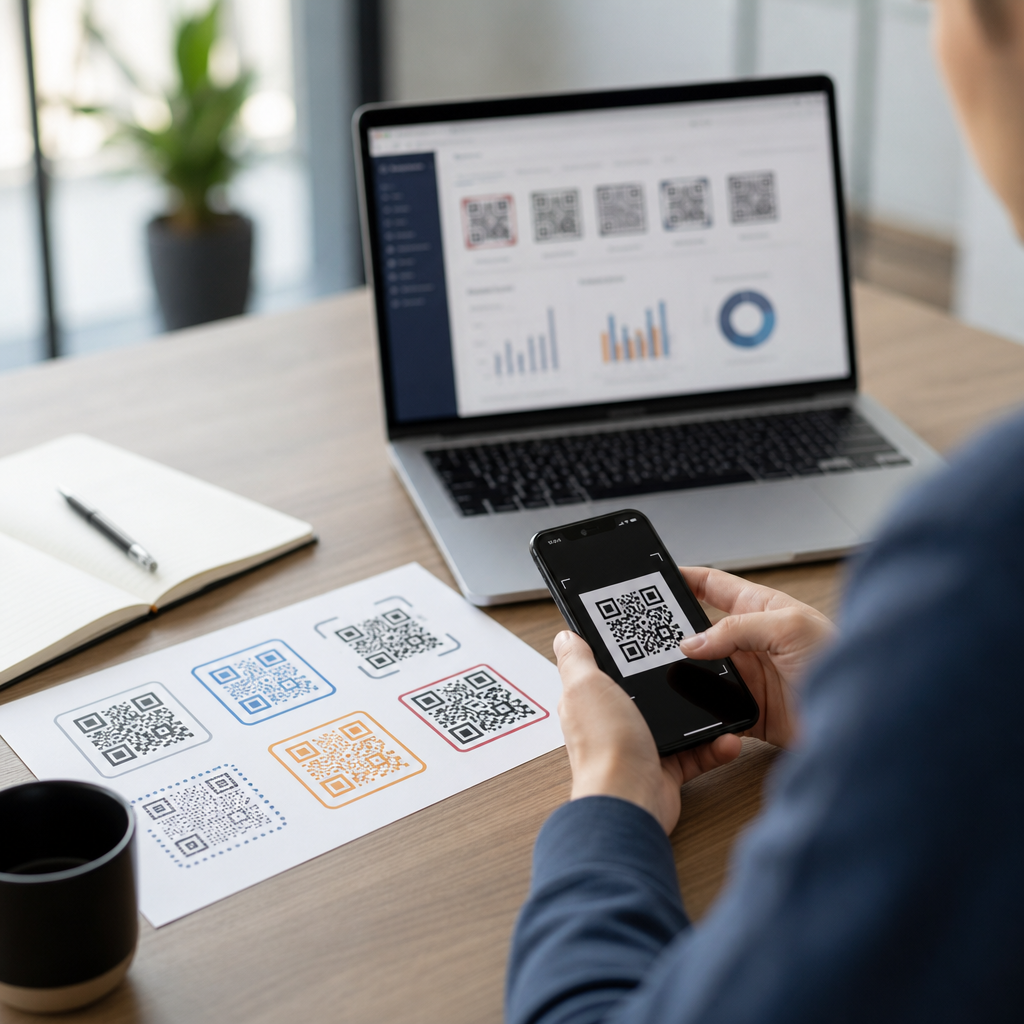
Dynamic QR programs are valuable because they can be measured rigorously. At minimum, track scan volume, unique scanners, destination views, bounce rate, completion rate, assisted conversions, and downstream revenue or retention metrics. Distinguish scans from actual landing page sessions because camera previews, bot activity, and accidental opens can distort reporting. In retail and out-of-home campaigns, I often compare scans by placement, print batch, geography, and time window to identify context effects. For example, codes on product neck hangers may outperform those on back labels because they are more visible before purchase. At events, booth counter cards may drive fewer scans than session slides but produce higher meeting-booking rates because the audience intent differs. QR platforms such as Bitly, Flowcode, QR Code Generator PRO, and Beaconstac provide redirect analytics, but serious programs push events into a central analytics stack for attribution and dashboarding. Testing should cover both routing logic and content. Compare generic versus personalized landing pages, immediate video versus quick bullets, incentive copy versus instructional copy, and single-step versus multi-step forms. Use holdout groups where possible. If personalization increases scans but not conversions, the issue may be novelty rather than relevance. If conversions improve for one segment and decline for another, refine the rules instead of declaring the whole strategy a success. The best teams review QR performance like any other digital channel: weekly during active campaigns, monthly for evergreen assets, and after every major content or routing change.
Privacy, Security, and Operational Risks to Manage
Personalized QR delivery introduces responsibilities that static codes often avoid. Because the redirect can change, it must be secured against unauthorized edits, expired domains, and malicious takeover. Use role-based access, multi-factor authentication, branded domains, and change logs. Review redirect destinations routinely to prevent link rot, especially when campaigns depend on CMS pages that may be unpublished later. Privacy deserves equal attention. Location, device, and campaign data may be appropriate for routing, but personal data should only be used with a lawful basis and clear disclosure. In regulated environments, avoid encoding sensitive data directly into the QR symbol; use opaque identifiers or session tokens instead. Short retention windows, consent management, and documented data flows reduce risk. Also plan for operational failure. What happens if the personalization service is down, if the app deep link breaks, or if a region-specific page has not been translated yet? A robust fallback page is essential. I also advise content owners to assign review dates to every dynamic code attached to long-lived physical materials. Packaging, signage, manuals, and equipment labels can remain in circulation years after the original campaign team has moved on.
QR code personalization works best when it serves the user first and the campaign second. Dynamic content delivery lets one printed code support localized guidance, tailored offers, lifecycle messaging, and measurable optimization without reprinting physical assets. The core requirements are straightforward: a managed redirect layer, sensible segmentation rules, fast mobile experiences, reliable analytics, and disciplined governance. When those pieces are in place, personalization becomes practical rather than gimmicky. Teams can improve onboarding, reduce support friction, increase conversions, and keep long-lived materials accurate over time. As the hub for this subtopic, this page should guide your deeper work on redirect rules, localization, analytics, consent, packaging strategy, and lifecycle QR journeys. Start by auditing every existing QR code you control, identifying which ones need dynamic routing, and mapping the audience signals that would make each scan more useful.
Frequently Asked Questions
What does dynamic content delivery with QR codes actually mean?
Dynamic content delivery with QR codes means the code itself stays the same, but the destination behind it can be updated at any time through a management platform. Instead of encoding a fixed URL that always leads to one unchangeable page, a dynamic QR code typically points to a short redirect or controlled endpoint. From there, the system can send the scanner to different content based on current business needs, campaign rules, or user context. This makes QR codes far more useful than simple one-time link shortcuts.
In practice, this allows organizations to change landing pages, update promotions, swap out product information, fix broken links, localize messaging, or redirect users to new experiences without reprinting packaging, posters, manuals, badges, menus, or signage. For example, a retailer can place one QR code on in-store displays and later update the destination from a spring sale page to a summer collection page. A manufacturer can use the same printed code on equipment labels while changing the linked support documentation as procedures evolve.
Dynamic delivery also supports rules-based routing. Someone scanning in one country may see a localized page in the correct language, while someone using a mobile device could be sent to an app-optimized version of the experience. This is where dynamic content delivery becomes especially powerful: the QR code is not just a static doorway, but a flexible control point for delivering the right content at the right moment.
How does QR code personalization work for different users or situations?
QR code personalization works by using scan context and predefined rules to tailor what each person sees after scanning. The personalization layer can evaluate attributes such as location, device type, operating system, browser language, time of day, campaign source, scan frequency, or even audience segment if the experience is connected to a CRM, marketing automation platform, or authenticated customer journey. The result is that one printed QR code can support many versions of content without creating confusion or requiring multiple codes in the same physical space.
For example, a global brand can use one QR code on packaging and automatically route users to country-specific product pages, language-specific instructions, or regionally compliant disclosures. At an event, organizers can use the same code on attendee materials while directing VIP guests, sponsors, and general attendees to different schedules or offers based on the campaign path used to reach them. In support and service environments, a QR code on a machine can send technicians to advanced documentation while end users are shown quick-start instructions or troubleshooting basics.
Good personalization is relevant without feeling invasive. It should simplify the experience, reduce friction, and make content more useful, not overwhelm users with unnecessary complexity. The strongest implementations balance convenience, privacy, and transparency by using data that improves the scan journey while avoiding overcollection. When done well, personalized QR code experiences can increase engagement, boost conversions, and make physical touchpoints feel as responsive as digital channels.
What are the main business benefits of using dynamic QR codes instead of static ones?
The biggest advantage of dynamic QR codes is flexibility. With a static QR code, the destination is fixed at the moment the code is created, so any change usually requires generating and reprinting a new code. Dynamic QR codes eliminate that problem by allowing teams to update the destination behind the code whenever needed. This saves time, reduces print waste, lowers operational costs, and protects long-term assets such as packaging, signage, direct mail, product inserts, and field labels.
Another major benefit is measurement. Dynamic QR code platforms often include scan analytics such as total scans, unique scans, timestamp trends, approximate location, device information, and campaign performance. That data gives marketers, operations teams, and support leaders a clearer picture of what is working. Instead of treating QR codes as offline endpoints, organizations can evaluate them as measurable touchpoints within a broader customer or user journey. This is especially valuable in omnichannel campaigns where physical materials need to be tied back to digital outcomes.
Dynamic codes also improve agility. Businesses can respond quickly to inventory changes, seasonal promotions, service alerts, regulatory updates, or content corrections without touching the printed material. In retail, that might mean changing a product page based on stock availability. In healthcare or manufacturing, it might mean updating instructions to reflect the latest approved guidance. In events, it could mean redirecting attendees to revised agendas or emergency notices in real time. The combination of adaptability, analytics, and lifecycle efficiency makes dynamic QR codes a strong choice for organizations that need both control and scalability.
Where are QR codes for dynamic content delivery most effective?
Dynamic QR codes are most effective anywhere physical objects, printed materials, or real-world environments need to connect people to current digital information. Marketing is an obvious use case, because campaigns often change quickly and benefit from testing, localization, and conversion tracking. A single QR code on flyers, posters, packaging, store displays, or direct mail can route users to different offers, landing pages, videos, or lead forms over time, making campaigns more responsive and easier to optimize.
They are equally valuable in customer support and product experience. A QR code on a product box, manual, or device can direct users to the latest setup instructions, troubleshooting content, warranty registration, FAQs, or chat support. Because support content changes frequently, dynamic control helps maintain accuracy without reissuing printed materials. In retail and hospitality, QR codes can power live menus, product details, loyalty promotions, multilingual experiences, and location-based recommendations. In events, they can handle registration, agendas, venue maps, sponsor activations, networking flows, and real-time updates.
Operational environments also benefit significantly. Warehouses, field service teams, equipment operators, and internal staff can scan codes tied to current procedures, inventory data, training resources, maintenance logs, or compliance documentation. This reduces reliance on outdated print documents and helps standardize access to the most current information. In short, dynamic QR code delivery works best wherever information changes, audiences vary, and printed assets need to remain useful over time.
What should businesses consider when implementing dynamic QR codes at scale?
At scale, successful implementation starts with governance and platform selection. Businesses should choose a QR code management system that supports editable destinations, role-based access, analytics, reliable hosting, and clear campaign organization. If personalization is important, the platform should also support routing rules based on location, language, device type, time, or audience segmentation. Teams need naming conventions, ownership rules, version control, and approval workflows so updates can happen quickly without creating errors or brand inconsistency.
Content strategy matters just as much as technical setup. The destination experience should be mobile-first, fast-loading, and directly relevant to the reason someone scanned. If a code appears on packaging, a product shelf, or a support label, the linked content should match the user’s likely intent in that moment. Strong implementations also include testing across devices, operating systems, network conditions, and geographic regions. Broken redirects, poor mobile layouts, or confusing landing pages can undermine the value of even the best QR placement strategy.
Businesses should also pay close attention to privacy, security, and long-term maintenance. If personalization uses scan context or customer data, teams should follow applicable privacy laws and communicate data use clearly. Secure domains, trusted branding, and routine link monitoring help reduce fraud concerns and build user confidence. Finally, organizations should plan for lifecycle management: archived campaigns, updated destinations, retired products, and evergreen codes all need a maintenance process. When companies treat dynamic QR codes as managed digital infrastructure rather than one-off graphics, they unlock much greater value, consistency, and performance over time.