
Tools for QR code split testing help marketers compare variations in design, placement, destination, and calls to action so they can measure which code drives more scans, more qualified traffic, and better downstream conversions. In practice, A/B testing QR codes means serving two or more versions of a scannable asset under controlled conditions, then analyzing performance differences with reliable scan and conversion data. I have used QR campaigns in retail, events, packaging, direct mail, and field sales, and the pattern is consistent: teams often obsess over code generation, then underinvest in testing, attribution, and statistical discipline. That is why this topic matters. A QR code can look technically correct yet still underperform because of low contrast, poor placement, weak incentive, slow landing pages, or mismatched audience context. Split testing reveals those friction points before they consume budget. For advanced QR code strategies, this is a hub topic because every related tactic—dynamic destinations, campaign tracking, print optimization, geotargeting, personalization, and offline-to-online attribution—depends on valid testing methods. The best tools for QR code split testing combine four capabilities: flexible code management, randomized routing, analytics integration, and governance controls. Without all four, results are easily skewed by uneven traffic distribution, duplicate scans, or disconnected conversion reporting.
A useful definition keeps the process grounded. A static QR code encodes a fixed destination and cannot be updated after printing; a dynamic QR code points to a short redirect URL that can change destination, attach tracking parameters, and record scan events. For split testing, dynamic QR codes are usually the correct choice because they let you rotate variants without reprinting everything. A test variable is the single element you intentionally change, such as headline, color frame, CTA text, landing page layout, or coupon value. A primary metric is the main outcome you judge success by, often unique scans, sessions, form completions, purchases, or revenue per scan. A valid toolchain preserves these definitions and maps them to reporting. If your QR platform counts every camera open as a scan, while your analytics suite counts only loaded sessions, you need both views and a clear hierarchy. Otherwise, teams optimize for the wrong number.
The strongest testing setups are boring in the best way: they standardize naming, segmentation, and tracking before launch. In my campaigns, the win rarely comes from a fancy generator alone. It comes from pairing a dependable QR management platform with web analytics, tag management, and a test design that isolates variables. The sections below explain which tools matter, how to compare them, and how to build a repeatable process for A/B testing QR codes at scale.
Core tools used for A/B testing QR codes
The first category is QR code management software. Platforms such as Bitly, QR Code Generator Pro, Uniqode, Flowcode, Beaconstac, and Scanova support dynamic QR codes, destination editing, scan analytics, and campaign organization. For split testing, the most valuable features are editable redirects, tags, bulk creation, API access, and exportable event data. If the platform cannot segment by code, device, location, or time, testing becomes shallow fast. I generally favor tools that expose first-scan versus repeat-scan metrics and allow custom parameters on destinations, because they reduce ambiguity when comparing versions.
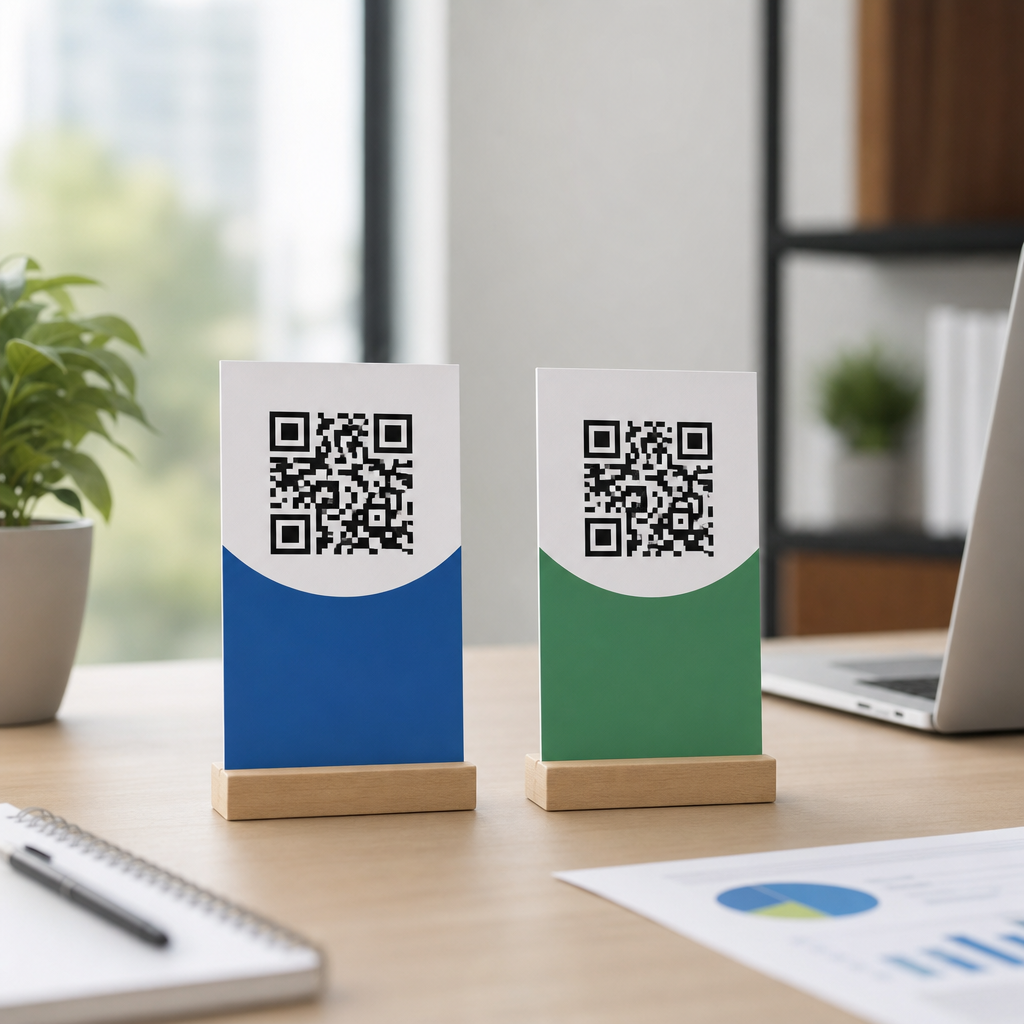
The second category is analytics. Google Analytics 4 is the default destination for session and conversion reporting, but Adobe Analytics, Matomo, Mixpanel, and Amplitude are also common. QR scan data alone is incomplete because it measures intent, not business impact. You need analytics events tied to landing page engagement, purchases, lead submissions, or store locator use. UTM parameters remain the simplest bridge between QR platforms and analytics tools. For example, Variant A might append utm_campaign=summer_mailer and utm_content=qr_a, while Variant B uses qr_b. That naming convention allows side-by-side reporting in GA4 explorations or Looker Studio dashboards.
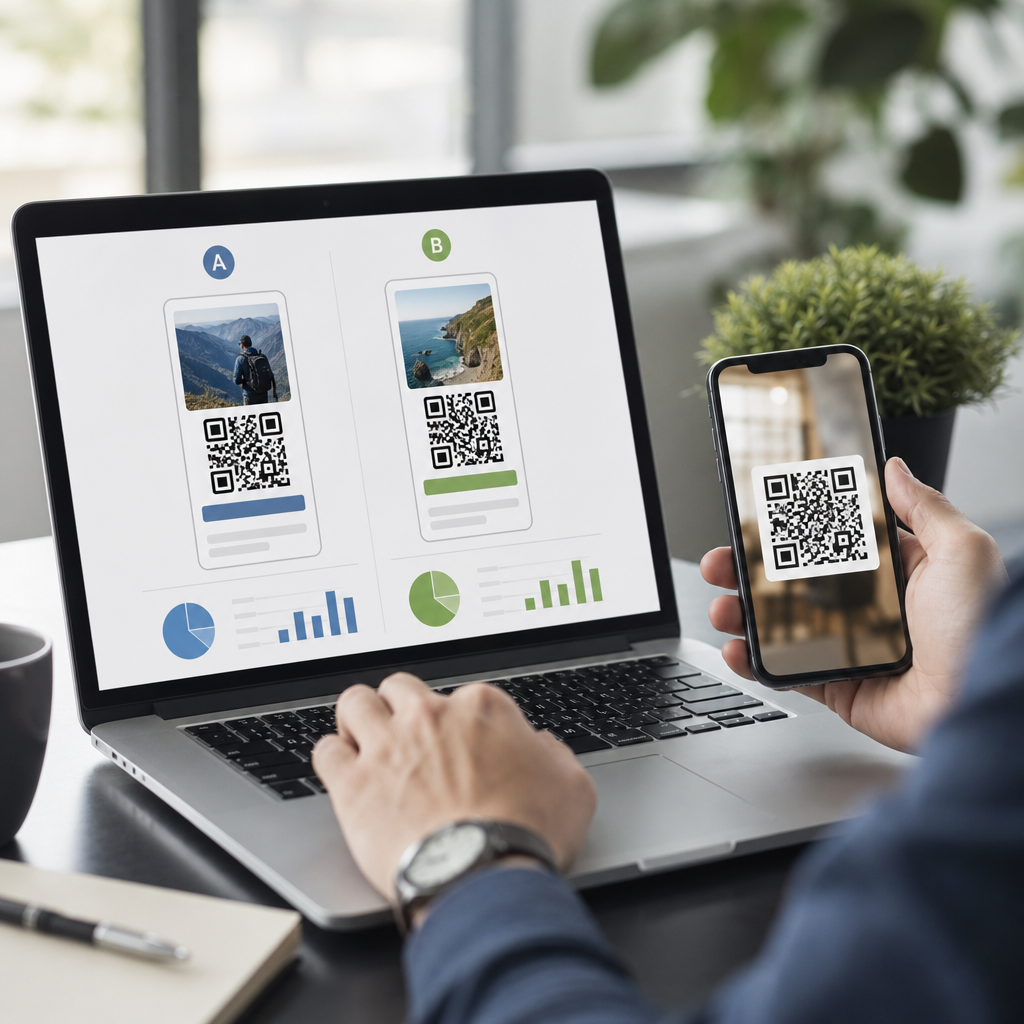
The third category is experimentation infrastructure. Some teams use URL rotators or server-side routing scripts to split traffic between landing pages. Others rely on Optimizely, VWO, Adobe Target, or in-house edge workers on Cloudflare or Fastly. The point is controlled traffic allocation. If one QR code on a poster sends all users to a redirect that randomly assigns 50 percent to page A and 50 percent to page B, you are testing the destination experience while holding the physical code constant. If you print two visibly different QR codes in matched placements, you are testing the code asset itself. Good tools support both approaches.
| Tool category | What it measures or controls | Best use in QR split testing |
|---|---|---|
| QR management platform | Dynamic redirects, scan counts, device and location data | Creating variants, editing destinations, tracking scan-level performance |
| Web analytics suite | Sessions, engagement, conversions, revenue | Measuring downstream outcomes beyond the scan |
| Experimentation tool or router | Random traffic allocation, variant persistence | Testing landing pages while using one QR code |
| Dashboard and BI layer | Blended reporting across tools | Comparing scan rate, conversion rate, and ROI in one view |
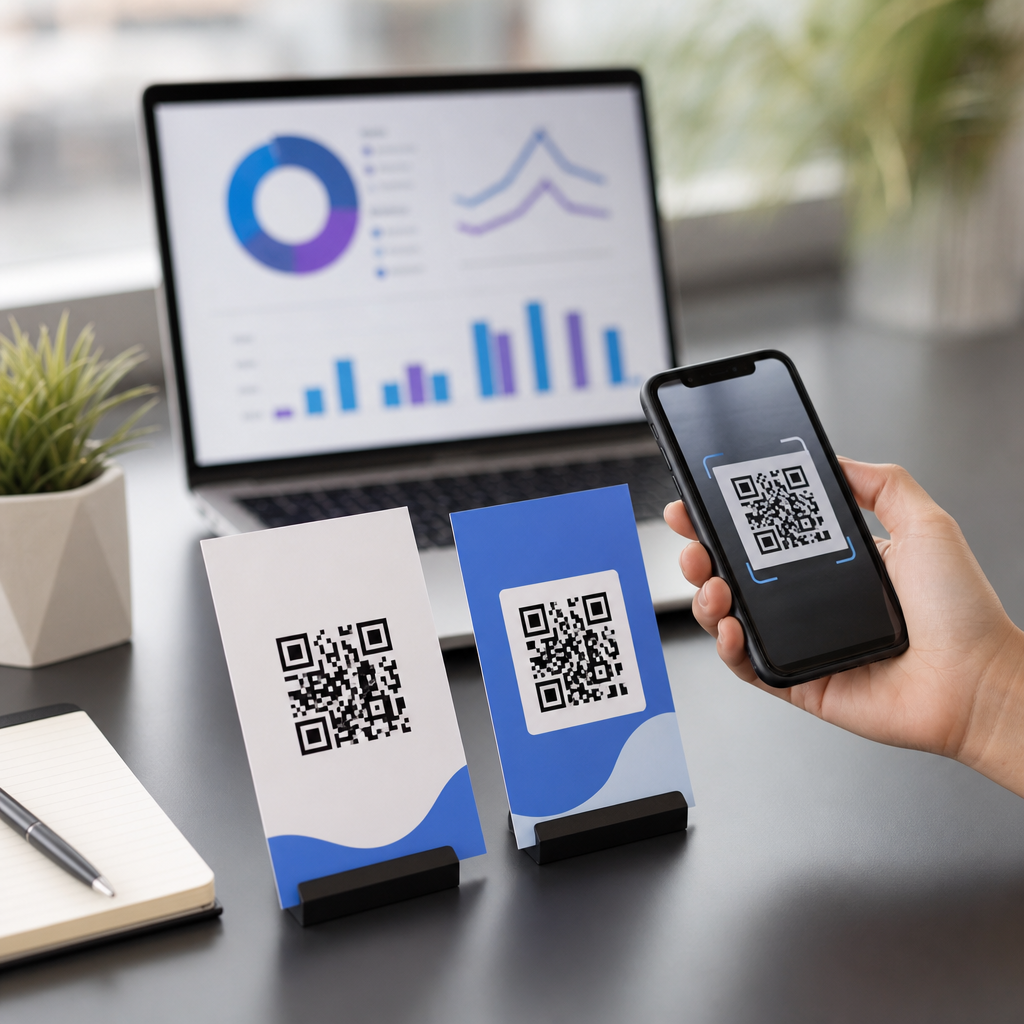
The fourth category is reporting and business intelligence. Looker Studio, Tableau, Power BI, and even well-structured spreadsheets are useful when stakeholders need a single source of truth. A QR code tool might show 8,000 scans, while GA4 shows 6,900 sessions because some users scanned without loading the page, bounced before tags fired, or hit privacy restrictions. A blended dashboard makes those gaps visible and prevents false conclusions.
What to test in a QR campaign and how tools support it
Most teams start by testing obvious visual differences, but the highest lifts often come from context and offer design. You can test the QR code treatment itself: black-and-white versus branded colors, plain square versus framed code, small placement versus prominent placement, or no instruction versus “Scan for 15% off.” You can test the surrounding creative: product shot, headline, incentive, trust badge, or explanatory copy. You can test the destination: homepage versus product page, short form versus long form, video-first versus text-first, coupon auto-apply versus manual code entry. Each of those tests requires different tools and different controls.
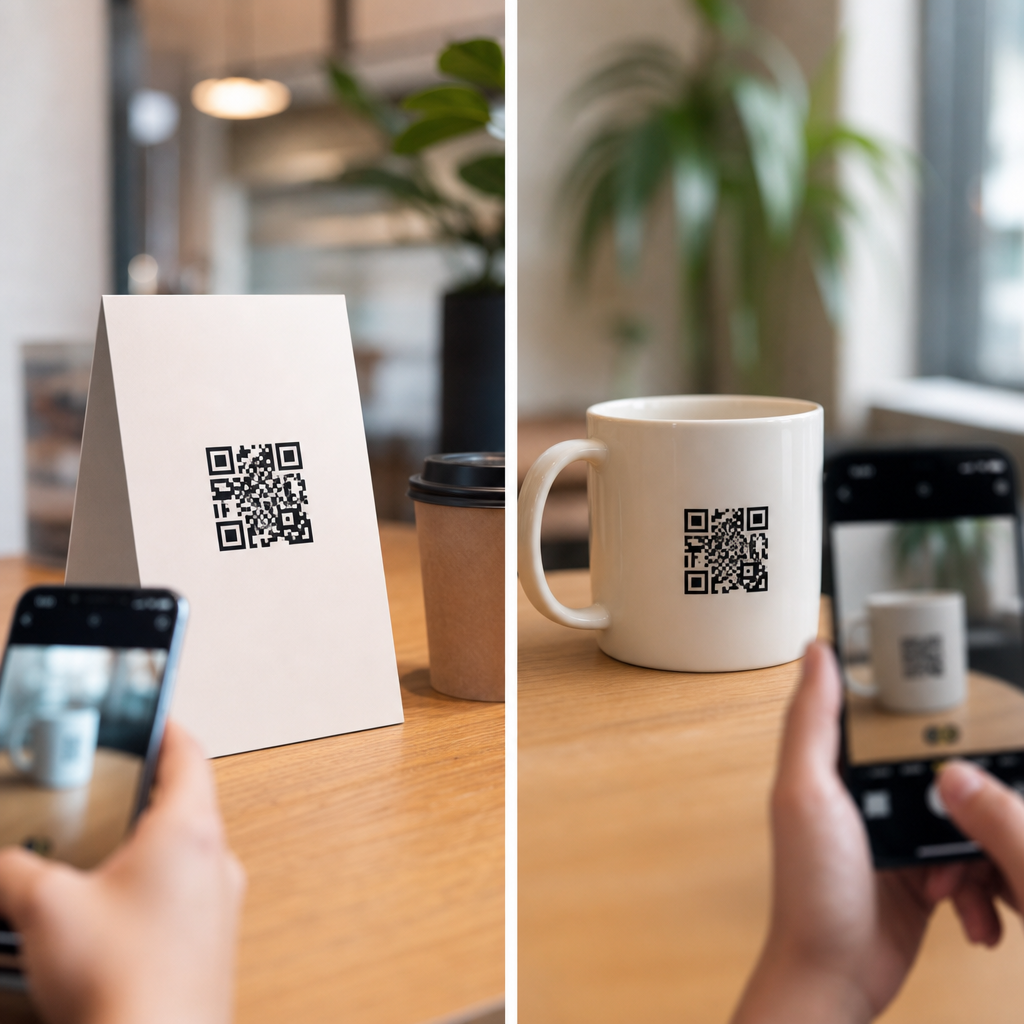
For creative and placement tests, print consistency matters. I have seen teams declare a winner between two QR flyers when the real difference was paper stock glare under store lighting. If you compare physical placements, keep size, substrate, and environmental conditions as similar as possible. Use separate dynamic codes for each physical variant and label them clearly in your platform. For landing page tests, use one dynamic QR code feeding a randomizer so the printed asset stays constant. That avoids contamination from design differences in the code itself.
Retail and packaging campaigns add another layer: time. A code on a shelf talker sees different behavior on weekdays versus weekends, and a code on a package may be scanned days after purchase. Strong tools let you break out performance by hour, day, geography, and device. That matters because a code that wins in total scans may lose in conversion quality. For example, one restaurant chain I worked with increased scans by enlarging the QR code on table tents, but the bigger win came from changing the CTA from “View menu” to “Order and earn points,” which lifted logged-in orders rather than casual menu views.
How to choose the best tools for QR code split testing
Choose tools based on the test maturity you need, not just the generator with the prettiest interface. Start with routing control. Can the platform edit destinations instantly, apply custom parameters, and support multiple variants without broken links? Next, evaluate analytics depth. At minimum, you want timestamp, device type, operating system, approximate location, and unique versus total scans. Then assess integration. Native connections to GA4, Zapier, CRM systems, ad platforms, and webhooks save hours and reduce tagging mistakes.
Reliability and governance are equally important. Enterprise teams should look for role-based access, audit logs, custom domains, SSL support, SLA commitments, and exportable raw data. These are not luxury features. They protect test integrity. If multiple marketers can change destinations without a change log, you may never know why results shifted mid-campaign. Custom domains also improve trust and can raise click-through after scanning because branded short links look more credible than generic redirect domains.
Cost should be evaluated against campaign volume and reporting needs. A low-cost QR tool can be sufficient for a single restaurant poster test. It is usually insufficient for a national direct mail program with personalized codes, CRM stitching, and weekly optimization cycles. In those cases, API access, batch management, and data retention limits become decisive. The cheapest option often becomes expensive when teams need manual workarounds.
Measurement pitfalls, significance, and operational best practices
The biggest mistake in A/B testing QR codes is declaring winners too early. Scan counts fluctuate by placement, weather, staffing, event traffic, and creative fatigue. Use a predefined sample target or test duration, and keep traffic allocation stable throughout the run. If possible, calculate significance with a standard two-proportion test for conversion rates or use revenue-based confidence intervals when value per scan varies. Do not change multiple variables at once unless you are intentionally running a multivariate design and have enough volume to support it.
Attribution needs discipline too. QR campaigns sit at the intersection of offline and digital behavior, so identity loss is common. A person may scan on mobile, browse, and purchase later on desktop. To reduce undercounting, connect forms to CRM records, encourage logged-in actions, and use first-party identifiers where consent permits. Also account for technical noise: some camera apps prefetch URLs, some privacy tools suppress referrers, and weak connectivity can delay page loads. A solid measurement plan documents these limitations before analysis.
Operationally, build a repeatable checklist. Lock the hypothesis, define the variable, create naming conventions, QA every redirect, verify analytics tags, confirm canonical landing pages, and archive screenshots of each variant. I also recommend a holdout log for external events such as price changes, inventory issues, or store remodels that could influence results. These notes become invaluable when someone asks why Variant B dipped during week two.
Building a scalable QR testing program
A strong QR testing program turns one-off experiments into a system. Start with a central taxonomy for campaigns, variants, assets, and markets. Document learnings in a simple repository so future teams know, for example, that framed codes improved scans in retail windows but reduced trust on medication packaging, or that a two-step landing page beat a long form for event registrations. Then expand gradually: test offer framing, page speed improvements, localized destinations, loyalty prompts, and post-scan personalization. The goal is not more tests for their own sake. The goal is faster evidence on what moves scans and business outcomes together.
Tools for QR code split testing are most valuable when they help you answer a simple question with confidence: which variation creates better results, and why? Use dynamic QR management, rigorous routing, connected analytics, and disciplined reporting to answer that question cleanly. When the tool stack is right, A/B testing QR codes stops being a guess-and-check exercise and becomes a reliable optimization engine for packaging, print, signage, events, and direct mail. Review your current QR workflow, identify the gaps in routing or measurement, and implement one controlled test this quarter. That single test can establish the foundation for a much smarter advanced QR code strategy.
Frequently Asked Questions
What are tools for QR code split testing, and why do marketers use them?
Tools for QR code split testing are platforms or feature sets that let marketers compare two or more QR code variations to see which version performs better. In a typical campaign, those variations might include different code designs, sizes, placements, destination URLs, landing pages, offers, or calls to action. The goal is not just to count scans, but to understand which version produces stronger engagement and more valuable outcomes such as form fills, purchases, registrations, downloads, or in-store visits. Instead of guessing which QR code will work best on packaging, signage, direct mail, retail displays, or event materials, marketers can use testing tools to make decisions based on measurable evidence.
These tools are useful because QR performance is affected by many variables at once. A visually attractive code may scan less reliably if the contrast is poor. A code placed on a poster may get fewer scans than one placed near a checkout counter, even if the design is identical. One landing page may generate more scans but fewer conversions, while another may produce lower scan volume but higher-quality traffic. Split testing tools help isolate those differences under controlled conditions so teams can improve results over time. For brands investing in print and physical media, this is especially important because every placement has a cost, and optimizing scan behavior can meaningfully improve campaign ROI.
What should I look for in a QR code split testing tool?
A strong QR code split testing tool should do more than generate a scannable image. At minimum, it should support dynamic QR codes, variant-level tracking, scan analytics, traffic routing, and downstream conversion measurement. Dynamic QR functionality is essential because it allows you to change destinations, assign traffic across multiple versions, and monitor campaign performance without reprinting assets each time a test changes. Reliable analytics should show total scans, unique scans, time and date patterns, device information, location trends where appropriate, and performance by individual variant. If the platform only tells you how many scans happened in total, it is not enough for serious testing.
You should also evaluate how well the tool integrates with your broader marketing stack. The best options connect with analytics platforms, CRM systems, ad platforms, and conversion tracking tools so you can follow the user journey beyond the initial scan. That matters because scan volume alone can be misleading. A good test measures not only which QR code gets attention, but which one leads to qualified traffic and actual business outcomes. Practical features also matter, including ease of setup, redirect speed, URL parameter support, exportable reports, access controls for teams, and clear attribution options for offline campaigns. If you are testing QR codes across retail, events, packaging, direct mail, and in-store signage, a tool that supports campaign organization and channel segmentation will make analysis much easier.
How do you run an effective A/B test for QR codes?
An effective QR code A/B test starts with a clear hypothesis. Instead of changing everything at once, define one primary variable to test, such as code placement, visual styling, offer language, landing page layout, or destination experience. For example, you might test whether a QR code placed on the front of product packaging outperforms one on the side panel, or whether a “Scan for 20% Off” call to action beats “Learn More.” Once you identify the variable, keep the rest of the conditions as consistent as possible so you can attribute performance differences to the change you intended to test.
Next, make sure traffic is split in a controlled and measurable way. If you are testing destinations, use a platform that can route scans between variants and record which version each user saw. If you are testing physical placement or printed creative, distribute versions as evenly as possible across similar environments, time periods, and audience segments. Then define success metrics before launch. Those metrics might include scan-through rate, unique scans, bounce rate, time on page, lead submissions, purchase completions, or another conversion event that reflects campaign value. Let the test run long enough to gather meaningful data, and avoid ending it too early based on small sample sizes. The most reliable conclusions come from tests that control variables carefully, track outcomes consistently, and evaluate both top-of-funnel and bottom-of-funnel performance.
What metrics matter most when evaluating QR code split test results?
The most important metrics depend on the campaign objective, but in most cases you should evaluate performance across three levels: scan behavior, traffic quality, and conversion outcomes. At the scan level, marketers usually look at total scans, unique scans, repeat scans, scan rate by distribution channel, and timing patterns. These metrics show which QR variation attracts attention and gets used in the real world. They are useful for evaluating design, placement, and visibility, especially in environments like retail displays, trade show booths, direct mail pieces, or product packaging where physical context can strongly influence response.
However, scan counts alone are not enough. You also need to understand traffic quality. That means examining bounce rate, pages viewed, session duration, device type, and whether users complete meaningful interactions after scanning. Finally, the most valuable layer is downstream conversion data: purchases, bookings, email signups, account creations, coupon redemptions, app installs, or any other event tied to business impact. In many campaigns, the winning QR code is not the one with the highest scan volume, but the one that drives better-qualified users and stronger conversion efficiency. For that reason, the best split testing workflows connect QR analytics with web analytics and conversion tracking so you can compare variants on cost-effectiveness and revenue contribution, not just raw engagement.
What are common mistakes to avoid when using tools for QR code split testing?
One of the most common mistakes is testing too many variables at the same time. If you change the QR design, placement, offer, and landing page all at once, you may see a performance difference but have no idea what caused it. Another frequent issue is relying on static QR codes for campaigns that need ongoing optimization. Static codes lock you into a single destination and make iterative testing much harder. Marketers also often focus too heavily on scan totals without validating whether those scans lead to qualified traffic or conversions. A high-scan variant can look successful on the surface while underperforming where it matters most.
Other mistakes include inconsistent distribution conditions, weak attribution setup, and ending tests before enough data has been collected. For example, comparing one QR version used at a busy event entrance to another placed in a low-traffic area will skew results. Similarly, if UTM parameters, event tracking, or CRM attribution are not configured correctly, you may lose visibility into what happened after the scan. Poor QR usability is another avoidable problem. A visually customized code may match your brand, but if it scans slowly or fails under different lighting conditions, the test results will be distorted. The best practice is to keep tests focused, use dynamic tracking, verify scannability across devices, align success metrics with business goals, and review results in the context of the full customer journey. That approach leads to cleaner data and much more actionable optimization decisions.