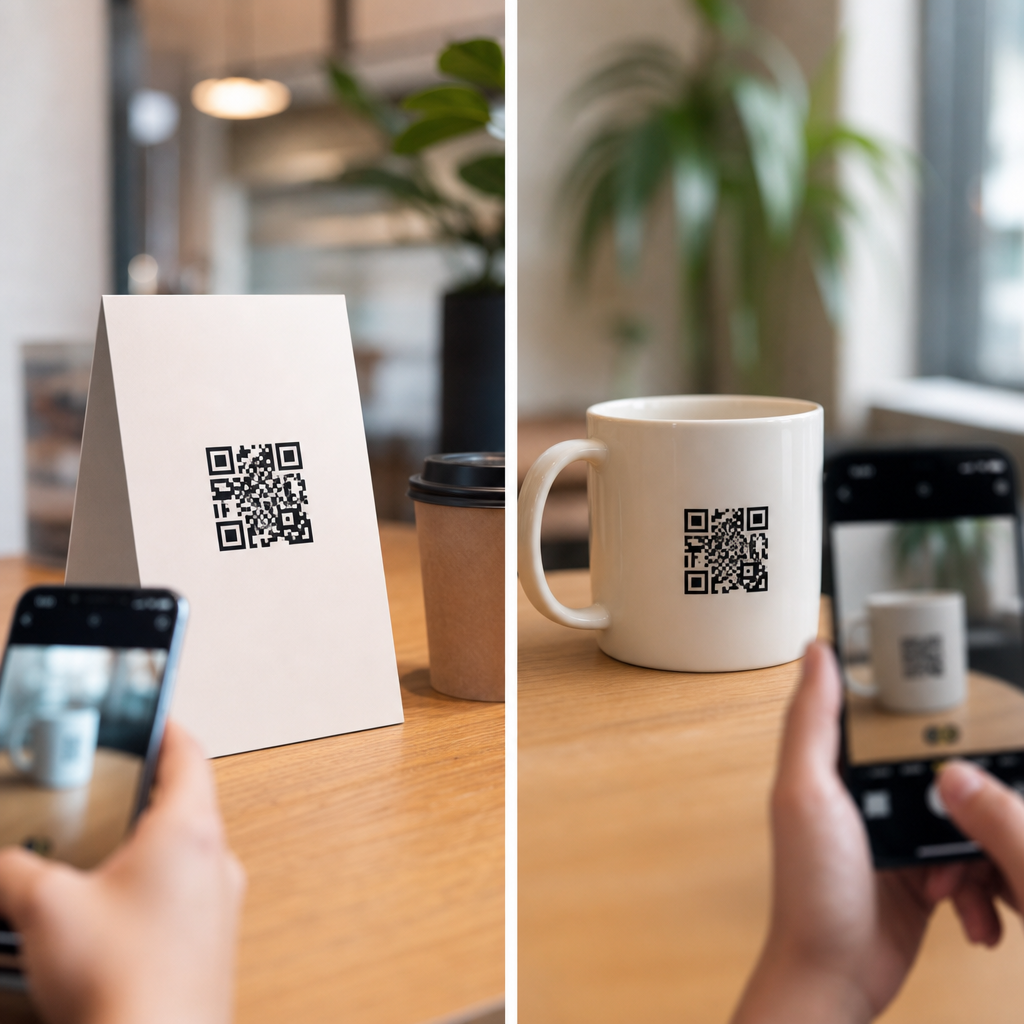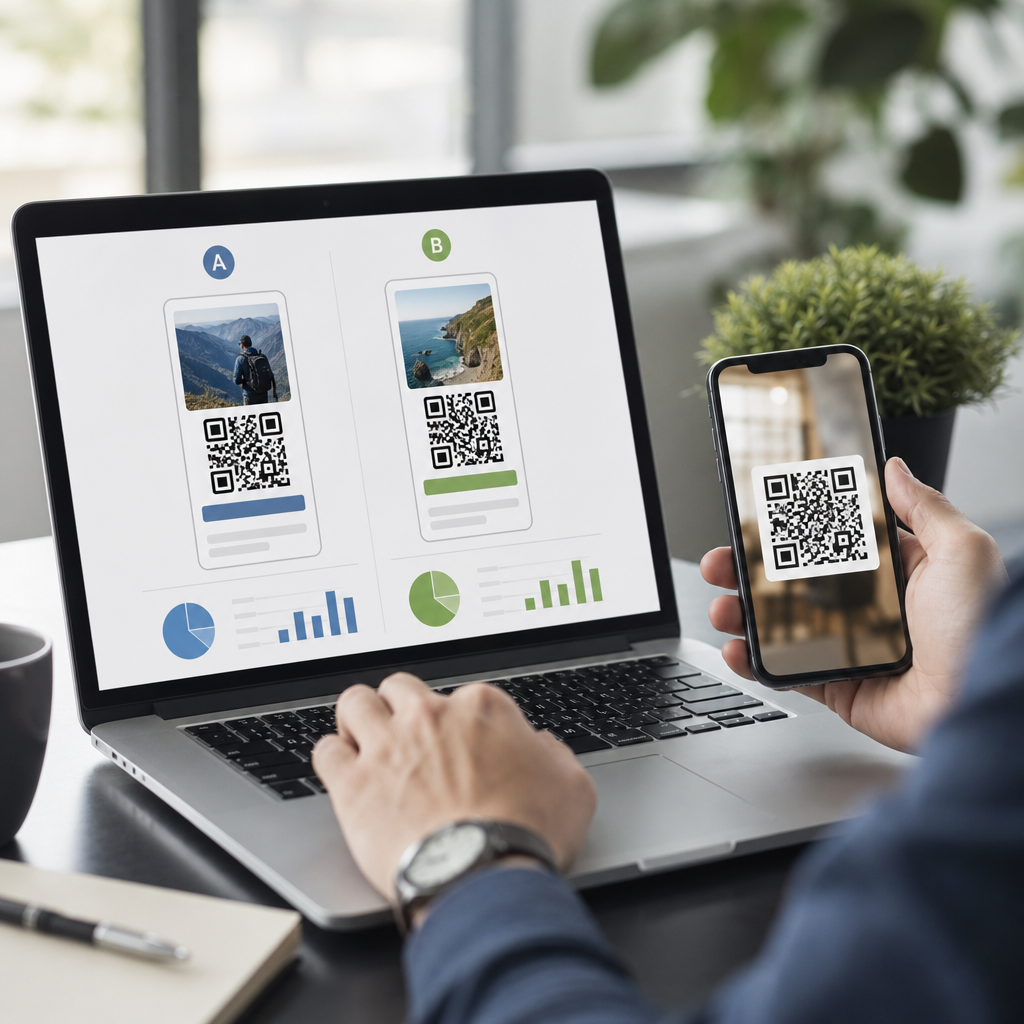
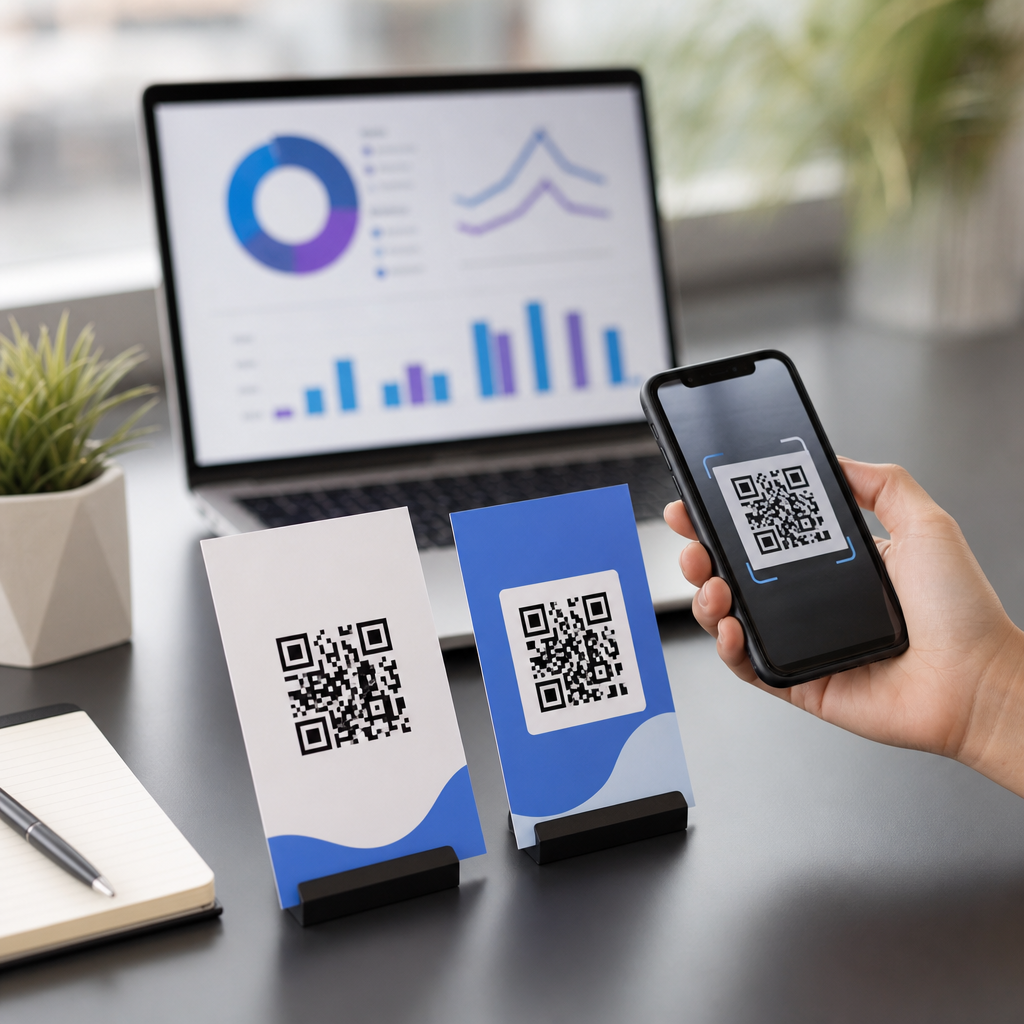
QR code A/B testing lets marketers compare two or more versions of a code, landing page, placement, or incentive to learn which option drives more scans, better engagement, and stronger business results. In practice, the best metrics for QR code A/B testing are not limited to scan counts. They include scan-through rate, unique scans, conversion rate, time to conversion, bounce rate, assisted revenue, and cohort-level retention. I have run QR campaigns for retail packaging, event signage, restaurant menus, and direct mail, and the same lesson holds across all of them: a QR code is only valuable when the metric matches the decision you need to make. Testing code size without measuring readability, or testing offer copy without measuring downstream conversion, produces tidy reports and weak conclusions. This matters because QR codes sit at the intersection of offline attention and digital action. They compress media spend, creative choices, and mobile experience into one tiny square. A disciplined measurement plan turns that square into a controllable growth channel rather than a guessing game.
Before choosing metrics, define the test unit clearly. You may be testing the code itself, such as color contrast or error correction level; the context, such as shelf talker versus package back panel; or the destination experience, such as a short form versus a product page. Each test type changes which metrics are primary and which are diagnostic. For a print placement test, scan rate is usually the lead metric. For a post-scan page test, conversion rate and revenue per scan matter more. For a loyalty test, repeat scan behavior and customer lifetime value become relevant. That distinction is essential for any advanced QR code strategy because teams often overvalue top-of-funnel scan volume and undervalue completion quality. A code that attracts fewer but more qualified visitors can outperform a high-scan variant that produces no sales, no sign-ups, and no measurable intent.
Start with the core QR code metrics that reveal test winners
The foundational metrics for A/B testing QR codes answer a simple question: did one version create more valuable user action than another. The first metric is scan-through rate, which is scans divided by estimated impressions. If a poster was seen by 10,000 people and generated 400 scans, the scan-through rate is 4 percent. This is the cleanest measure when testing placement, call-to-action language, surrounding design, or incentive framing. Raw scan count alone is misleading because it ignores exposure.
Unique scans are the next essential measure. Most QR analytics platforms, including Bitly, Beaconstac, QR Code Generator PRO, and Uniqode, can separate total scans from unique users using device and session signals. Unique scans matter because repeated scans from the same user can inflate performance, especially in menu, event, or support use cases. If Variant A generates 1,000 scans from 300 people and Variant B generates 700 scans from 500 people, Variant B may have broader reach even with lower total activity.
Conversion rate is usually the deciding metric for business outcomes. It measures the percentage of scanners who complete a target action such as purchase, registration, coupon redemption, app install, or lead submission. I treat conversion rate as the primary metric whenever the post-scan experience differs between variants. A landing page with fewer fields may reduce friction and produce fewer page views but more completed forms. That is a meaningful win.
Time to conversion adds useful nuance. In one direct mail campaign I managed, two QR variants drove similar lead totals, but the simpler page converted within minutes while the longer educational page converted over several days. For sales teams working hot leads, speed mattered as much as volume. Bounce rate, pages per session, and average engagement time are supporting metrics. They explain why one variant converted better, but they should not override the primary business metric.
Match the metric to the specific hypothesis you are testing
Every strong QR code experiment starts with a narrow hypothesis. If the hypothesis is that a larger code improves scannability from six feet away, the key metrics are scan-through rate, failed scan rate if available, and device split. If the hypothesis is that a stronger offer improves response, use unique scan rate, conversion rate, and revenue per visitor. If the hypothesis is that destination speed matters, focus on landing page load time, bounce rate, and conversion completion.
I recommend mapping each test to one primary metric, one guardrail metric, and two diagnostic metrics. The primary metric declares the winner. The guardrail protects against false wins, such as a variant that increases scans but hurts sales. Diagnostic metrics explain behavior. For example, a restaurant table tent test might use menu opens per table impression as the primary metric, average order value as the guardrail, and device type plus dwell time as diagnostics. This structure prevents teams from cherry-picking whichever number looks best after the fact.
Context matters because QR codes are heavily influenced by environment. A code on transit signage is a low-attention scan, so brevity and urgency can lift response. A code on product packaging reaches people already considering the item, so deeper product information may convert better. In-store shelf labels often perform differently by aisle because dwell time varies. Segmenting results by placement, geography, daypart, and traffic source often reveals that a “winning” variant only wins in one context. Advanced QR code strategies depend on reading those segments instead of relying on blended averages.
Use a full-funnel measurement framework, not just scan volume
QR code A/B testing works best when you measure the entire path from exposure to outcome. The table below shows the metrics I rely on most and what each one is best for.
| Metric | What it measures | Best use case | Main limitation |
|---|---|---|---|
| Scan-through rate | Scans divided by impressions | Testing placement, CTA, visual design | Requires solid impression estimates |
| Unique scan rate | Distinct users who scanned | Comparing reach across variants | Identity deduplication is imperfect |
| Conversion rate | Completed goal divided by visitors | Landing page and offer tests | Needs accurate event tracking |
| Revenue per scan | Revenue generated from each scan | Ecommerce and coupon campaigns | Can mask low volume issues |
| Time to conversion | Delay between scan and goal completion | Lead generation and nurture journeys | Long windows complicate attribution |
| Bounce rate | Users leaving without deeper action | Diagnosing poor landing experiences | Not a direct business outcome |
| Repeat scan rate | Users scanning again later | Loyalty, support, menus, packaging | May reflect confusion, not interest |
| Assisted conversions | Sales influenced but not directly closed by scan | Omnichannel campaigns | Attribution models vary |
This framework keeps teams from optimizing for vanity metrics. A packaging QR code can have a modest scan-through rate and still be excellent if it drives high-margin repeat purchases through replenishment. Conversely, a giveaway poster may generate large scan totals but weak revenue quality. When you report results, include both rate metrics and absolute counts. A 20 percent lift sounds impressive, but if Variant A produced 12 conversions and Variant B produced 14, the business impact may be too small to justify rollout without more data.
Attribution discipline is critical. Use UTM parameters, event tagging in Google Analytics 4, server-side conversion tracking where possible, and a consistent attribution window. Dynamic QR codes are especially useful because they let you maintain one printed asset while changing destinations and preserving analytics continuity. For offline-heavy campaigns, tie scans to promo codes, POS redemption data, CRM records, or call-center outcomes so the test connects to actual revenue.
Track scannability, technical quality, and environmental variables
Many teams jump straight to creative tests and overlook the technical factors that determine whether a code can be scanned reliably. Scannability metrics should include successful scan rate, camera compatibility, load time after redirect, and the impact of physical conditions such as glare, curvature, and print resolution. ISO/IEC 18004 defines the QR Code symbology standard, and practical execution still matters more than most marketers assume. Poor contrast, excessive logo intrusion, tiny quiet zones, or printing a code on a reflective pouch can sabotage an otherwise strong offer.
When I test physical QR assets, I document distance, angle, lighting, substrate, and device mix before launch. A code that works well on matte carton packaging may fail on glossy window decals at midday because reflections interfere with detection. Error correction level also introduces tradeoffs. Higher error correction can preserve readability if the code is partially obscured, but it increases density, which can hurt scan performance at smaller sizes. For long URLs, using a short redirect domain often improves code simplicity and reliability.
Landing page speed is another technical metric that belongs in QR testing. Mobile users who scan in-store or on the street have little patience for slow pages. Google’s Core Web Vitals are useful reference points, especially Largest Contentful Paint and Interaction to Next Paint. If Variant B has a stronger offer but a slower page, scan intent may not survive the wait. In several campaigns, compressing images, reducing third-party scripts, and simplifying the first screen produced more lift than redesigning the code itself.
Design statistically sound tests and interpret results carefully
A/B testing QR codes requires more rigor than simply printing two versions and comparing totals. Randomization is difficult in offline environments, so you need to control variables wherever possible. If you are comparing poster designs across stores, balance store traffic, region, and promotion timing. If you are testing package inserts, split distribution by batch rather than by convenience. Seasonality, staffing, weather, and media support can distort results.
Sample size matters because QR response rates can be low. Use a calculator before launch to estimate the number of impressions or scans needed to detect a meaningful lift. A tiny difference in scan-through rate is not actionable unless the confidence is strong and the effect size justifies operational change. I prefer running tests until both variants have enough observations to support a decision, rather than stopping the moment one line on a dashboard pulls ahead.
Interpretation should also account for intent quality. If Variant A wins on scans and Variant B wins on purchases, the answer is usually not “pick one metric.” The answer is to trace where intent is gained or lost. Maybe the first variant’s CTA attracts curiosity seekers, while the second pre-qualifies users with clearer language. That insight can inspire a third variant combining stronger top-funnel appeal with better expectation setting. The best hub pages on A/B testing QR codes teach teams to build a testing program, not chase one-off wins.
The best metrics for QR code A/B testing are the ones that connect a clear hypothesis to a measurable business outcome. Start with scan-through rate and unique scans when evaluating visibility and response. Shift to conversion rate, revenue per scan, and time to conversion when testing landing pages, offers, and post-scan journeys. Add bounce rate, repeat scans, and assisted conversions as diagnostic and downstream measures. Just as important, validate scannability, mobile performance, and environmental conditions so technical issues do not contaminate the test.
For any team building advanced QR code strategies, this hub topic should anchor the rest of the subtopic: test one variable at a time, instrument every step, segment results by context, and report both volume and value. QR codes are not merely access points; they are measurable bridges between physical media and digital intent. Build your next experiment around one primary metric, one guardrail, and a disciplined tracking plan, then use the findings to improve every campaign that follows.
Frequently Asked Questions
1. What are the most important metrics to track in QR code A/B testing?
The best metrics for QR code A/B testing go far beyond raw scan counts. Scans are useful as a top-of-funnel indicator, but they do not tell you whether a variation actually produced meaningful business results. In most campaigns, I recommend looking at the full journey: scan-through rate, unique scans, landing page engagement, conversion rate, time to conversion, bounce rate, assisted revenue, and retention by cohort. Together, these metrics show not just which QR code got attention, but which version moved people from interest to action.
Scan-through rate is especially helpful when you know how many people were exposed to each QR code version. For example, if two package designs were distributed in equal volume, the version with the higher scan-through rate likely did a better job prompting action. Unique scans matter because total scans can be inflated by repeat interactions from the same user, especially in retail, events, and restaurant environments where people may revisit the same code multiple times. Unique scans help separate broad reach from repeated curiosity.
Conversion rate is usually the core performance metric because it connects scans to the action that matters most, whether that is a purchase, signup, coupon redemption, app install, menu order, or lead form completion. Time to conversion adds another layer by revealing how quickly different variants turn intent into action. A version that converts at the same rate but in half the time may be operationally stronger, especially in fast-decision environments like event booths or in-store displays.
Bounce rate helps identify mismatch between the QR code promise and the landing page experience. If one variant gets plenty of scans but sends users to a page they immediately leave, that is a signal that the test is winning attention but losing trust or relevance. Assisted revenue is important in campaigns where the scan influences a later purchase rather than triggering an immediate one. And cohort-level retention becomes essential when the QR experience starts an ongoing relationship, such as loyalty enrollment, subscription activation, or repeat ordering. In short, the best metric set is the one that measures the whole path from exposure to long-term value.
2. Why is scan count alone not enough to decide a winning QR code test?
Scan count is one of the easiest numbers to collect, which is exactly why it is often overvalued. The problem is that a high number of scans does not automatically mean a QR code variation is more effective. A version may attract more scans because it is curiosity-driven, placed in a busier location, or paired with more aggressive copy, but if those scans do not lead to meaningful engagement or conversion, then the test result can be misleading. In other words, scan count shows initial response, not final performance.
Imagine two QR code variants on restaurant table tents. Version A gets more scans because it uses bold text like “Scan for a surprise,” while Version B gets fewer scans but directs people to a clean menu-and-order flow that produces more completed orders. If you choose the winner based only on scan count, you may end up favoring the version that generates attention without revenue. The same pattern happens in retail packaging, event signage, and direct mail. More scans can actually hide friction further down the funnel.
Another issue is that scan count can be distorted by repeat activity. If one person scans the same code several times because the landing page loads slowly, the coupon does not save properly, or they are trying to revisit information, total scans rise without reflecting stronger campaign performance. That is why unique scans, engaged sessions, and completed outcomes provide better decision-making signals. You want to know how many distinct people responded and what they did next.
The smarter approach is to treat scan count as an early indicator, not a final verdict. Use it to assess top-of-funnel interest, then pair it with deeper metrics such as conversion rate, bounce rate, assisted revenue, and time to conversion. When those metrics align, you can confidently identify the true winner. When they conflict, the test is giving you useful diagnostic insight rather than a simple yes-or-no answer.
3. How do I measure conversion rate correctly in a QR code A/B test?
To measure conversion rate correctly, you first need a precise definition of what counts as a conversion. That sounds obvious, but it is where many QR code tests go wrong. A conversion should reflect the primary business outcome of the campaign, not just an intermediate click. Depending on the use case, that might be a completed purchase, redeemed offer, submitted lead form, loyalty signup, reservation, app download, or digital menu order. Once the action is clearly defined, each QR code variation should be tracked separately all the way from scan to outcome.
The most common formula is conversions divided by eligible scans or users. In many cases, the cleanest denominator is unique scanners rather than total scans, because total scans can include repeats that distort the result. If 500 unique users scanned Version A and 50 completed the target action, the conversion rate is 10 percent. If Version B had 350 unique users but 49 conversions, its conversion rate is 14 percent. Even though Version A produced more total conversions, Version B may be the stronger experience on an efficiency basis. Which one matters more depends on your campaign goal: total volume, conversion efficiency, or downstream revenue.
Attribution setup also matters. Use distinct tracking parameters, redirect rules, or QR destinations for each variant so the source of each conversion is unambiguous. If conversions happen later, connect the scan session to CRM, analytics, or commerce data whenever possible. In retail and restaurant settings, this might mean tying the scan to coupon codes, loyalty IDs, or session-level transaction data. At events, it could mean linking scans to lead capture records and later sales outcomes. The more reliable your attribution chain, the more accurate your conversion comparison will be.
Finally, interpret conversion rate in context. A variation with a slightly lower conversion rate may still generate more revenue if it brings in higher-value customers. Likewise, a variant that appears to convert well may be attracting low-intent users if retention is weak. That is why seasoned marketers rarely look at conversion rate in isolation. It is a central metric, but it becomes far more useful when paired with revenue per scanner, time to conversion, and post-conversion retention.
4. What does time to conversion tell you in a QR code A/B test?
Time to conversion tells you how quickly a QR code experience moves someone from scan to the intended action. This metric is often overlooked, but it can be incredibly revealing. Two variants might produce similar conversion rates, yet one gets users to act in seconds while the other takes hours or days. That difference matters because speed usually reflects lower friction, clearer messaging, stronger intent alignment, or a more persuasive landing experience.
In practical terms, time to conversion is especially valuable in situations where decisions happen fast. At events, attendees may scan signage while walking between sessions, so a version that converts immediately is usually more effective than one that requires follow-up intent later. In restaurants, a QR code used for ordering or promotions needs to support quick action during a limited dwell time. On retail packaging, a slower conversion window may still be perfectly normal if the scan starts a research journey that leads to a later purchase. The right benchmark depends on the context of the campaign.
This metric also helps diagnose hidden funnel problems. If one QR version attracts strong scan volume but conversion takes much longer, the landing page may be confusing, the offer may need more explanation, or the user may be getting redirected into a multi-step flow that adds friction. On the other hand, a shorter time to conversion can indicate that the CTA, incentive, and destination are tightly aligned. It is often a sign that users understood what they would get before they scanned, and the landing page delivered on that expectation quickly.
For analysis, look at median time to conversion rather than just averages, since averages can be skewed by delayed outliers. Also compare immediate conversions, same-day conversions, and longer-lag conversions by variant. That breakdown often reveals whether a QR code is capturing impulse behavior, considered behavior, or both. When used alongside conversion rate and assisted revenue, time to conversion gives a more complete picture of how efficiently each test variation turns attention into business value.
5. How do bounce rate, assisted revenue, and retention help identify the best-performing QR code variation?
These three metrics help you evaluate quality, not just quantity. Bounce rate tells you whether users found the post-scan experience relevant enough to continue. If a QR code promises one thing and the landing page delivers another, users leave quickly, and bounce rate rises. In A/B testing, this often shows up when one version has a strong CTA or high-visibility placement that drives scans, but the destination page fails to match user expectations. A lower bounce rate usually signals better message match, clearer usability, or stronger audience alignment.
Assisted revenue matters when the QR scan influences a purchase that does not happen immediately in the same session. This is common in packaging, out-of-home placements, event marketing, and restaurant promotions where the scan starts a product discovery or offer consideration journey. A user might scan a product code today, then purchase online tomorrow or in-store later that week. If you only judge the test by last-click conversions, you may undervalue the variation that introduced the customer to the brand or