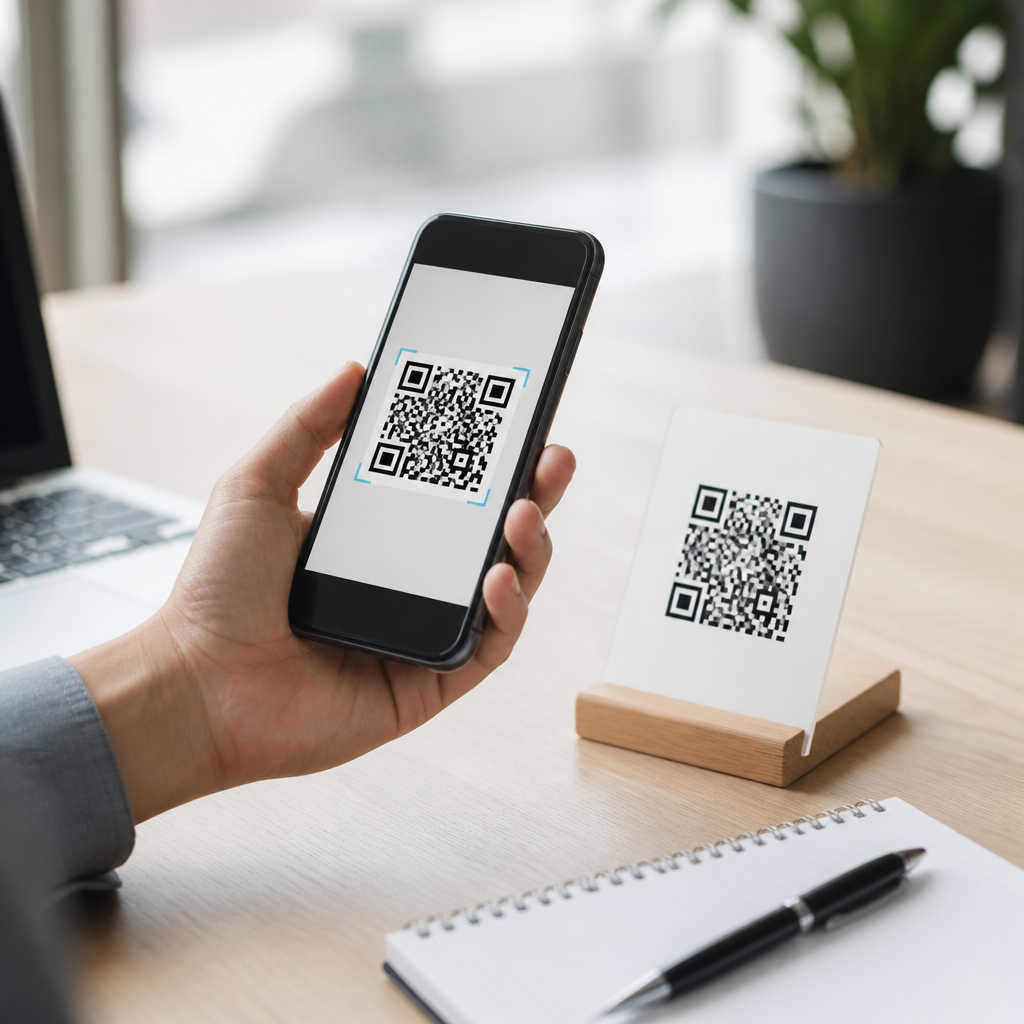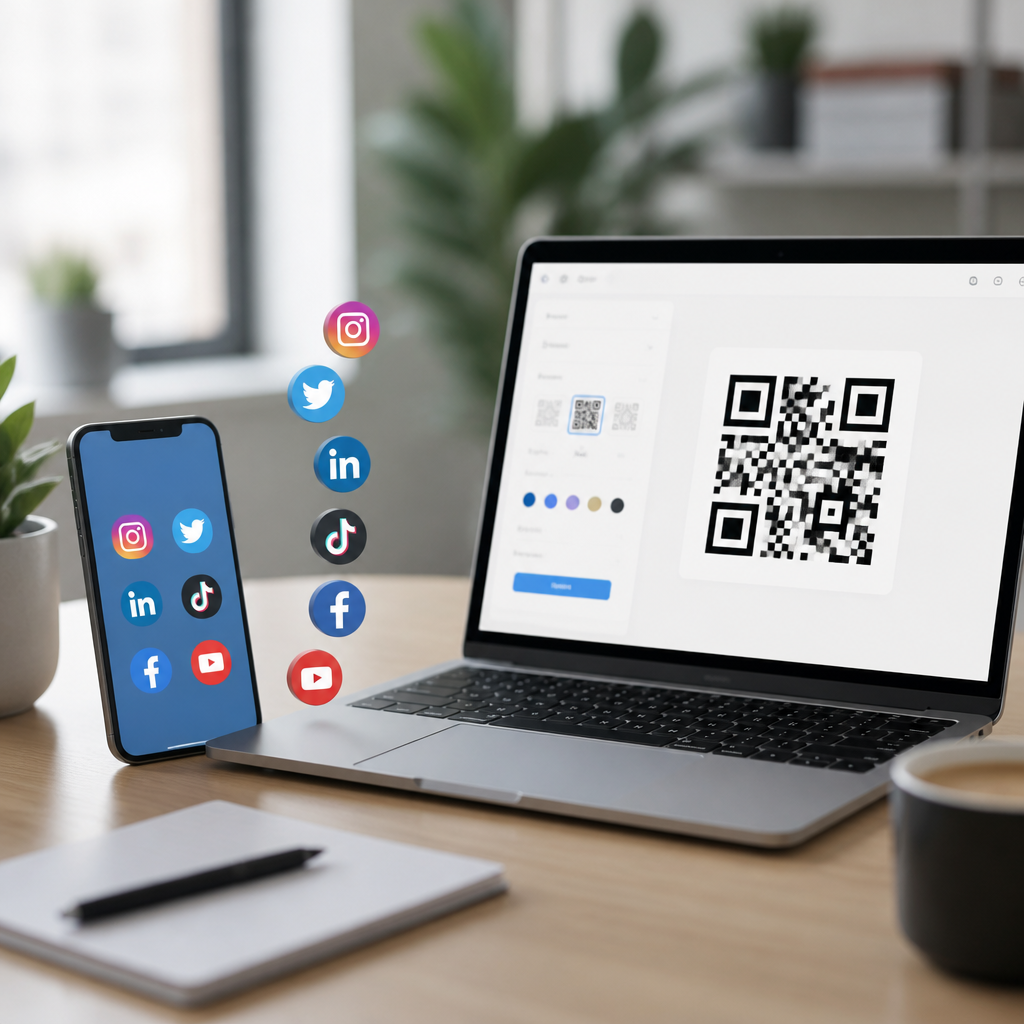
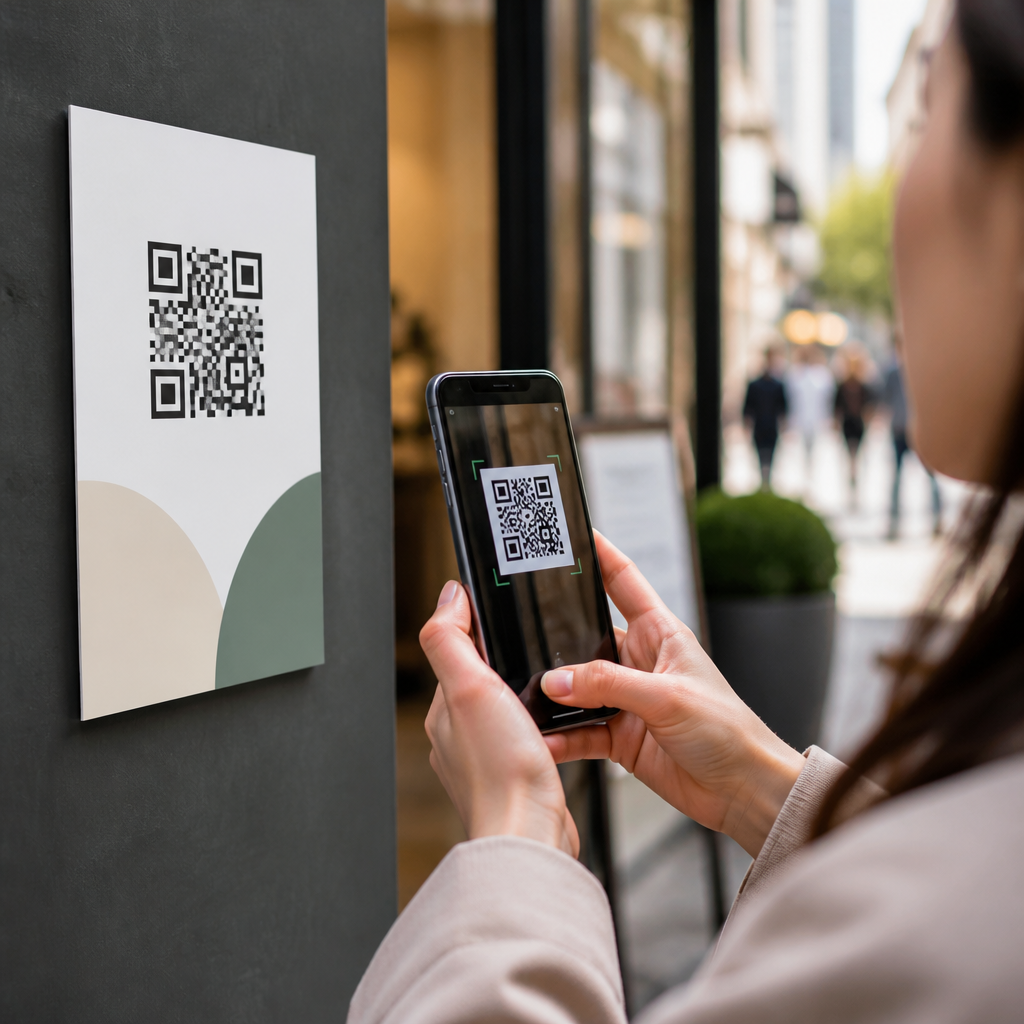
QR codes turn physical attention into digital action, which makes them one of the most practical tools in offline-to-online marketing. A QR code is a scannable two-dimensional barcode that opens a destination such as a website, PDF, video, app page, payment screen, or lead form when a smartphone camera reads it. Offline-to-online marketing means using printed, displayed, or in-person touchpoints to drive measurable digital behavior. I have used QR campaigns on packaging, trade show booths, direct mail, restaurant menus, retail signage, and event badges, and the pattern is consistent: when the code, message, and landing page align, response rates improve and attribution becomes clearer.
Why does this matter now? Smartphone camera scanning is native on iPhone and Android, so the user no longer needs a separate scanner app in most cases. At the same time, marketers face rising customer acquisition costs in paid channels and growing pressure to prove return on every campaign. QR codes help bridge that gap because they connect a physical impression to a tracked online session. They also reduce friction. Instead of asking someone to type a long URL from a poster or brochure, you let them scan and arrive instantly at the exact next step.
For intermediate marketers, the challenge is not generating a code. It is planning the full system around it: choosing static or dynamic codes, matching the call to action to the setting, building a mobile-first destination, setting up analytics, and testing placement and scanability. That is why this guide serves as a hub for intermediate QR code tactics. It explains the mechanics, the strategy, the measurement model, and the operational details that separate a code that gets ignored from one that reliably captures leads, drives sales, and supports customer service at scale.
Choose the right QR code strategy before you design
The first strategic decision is whether to use a static or dynamic QR code. A static code points directly to a fixed destination and cannot be changed after printing. A dynamic code uses a short redirect URL managed through a QR platform, which means you can update the destination later without reprinting the code. In most offline-to-online marketing campaigns, dynamic codes are the better choice because they support analytics, A/B testing, retargeting-friendly landing page changes, and error correction when a URL changes.
The second decision is campaign intent. Every QR code should map to one primary action: download a PDF, claim an offer, register for an event, watch a demo, leave a review, join SMS, or complete a purchase. Mixed intent weakens performance because the user cannot tell what happens after the scan. On packaging, a code may work best for setup instructions or loyalty enrollment. On an in-store sign, it may be better for a coupon or product comparison page. On direct mail, it often performs best when it leads to a short, personalized landing page that repeats the offer from the mailer.
If you need a deeper starting point for downloadable assets, use this main pillar guide on how to create a QR code for a PDF, then return to this hub for campaign planning and optimization. In practice, PDF codes are effective for menus, spec sheets, onboarding guides, and event handouts, but they still need the same strategic framing as any other destination.
Match the placement, message, and landing page
Context determines scan rate. A QR code on a highway billboard is constrained by distance, speed, and safety, so the user needs a very short value proposition and a simple follow-up path. A code on a product package is handled at close range, often at home, which makes educational content, warranty registration, recipe ideas, and refill subscriptions more appropriate. At trade shows, I have seen booth-side QR codes underperform when they send users to a generic homepage, then outperform after being switched to a page with the booth number, speaker session times, and a lead form that prequalifies interest.
Your call to action should describe the benefit, not the mechanism. “Scan to see pricing” outperforms “Scan this QR code.” “Get the installation guide” is clearer than “Learn more.” The landing page should continue the same promise immediately above the fold. If a restaurant table tent says “See seasonal cocktails,” the page should open directly to the cocktail menu, not the main homepage. If a retail shelf talker says “Compare this model,” the landing page should present a comparison table, financing details, and local inventory status on mobile.
| Placement | Best CTA | Recommended destination | Main metric |
|---|---|---|---|
| Product packaging | Get setup help | Quick-start guide or video | Scan-to-completion rate |
| Direct mail | Claim your offer | Personalized landing page | Conversion rate |
| Event booth | Book a demo | Lead form with calendar link | Qualified leads |
| In-store signage | See reviews | Product page with social proof | Assisted sales |
| Restaurant menu | Mobile menu or order page | Order starts |
Build for scanability and mobile usability
Many QR campaigns fail for physical reasons long before analytics can tell the story. Size, contrast, quiet zone, and placement all matter. A reliable baseline is at least 2 x 2 centimeters for close-range scanning, with larger sizes required as distance increases. The common rule of thumb is a scanning distance ratio around 10:1, meaning a code intended to be scanned from ten feet away should be roughly one foot wide. Use dark modules on a light background, maintain sufficient white space around the code, and avoid glossy surfaces that create reflections under store lighting.
Do not distort the code to fit a brand shape, and test any logo overlay carefully. Most generators rely on error correction levels such as L, M, Q, and H; higher correction can preserve scannability when part of the code is obstructed, but it should not be used as an excuse for poor design. I typically test printed samples on multiple phones, under indoor and outdoor lighting, and from the actual angle a customer will use. This catches issues like low contrast on kraft paper packaging or warped codes on curved bottles.
Mobile usability is equally important. The destination should load quickly, use responsive design, and remove unnecessary fields. If the user scans from a store aisle, a form asking for eight fields will suppress conversion. If the goal is content consumption, compress images, avoid intrusive pop-ups, and keep navigation simple. Google PageSpeed Insights, Lighthouse, and Search Console are useful for identifying mobile performance issues that reduce post-scan engagement.
Track performance with campaign-level analytics
To measure offline-to-online marketing properly, track at three levels: the scan, the session, and the business outcome. The scan level comes from your dynamic QR platform, which may report total scans, unique scans, device type, time, and approximate location. The session level comes from web analytics such as Google Analytics 4, where you should use UTM parameters to distinguish channels, placements, and creative versions. The business outcome level includes leads, purchases, bookings, downloads, calls, or support deflection.
A practical naming convention prevents messy data. For example, use source=print, medium=qr, campaign=spring-launch, content=mailer-a or shelf-sign-blue. If you are running several printed variants, create unique codes for each placement rather than reusing one code everywhere. That simple discipline lets you answer real questions: Did the endcap sign outperform the aisle blade? Did the expo badge convert better than the booth banner? Did a code near the checkout counter produce more loyalty signups than the one at the entrance?
Attribution needs nuance. A scan may influence a sale later on another device, especially for higher-consideration purchases such as furniture, insurance, or B2B software. In those cases, combine QR analytics with CRM records, coupon redemption codes, vanity URLs, call tracking, or post-purchase surveys. No single method is perfect, but a consistent measurement framework reveals directional truth and helps allocate budget toward placements that create meaningful lift.
Use proven campaign formats for real business goals
Different industries use QR codes differently, and the best format depends on the customer moment. Retailers use shelf labels and packaging inserts to provide reviews, compatibility checks, warranty registration, and replenishment subscriptions. Restaurants use table tents, window decals, and receipts for menus, ordering, feedback, and loyalty programs. Real estate agents place codes on yard signs and brochures to show property tours, floor plans, and mortgage calculators. Healthcare providers use them for appointment check-in, patient education, and secure payment pages, while staying aligned with privacy requirements.
For events and B2B marketing, QR codes are especially efficient because they compress the path from interest to capture. A conference slide can offer “Download the benchmark report,” leading to a gated page that syncs with HubSpot, Marketo, or Salesforce. An expo booth can use separate codes for product demos, case studies, and pricing conversations, then score leads by what they chose to view. I have also used post-purchase inserts that link to onboarding videos; this reduces support tickets while increasing activation, a strong example of marketing and customer success benefiting from the same code strategy.
There are limitations. Not every audience wants to scan, especially in low-trust contexts or where mobile connectivity is weak. Accessibility also matters; always pair the code with a short URL or alternate path. Compliance matters too. If you collect personal data, disclose how it will be used, secure the destination with HTTPS, and avoid printing codes that lead through suspicious-looking domains. Good QR marketing is convenient, but it must also feel safe.
QR codes work best when they are treated as part of a complete customer journey rather than a standalone graphic. Define one action, choose a dynamic code when flexibility matters, place it where scanning is natural, write a benefit-led call to action, and send users to a fast mobile destination that fulfills the promise immediately. Then track each placement with disciplined analytics so you can improve creative, context, and conversion over time.
For an intermediate marketer, that process turns QR codes from a novelty into a dependable acquisition, retention, and service channel. You can connect print to digital, events to CRM, packaging to onboarding, and in-store attention to measurable revenue without adding much friction for the customer. Review your current offline touchpoints, identify one high-intent moment, and launch a properly tracked QR campaign this week.
Frequently Asked Questions
What is offline-to-online marketing, and why are QR codes so effective for it?
Offline-to-online marketing is the practice of using physical touchpoints such as product packaging, flyers, posters, direct mail, storefront displays, event signage, trade show booths, receipts, menus, and business cards to drive people into a digital experience. The goal is not just awareness, but action: website visits, lead form submissions, app downloads, product page views, video plays, coupon redemptions, appointment bookings, payments, or email signups. QR codes are especially effective in this model because they remove friction between seeing something offline and doing something online. Instead of asking someone to remember a URL, search for a brand later, or type in a long web address, a QR code gives them an instant bridge from physical attention to digital action.
That speed matters. In most real-world environments, attention is short and distractions are everywhere. If a customer is standing in a store aisle, walking through an event hall, opening a piece of mail, or looking at restaurant table signage, the easiest next step usually wins. A QR code makes the next step effortless because most smartphones can scan it directly from the camera app. That ease tends to increase response rates, improve attribution, and create a more measurable path from offline exposure to online conversion. When used well, QR codes turn traditional print and in-person marketing from a passive awareness channel into an active performance channel.
Where should you use QR codes in an offline-to-online marketing campaign?
QR codes work best anywhere a customer naturally pauses, looks closer, or is ready to take the next step. Common placements include product packaging, shelf talkers, brochures, posters, window decals, table tents, menus, direct mail pieces, event badges, conference booths, handouts, outdoor signage, receipts, invoices, and point-of-sale displays. They are also useful in service environments such as clinics, hotels, real estate offices, gyms, and retail counters where customers often need fast access to forms, instructions, videos, loyalty programs, or support resources. The strongest placements usually appear at moments of high intent, such as after a purchase, during product comparison, while waiting in line, or when someone is already engaging with the brand in person.
Placement should always match user intent. For example, a QR code on packaging might link to setup instructions, a product demo, warranty registration, or a cross-sell offer. A code at a trade show booth might open a lead form, a downloadable case study, a meeting scheduler, or a live product demo. A code in direct mail might take recipients to a personalized landing page with a clear offer and measurable campaign tracking. The key is relevance. The destination should feel like the obvious next step based on where the code appears and what the person is trying to do in that moment. If the experience is aligned with context, scan rates and conversions generally improve.
What should a QR code link to in order to get the best results?
A QR code should link to a destination that is fast, mobile-friendly, and directly connected to the user’s immediate intent. Good destinations include landing pages, lead capture forms, coupon pages, payment screens, app download pages, product demos, instructional videos, event registration pages, digital menus, review requests, and PDFs only when a document is truly the best format. The biggest mistake is sending people to a generic homepage and forcing them to figure out the next step on their own. A better approach is to create a focused landing page with one clear call to action, concise copy, and content that matches the message or promise made in the physical placement.
It also helps to think in terms of campaign goals. If the goal is lead generation, link to a short form with a compelling reason to submit it, such as a consultation, sample, giveaway, or gated resource. If the goal is ecommerce, send users directly to a product page, bundle page, or discount page rather than a broad category page. If the goal is customer support, use the code to open setup instructions, FAQs, or chat. If the goal is engagement, a video or interactive page can work extremely well. In every case, the destination should load quickly, be easy to use on a phone, and make the value of taking action immediately obvious. The smoother the experience, the more likely the scan turns into a measurable result.
How can you track the performance of a QR code campaign?
One of the biggest advantages of QR codes in offline-to-online marketing is that they can be measured much more accurately than many traditional print tactics. The standard approach is to use a trackable URL, often with UTM parameters or a dedicated campaign landing page, so you can see where traffic came from inside analytics platforms. This allows you to compare performance across channels, locations, creative versions, events, stores, or even individual printed assets. For example, you can use different QR codes for packaging, direct mail, in-store signage, and trade show materials, then measure which one drove the most scans, sessions, leads, purchases, or other conversions.
Dynamic QR codes are especially useful for campaigns because they let you change the destination URL without reprinting the code, and many dynamic QR platforms provide scan data such as total scans, time, date, approximate location, and device type. That makes testing and optimization easier. You can evaluate not just scan volume, but conversion quality by looking at bounce rate, form completion rate, revenue, bookings, or downstream sales outcomes. The most useful reporting combines top-of-funnel and bottom-of-funnel metrics: scans, click-through behavior, conversions, and cost per result. That way, you are not just asking whether people scanned the code, but whether the campaign produced meaningful business outcomes.
What are the most important best practices for designing and using QR codes successfully?
Start with clarity and usability. A QR code should be easy to scan, large enough for the viewing distance, placed on a clean background, and printed with strong contrast. It should also be accompanied by a clear call to action that tells people what they will get when they scan, such as “Scan to watch the demo,” “Scan for 15% off,” or “Scan to book an appointment.” People are far more likely to engage when the value is explicit. The landing page itself should be mobile-optimized, fast-loading, and designed for a single primary action. Every extra step reduces conversion rates, so keep forms short and eliminate unnecessary navigation where possible.
It is also important to test the code in real-world conditions before launch. Scan it on multiple phones, from different angles, in different lighting, and at the actual printed size. Make sure it works on the material where it appears, whether that is glossy packaging, outdoor signage, fabric displays, or direct mail stock. Avoid placing QR codes where scanning is impractical, such as moving vehicles or areas with poor lighting and weak mobile signal unless there is a good workaround. Finally, think strategically about continuity. The offline message, QR code prompt, and online destination should all feel like one connected experience. When the offer, context, and user journey line up, QR codes become one of the most practical and measurable tools for turning offline attention into online action.